Pull the bag out of your kitchen bin tonight and really look at it. Most of what’s in there isn’t even “trash” in the way we usually think. It’s the plastic film off a cucumber, the foam tray from under the chicken, a coffee cup, a wrapper from something you finished in two minutes. We tie the bag, drop it outside, and forget it ever existed.
That bag is one of the most honest pictures of how we live. And once you start paying attention to it, you can’t really un-see it.
This guide is for anyone who wants to throw away less but feels a little lost about where to begin. Maybe you’ve seen people online fit a whole year of garbage into a single jar and thought, “That is never going to be me.” Good news: it doesn’t have to be. Starting a zero waste lifestyle isn’t about perfection or some viral mason jar. It’s about a handful of small, repeatable changes that add up over time.
By the end of this, you’ll know exactly what to do first, which beginner swaps are worth your money, how to do this on a budget, and what realistic obstacles to expect. No guilt, no overwhelm.
What Is a Zero Waste Lifestyle?

A zero waste lifestyle is a way of living that aims to send as little as possible to the landfill by refusing, reducing, reusing, and recycling the things you bring into your home — often called the 5 Rs of zero waste. In plain terms, it means making everyday choices that cut down on single-use items and packaging.
Here’s the part nobody says out loud: the name is a little misleading. Almost no one produces literally zero waste, and you don’t need to in order to make a real difference. A more useful way to think about it is “low waste” or “less waste.” It’s a direction you’re heading, not a finish line you cross.
That mindset shift matters more than any product you’ll ever buy. People who treat zero waste as a strict rulebook usually burn out in a few weeks. People who treat it as a slow, ongoing improvement tend to stick with it for years.
Why Starting Small Matters

When most people decide to go zero waste, they do the same thing: they go online, fill a cart with bamboo toothbrushes, glass jars, beeswax wraps, and metal straws, and try to overhaul their entire life in a weekend.
It almost never works.
Two things go wrong. First, you’ve now spent money and created waste buying new things to replace items you already owned, which is the opposite of the point. Second, changing ten habits at once is exhausting, and exhaustion is how good intentions quietly die.
Small changes win because they actually stick. A single habit you keep for a year beats ten habits you drop in a month. When you nail one swap and it becomes second nature, you barely think about it anymore, which frees up your attention for the next one.
So as you read the steps below, resist the urge to do everything immediately. Pick one thing. Get comfortable. Then move on.
Step 1: Audit Your Trash

Before you change anything, you need to know what you’re actually throwing away. This is the single most useful thing a beginner can do, and almost nobody does it.
A trash audit sounds fancy but it’s simple. For one week, pay attention to what goes in your bin. You don’t have to dig through old garbage (please don’t). Just notice patterns as they happen, or if you want a clearer picture, empty one full bag onto a few sheets of newspaper and sort it into rough piles.
You’re looking for your biggest, most repeated sources of waste. For most households, a few things show up again and again:
- Food packaging (plastic wrap, trays, snack bags, bottles)
- Food waste (forgotten leftovers, peels, scraps, things gone bad)
- Paper products (paper towels, napkins, tissues)
- Single-use convenience items (coffee cups, takeout containers, plastic bags)
The reason this step is so powerful is that it tells you where your waste is, which may be totally different from someone else’s. There’s no point obsessing over plastic straws if your real problem is that you toss spoiled vegetables every week. The audit replaces guessing with facts, and it tells you exactly where to start.
Step 2: Use What You Already Have
This is the step that saves you the most money and the one most beginners skip.
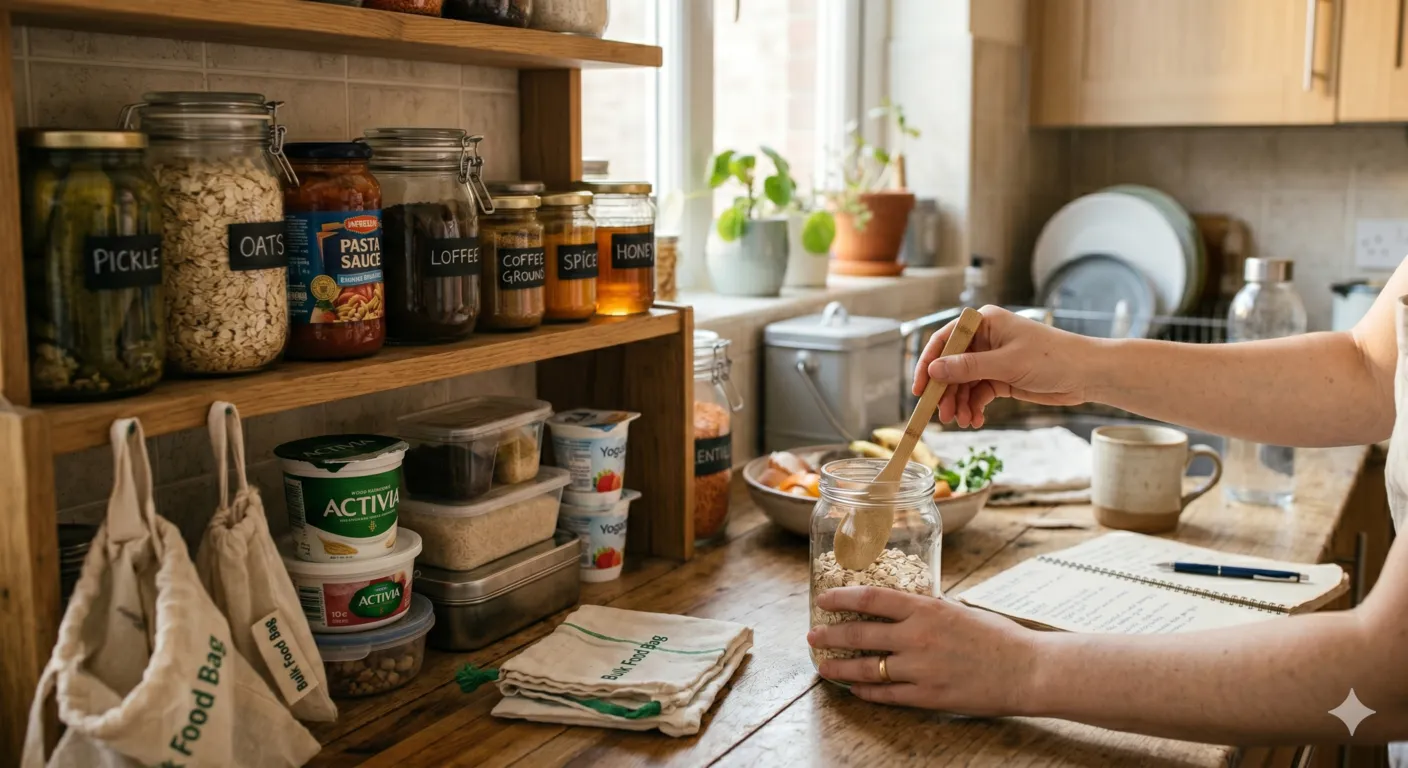
You do not need to buy anything new to start living with less waste. Look around your kitchen right now. You probably already own everything you need to begin: glass jars from pasta sauce and jam, plastic containers, cloth bags from old purchases, water bottles in the back of a cupboard.
That slightly scratched plastic Tupperware works just as well for storing leftovers as a trendy glass container. The pasta jar you rinsed out will hold rice or lentils perfectly. You don’t have to throw out your existing plastic to be “allowed” to live this way.
A few easy moves that cost nothing:
- Save glass jars and sturdy containers instead of recycling all of them
- Keep a couple of bags or totes you already own near the front door
- Use cloth shopping bags you’ve collected over the years
- Refill bottles and containers rather than buying new storage
Tossing working items to replace them with “eco” versions creates waste and drains your wallet. Using what you have is, genuinely, the most sustainable choice you can make.
Step 3: Replace Disposable Products Slowly

Once you’ve used up or worn out the things you own, then you start swapping in reusable versions. The rule is simple: replace as you run out, not all at once.
When your last roll of paper towels runs low, that’s the moment to bring in a stack of cloth rags or cut-up old t-shirts. When your plastic toothbrush is frayed, that’s when you try a bamboo one. When your sponge falls apart, you try a more durable scrubber. One thing at a time, as the old thing naturally ends.
This approach has two big advantages. You spread the cost over months instead of taking one painful hit. And you give each new habit room to settle before adding the next.
It also keeps you honest. There’s no waste-free benefit in throwing out a half-used bottle of shampoo to make room for a shampoo bar. Finish the bottle. Then switch. The most eco-friendly product is almost always the one you already paid for and haven’t used up yet.
Step 4: Reduce Plastic Consumption

Plastic is where a lot of household waste lives, especially the single-use kind that gets used for minutes and lasts for centuries. Cutting back on it is one of the most visible wins you’ll get.
The trick is to focus on plastic you can avoid before it ever enters your home, not just plastic you recycle after. Recycling is a backup, not a solution, since a lot of plastic isn’t recycled even when we put it in the right bin.
Some realistic places to start:
- Bring your own bags. Grocery bags, produce bags, the works. This is the easiest plastic to skip.
- Choose loose produce over the pre-packaged, plastic-wrapped versions when you can.
- Pick glass, metal, cardboard, or refillable options over plastic when there’s a fair choice.
- Skip the bottled water habit and use a refillable bottle.
- Buy bigger sizes of things you use often, since one large container usually means less packaging than several small ones.
A word of warning, because this is where people get discouraged: you will not eliminate plastic completely, and that’s fine. Some plastic is genuinely hard to avoid, and beating yourself up over the wrapper on a medication isn’t the point. Aim for “noticeably less,” not “none.”
Step 5: Build New Habits

Here’s the truth about lasting change: it runs on systems, not willpower. Willpower fades by Wednesday. A good setup keeps working even on the days you’re tired and distracted.
The classic example is the reusable bag. Everyone owns them. Everyone forgets them in the car, or at home, exactly when they’re standing in the checkout line. The problem isn’t that you don’t care, it’s that the bag wasn’t where you needed it.
So you fix the system, not your memory:
- Keep a foldable bag in your everyday purse, backpack, or jacket pocket
- Hang totes on the doorknob you walk past on your way out
- Put bags back in the car the moment you finish unpacking groceries
This is sometimes called habit stacking: attaching a new behavior to something you already do without thinking. Fill your water bottle right after you brush your teeth. Grab your bags when you grab your keys. Rinse and save jars while you do the dishes you’re already doing.
Give a new habit a few weeks before you judge it. It’ll feel like effort at first and then, one day, you’ll realize you’ve stopped thinking about it. That’s the moment it stuck. For more ideas on habits that hold up long-term, see our guide to daily zero waste habits that actually stick.
Easy Beginner Swaps

Once you’re ready to replace worn-out items, these are the swaps that tend to deliver the most value for the least hassle. You don’t need all of them, and you definitely don’t need them today. Treat this as a menu, not a shopping list.
In the Kitchen
- Cloth napkins and rags in place of paper towels and napkins
- Reusable containers and saved jars instead of plastic wrap and zip bags
- A dish brush with a replaceable head instead of throwaway sponges
- Beeswax or fabric wraps for covering bowls and wrapping food
In the Bathroom
- Bar soap instead of bottled body wash
- A bamboo or replaceable-head toothbrush when your old one wears out
- A safety razor instead of disposable plastic razors (this one saves real money over time)
- Refillable or solid options for shampoo and conditioner, if they suit your hair and water
When You’re Out and About
- A reusable water bottle you actually like carrying
- A travel coffee cup for your café order
- Foldable shopping and produce bags that live in your everyday bag
- A reusable cutlery set or just a fork from home for lunches on the go
One honest note from experience: not every popular swap works for everyone. Plenty of people love shampoo bars, and plenty find they leave a film in hard water. Some adore beeswax wraps; others find them fiddly. Try one, see if it fits your life, and don’t feel like a failure if it doesn’t.
Budget-Friendly Tips

There’s a myth that zero waste living is expensive. Walk into a fancy “eco” shop and you’ll see why people believe it. But the reality, once you’re set up, is usually the opposite. Reusables cost more upfront and then save you money for years, because you stop buying the same disposables over and over.
How to keep costs down while you start:
- Use what you already own first. Free is the best price, and you’ve already covered this in Step 2.
- Reuse before you buy. Glass jars, old containers, and worn t-shirts cut into rags cost nothing.
- Buy secondhand. Thrift stores are full of glass jars, containers, totes, and cloth napkins.
- Replace one item at a time as things wear out, so you never face a big bill at once.
- Focus on what saves money fast. Cloth rags replace endless paper towels. A safety razor replaces a constant stream of disposables. A water bottle replaces bottled water.
- Skip the matching aesthetic. You don’t need a coordinated set of bamboo and glass for it to “count.” A mismatched jar collection works exactly as well.
- Cooking from scratch and wasting less food quietly saves more money than any product, because food you don’t throw away is food you don’t rebuy.
Done right, going low waste should make your life cheaper over time, not more expensive.
Challenges You May Face

Nobody mentions the hard parts, so let’s be straight about them. Knowing what’s coming makes it far easier to push through.
Forgetting your reusables
This happens to everyone, especially early on. The fix isn’t trying harder, it’s better placement. Bags by the door, a bottle in your bag, a cup in the car. And when you do forget? You forget. It’s not a moral failure. Carry on.
Feeling like it’s not enough
You’ll have moments where your small efforts feel pointless against the size of the problem. That feeling is normal and it’s also misleading. The point of individual change isn’t that you single-handedly fix everything. It’s that your habits shape what you buy, what you waste, and what you ask businesses to provide. Lots of people doing this imperfectly matters.
Family or roommates who aren’t on board
You can’t force anyone, and nagging usually backfires. Lead by example, make the easy option the default (the rag is right there, the bin is set up), and let people come around at their own pace. Often they do, just slowly.
No bulk store or refill shop nearby
Plenty of zero waste content assumes you have a fancy bulk store down the road. Many people don’t. You can still buy larger sizes, choose less packaging where it exists, and shop secondhand. Do what your actual neighborhood allows, not what someone’s video pretends is universal.
Wanting to quit because you “slipped”
You’ll buy something wrapped in plastic. You’ll grab a takeout container. This isn’t a streak you’ve broken. One disposable cup doesn’t undo months of cloth napkins and saved jars. Shrug, keep going, and aim for your overall direction rather than a clean record. If you want to know what trips up most beginners specifically, we’ve rounded up the common zero waste mistakes beginners make and how to fix them.
Frequently Asked Questions
Is a zero waste lifestyle expensive?
Not in the long run. The reusable versions of things cost more upfront but replace disposables you’d otherwise buy again and again, so they usually save money over time. You can start for free by using what you already own and shopping secondhand.
How long does it take to go zero waste?
There’s no fixed timeline, and honestly no real endpoint. Most people start seeing less trash within a few weeks of changing one or two habits. Think of it as a gradual shift over months and years, not a project you finish.
What’s the first thing I should do to start?
Do a quick trash audit. Spend a week noticing what you throw away most, then tackle that one thing first. It keeps you focused on what actually matters for your household instead of guessing.
Can you live a zero waste lifestyle in an apartment?
Yes. Apartment living changes the details, not the idea. You can still reduce packaging, reuse containers, and swap disposables. Even composting is possible with a countertop or freezer bin plus a local drop-off, a community garden, or a curbside program.
Do small zero waste swaps really make a difference?
A single swap is small, but your habits steer your spending, your waste, and the demand you create as a consumer. Multiply that across millions of people and it adds up. Small and consistent beats big and short-lived.
Do I have to be perfect to call myself zero waste?
No. Almost nobody produces literally zero waste. The goal is “less,” not “none.” Progress counts, and aiming for perfect is the fastest way to give up entirely.
Final Thoughts
Starting a zero waste lifestyle comes down to one quiet idea: pay attention, then make small changes you can actually keep. You don’t need a cart full of bamboo products or a year of trash in a jar. You need to look at your bin, use what you’ve got, replace things slowly as they wear out, and build a few habits that run on their own.
Pick one thing this week. Maybe it’s the trash audit. Maybe it’s keeping bags by the door. Get that comfortable before you reach for the next change. The people who make this last aren’t the ones who did everything at once, they’re the ones who never stopped doing the small things.
Your trash bag tonight tells you where to begin. That’s a better starting point than any shopping list.