Take a look at your kitchen bin right now. If your home is anything like most, it filled up faster than you’d expect, and a lot of what’s in there isn’t food scraps. It’s packaging. Plastic film, snack wrappers, the flimsy produce bags from the grocery store, a takeout container or two.
That small moment of noticing is where almost every zero waste home begins. Not with a dramatic overhaul, not with throwing everything out and buying matching bamboo replacements, but with paying attention to how much we toss without thinking.
This guide walks you through how to create a zero waste home one realistic step at a time. You’ll learn where household waste actually comes from, which swaps make the biggest difference, how to cut energy and water waste too, and how to do all of it without spending a fortune or driving your family up the wall. No guilt, no perfectionism, just practical changes that add up. These same habits are the building blocks of a full zero waste lifestyle, just applied room by room.
What Is a Zero Waste Home?
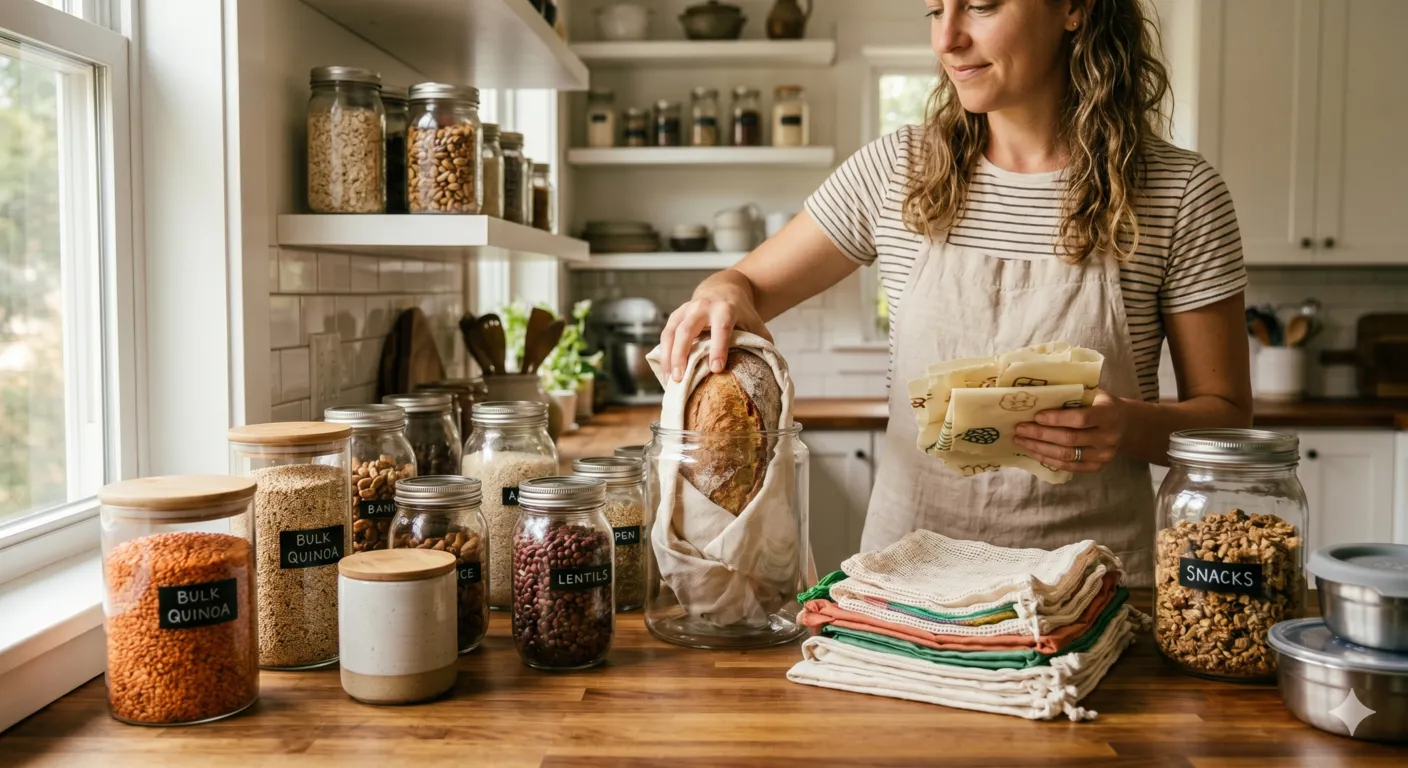
A zero waste home is a household that tries to send as little as possible to the landfill by rethinking what comes in and how things are used, reused, and disposed of.
The word “zero” trips a lot of people up, so let’s be honest about it: almost nobody hits literal zero. Even the most committed households still produce some trash. Think of “zero waste” as a direction you’re heading, not a finish line you cross. Many people prefer the term low waste home for exactly this reason, and it’s a healthier way to think about the whole thing.
Most zero waste living is built on a simple set of priorities, often called the 5 Rs:
- Refuse what you don’t need (freebies, junk mail, single-use extras).
- Reduce what you do need.
- Reuse what you already own.
- Recycle what you can’t refuse, reduce, or reuse.
- Rot (compost) the rest, especially food scraps.
Notice the order. Recycling sits near the bottom, not the top. That surprises people, because we’ve been told for years that recycling is the answer. It helps, but refusing and reducing in the first place beats trying to deal with waste after it already exists. We break down each of the 5 Rs of zero waste in more detail if you want the full picture.
Why Your Home Produces So Much Waste
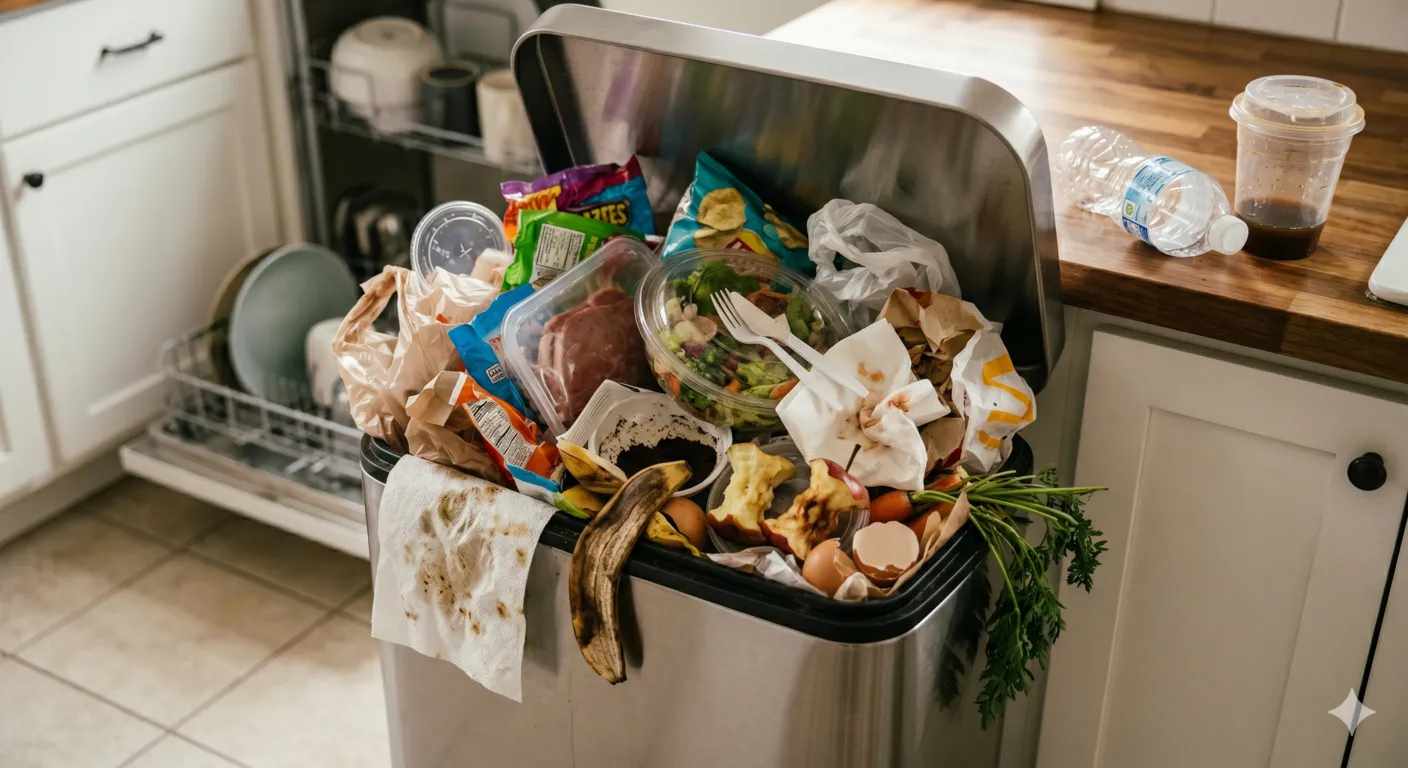
Before you can shrink your trash, it helps to see where it’s coming from. Most of it falls into a few predictable buckets.
Packaging. Nearly everything we buy arrives wrapped in something: food, toiletries, cleaning products, online orders. A surprising share of a typical bin is just the box, bag, or wrapper a product came in.
Single-use convenience items. Paper towels, plastic wrap, disposable razors, coffee pods, cotton rounds, takeout cutlery. These are designed to be thrown away after one use, which means a steady stream of them flowing through your home and out to the curb.
Food waste. Food scraps and spoiled groceries make up a big chunk of household trash. And when food waste breaks down in a landfill, it produces methane, a greenhouse gas, which is why composting matters so much.
Stuff we buy and barely use. Impulse purchases, duplicates, gadgets, fast fashion. A lot of what eventually gets tossed was bought quickly and used rarely.
The point isn’t to feel bad about any of this. It’s normal, and the system is built to make convenience easy and waste invisible. Once you can see the pattern, though, you know exactly where to aim your effort.
Start With One Room at a Time
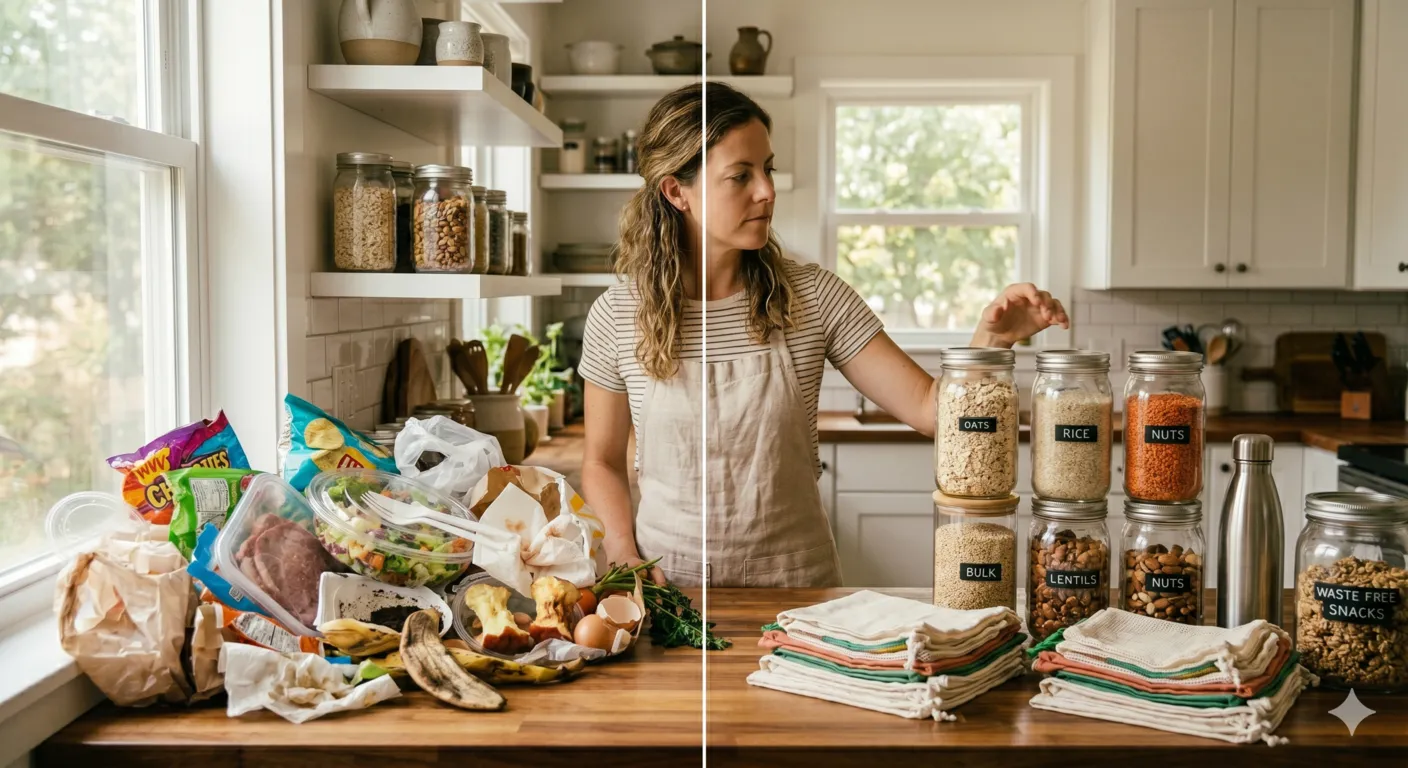
The fastest way to give up on a sustainable home is to try to fix everything at once. You’ll burn out, spend too much money, and feel like a failure the first time you forget your reusable bag. So don’t.
Pick one room and start there. For most households, the kitchen is the obvious choice because it generates the most waste day to day. After that, a natural order looks like:
- Kitchen (food packaging, single-use items, food scraps)
- Bathroom (toiletries, cotton products, plastic bottles)
- Laundry and cleaning (detergents, sprays, paper products)
- Bedroom and home office (clothing, paper, electronics)
Before you change anything, try a simple trash audit. For one week, pay attention to what actually goes in your bin. You can keep a quick note on your phone or just glance in before you take it out. By the end of the week you’ll know your top offenders, and those are exactly what to tackle first. There’s no point buying beeswax wraps if your real problem is bottled water.
Reduce Single-Use Products
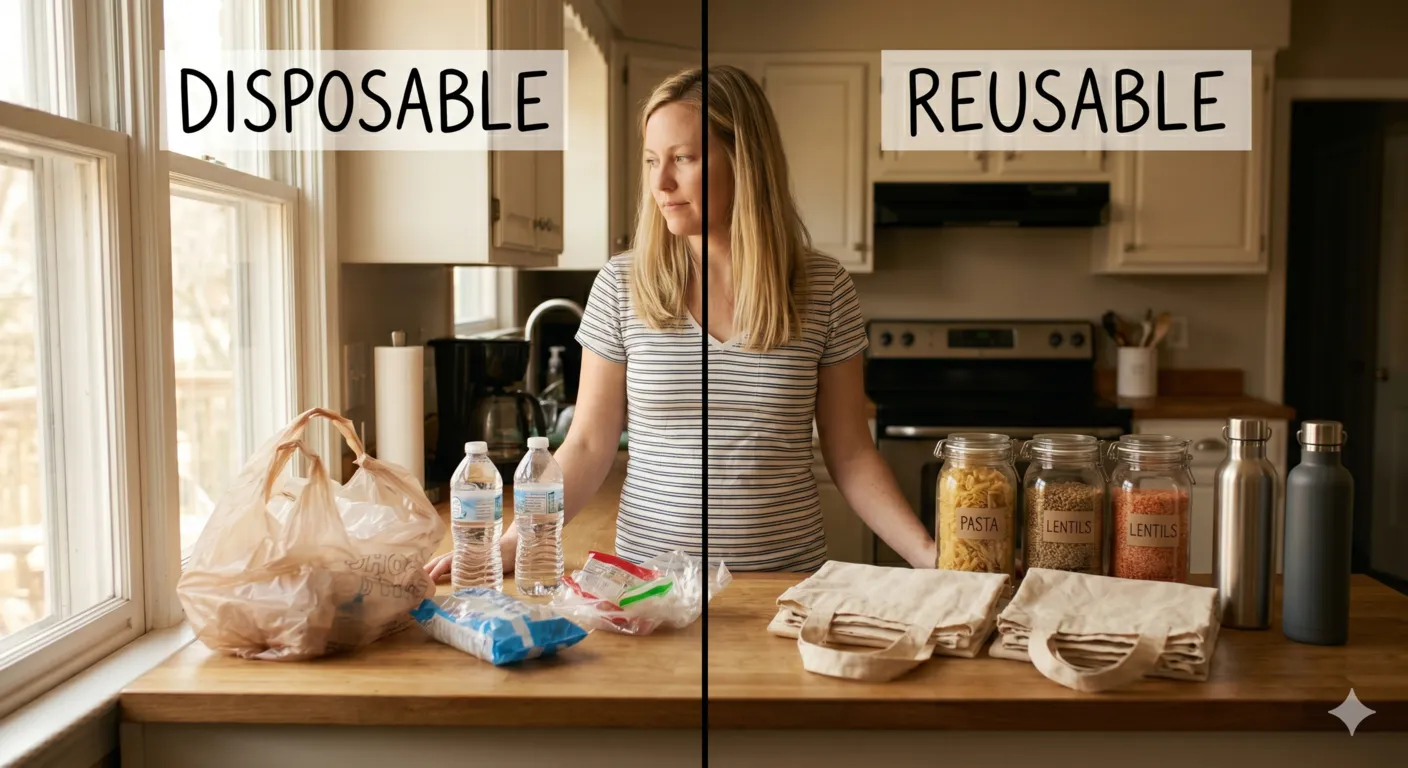
Single-use products are the low-hanging fruit of an eco-friendly home. They’re cheap, they’re everywhere, and they leave the moment you use them.
Common single-use items hiding in a typical home:
- Paper towels and paper napkins
- Plastic wrap and aluminum foil
- Plastic sandwich and freezer bags
- Disposable razors
- Cotton rounds and makeup wipes
- Single-use coffee pods
- Bottled water
- Dryer sheets
- Plastic produce bags
You don’t need to eliminate all of these overnight. Start by picking your top three from the list, the ones you go through fastest, and focus on those. This is the “refuse and reduce” stage in action. Sometimes reducing is as simple as a habit shift, like keeping a cloth bag by the door so you stop accepting plastic ones at checkout.
A quick mindset note: every single-use item you stop buying is money you stop spending, week after week. The savings are small individually but they’re constant.
Switch to Reusable Alternatives
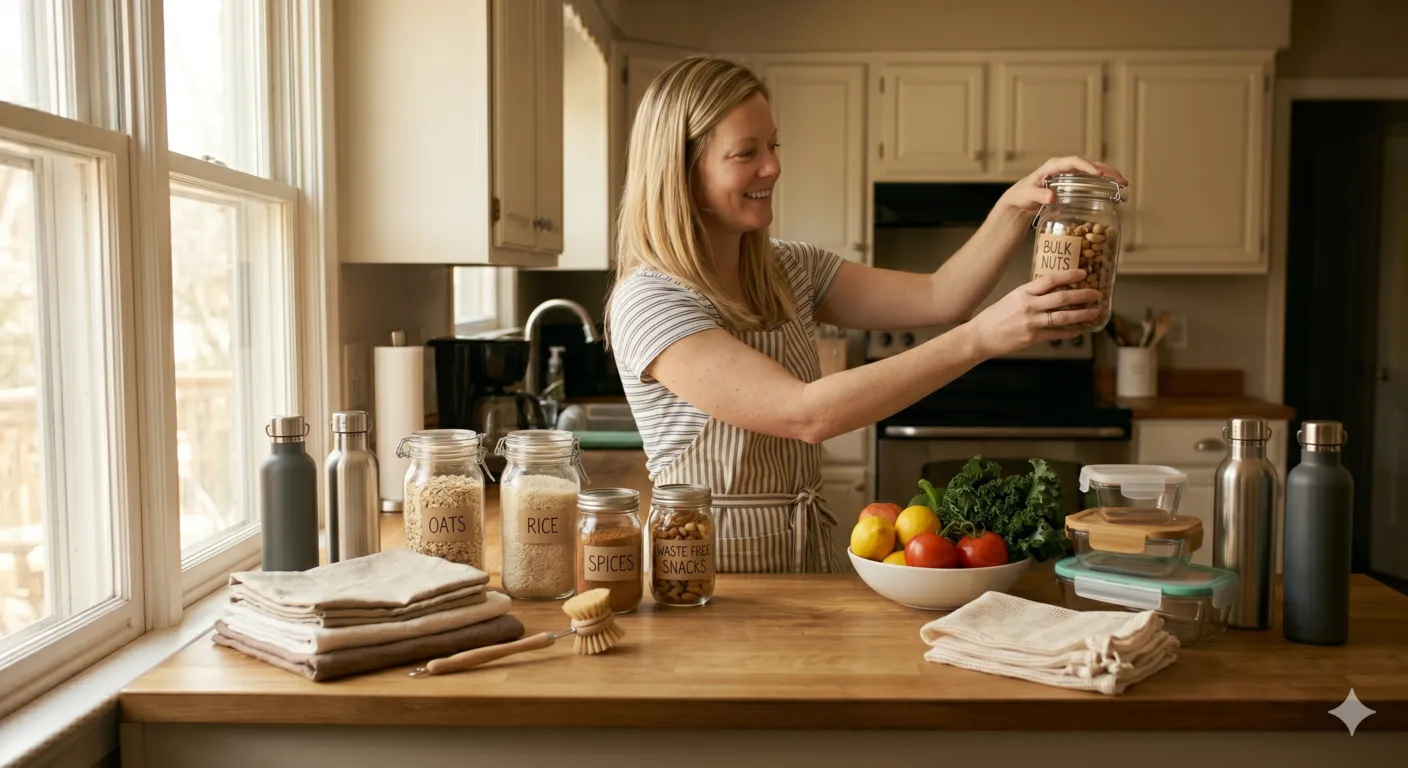
Once you’ve spotted your biggest single-use culprits, the next move is to swap them for something you can use again and again. This is where a plastic-free lifestyle really starts to take shape.
Here are reliable, beginner-friendly swaps:
- Paper towels → cloth rags. Cut up old t-shirts or towels and keep a basket of them under the sink.
- Plastic wrap → beeswax wraps, silicone stretch lids, or just a plate over a bowl.
- Plastic bags → reusable silicone bags, glass jars, or stainless steel containers.
- Disposable razor → a safety razor. The metal blades can usually go in your metal recycling.
- Cotton rounds → washable cloth rounds you toss in the laundry.
- Paper napkins → cloth napkins.
- Bottled water → a refillable bottle (add a filter at home if you don’t love your tap water).
- Coffee pods → a reusable pod, French press, or moka pot.
- Dryer sheets → wool dryer balls.
- Plastic produce bags → mesh or cloth produce bags.
Here’s the most important rule of this whole section, and the one most beginners get wrong: use what you already own first. Don’t throw out a working plastic container so you can buy a glass one. Don’t toss half a roll of paper towels to feel pure. Finish what you have, then replace it with something durable when it genuinely runs out. Buying a pile of brand-new “zero waste” products you didn’t need is just a prettier form of consumption.
Reduce Energy and Water Waste

A zero waste home isn’t only about what goes in the trash. Energy and water are resources too, and trimming how much you use is good for the planet and noticeably good for your bills.
Easy wins on energy:
- Switch burnt-out bulbs to LEDs as they go.
- Plug electronics into a power strip and switch it off, since many devices draw power even when “off.”
- Wash laundry in cold water, which works fine for most loads.
- Air-dry clothes when you can, or use wool dryer balls to cut drying time.
- Run the dishwasher and washing machine only with full loads.
- Draft-proof windows and doors, and nudge your thermostat a degree or two.
Easy wins on water:
- Fix dripping taps and running toilets quickly; small leaks waste a lot over time.
- Take shorter showers and consider a low-flow showerhead or faucet aerators.
- Turn the tap off while brushing your teeth or scrubbing dishes.
None of this requires a big investment. Most of it is habit, and the rest pays for itself.
Declutter Sustainably

When people get inspired to build a sustainable home, a common first instinct is to declutter hard, filling bags with stuff and hauling it all to the curb. Resist that. A massive purge straight to the landfill isn’t low waste, it’s just relocating the problem.
Declutter in this order instead:
- Keep or repair what’s still useful to you.
- Sell what has value (online marketplaces, consignment).
- Give away to friends, neighbors, local “Buy Nothing” groups, or donation centers.
- Recycle responsibly, including textiles and electronics through proper take-back programs.
- Dispose carefully of hazardous items like batteries, paint, and old electronics at the right facility.
- Landfill only as a last resort.
And one trap to dodge: decluttering does not mean buying a fresh set of matching storage bins. The goal is fewer things, not new things to hold your things. Work with the baskets, jars, and boxes you already have.
Common Challenges

Going low waste sounds simple on paper, and then real life happens. Here are the obstacles almost everyone hits, and how to get past them.
“It feels overwhelming.” That’s the sign you’re trying to do too much at once. Go back to one room, one swap. Momentum beats intensity.
“It’s expensive to start.” Some reusables do cost more upfront. Begin with the free swaps (rags, jars, tap water) and buy the rest slowly, only as old items wear out.
“My family isn’t on board.” You can’t force anyone. Lead by example, make the eco-friendly option the easy default, and skip the lectures. People come around faster when it’s convenient and low-pressure than when they feel judged.
“My area doesn’t compost or recycle much.” Look for community compost drop-off sites, and store food scraps in the freezer between trips if you need to. Where recycling is limited, lean harder on reducing what you bring home in the first place.
“Some packaging is impossible to avoid.” True. Certain products simply come wrapped in plastic. Reduce where you reasonably can and let the rest go without guilt.
“I keep forgetting my reusable bags and bottle.” Keep a stash in your car, by the front door, or in your everyday bag. Make remembering automatic instead of relying on willpower.
Budget-Friendly Changes
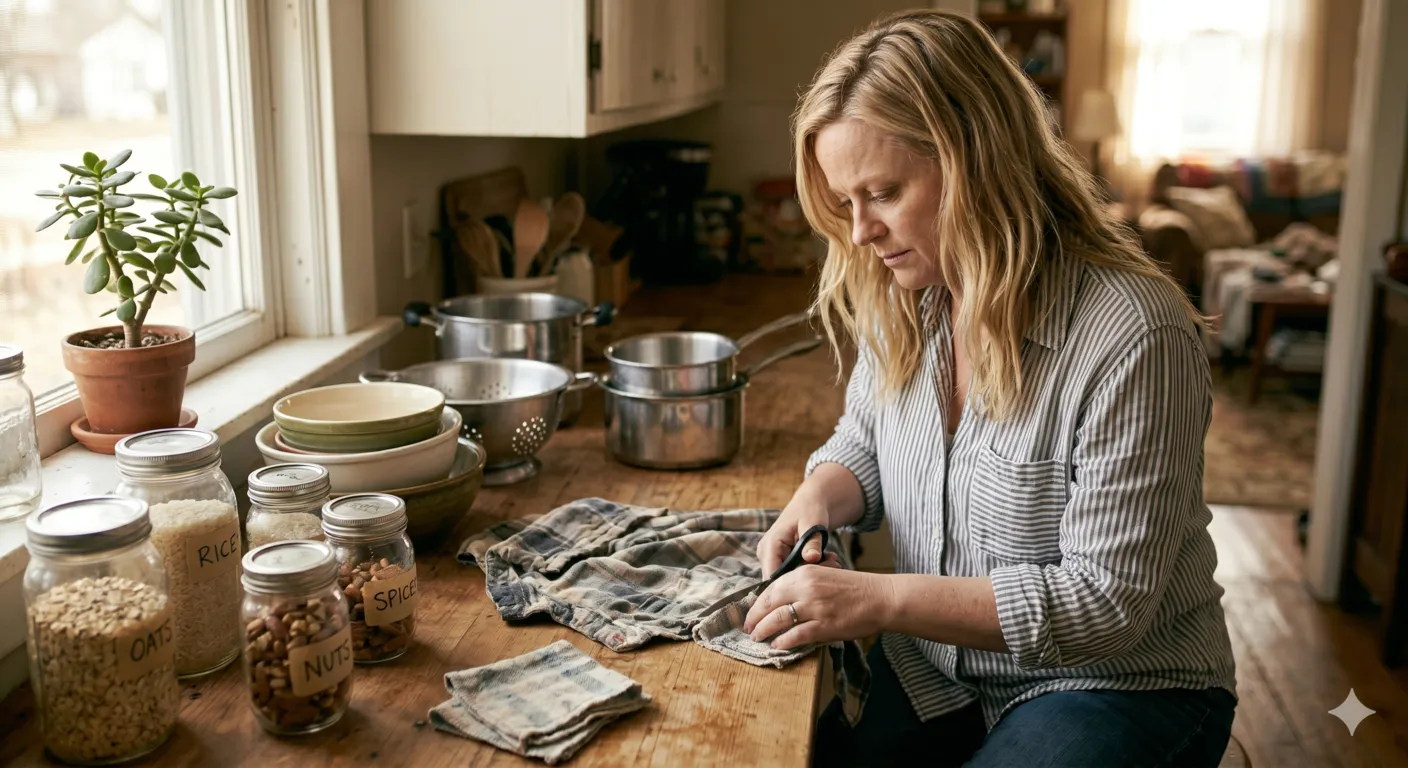
There’s a myth that a zero waste home is a luxury for people with money to spend on fancy glass jars and artisan soap. It isn’t. In practice, most low waste habits save money, because the core idea is buying and wasting less.
Changes that cost little or nothing:
- Reuse jars and containers you already have for storage and bulk shopping.
- Make rags from old clothes and towels instead of buying paper towels.
- Drink tap water instead of bottled.
- Cook at home and plan meals to cut food waste, which is one of the biggest hidden grocery costs.
- Repair instead of replace clothing, furniture, and small appliances when you can.
- Borrow or rent tools you’ll only use once, and lean on your local library.
- Buy secondhand for clothes, furniture, and household goods.
If you remember only one budget tip, make it this: the cheapest and greenest choice is almost always buying less in the first place. Every purchase you skip is money saved and waste avoided at the same time.
Progress Over Perfection
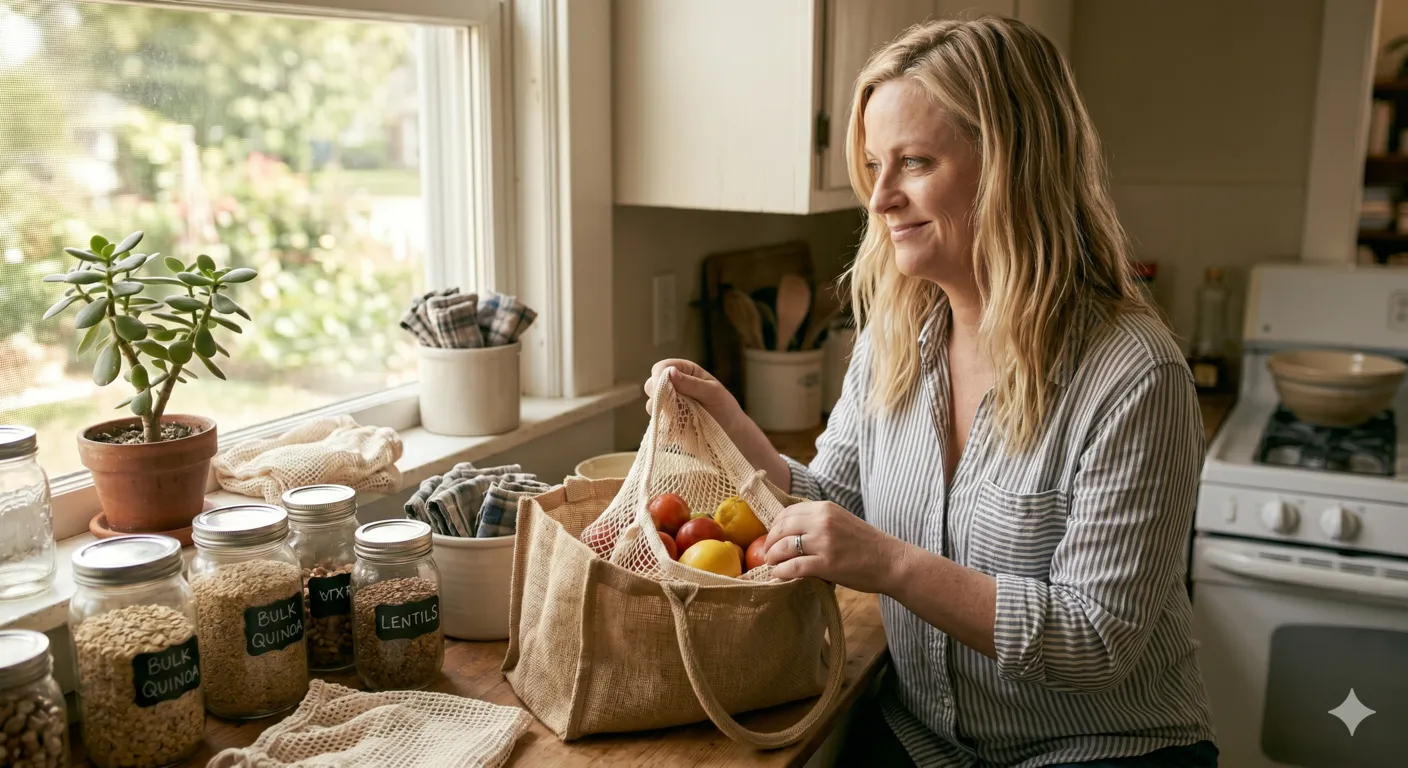
You will still produce waste. You’ll forget your bag, you’ll buy the cucumber wrapped in plastic because it’s the only one left, you’ll order takeout on a hard day. This is completely normal, and it does not mean you’re failing.
The whole zero waste idea works best when lots of people do it imperfectly, not when a few people do it flawlessly. A home that cuts its trash in half is a genuine win, even if it never reaches zero. Burning out from guilt and quitting helps no one.
So track your progress instead of your slip-ups. Notice that you’re filling the bin less often, that you’re buying fewer disposables, that the kitchen feels a little less wasteful than it did a month ago. Celebrate the small stuff. Sustainable living is a long game, and the version of it you can actually keep up is the version that counts.
Frequently Asked Questions
Can a home ever be truly zero waste?
In practice, almost never, and that’s okay. “Zero waste” is a goal you move toward, not a standard you have to hit. Aim to build a low waste home and steadily reduce what you send to the landfill.
What’s the easiest first step?
Do a one-week trash audit to see what you throw away most, then tackle your single biggest category. For most households that means cutting kitchen single-use items first.
Is going zero waste expensive?
It can cost a bit more upfront for certain reusables, but the majority of changes save money over time, and many cost nothing at all. Reducing food waste and buying less make the biggest dent in your spending.
Do I need to buy special “zero waste” products?
No. Use what you already own first. Buying a pile of new sustainable gear you don’t need works against the whole point, which is consuming less.
How do I get my family on board?
Lead by example, make the eco-friendly choice the easy and obvious one at home, and avoid preaching. People adopt new habits faster when they’re convenient than when they feel pressured.
What do I do with waste I genuinely can’t avoid?
Reduce it where you can, recycle correctly, dispose of hazardous items at the proper facility, and let go of guilt over what’s left. Doing your reasonable best is enough.
Final Thoughts
Creating a zero waste home isn’t about being perfect or buying your way to a greener life. It’s about paying attention, making one small swap at a time, and choosing reuse over disposal whenever it’s realistic.
Start with your kitchen bin. Run a quick trash audit this week, pick the one single-use item you go through fastest, and find a reusable replacement for it. That’s it. One change, made and kept, is worth more than a dozen good intentions.
Build from there at your own pace. Over time those small choices stack into a home that wastes less, costs less to run, and feels a lot more intentional, without ever demanding that you get everything right.