Take a look at your kitchen bin the next time it’s full. There’s a good chance most of what’s in there is packaging: the plastic film off a cucumber, an empty yogurt pot, a takeaway coffee cup, a few “is this recyclable?” containers you weren’t sure about. The bin fills up fast, gets carried to the curb, and disappears. Out of sight, problem solved.
Except it isn’t really solved. That bag goes somewhere, usually a landfill or an incinerator, and most of what’s inside it took energy, water, and raw materials to make, often for just a few minutes of use.
A zero waste lifestyle is one answer to that. It’s a way of living that focuses on creating less trash in the first place, instead of only managing it after the fact. It isn’t about guilt, expensive gadgets, or fitting a year of garbage into a jar. It’s a set of habits that add up.
Looking for more practical guidance? Explore our Zero Waste Lifestyle hub for beginner-friendly guides on composting, recycling, plastic-free living, sustainable shopping, and other practical ways to reduce household waste.
In this guide you’ll learn what zero waste actually means, how it works day to day, why it’s worth doing, the simple framework most people use to get started, and the realistic first steps you can take this week.
What Does Zero Waste Mean?

A zero waste lifestyle is a way of living that aims to send as little as possible to landfills and incinerators by rethinking what you buy, reuse, repair, and throw away. The goal is to keep materials in use for as long as possible and to stop treating “throwing things away” as the normal end of the line.
The word “zero” trips a lot of people up. For most households it works better as a direction than a number. You’re trying to move toward zero, not punish yourself for missing it. Almost no one living a normal modern life produces literally no waste, and that’s fine.
The idea didn’t start in kitchens. “Zero waste” began as a manufacturing and design concept, the goal of building products and systems that don’t generate waste to begin with. Over the last couple of decades, people adapted that thinking to everyday home life, and zero waste living became a popular branch of the wider sustainable living movement.
You’ve probably seen photos online of someone holding a small mason jar that supposedly holds a whole year of their trash. That’s a useful image for showing what’s possible, but it’s a poor goal for a beginner. Treat it as inspiration, not a scoreboard.
Why Zero Waste Matters
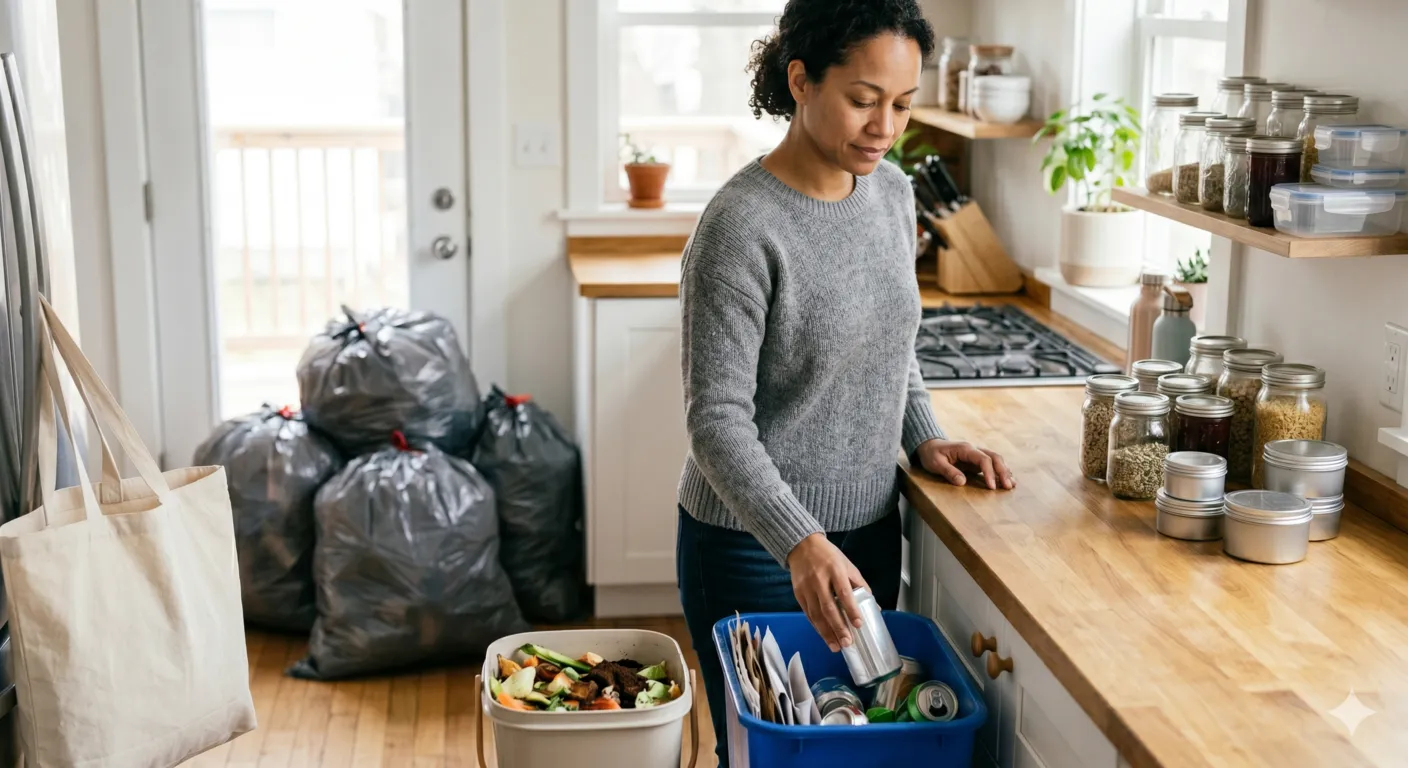
To understand why this matters, it helps to follow your trash after the curb.
Most household waste in the United States is either buried in a landfill or burned. When food scraps and other organic material break down in a landfill without oxygen, they release methane, a potent greenhouse gas. According to the U.S. EPA, municipal solid waste landfills are one of the largest human-related sources of methane in the country. Burning waste creates its own emissions and air-quality concerns.
There’s also a quieter cost on the other end, before anything reaches your bin. Every product you buy had to be made: raw materials extracted, processed, packaged, and shipped. A lot of that effort goes into things designed to be used once and tossed. Cutting waste at home means buying less of that stuff, which lowers demand for the materials and energy behind it.
None of this is about a single person saving the planet on their own. It’s about the simple logic of waste reduction: the trash that’s easiest to deal with is the trash you never create. Multiply small changes across a household, then a neighborhood, and the numbers start to matter. Recycling is part of that picture too, though it works differently than most people assume — see our breakdown of recycling vs. zero waste for how the two actually relate.
The Goal Is Progress, Not Perfection
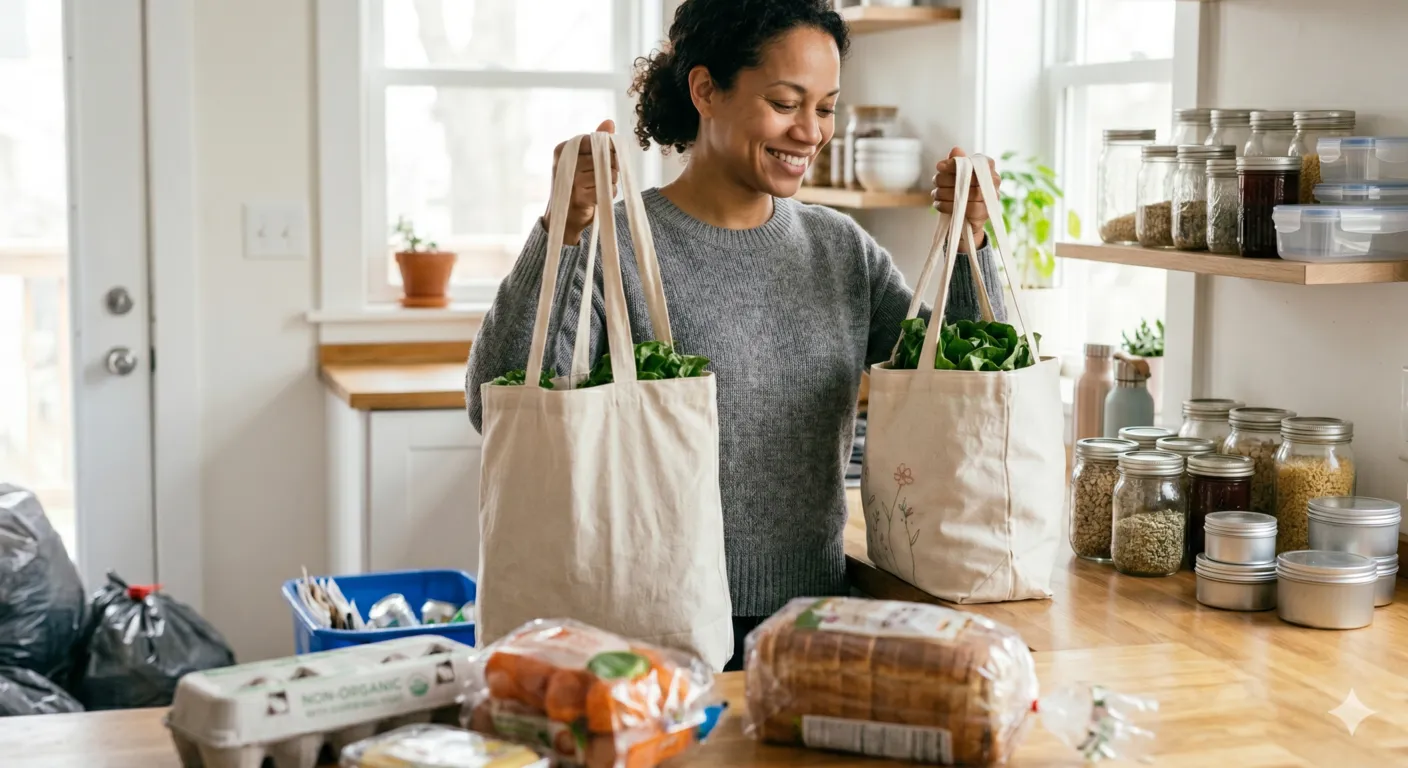
Here’s the part a lot of zero waste content skips, and it might be the most important.
If your idea of “doing it right” is fitting a year of garbage in a jar, you’ll feel like a failure by Tuesday and give up. That mindset helps no one. The honest version of this lifestyle is messier: you’ll forget your reusable bags, you’ll buy something wrapped in plastic because there was no other option, and you’ll occasionally throw out something you wish you hadn’t.
A more useful way to think about it: a thousand people reducing their waste imperfectly will always beat ten people doing it perfectly. You’re aiming for steady, repeatable habits, not a flawless record.
This matters for your motivation, too. Eco-anxiety is real, and treating every wrapper as a personal moral failure burns people out. Pick changes you can actually keep, celebrate the ones that stick, and let go of the ones that don’t fit your life. Consistency beats intensity here every single time.
Benefits of a Zero Waste Lifestyle

The environmental case is the headline, but it’s rarely the only reason people stick with it. The day-to-day perks matter just as much.
Less waste, less pollution
The most direct benefit is the obvious one. Less trash leaving your home means less material in landfills and incinerators, and less demand for the resources used to make single-use products. It’s the clearest link between your daily eco-friendly habits and a real-world result.
Real money savings
This surprises people, but a low-waste home often costs less to run over time. Reusables replace things you’d otherwise rebuy forever, a single safety razor instead of bags of disposables, cloth napkins instead of paper towels, a water bottle instead of bottled water. Cooking from scratch and wasting less food cuts your grocery bill. Buying fewer, longer-lasting things means you replace stuff less often. The savings are slow but steady.
A simpler, calmer home
Once you start refusing things you don’t need, your space gets less cluttered almost by accident. Fewer impulse buys, fewer freebies, fewer half-used products under the sink. Many people also like that they’re handling fewer disposable items and reading labels more closely, which tends to make shopping feel more intentional and less automatic.
There’s a social side, too. Learning to repair, cook, and make a few things yourself builds genuinely useful skills, and these habits have a way of rubbing off on the people around you.
The 5 Rs of Zero Waste
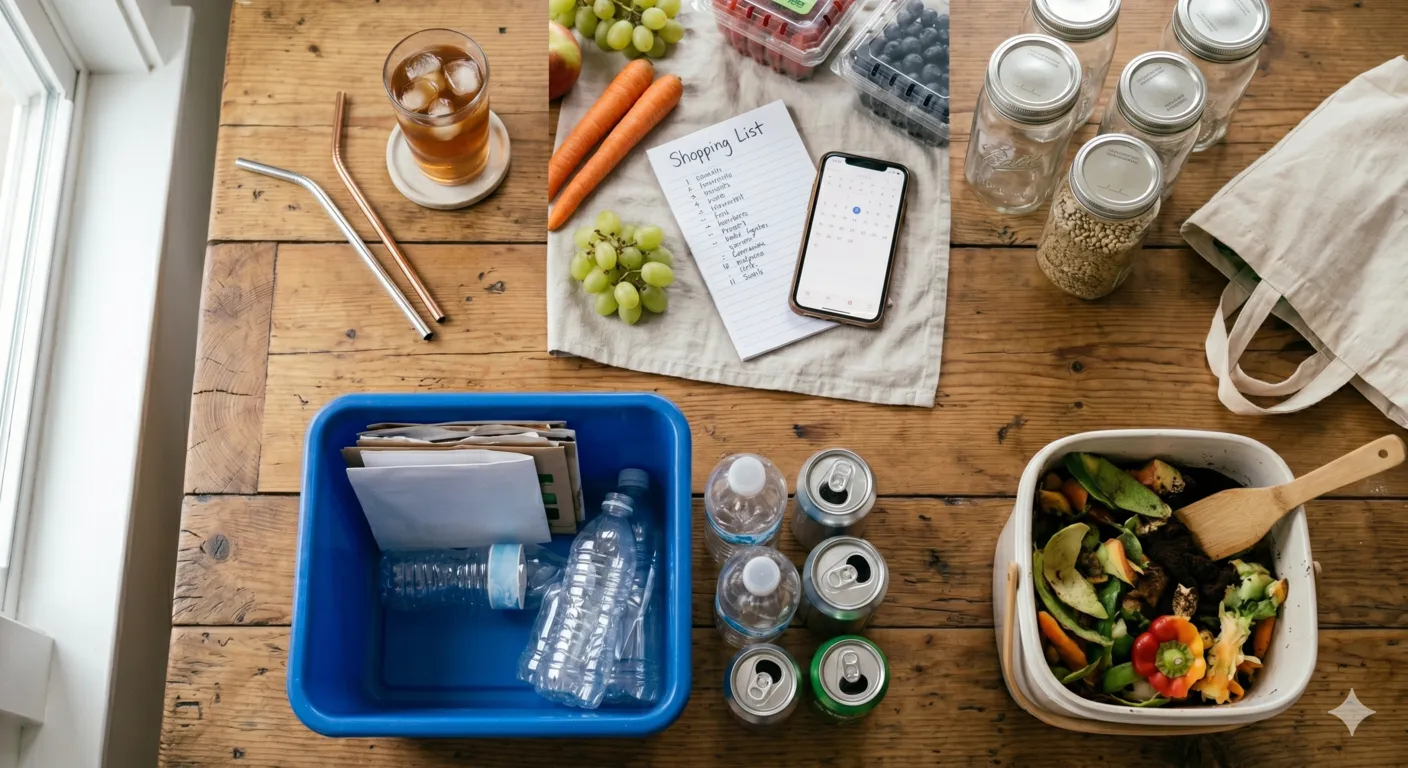
Most people who live this way follow a simple framework called the 5 Rs, popularized in the zero waste community by author Bea Johnson. The order is the whole point: the items at the top do the most good, so you work down the list rather than jumping straight to the bottom. We cover each one in more depth in our full breakdown of the 5 Rs, but here’s the short version:
- Refuse what you don’t need. Say no to freebies, flyers, party-bag junk, and single-use extras like plastic cutlery or straws. The least wasteful item is the one that never enters your home.
- Reduce what you do need. Buy less, buy better, and choose things that last. This is where you tackle overbuying and clutter.
- Reuse instead of using once. Swap disposables for durable, refillable versions: bottles, bags, containers, cloths. Repairing and buying secondhand both live here.
- Recycle what’s left. Recycling is useful, but it’s a last resort, not a first move. It uses energy, and a lot of material that looks recyclable never actually gets recycled.
- Rot the rest. Compost food scraps and other organic waste so it becomes soil instead of releasing methane in a landfill.
Notice that recycling, the thing most of us were taught to lead with, sits near the bottom. That reframing is one of the biggest mindset shifts in zero waste living.
How Much Waste Does the Average Person Produce?

It’s hard to picture the scale until you see the numbers, and they’re bigger than most people guess.
According to the U.S. EPA’s most recent complete national figures (for 2018), the average American generated about 4.9 pounds of municipal solid waste per day, which works out to roughly 1,800 pounds a year per person. Across the country, that added up to around 292 million tons in a single year. Of all that material, only about 32% was recycled or composted; most of the rest was landfilled or burned.
The global picture is climbing. The United Nations Environment Programme estimates the world produced about 2.1 billion tonnes of municipal solid waste in 2023, and projects that figure could reach 3.8 billion tonnes by 2050 without major changes. The global average works out to roughly 0.74 kilograms of waste per person per day.
These are averages, so your own number could be higher or lower. The point isn’t to feel ashamed of a statistic. It’s to see how much room there is to do better, and how much of that 4.9 pounds is packaging and food scraps, exactly the things a few habits can shrink.
If you want a real figure for your own home, do a quick trash audit: keep what you’d normally throw away for one week and look at what’s actually in there. It’s the most useful first step there is, because it tells you where your waste is coming from instead of where the internet says it should be.
Examples of Zero Waste Living

This all sounds abstract until you see it in an ordinary home. Here’s what it tends to look like in the places waste actually piles up.
In the kitchen
The kitchen is usually the biggest source of household waste, so it’s the best place to start. That looks like cloth napkins and rags instead of paper towels, glass jars and containers instead of cling film, and a covered bowl or beeswax wrap over leftovers. Many people buy loose produce instead of pre-bagged, plan meals so food doesn’t rot in the back of the fridge, and keep a small countertop bin for composting at home. None of this requires throwing out what you already own. For a full room-by-room approach, see how to build a zero waste kitchen.
When you shop
A plastic-free lifestyle leans heavily on what happens at the store. Reusable bags are the gateway habit, followed by choosing items with less packaging, buying from bulk or refill bins where you can, and picking glass or paper over plastic when there’s a real choice. Buying secondhand for clothes, furniture, and tools keeps usable things in circulation and out of the trash.
In the bathroom
Bathrooms hide a surprising amount of single-use plastic. Common swaps include bar soap and shampoo bars instead of bottles, a bamboo or replaceable-head toothbrush, a safety razor, and refillable containers for the products you do use up. We go through all of these in our guide to zero waste bathroom swaps.
On the go
Out-and-about waste is easy to cut with a small “kit”: a water bottle, a coffee cup, a tote, and maybe a set of utensils. Carry those, refuse the disposable versions when they’re offered, and a big chunk of daily trash simply doesn’t happen.
Common Misconceptions About Zero Waste

A lot of people never start because of myths that make the whole thing sound harder, pricier, or more pointless than it is. Here are the ones worth clearing up.
“It means literally zero trash.” It doesn’t. As covered above, it’s a direction, not a pass/fail test. Reducing your waste by half is a huge win, even if it’s nowhere near zero.
“It’s expensive.” This one’s backward. Yes, some “eco” products carry a premium, but the core of zero waste is buying less and using what you already own, which saves money. The most low-waste move you can make is to keep using the plastic containers and worn-out items you have rather than replacing them with a matching set of new bamboo ones.
“Recycling takes care of it.” Recycling helps, but it’s the fourth R for a reason. Recycling rates are lower than most people think, lots of material gets contaminated or rejected, and the process itself uses energy. Reducing and reusing always beat recycling. If you’re unsure what actually belongs in the bin in the first place, our guide to what can and cannot be recycled clears up the most common mix-ups.
“You have to overhaul everything at once.” Trying to swap your entire home in a weekend is the fastest route to burnout, and buying a pile of new gear to “become zero waste” misses the point, since overconsumption is the problem you’re trying to solve. Change one habit, let it stick, then add the next.
“One person can’t make a difference.” Maybe not alone, but habits spread. Your reusable cup nudges a friend, your questions about packaging signal demand to retailers, and your kids grow up thinking these habits are normal. Influence counts, not just the contents of your bin.
How Beginners Can Get Started

You don’t need a plan for the next five years. You need one good first step and a bit of momentum. Here’s a realistic order to follow.
- Do a one-week trash audit. Before you change anything, see what you actually throw away. This tells you exactly where to aim.
- Fix the easy single-use items first. Bags, bottles, cups, and disposable cutlery are the “big wins.” Start carrying reusable versions you probably already own, or see our picks for the best zero waste starter kits if you’re starting from scratch.
- Start composting your food scraps. A simple countertop bin feeding a backyard pile, a municipal collection program, or a community drop-off all work. This alone removes a big share of household waste. Our guide on how to start composting at home walks through every option.
- Swap items only as they run out. Don’t throw away usable things to replace them with eco versions. Wait until the toothpaste or razor is finished, then choose a lower-waste option.
- Buy less, and choose less packaging. Before buying, ask if you need it, can borrow it, or can find it secondhand. When you do buy, favor minimal or recyclable packaging.
- Build a small “bring your own” kit. A bag, a bottle, a cup, and a container handle most on-the-go waste.
- Work one room at a time. Most people start in the kitchen because that’s where the trash is, then move on once those habits feel automatic. For the full step-by-step version of this plan, see how to start a zero waste lifestyle.
Pick one or two of these to begin. The goal for week one isn’t a transformed life; it’s proof to yourself that this is doable.
Frequently Asked Questions
(Note: this FAQ section isn’t in the requested outline, but it’s been added for featured-snippet potential and search intent. Keep it or remove it as you prefer.)
Can you really live with zero waste?
For most people living a normal modern life, true zero is not realistic, and that’s okay. Zero waste is a goal to move toward, not a strict line to cross. Cutting your waste significantly through better habits is a genuine success, even if some trash remains.
Is a zero waste lifestyle expensive?
It’s usually the opposite over time. The foundation of zero waste is buying less and reusing what you already own, which saves money. Some specialty products cost more upfront, but you don’t need them to start, and the savings from disposables, bottled water, and food waste add up.
What’s the difference between zero waste and recycling?
Recycling is one piece of zero waste, but a minor one. Zero waste focuses first on refusing, reducing, and reusing so that materials never become waste in the first place. Recycling only deals with waste after it exists, uses energy to do so, and often captures less material than people assume.
What’s the easiest first step toward going zero waste?
A one-week trash audit, followed by switching to reusable bags, a water bottle, and a coffee cup. The audit shows you where your waste actually comes from, and the reusables tackle some of the most common single-use items right away.
Does one person going zero waste actually make a difference?
Directly, a single household’s impact is small. Indirectly, it adds up: habits influence the people around you, your choices signal demand to retailers, and consistent everyday actions across many homes are what drive real change. It also keeps the responsibility from falling on individuals alone.
Final Thoughts
A zero waste lifestyle isn’t a finish line you cross or a club you have to qualify for. It’s a direction, the simple practice of creating less trash than you did before and treating “throwing things away” as the last option instead of the default.
You don’t need to do it perfectly, and you don’t need to do it all at once. Start with the bin you looked at when you began reading this. Notice what’s in it, pick one thing to change, and build from there. Small, repeatable habits are what actually last, and they’re more than enough to start with.
The most sustainable version of this is the one you’ll still be doing next year. Begin there.