It usually hits you on trash day. You drag the bin to the curb, and it’s full again — maybe spilling over the lid — and you start wondering where all of it came from. A few grocery runs, some takeout containers, packaging from online orders, and suddenly the week’s garbage won’t fit.
That moment is where most people’s low-waste journey actually begins. Not with a dramatic overhaul, but with one slightly uncomfortable thought: most of what we throw away didn’t need to exist in the first place.
Here’s the encouraging part. You don’t need to fit a year of trash into a mason jar to make a real difference. People who stick with sustainable living long term almost never start big. They start with a handful of daily zero waste habits — small, repeatable actions that quietly add up over months and years.
This guide walks through the everyday habits that matter most, why they work, and how to build them into a routine you’ll actually keep. No guilt, no perfectionism, no expensive starter kit. If you’re just getting oriented, these habits are one piece of building a full zero waste lifestyle.
Why Small Habits Matter

Zero waste is a direction, not a finish line. Nobody produces zero trash, and treating it like a pass-or-fail test is the fastest way to quit. The goal is simply to waste less than you did last month.
Small actions matter because they repeat. If you currently buy a bottle of water most days, switching to one reusable bottle can replace hundreds of single-use bottles over a year — without any extra effort once it becomes routine. That’s the quiet power of a habit: you make the decision once, then it runs on autopilot.
The most common beginner mistake is trying to change everything overnight. You buy bamboo everything, swap your whole pantry, and commit to ten new rules at once. Two weeks later, the willpower runs out and the old habits creep back. Lasting change works the opposite way: one habit at a time, built slowly until it sticks.
There’s an everyday payoff too. Lighter trash bags, a less cluttered home, smaller grocery and utility bills, and a calmer relationship with your stuff. Waste reduction tends to make daily life simpler, not harder.
Reusable Water Bottles

A refillable bottle is the easiest first habit, which is exactly why it’s a great place to start. Disposable bottles are one of the most common single-use items, and they’re avoidable almost every time.
The trick is to pick one bottle you genuinely like and will actually carry. Stainless steel and glass last for years and don’t hold odors. Size matters more than people expect — a bottle too big for your bag stays home.
Keep it somewhere you can’t miss it: by your keys, in your bag, on your desk. Refill it before you leave the house and give it a rinse at the end of the day so it stays fresh.
The classic pitfall is buying three trendy bottles and using none of them. One bottle you love beats a cupboard full of forgotten ones. You’ll also notice the savings fast, since bottled water costs far more than tap over time.
Carry Reusable Bags
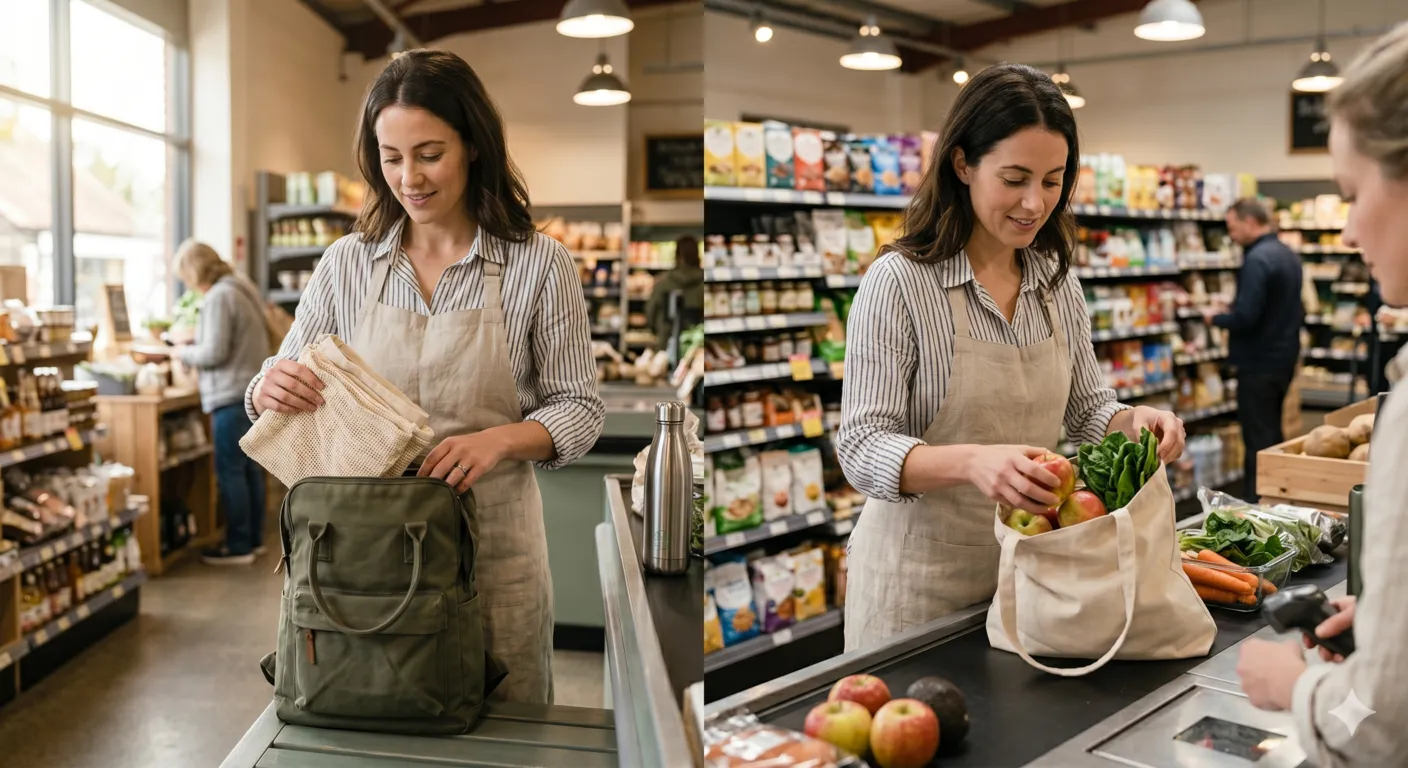
Plastic shopping bags get used for a few minutes but stick around in the environment for a very long time. Reusable bags solve this for nearly every shopping trip.
The real challenge isn’t owning bags — it’s remembering them. Almost everyone has a drawer stuffed with totes they keep forgetting at home. The fix is to stash them everywhere you might need them:
- A couple folded in your car or by the front door
- A compact one that lives permanently in your everyday bag or backpack
- A few lightweight produce bags for loose fruit and vegetables
Then build in the loop: after you unpack the groceries, put the bags straight back where they belong. That single step is what turns “I own reusable bags” into “I actually use them.” The common slip-up is leaving them in the car and buying new ones at checkout anyway. For more ways to cut waste before you even reach checkout, see our guide to zero waste grocery shopping.
Avoid Single-Use Plastics

Throwaway plastics quietly pile up: straws, plastic cutlery, coffee cup lids, cling film, single-serve packaging. Cutting them is a core part of moving toward a plastic-free lifestyle.
Simple swaps to try
- Refuse straws, or carry a reusable one
- Keep a small fork-and-spoon set or a spork in your bag for lunches on the go
- Bring a travel mug to your coffee spot
- Use beeswax wraps, a plate, or a container instead of cling film
- Buy pantry staples in bulk using your own jars or bags where stores allow it
Start with the one you use most often. If your weak spot is takeaway coffee, fix that first and leave the rest for later.
One important mistake to avoid: don’t throw out all your usable plastic to “go plastic-free.” Tossing perfectly good containers to buy shiny new eco versions just creates more waste. Use what you already have until it wears out, then replace it with something durable.
Meal Planning
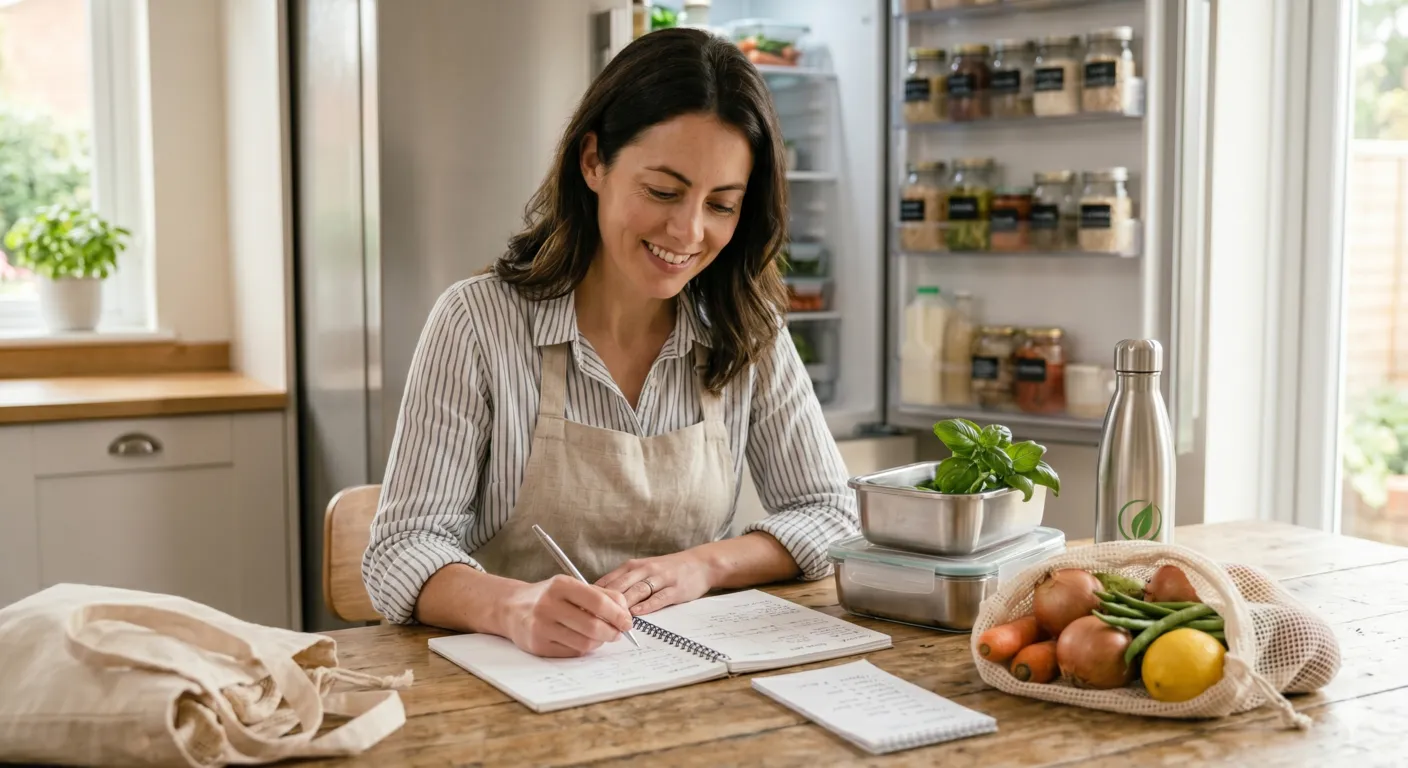
Wasted food is one of the largest parts of most households’ trash — and it’s money going straight into the bin. A little planning fixes a surprising amount of it.
A simple weekly routine looks like this: check what you already have, plan a few meals around those ingredients, write a list, and shop the list. Ten minutes is usually enough.
A few habits make it easier:
- Keep an “eat me first” shelf in the fridge for food nearing its end
- Store produce properly so it lasts longer
- Remember that “best before” is about quality, not safety — plenty of food is fine past that date
- Cook once and eat twice by planning for leftovers
The big pitfall is over-shopping because everything looks good in the store. Your list is the anchor that keeps you honest. Beyond less waste, you’ll spend less on groceries and reach for last-minute takeout (and its packaging) far less often. For a deeper walkthrough of this routine, check out our easy zero waste meal planning tips.
Compost Food Scraps

Even with careful planning, scraps are unavoidable: peels, cores, coffee grounds, eggshells. Composting at home keeps them out of landfill — where buried food breaks down and releases methane — and turns them into something useful for soil and plants instead. There’s an option for almost any living situation, and we cover each one in detail in our guide on how to start composting at home:
There’s an option for almost any living situation:
- A yard: a simple outdoor pile or compost bin
- A city apartment: a small countertop bin paired with a municipal food-scrap collection program, if your area offers one
- No outdoor space at all: a worm bin (vermicomposting) or a bokashi bucket, both of which work indoors
What you can compost
Fruit and vegetable scraps, coffee grounds and paper filters, tea, eggshells, plain bread, and yard trimmings all break down well.
What to keep out (for home bins)
Meat, fish, dairy, and oily or greasy food tend to smell and attract pests, so most home setups leave them out.
The usual complaint from beginners is a wet, smelly bin. The fix is balance: mix your “greens” (food scraps) with “browns” (dry leaves, shredded cardboard, or paper). Get that ratio roughly right and the smell disappears.
Buy Less and Choose Better

The most powerful habit on this list isn’t a swap at all — it’s buying less in the first place. In the waste hierarchy, refusing and reducing come before reusing and recycling for a reason.
Before any purchase, pause for a second and ask: Do I already own something that does this job? Could I borrow it, rent it, or find it secondhand? A lot of “I need to buy this” turns into “actually, I don’t” with one honest question.
When you do buy, choose quality that lasts over cheap things you’ll replace in a year. Durable items cost less over their lifetime and create less waste along the way.
Watch out for the greenwashing trap: filling your home with eco-labeled gadgets you don’t really need. The greenest product is usually the one you already own. A bamboo gadget gathering dust is still waste. Fewer, better things is the whole idea — and it leaves you with more money and less clutter.
Save Energy and Water
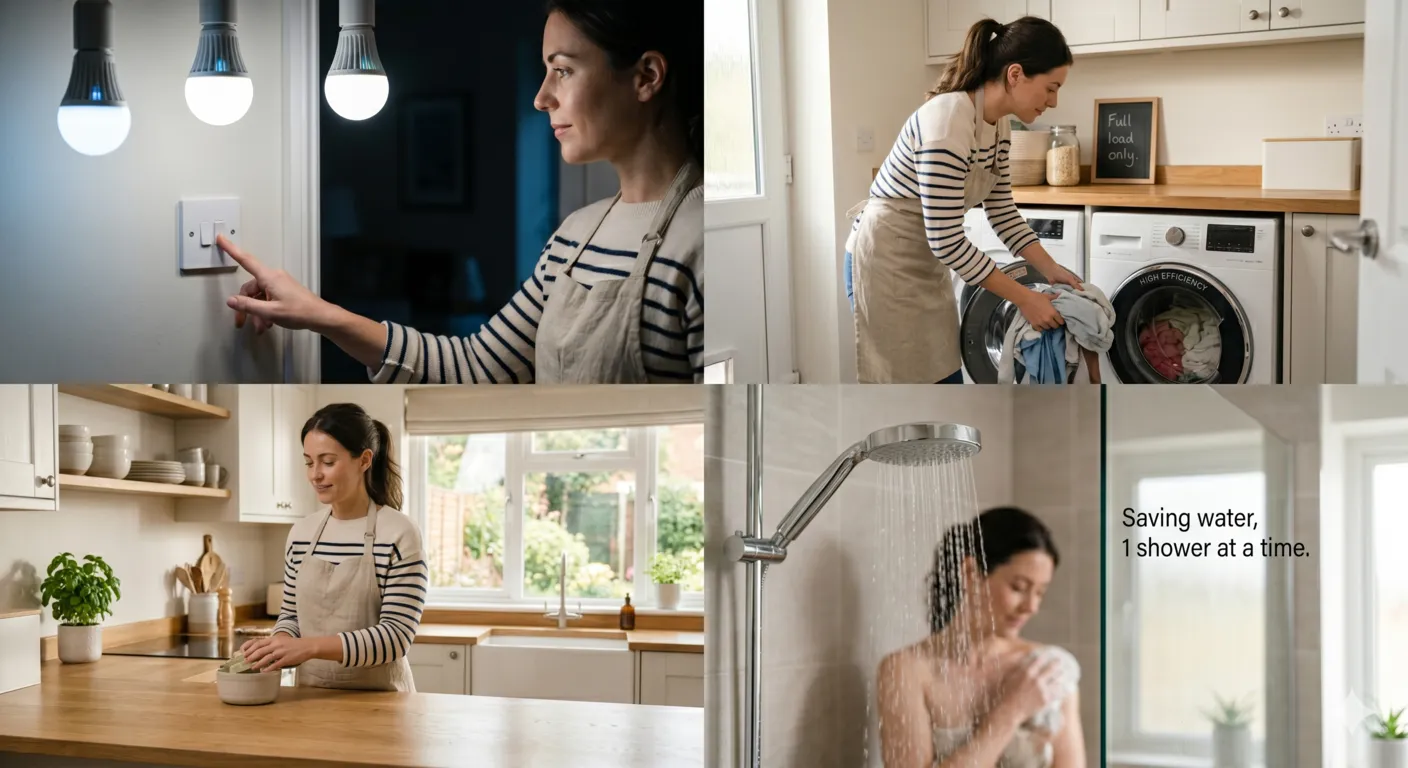
Living with less waste isn’t only about what lands in the trash. Wasted energy and water count too, and trimming them shows up directly on your bills.
These are some of the easiest sustainable habits to set and forget:
- Turn off lights and unplug electronics that sit idle
- Switch to LED bulbs as old ones burn out
- Run the dishwasher and washing machine only when they’re full
- Wash clothes in cold water when you can
- Take slightly shorter showers
- Fix dripping taps and running toilets quickly
Once these are in place, they run quietly in the background. The pitfall is ignoring small leaks — a slow drip wastes a surprising amount of water over a few weeks, and it’s an easy fix that pays for itself.
Create a Habit Routine
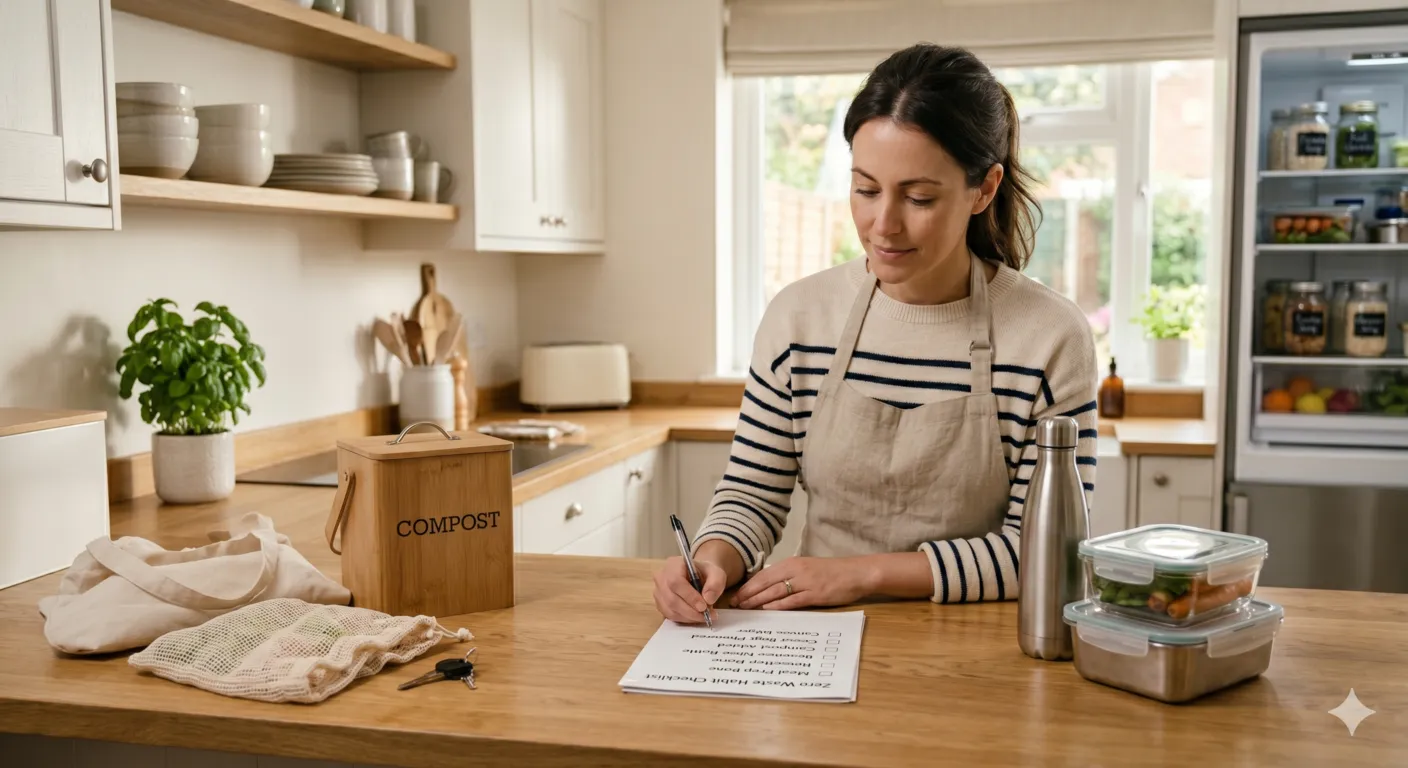
Knowing what to do is the easy part. Making it automatic is the real skill, and it’s where most good intentions either stick or fade. A few simple methods make eco-friendly habits last.
Start with one. Pick the easiest, most visible habit — usually the reusable bottle or bags — and do only that for a couple of weeks before adding anything else.
Stack it onto something you already do. Attach a new habit to an existing one: “After I pour my morning coffee, I pack my bottle and bags by the door.” The old habit becomes the reminder.
Design your space. Put reusable items where you’ll see them and keep a compost bin within arm’s reach of where you cook. Make the better option easy and the wasteful one slightly harder.
Track it lightly. A short checklist works, but honestly, just noticing your trash bag shrink is motivating enough for most people.
Expect to slip. Forgetting your bags one day doesn’t undo your progress — it’s completely normal. Pick the habit back up the next day and keep going.
Add the next habit only once the first feels automatic. This slow stacking is exactly how a genuine plastic-free lifestyle and lasting waste reduction get built — quietly, one routine at a time.
Frequently Asked Questions
How do I start zero waste living as a beginner?
Start with a single habit instead of overhauling everything. Choose something easy and visible — a reusable water bottle or shopping bags — and stick with it for two weeks. Once it feels automatic, add the next one. Slow and steady beats an all-at-once reset that you abandon.
Is a zero waste lifestyle expensive?
It’s cheaper than people assume. Reusables like bottles, bags, and containers pay for themselves over time, and the core habit — buying less and choosing durable items — saves money directly. You don’t need to replace everything with eco products; using what you already own is both the greenest and the most affordable place to start.
Do small daily habits actually make a difference?
Yes, in two ways. Individually, repeated habits add up to a meaningful amount of waste avoided over a year. Collectively, your habits also influence the people around you and signal demand for less wasteful options. It’s reasonable to feel like one person can’t fix everything — but small, consistent actions are exactly how change spreads.
What’s the easiest zero waste habit to start with?
For most people it’s a reusable water bottle or reusable shopping bags. Both replace common single-use items, cost very little, and slot into your day without much thought. They’re confidence-builders that make the next habit feel achievable.
Can I reduce waste in an apartment without a yard?
Absolutely. You can compost indoors with a worm bin or a bokashi bucket, or use a countertop bin and drop scraps at a local food-scrap collection point if your city has one. The reusable-bottle, reusable-bag, meal-planning, and energy-saving habits all work the same whether you have a yard or not.
Final Thoughts
Zero waste living isn’t about perfection or a dramatic before-and-after. It’s a direction you move in, built from small daily zero waste habits that you barely notice once they settle into your routine.
Pick one habit from this list — whichever feels easiest today — and let it become second nature before adding the next. Over a few months, those small choices stack into a noticeably lighter trash bin, a simpler home, and lower bills. Start with one thing this week, and let the rest follow at its own pace.