If you’ve ever stood at your kitchen counter holding a fistful of coffee grounds and banana peels, knowing the trash isn’t the right place for them but not sure what is, you’re already halfway to composting. The missing piece is usually the bin.
Picking the wrong one is the quiet reason most people quit. A bin that’s too small fills up and gets ignored. One that’s a hassle to turn never gets turned. One that smells ends up in the garage, then forgotten. The right bin does the opposite. It fits your space, matches how much food waste your household actually makes, and turns scraps into something useful without becoming a chore.
This guide breaks down the best compost bins for every situation, whether you’ve got a backyard, a balcony, or just a sliver of counter space. We’ll cover what each one does well, where it falls short, and who it’s really for, so you can buy once and start composting at home for good. If you’re brand new to this, see our full guide on how to start composting at home first.
Why Composting Matters
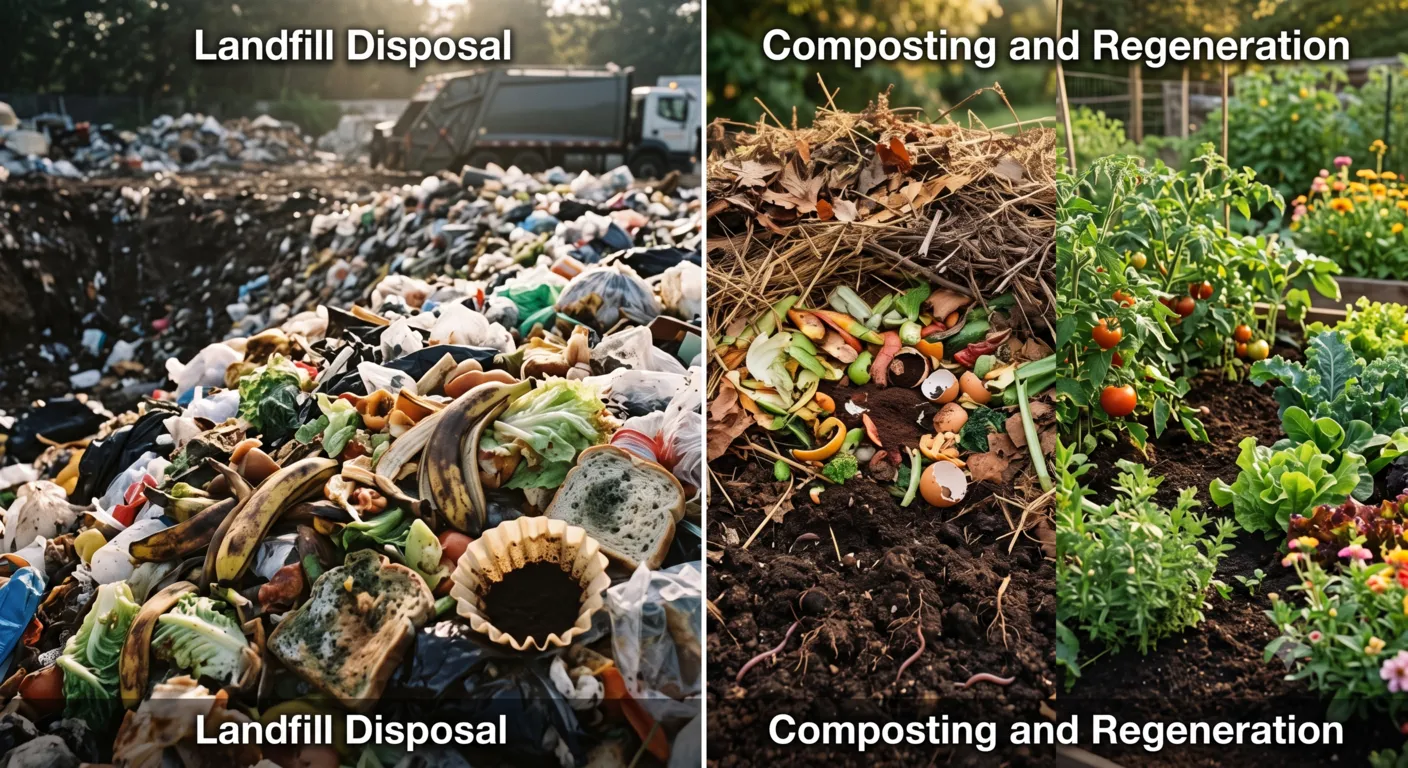
Composting isn’t just a feel-good habit. The numbers behind food waste are genuinely striking.
According to the U.S. Environmental Protection Agency, food is the single most common material sent to American landfills, making up roughly 24% of everything we throw away. Add in yard trimmings, paper, and wood, and organic material accounts for more than half of all landfilled waste.
The problem is what happens next. When food scraps get buried in a landfill, they break down without oxygen and release methane, a greenhouse gas that traps far more heat than carbon dioxide over the short term. The EPA estimates that wasted food is responsible for about 58% of the methane that escapes from landfills. Despite that, only around 5% of wasted food gets composted.
That gap is where your kitchen bin comes in. Composting keeps those scraps out of the landfill and turns them into a dark, crumbly soil conditioner that feeds your garden, your potted plants, or your lawn for free.
The benefits show up in everyday life, too:
- Less trash. Many households cut their garbage volume noticeably once food scraps stop going in the bin. That can mean smaller bags, fewer trips, and sometimes a smaller waste bill.
- Free fertilizer. Finished compost improves soil structure, holds moisture, and feeds plants. You stop buying bagged amendments.
- A simple step toward sustainable living. Composting is one of the most direct waste reduction habits you can build into a full zero waste lifestyle.
You don’t need a farm or a green thumb to start. You just need a bin that fits your life.
How We Chose the Best Compost Bins
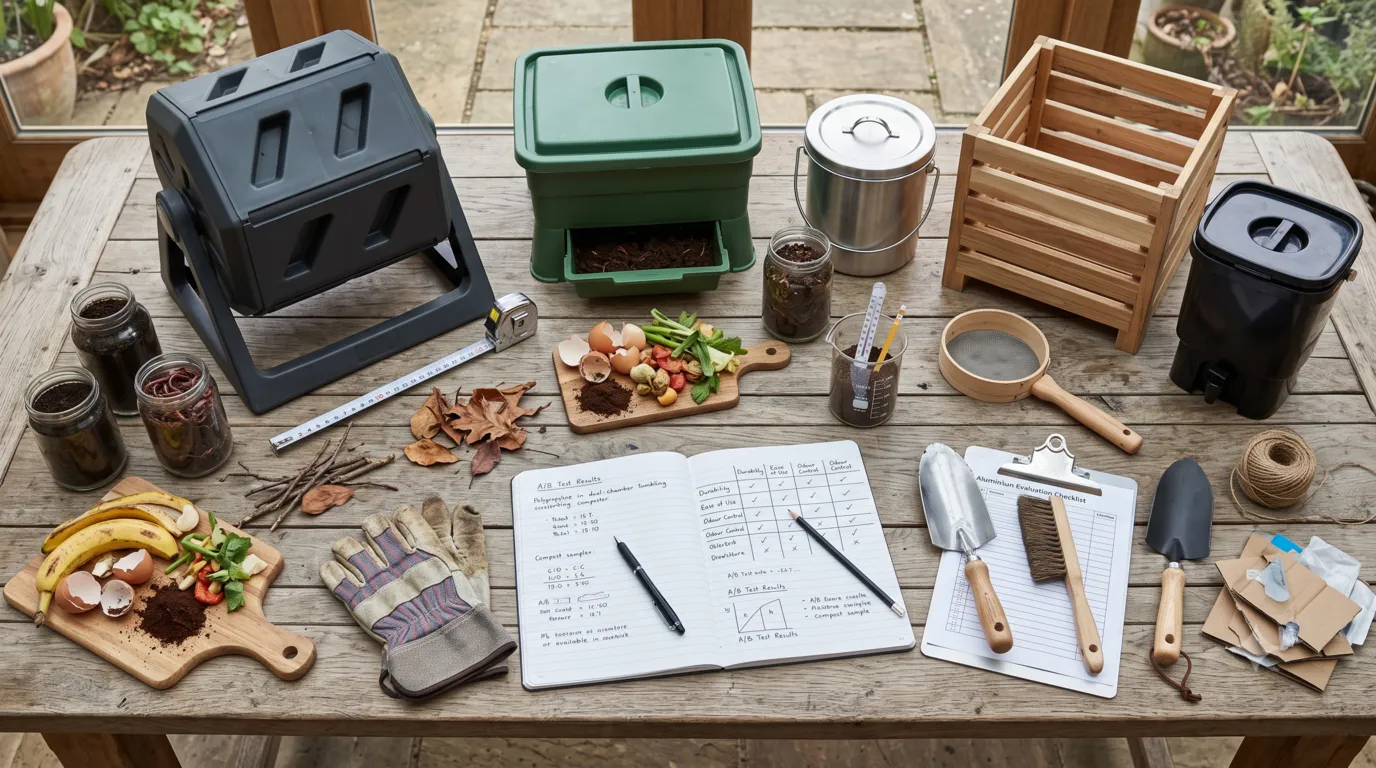
There is no single “best” compost bin, because the right pick depends on your space, your climate, and how much waste you generate. So instead of crowning one winner, we chose a top pick for each common situation.
These recommendations come from comparing the models people buy most against the things that actually make composting work, then weighing those specs against what long-term owners and independent reviewers consistently report. The criteria that mattered most:
- Capacity that matches real households. A bin you fill in two days isn’t useful. We looked at sizing for everything from a one-person apartment to a family with a vegetable garden.
- Airflow and decomposition. Compost needs oxygen. Tumblers, perforated bins, and well-vented designs break material down faster and with less odor.
- Odor and pest control. Charcoal filters, sealed lids, and enclosed designs are the difference between a bin you keep and one you hide.
- Durability and materials. We favored recycled plastic, rust-proof stainless steel, and UV-resistant builds that survive years outdoors.
- Ease of use. Assembly, turning, and harvesting should be manageable for a beginner.
- Honest value. Upfront price matters, but so do ongoing costs like replacement filters, pods, and electricity.
One more thing worth saying plainly: a few of these products don’t all do the same job, and we’ll flag exactly what each one does and doesn’t do as we go.
Best Overall Compost Bin
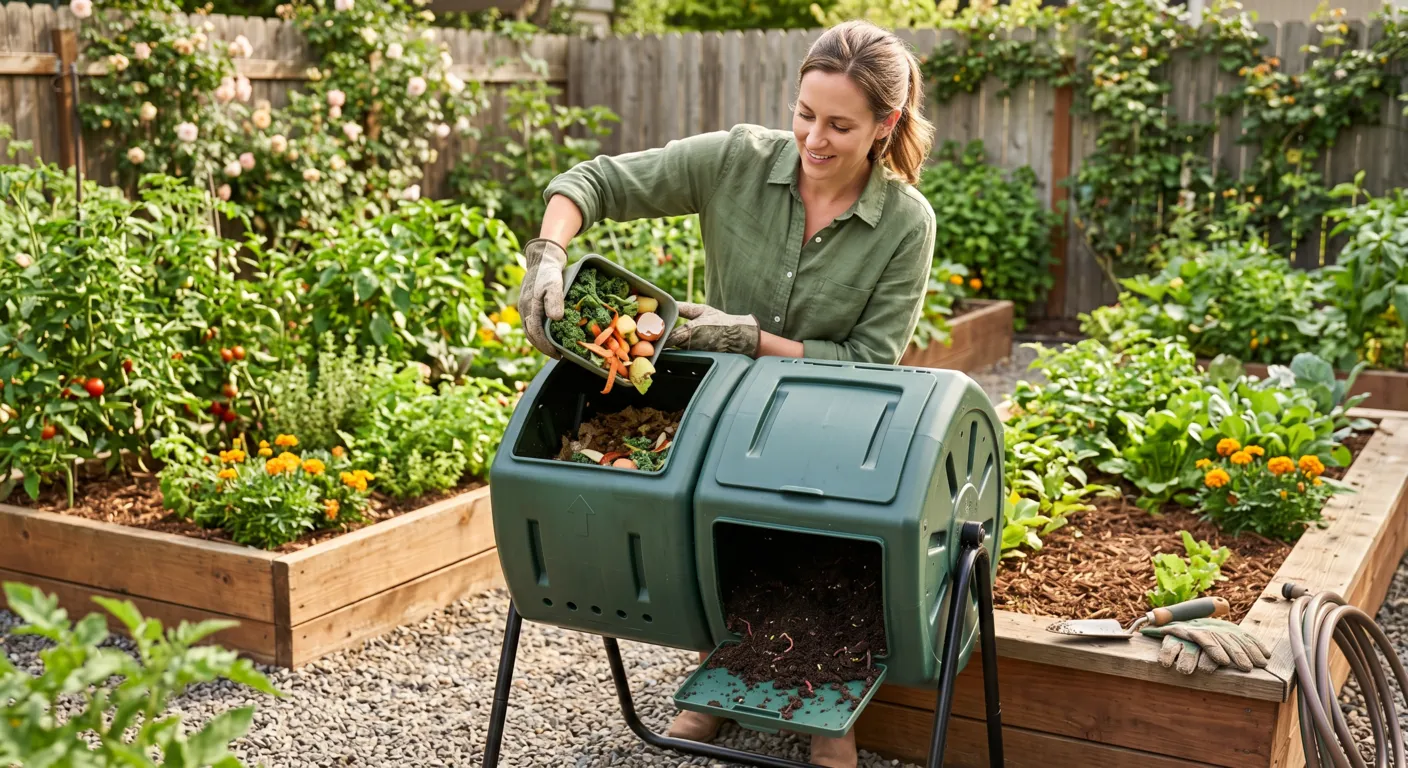
FCMP Outdoor IM4000 Dual-Chamber Tumbling Composter
If you have even a small patch of outdoor space and want a bin that just works, this is the one we’d point most people to first.
The basics: Roughly 37–43 gallons across two chambers, made from 100% post-consumer recycled plastic on a galvanized steel frame. It typically runs around $70–$90.
The dual-chamber design is the reason it earns the top spot. You fill one side while the other “cooks,” then swap, which gives you a steady supply of finished compost instead of one big batch you can’t add to. You give it a spin every two or three days using the molded grips, and in warm weather a batch can finish in a matter of weeks. No shoveling, no wrestling a pile with a pitchfork.
It’s also genuinely beginner-friendly. The sealed, raised drum keeps rain out, keeps smells down, and makes it much harder for raccoons and rodents to get in than an open pile. That’s a big part of why it has tens of thousands of positive owner reviews.
Watch out for: Assembly is the common complaint. There are a lot of bolts, and it goes far smoother with two people and a socket wrench. The drum isn’t insulated, so composting slows down in cold weather, and it gets heavy to turn when full. It’s also not built for large volumes of grass clippings or fall leaves.
Best for: Most homes with a yard, patio, or side return who want a low-mess, manageable composter and steady results without babysitting a pile.
Best Indoor Compost Bin
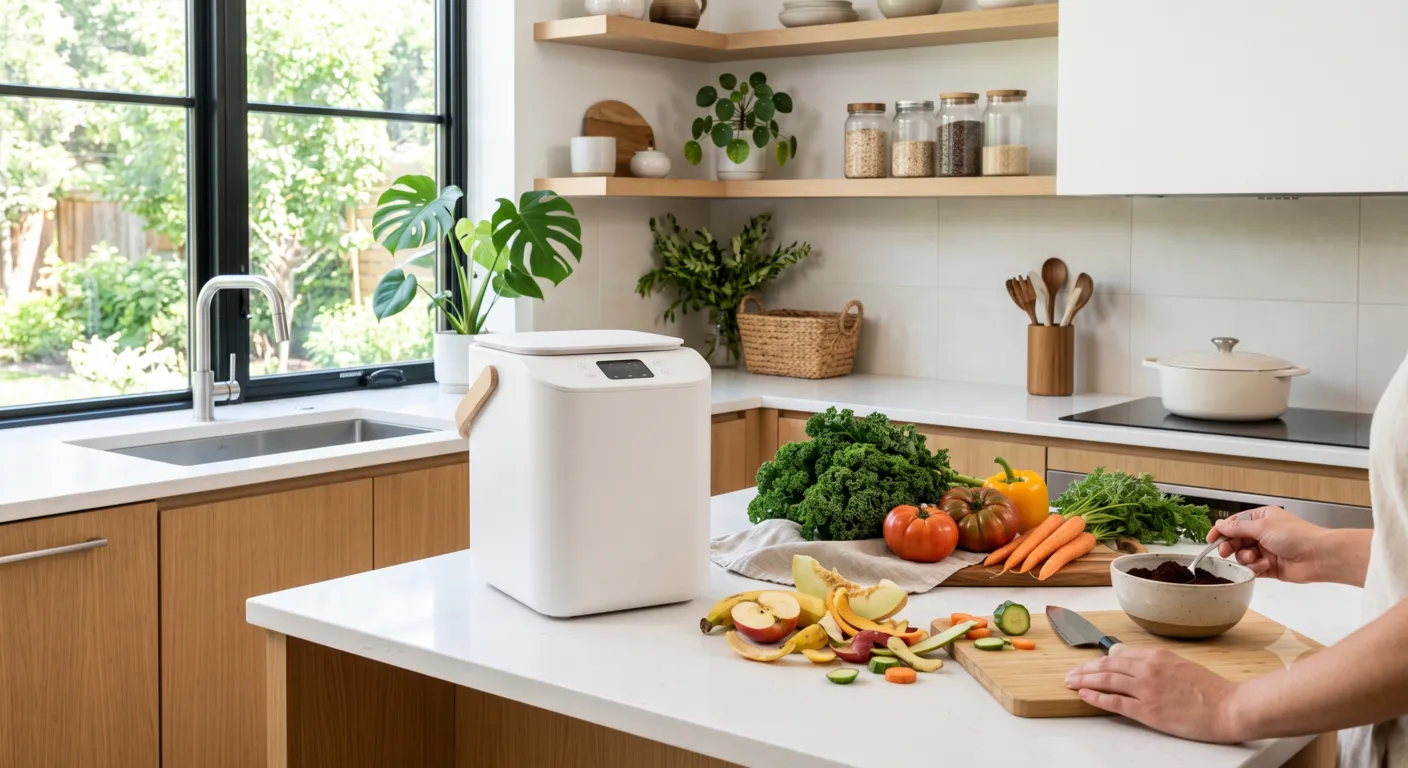
Reencle Electric Composter
This is where things get confusing for shoppers, so let’s clear it up first. Most “electric composters” you’ll see advertised are really food dehydrators. They heat and grind your scraps into a dry, soil-colored material in a few hours. That’s useful for shrinking waste, but it isn’t finished compost. The output, sometimes called pre-compost or “grounds,” still needs to break down in soil or a real compost system before plants can fully use it. Popular grinders like the Vitamix FoodCycler, Lomi, and Mill all fall into this category.
The Reencle works differently, which is why it’s our pick for true indoor composting. It uses living microbes to break food waste down continuously, more like an outdoor pile sped up and shrunk to fit a kitchen.
The basics: Around a 14-liter chamber, processes up to roughly 2.2 pounds of food a day, runs quietly (about 45 decibels), and uses very little electricity. It’s typically about $499 to buy, with a rental option around $35 a month. Replacement filters run roughly $47 a year.
You drop scraps in, including meat and dairy that outdoor bins struggle with, and the microbes keep working around the clock. There’s no big cycle to run and no fruit-fly invasion, which makes it one of the most realistic indoor compost bins for an apartment.
Watch out for: It’s a real investment, and harvesting means scooping and sifting out anything not fully broken down rather than tipping out a clean bucket. It needs floor or counter space, and the filters are a small recurring cost.
Two cheaper ways to compost indoors: If the price is steep, a bokashi bucket ($30–$60) ferments scraps anaerobically with no electricity, though the result needs to be buried or added to soil afterward. A worm bin ($50–$150) produces genuine worm castings, an excellent soil booster, and works quietly under a sink or on a balcony.
Best for: Renters and small-space dwellers with no yard who want real composting indoors and will pay for convenience and a tidy, odor-free process.
Best Outdoor Compost Bin
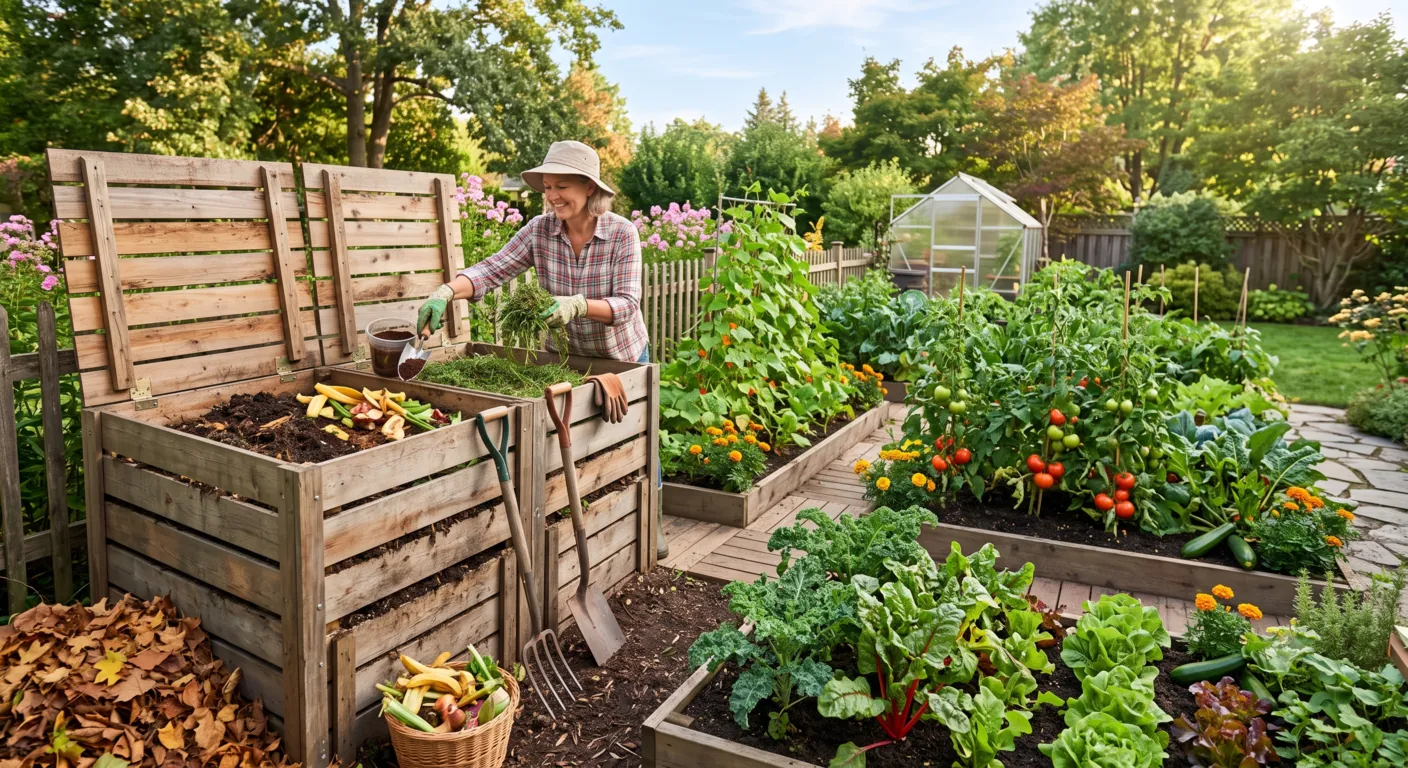
Algreen Soil Saver Classic
If you’ve got real yard space and want to compost in volume without fussing over it, a stationary bin beats a tumbler on sheer capacity, and the Soil Saver is a long-running favorite. Pair it with our backyard composting guide for beginners to get the most out of it.
The basics: Around 94 gallons (roughly 11–13 cubic feet), built from 100% recycled plastic with quarter-inch-thick walls that hold heat well for a passive bin. It has a locking, self-watering lid, two sliding doors at the base for harvesting finished compost, and assembles in under 30 minutes with no tools. Expect to pay somewhere around $90–$120, and it’s backed by a long limited warranty.
This is a “set it and let nature work” composter. It sits open to the ground, so worms and soil microbes move up into the pile on their own. You add kitchen scraps and yard waste from the top, turn it occasionally with a garden fork, and pull finished compost from the bottom hatches. The thick walls and dark color help it stay warm enough to keep things decomposing through much of the year.
Watch out for: Because the bottom is open, it isn’t pest-proof, and determined critters can burrow in. The harvest doors sometimes jam when material packs down. And since it doesn’t tumble, you do the mixing yourself.
For cold climates or faster results: An insulated hot composter like the Green Johanna holds heat through winter and processes a wider range of food waste, though it costs noticeably more.
Best for: Backyard gardeners who generate a steady flow of kitchen and garden waste and want high capacity with minimal daily effort.
Best Budget Option
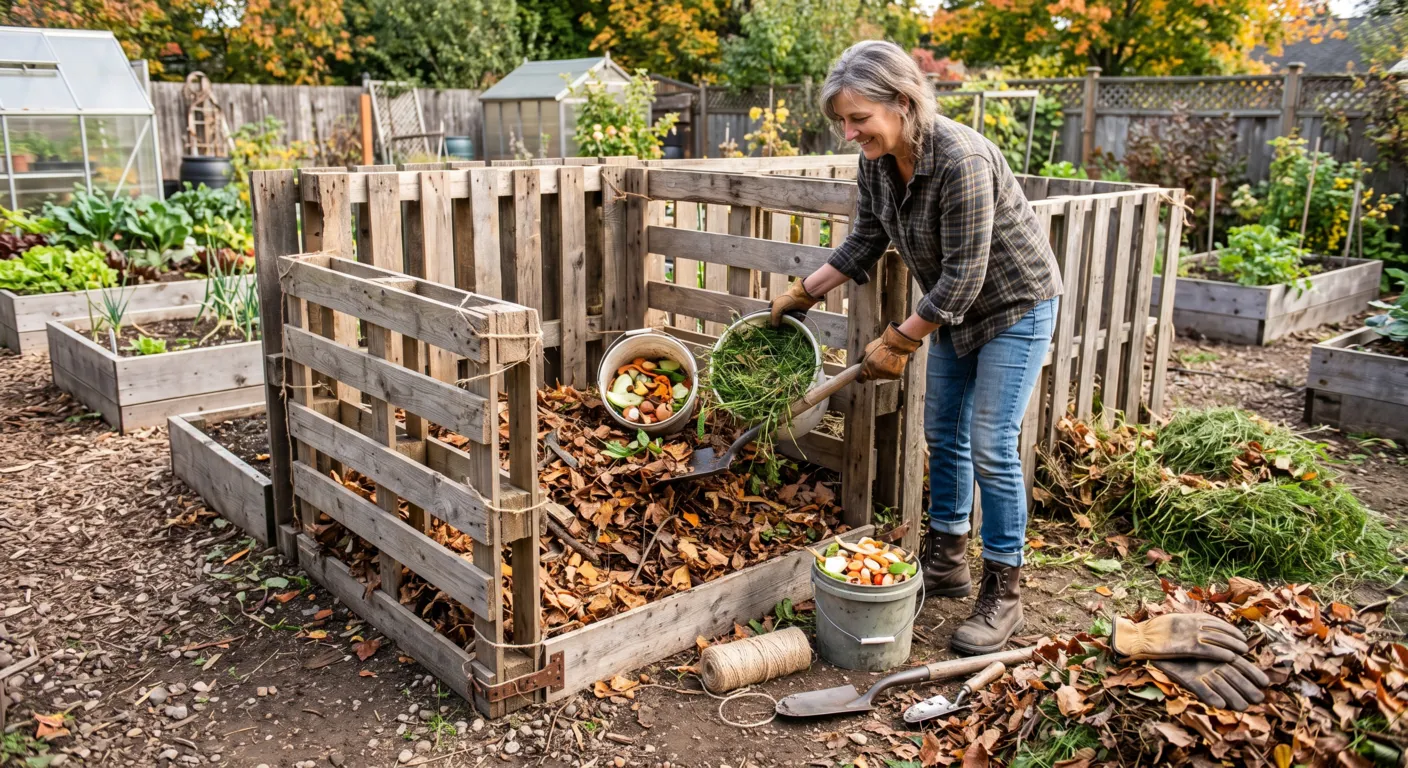
Geobin Expandable Composter
Composting does not have to be expensive, and the Geobin proves it. It’s the cheapest way to get a real, working compost bin rather than just a scrap collector.
The basics: An expandable perforated cylinder that adjusts up to about 246 gallons, made in the USA from recycled-content plastic. It snaps together in roughly five minutes using keyhole slots, and usually costs around $40–$50.
Don’t let the simple design fool you. The open, perforated walls give it excellent airflow, which is exactly what compost needs, and the adjustable size is genuinely handy. Start it small, then expand it as your pile grows or when a neighbor offers you a truckload of leaves. It’s light enough to move around the garden when empty, and the price leaves room in the budget for a countertop bin to go with it.
Watch out for: There’s no insulation, so it’s slower in cold weather, and no floor or solid lid, so rain gets in and it’s best kept in a covered spot. It isn’t pest-proof, the open mesh look won’t win design awards, and the walls can feel flimsy at full expansion.
Even cheaper: If you’re handy, a DIY wire-mesh or wood-pallet bin can cost under $30, or nothing at all if you scavenge pallets.
Best for: Budget-minded gardeners, anyone dealing with lots of leaves and grass clippings, and first-timers who want to start composting at home without a big spend.
Best Countertop Compost Bin
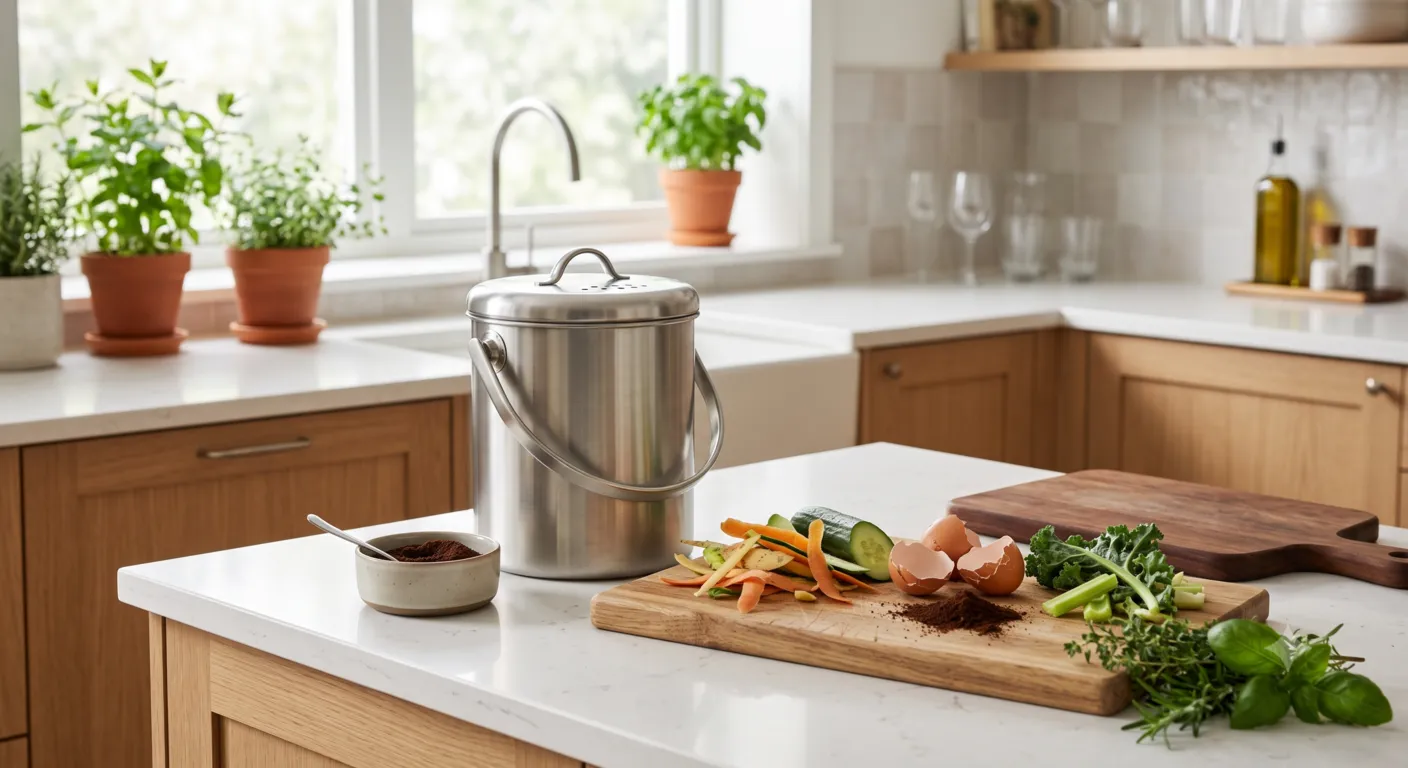
Epica Stainless Steel Countertop Compost Bin
Here’s the clarification that saves a lot of beginner frustration: countertop bins don’t make compost. They’re collectors. Their job is to hold your daily food scraps neatly until you carry them out to a tumbler, an outdoor bin, a curbside green bin, or a community drop-off. Almost every kitchen needs one, and they pair perfectly with any of the composting systems above.
The Epica is the one we’d reach for. It’s a top seller for good reason.
The basics: A 1.3-gallon capacity, molded from a single piece of stainless steel so it won’t leak or rust, with an airtight lid and a replaceable activated-charcoal filter. It usually costs around $25–$35.
Odor control is where it shines. The charcoal filter and sealed lid keep smells contained even with cooked scraps inside, and the stainless steel doesn’t absorb odors or stains the way plastic can over time. The cylindrical shape tucks into a counter corner, and it’s sturdy enough to last for years.
Watch out for: It has no carry handle, which makes the trip to the outdoor bin slightly awkward. The charcoal filters are a small ongoing cost, and cleanup is far easier if you use a compostable liner.
The best-value alternative: The OXO Good Grips Easy-Clean Compost Bin ($20–$30) is a smart pick if you’d rather skip filter costs. It uses a lid that stays open while you cook and a smooth interior that tips out cleanly, though without a charcoal filter you’ll want to empty it more often in warm weather. Other solid kitchen compost bins worth a look include the sleek, door-mountable simplehuman Compost Caddy and the eco-minded Bamboozle bin made from bamboo fiber.
Best for: Every kitchen. Use it as your daily catch-all and empty it into whichever composting system fits your home.
Buying Guide: How to Choose the Right Compost Bin
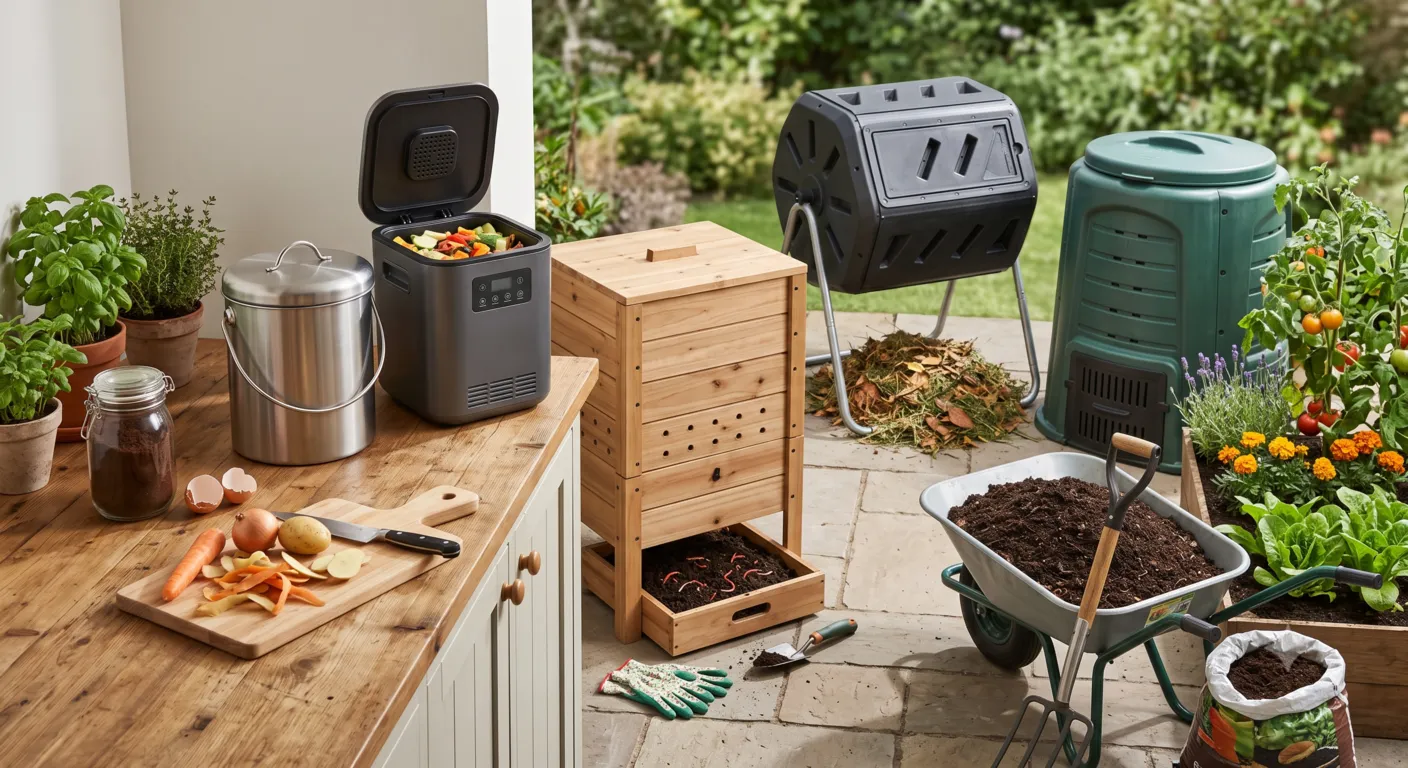
Before you buy, work through these questions. They’ll narrow the field fast.
- Do you want to make compost or just collect scraps? This is the big one. A countertop bin collects. A composter (tumbler, stationary bin, worm bin, or microbial unit) actually breaks waste down. Most people end up wanting both: a collector in the kitchen and a composter outside or a system for indoors.
- How much outdoor space do you have?
- A yard or garden: A tumbler (like the FCMP) or a stationary bin (like the Soil Saver) will serve you well.
- A balcony or patio: A compact tumbler, a worm bin, or a bokashi system fits small footprints.
- No outdoor space at all: Look at an electric microbial composter, a worm bin, or a countertop collector paired with a local drop-off or curbside pickup.
- How much waste does your household make? A rough guide is one to two pounds of food scraps per person per day, more if you cook a lot or have a garden. Size up if you’re feeding yard waste in too. A bin that’s slightly too big beats one that overflows.
- What’s the right type for you?
- Countertop collector: Holds kitchen scraps short-term. No composting happens.
- Tumbler: Sealed, rotating drum. Fast, tidy, pest-resistant, moderate capacity.
- Stationary/passive bin: Large capacity, low effort, slower, open to the ground.
- Electric composter / food recycler: Fast and odor-free, but most just dehydrate scraps into pre-compost rather than finished compost.
- Worm bin (vermicomposting): Produces rich castings, great indoors or out.
- Bokashi: Ferments scraps including meat and dairy, then needs burying.
- In-ground digester: Disposes of food waste into the soil but doesn’t make compost you can scoop out.
- Will it control odor and pests? Look for charcoal filters and sealed lids on kitchen bins, and enclosed or raised designs outdoors. The simplest rule for any home composting system: keep meat, dairy, oily foods, and pet waste out unless your system is specifically built for them.
- Does it suit your climate? Thicker walls and insulation keep compost active in cold winters. Good airflow matters most in hot, humid areas.
- What does it cost to keep running? Factor in replacement filters, microbe pods, electricity, or subscription fees. A cheap machine with pricey filters can cost more over a few years than a higher-priced one.
A quick note on pricing: the figures in this guide are typical ranges and shift with sales and retailers, so check the current price before you buy.
Frequently Asked Questions
What’s the difference between a compost bin and an electric composter?
A compost bin (a tumbler, stationary bin, or worm bin) breaks food and yard waste down into finished compost using microbes, oxygen, and time. Most electric “composters” are actually dehydrators that heat and grind scraps into a dry, soil-like material in hours. That material is a useful waste reducer, but it’s pre-compost and still needs to break down further before it works like true compost. A handful of microbial machines, like the Reencle, are closer to real composting.
Do indoor and kitchen compost bins smell?
Not if you manage them. A sealed lid plus an activated-charcoal filter keeps most countertop bins odor-free for a few days. The simplest habit is to empty the bin regularly, more often in summer, and use a compostable liner. If a bin starts to smell, it’s usually overdue for emptying or holding too many wet scraps without anything dry mixed in.
What can I put in a compost bin?
Aim for a rough balance of “greens” (nitrogen-rich items like fruit and vegetable scraps, coffee grounds, and fresh trimmings) and “browns” (carbon-rich items like dry leaves, shredded paper, and cardboard), leaning toward a bit more brown. For most home setups, leave out meat, fish, dairy, oily or greasy food, and pet waste, since these attract pests and slow things down. Bokashi systems and some microbial machines are exceptions that can handle meat and dairy.
How long does compost take to be ready?
It depends on the method. A tumbler in warm weather can produce usable compost in a few weeks to a couple of months. A passive stationary bin or open pile usually takes several months to a year. Electric machines work in hours, but remember they’re typically making pre-compost, not the finished product.
Do I need a backyard to compost?
No. Plenty of people compost in apartments. A worm bin, a bokashi bucket, or an electric microbial composter all work indoors, and a countertop collector paired with a curbside green bin or a farmers-market drop-off lets you compost with no equipment of your own at all.
Are expensive compost bins worth it?
Sometimes. A $40 Geobin or a simple DIY bin makes excellent compost if you have the space and don’t mind the wait. You’re paying more for convenience, speed, odor control, and indoor use. If a pricier bin is the one that actually fits your kitchen and gets used daily, it’s worth it. The best compost bin is the one you’ll keep using.
Final Verdict
The best compost bins aren’t about spending the most money. They’re about matching the bin to your space and your routine so composting becomes a habit instead of a chore.
For most homes with a yard, the FCMP Outdoor IM4000 tumbler is the easiest all-around choice. Renters and small-space dwellers will get the most from the Reencle for real indoor composting, or a low-cost worm bin or bokashi bucket. Gardeners working with volume should look at the Algreen Soil Saver Classic, while anyone on a budget can start strong with the Geobin. And nearly every kitchen benefits from a countertop collector like the Epica to catch scraps day to day.
Pick the one that fits your life, set it up this week, and start turning what you’d normally throw away into something that gives back to your soil. That first batch of dark, earthy compost is more satisfying than you’d expect.