You rinse out the yogurt cups, flatten the cardboard, sort glass from plastic, and roll the bin to the curb feeling like you’ve done your part. A week later the bin is full again. And again. At some point most people start to wonder whether all that careful recycling is really changing anything.
Here’s the honest answer: recycling helps, but it was never meant to be the main event. It’s the cleanup crew, not the game plan.
The 5 Rs of zero waste flip the usual thinking around. Instead of asking “how do I deal with all this trash?” they ask “how do I avoid creating it in the first place?” The framework gives you five actions in a deliberate order — Refuse, Reduce, Reuse, Recycle, Rot — and that order is the entire point.
In this guide I’ll walk through each of the five, explain why recycling sits surprisingly low on the list, and show you how to put the 5 Rs to work in a normal home without turning your life upside down.
What Are the 5 Rs?
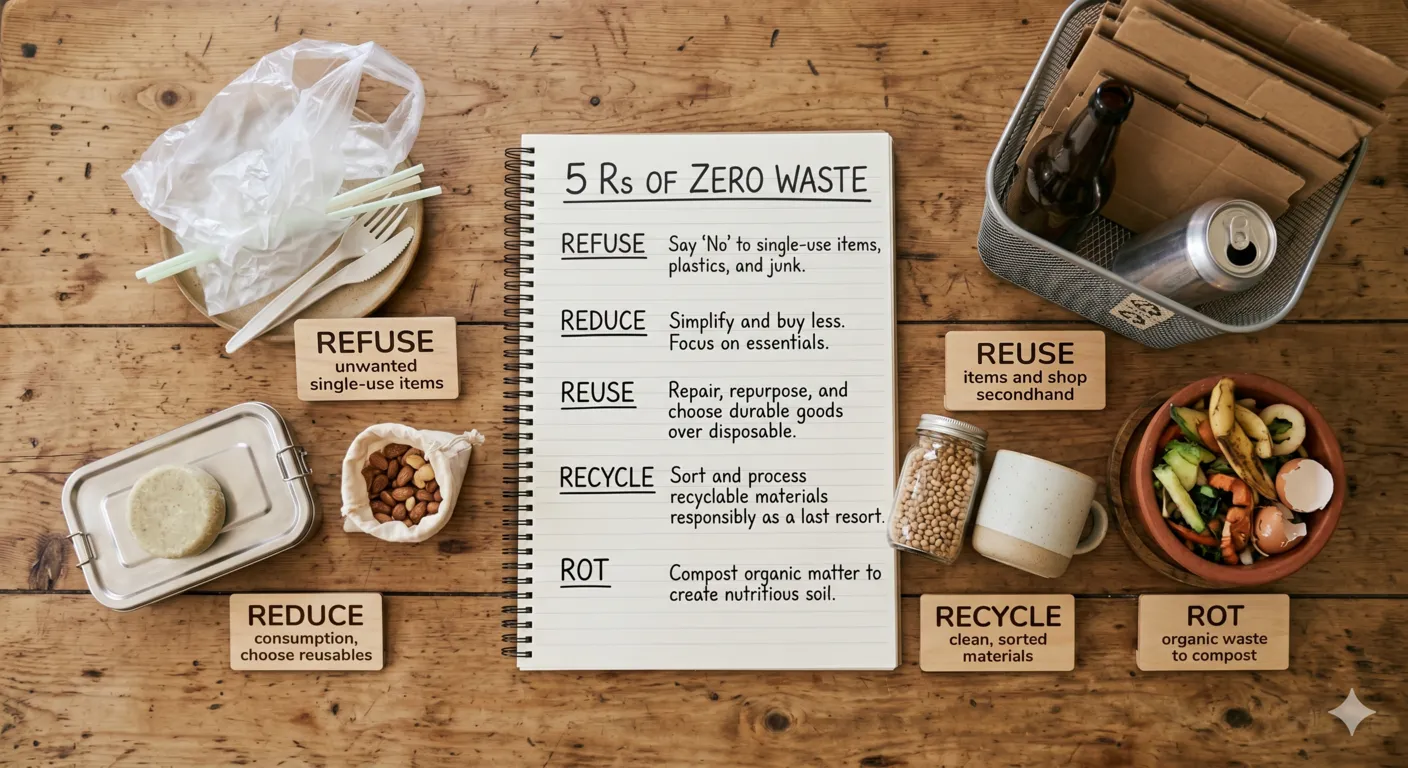
The 5 Rs of zero waste are five steps for cutting household waste, listed in order of priority: Refuse, Reduce, Reuse, Recycle, and Rot. You work through them top to bottom — refuse what you can, then reduce, then reuse, and only recycle or compost whatever is left.
The framework was popularized by Bea Johnson in her book Zero Waste Home, it has become one of the core principles behind building a zero waste lifestyle.
The order matters more than people expect. Most of us grew up with “reduce, reuse, recycle” — three Rs, with recycling treated as the hero. The 5 Rs add two powerful steps at the front (refuse and rot) and quietly move recycling down to fourth. The reasoning is simple: the best piece of waste is the one that never enters your home.
Picture a funnel. Each R catches what the step above it couldn’t, so by the time something reaches the bottom, there’s very little left to throw away.
Refuse

Refusing means saying no to things you don’t need before they ever become your problem. It’s the most overlooked step and the most powerful, because nothing you refuse can ever end up in a landfill.
In daily life, refusing looks like:
- Turning down freebies, swag bags, and conference tote bags you’ll never use
- Skipping the plastic cutlery and napkins with takeout
- Declining the receipt when you don’t need it
- Saying “no straw, please” before it lands in your glass
- Opting out of junk mail and catalogs
A common mistake: accepting things out of politeness, then feeling guilty when they sit unused in a drawer. A friendly “no thanks, I’m good” is enough. You’re not being rude — you’re refusing clutter and waste at the same time.
Start small. Pick one freebie you habitually accept and practice turning it down this week. It feels awkward for about three days, then it becomes automatic.
Reduce
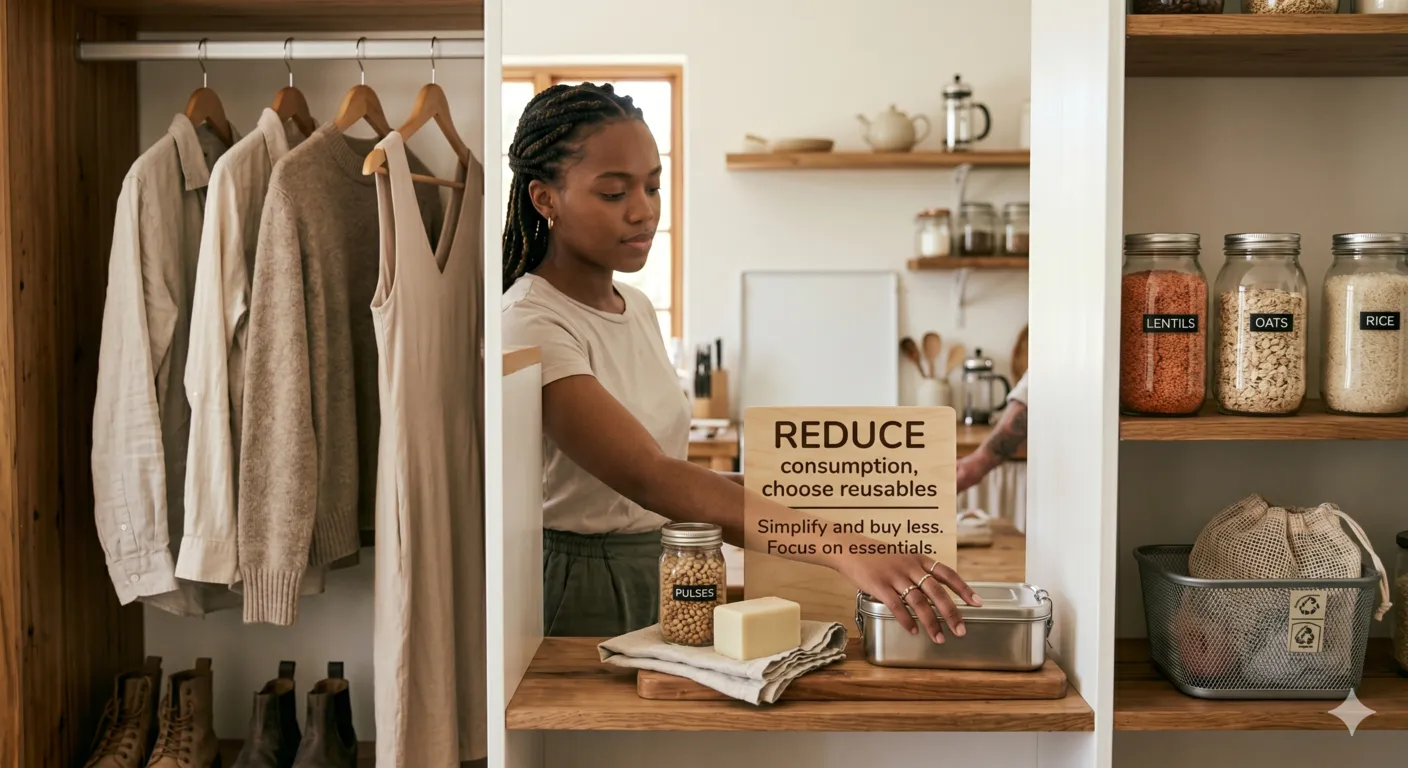
Reduce is about owning and buying less in the first place. Once you stop the flow of unnecessary stuff coming in, you naturally have less to store, clean, repair, and eventually throw out.
Reducing in practice:
- Buy what you’ll actually use instead of stocking up on deals you won’t finish
- Choose quality items that last over cheap ones you’ll replace in a year
- Borrow or rent tools you only need occasionally
- Declutter thoughtfully, then donate or sell rather than bin
- Shop your own pantry and closet before buying more
Reducing is where the cost savings really show up. Buying less means spending less, and waste reduction at home often pays for itself within a few months.
A common mistake: treating “reduce” as a one-time decluttering spree. The goal isn’t a single weekend purge — it’s slowing the incoming tide so you don’t refill the same shelves three months later.
Reuse

Reuse means getting more than one life out of the things you already own, and choosing reusables over disposables wherever you can. This is where a plastic-free lifestyle starts to feel less like sacrifice and more like an upgrade.
Reuse looks like:
- Carrying a reusable water bottle, coffee cup, and shopping bags
- Keeping glass jars from sauces and using them for leftovers, grains, or storage
- Switching to cloth napkins, beeswax wraps, and rags instead of paper towels
- Buying secondhand clothes, furniture, and electronics
- Repairing a torn seam or a loose handle instead of tossing the item
There’s an important difference between reuse and recycle. Reusing keeps an object intact and useful as it is. Recycling breaks it down to make something new, which takes energy. Reuse skips that step entirely, so it almost always comes out ahead.
A common mistake: buying a huge collection of “eco” reusables you don’t need. Five matching bamboo lunch kits aren’t sustainable if four stay in the cupboard. Use what you have first.
Recycle
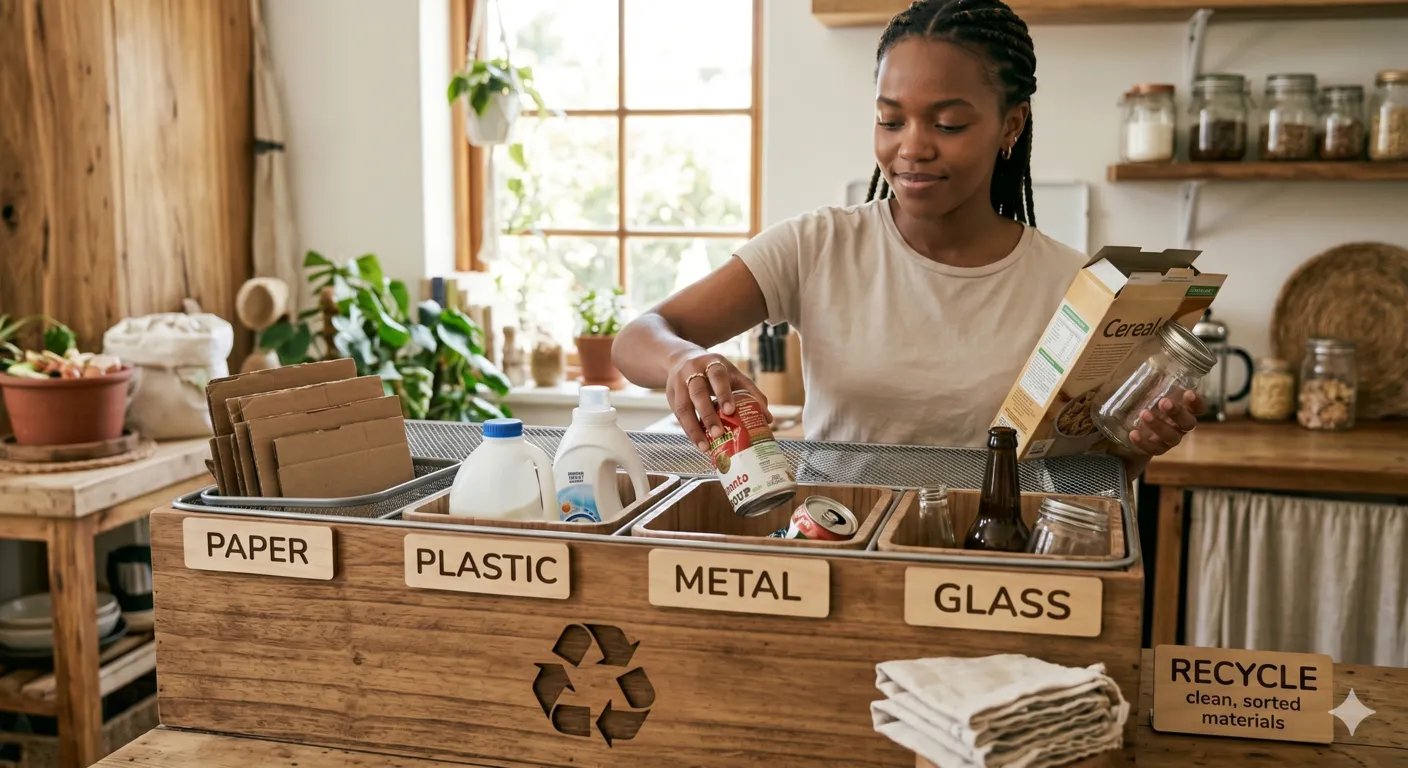
Recycling is processing materials you can no longer refuse, reduce, or reuse so they can be turned into something new. It’s a genuinely useful tool — it just belongs near the end of the list, not at the front.
To recycle well:
- Check your local rules, because accepted materials vary by city and even by week
- Rinse containers so food residue doesn’t contaminate a whole batch
- Keep recyclables loose and dry rather than bagged, unless your program says otherwise
- Learn the resin codes on plastics and which numbers your facility actually accepts
The biggest mistake here is “wishcycling” — tossing something in the bin and hoping it’s recyclable. Greasy pizza boxes, plastic film, and tangled cords can jam machinery or spoil an otherwise good load. When in doubt, look it up; if you can’t confirm it, leave it out.
Recycling also has real limits. Many materials, especially plastics, lose quality each time they’re processed and can only be recycled a handful of times before they’re no good. That’s a big reason it sits where it does.
Rot (Composting)

Rot means letting organic waste break down naturally into compost instead of sending it to landfill. Food scraps and yard trimmings make up a large share of what households throw away, so composting at home can shrink your trash dramatically.
You have several options, depending on your space:
- Backyard compost bin or pile — ideal if you have outdoor space and yard waste
- Worm bin (vermicomposting) — compact and odor-free when balanced, great for apartments
- Bokashi bucket — ferments scraps (including some meat and dairy) in a sealed container indoors
- Municipal or community composting — a drop-off site or curbside green-bin program if home setups aren’t practical
What you can usually compost: fruit and vegetable scraps, coffee grounds and filters, eggshells, tea, and yard clippings. What to keep out of a basic backyard pile: meat, dairy, oils, and pet waste, which attract pests and slow things down.
A common mistake: a wet, smelly bin. Compost needs a rough balance of “greens” (wet food scraps) and “browns” (dry leaves, cardboard, shredded paper). If it stinks, add more browns and mix it.
The payoff is twofold — less trash leaving your home, and free, rich soil for plants, a garden, or a few pots on a balcony.
Why Recycling Comes Fourth
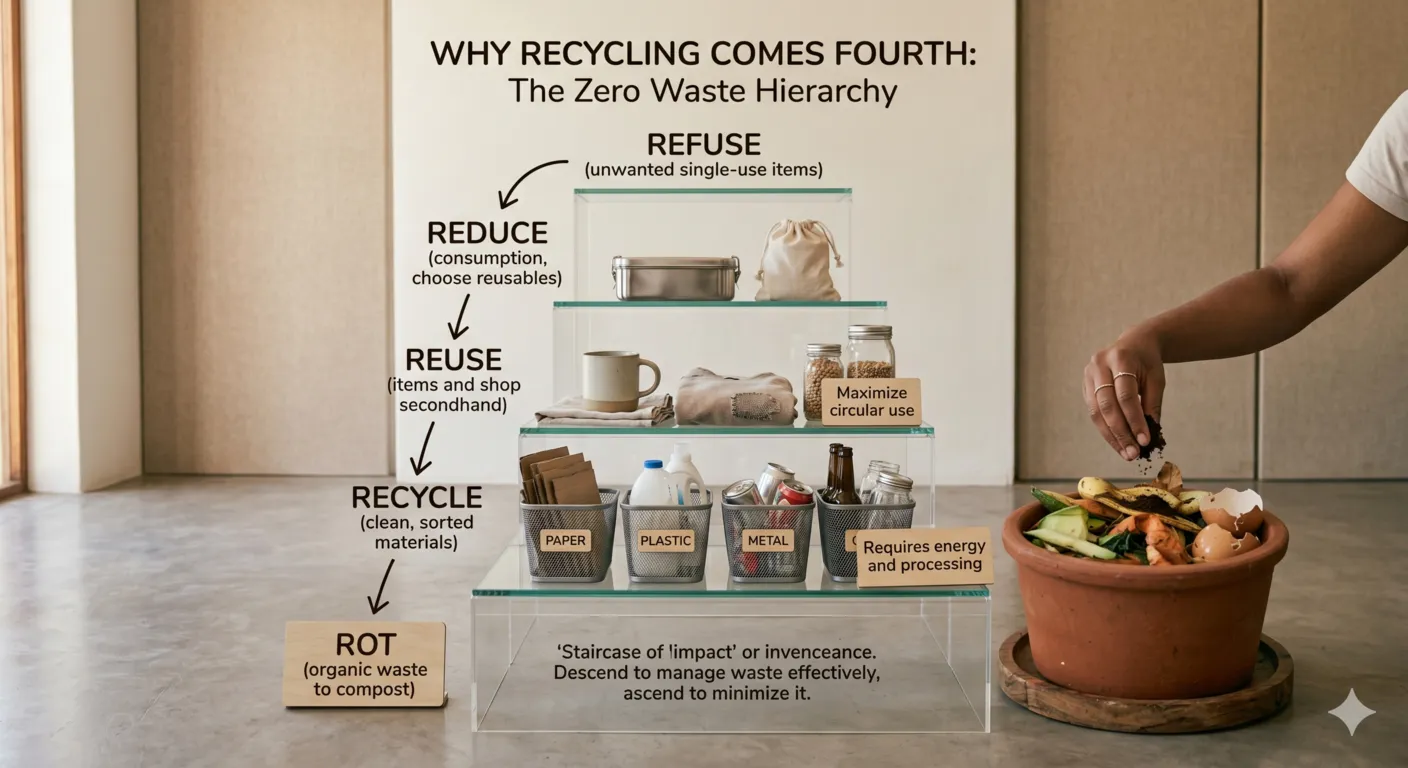
This is the question that trips up almost everyone new to the 5 Rs. If recycling is good, why isn’t it higher?
Because recycling is a last resort dressed up as a first response. By the time something reaches your recycling bin, it has already been manufactured, packaged, shipped, sold, and used. All of that took energy and raw materials. Recycling recovers a fraction of that value, but it can’t undo the cost of making the thing in the first place.
Three points explain the ranking:
- Recycling still uses energy and resources. Collecting, sorting, cleaning, and reprocessing materials all have a footprint. Refusing and reducing avoid that footprint completely.
- Many materials degrade. Plastic in particular usually gets “downcycled” into lower-grade products and can’t be recycled endlessly. Glass and metal hold up better, but the process still isn’t free.
- Not everything labeled recyclable actually gets recycled. Local capacity, contamination, and market demand all affect what’s truly processed versus what quietly ends up in landfill.
None of this means you should stop recycling. It means recycling works best as a safety net for the few things you couldn’t avoid — not as permission to keep consuming disposables because “it’s recyclable.” Prevent first, recycle last. If you want the fuller picture of how these two ideas relate, see our breakdown of recycling vs. zero waste.
Real-Life Examples

The 5 Rs click into place once you see them in ordinary moments. Here’s how the order plays out in everyday situations.
At the coffee shop. You refuse the disposable cup and hand over your own. If you forgot it, you reduce by drinking in with a ceramic mug instead of grabbing a to-go cup. The paper cup only enters the picture as a last resort, and even then the sleeve might be recyclable and the grounds compostable.
Buying a gift. You reduce by choosing one thoughtful, lasting item over a pile of small things. You reuse a gift bag or wrap it in a cloth or a page from a magazine. Whatever paper is left can be recycled.
Cleaning out the fridge. Vegetable peels, that forgotten half-onion, and coffee grounds go to rot in your compost rather than the trash. The glass jar the pickles came in gets reused for leftovers.
Notice the pattern: trash is the exception, not the default. You’re climbing down the list only as far as you have to.
Applying the 5 Rs at Home

You don’t need to overhaul everything at once. Pick one room, build a couple of eco-friendly habits, then move on. Here’s a realistic starting plan. If you’re building all of this from scratch, our full guide on how to start a zero waste lifestyle walks through the same idea step by step.
Kitchen (start here).
- Set up a small countertop compost bin for scraps
- Keep a few cloth bags and reusable produce bags by the door for shopping
- Swap paper towels for a stack of rags or cloths
- Buy pantry staples in bulk using your own jars where you can
Bathroom.
- Replace plastic toothbrushes with bamboo and try a bar of shampoo or soap
- Refuse single-use razors in favor of one with replaceable blades
- Choose products in glass or aluminum over plastic when there’s a clear option
Shopping and errands.
- Keep a small kit in your bag: a water bottle, a coffee cup, a tote, and a set of cutlery
- Shop secondhand first for clothes, furniture, and tools
- Choose loose produce over the pre-bagged, shrink-wrapped version
A simple weekly routine: before you buy anything, run it through the funnel. Can I refuse this? Do I actually need it (reduce)? Can I get it secondhand or use something I already own (reuse)? Over a few weeks this becomes second nature, and your trash bag gets noticeably lighter.
Progress beats perfection here. Cutting your household waste by half is a real, meaningful win, even if you never hit literal zero.
Frequently Asked Questions
What are the 5 Rs of zero waste in order?
The 5 Rs are Refuse, Reduce, Reuse, Recycle, and Rot, in that order. You refuse what you don’t need, reduce what you do, reuse what you can, recycle what’s left, and rot (compost) the rest.
Who created the 5 Rs of zero waste?
The 5 Rs were popularized by Bea Johnson in her book Zero Waste Home. She expanded the familiar “reduce, reuse, recycle” by adding “refuse” at the start and “rot” at the end, and arranged all five in order of priority.
Why is recycling listed fourth instead of first?
Because recycling still uses energy and raw materials, and many items degrade or aren’t actually processed. Refusing and reducing prevent waste entirely, which is far more effective than dealing with it after the fact. Recycling works best as a safety net.
What’s the difference between reduce and reuse?
Reduce means owning and buying less so fewer items enter your home. Reuse means getting more life out of things you already have, like refilling jars or buying secondhand, instead of using disposables.
Do I need a backyard to compost?
No. Apartment dwellers can use a worm bin or a bokashi bucket indoors, or drop scraps at a community composting site or curbside green-bin program. Composting at home is possible in almost any living situation.
Is zero waste realistic for a beginner?
Yes, as long as you treat it as a direction rather than a finish line. Most people start with one or two changes in the kitchen and build from there. Cutting your waste meaningfully is a genuine success, even without reaching a literal zero.
Final Thoughts
The 5 Rs aren’t a rigid set of rules — they’re a way of thinking that takes the pressure off recycling and puts it where it does the most good. Refuse, reduce, reuse, recycle, rot. Work the list from the top, and most of your waste disappears before it ever becomes waste.
You don’t have to do all five perfectly tomorrow. Refuse one freebie. Start one compost bin. Carry one reusable bag. Each small habit stacks on the last, and before long a lighter trash can just becomes normal. That’s the quiet power of these zero waste principles: they make sustainable living feel less like a project and more like the obvious way to live.