You decide to go zero waste. You order a set of glass jars, a bamboo toothbrush, three reusable bags, and a shiny stainless steel straw. Two weeks later the straw is buried in a drawer, you’ve left your tote at the store twice, and your trash can looks about the same as it always did.
If that sounds familiar, you’re in good company. Most people don’t give up on zero waste because it’s too hard. They give up because they walk straight into a handful of predictable traps that make the whole thing feel exhausting and pointless.
The good news is that these mistakes are easy to spot once you know what to look for. Below are the most common zero waste mistakes beginners make, why they happen, and what to do instead so your effort actually sticks. Fixing them is often the difference between giving up after two weeks and actually building a lasting zero waste lifestyle. Here’s a quick look at what we’ll cover:
Here’s a quick look at what we’ll cover:
- Trying to be perfect from day one
- Throwing away usable items
- Buying too many “eco” products
- Ignoring food waste
- Owning reusables but forgetting to use them
- Expecting immediate results
- Comparing your progress to everyone else’s
Let’s go through each one.
Mistake 1: Trying to Be Perfect
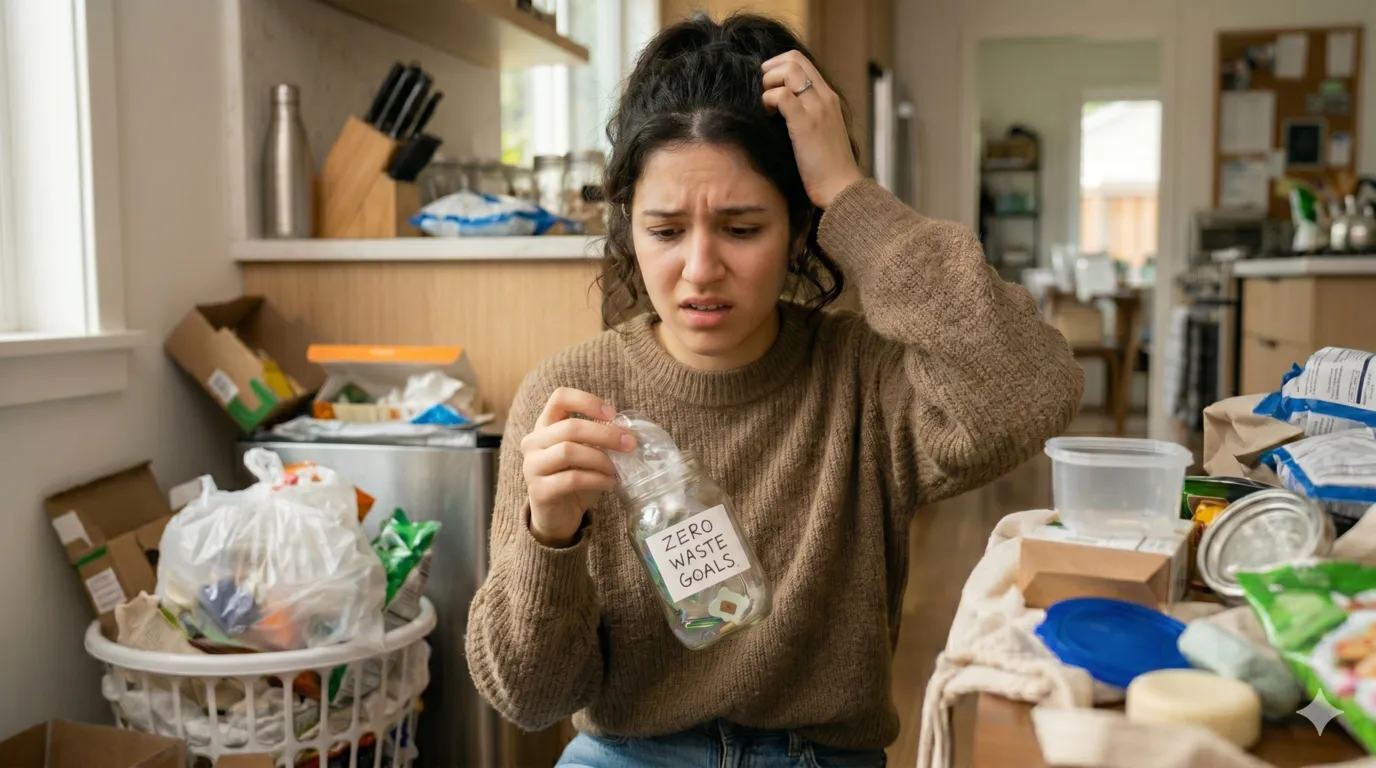
The biggest zero waste mistake has nothing to do with what you buy. It’s the all-or-nothing mindset.
You’ve probably seen the photos: someone holds up a single small jar and says it holds a whole year of their trash. It’s impressive, but it’s also an extreme version of this lifestyle, and treating it as the starting line sets you up to fail.
When perfect is the only acceptable result, every piece of plastic packaging feels like a failure. That guilt builds up fast, and most people quit within a few weeks.
The fix is to aim for less waste, not zero waste. Sustainable living is a direction, not a finish line. Switching to a refillable water bottle is a real win, even if your bin isn’t photo-ready. Pick one habit, get comfortable with it, then add the next. For ideas on what to pick first, see our list of daily zero waste habits for beginners.
Mistake 2: Throwing Away Usable Items
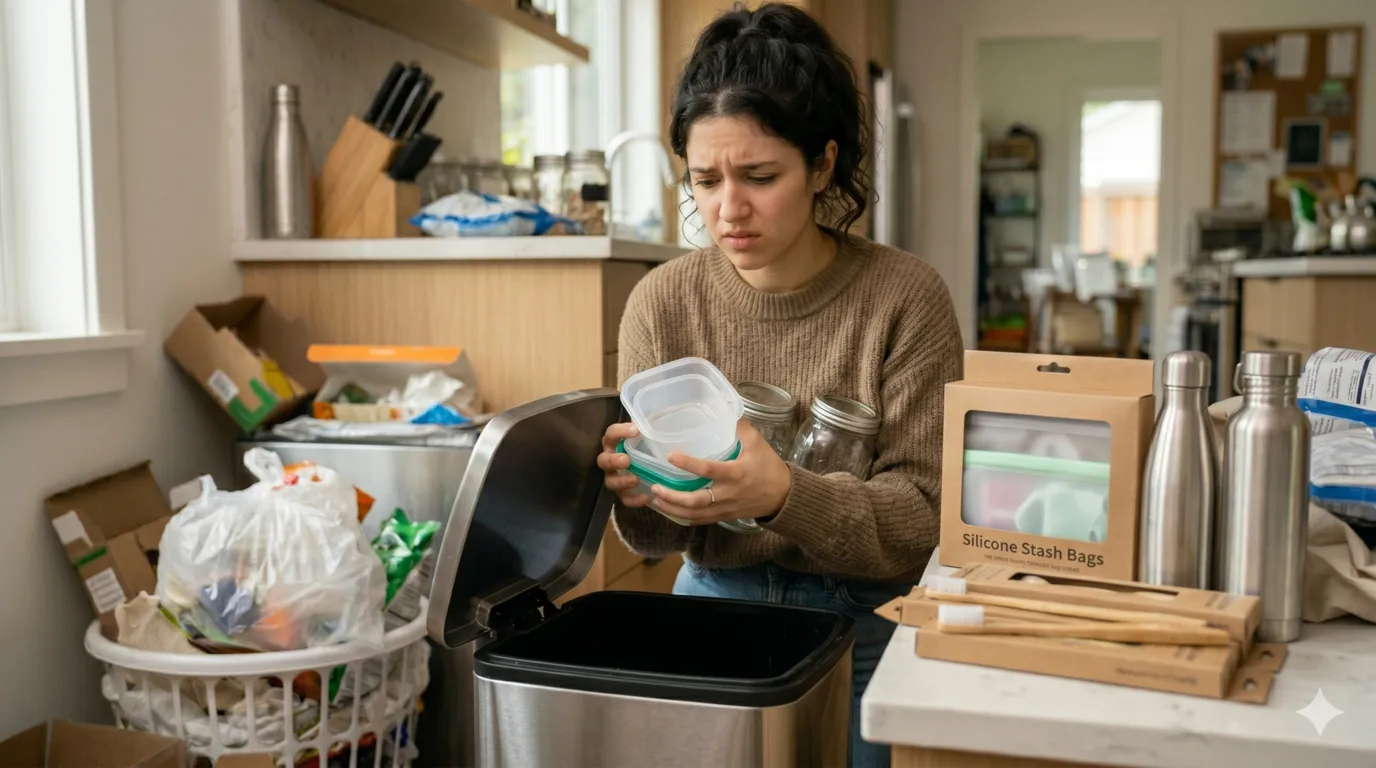
This one is sneaky because it feels productive. You get motivated, so you clear out all your plastic containers, your old toothbrush, and half-used bottles of shampoo to “start fresh” with eco-friendly versions.
The problem is obvious once you say it out loud: you just created a pile of waste in the name of reducing waste.
The most sustainable product is almost always the one you already own. Those plastic food containers still work. That toothbrush still cleans your teeth. Throwing them out early wastes the resources used to make them, and the new items you buy carry their own footprint.
What to do instead:
- Use what you have until it genuinely wears out
- Replace items one at a time, as they break or run out
- When you do replace something, choose a durable, refillable, or plastic-free option
A scratched plastic container that gets used for three more years is far better for the planet than a brand-new glass one bought to replace it today.
Mistake 3: Buying Too Many “Eco” Products
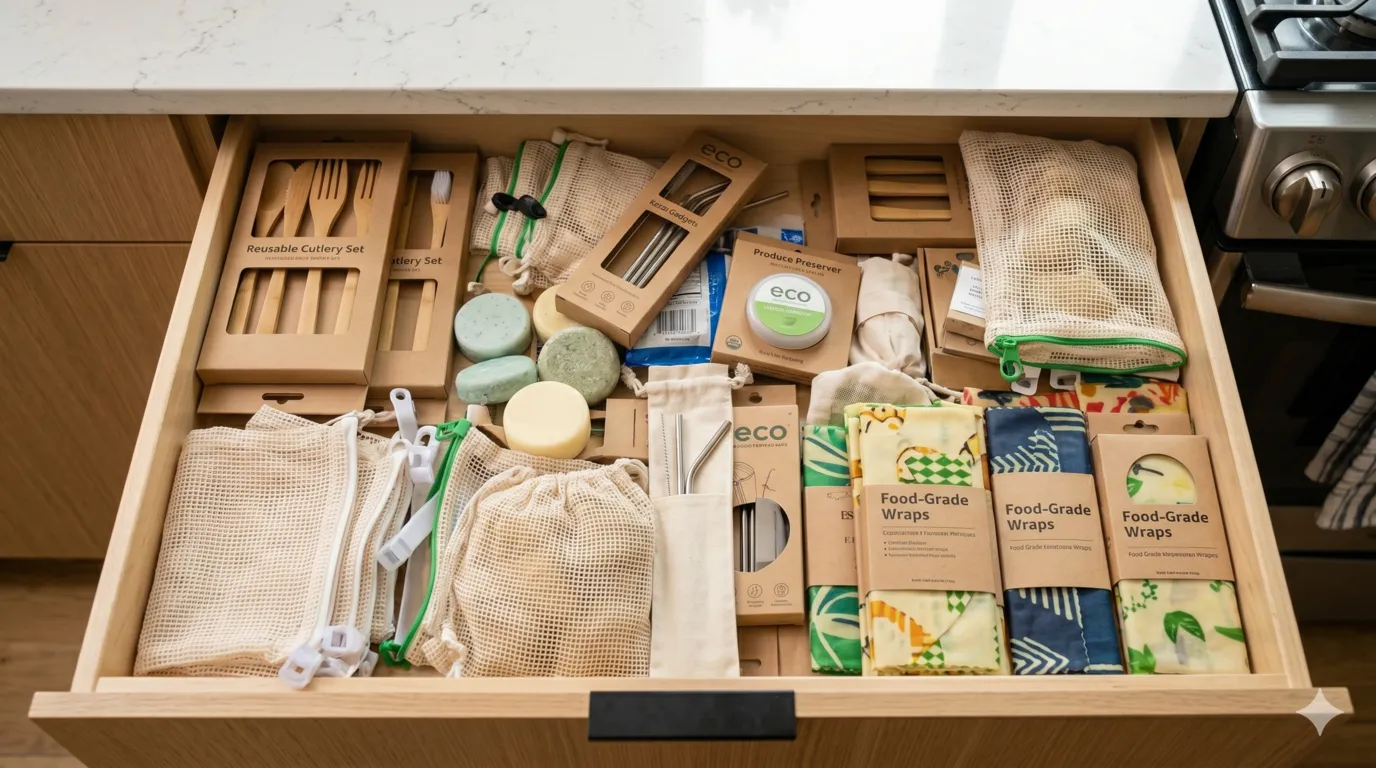
Going zero waste can quietly turn into a shopping spree. Bamboo cutlery, beeswax wraps, a set of produce bags, a second set of produce bags in a nicer color. It feels like progress because everything has a green label.
But buying is still buying. Every product uses materials, energy, and packaging to reach your door, no matter how natural it looks. A drawer full of unused “sustainable” gadgets is just clutter with a clean conscience.
Watch out for greenwashing too. Words like “natural,” “green,” and “eco” aren’t tightly regulated, so they don’t always mean much. A plastic bottle labelled “made with recycled material” is still a plastic bottle.
Before buying anything, ask one question: do I need this, or do I just like the idea of it? Many of the best zero waste swaps are free. Glass jars from pasta sauce make excellent storage. An old t-shirt becomes cleaning rags. You probably already own most of what you need.
Mistake 4: Ignoring Food Waste
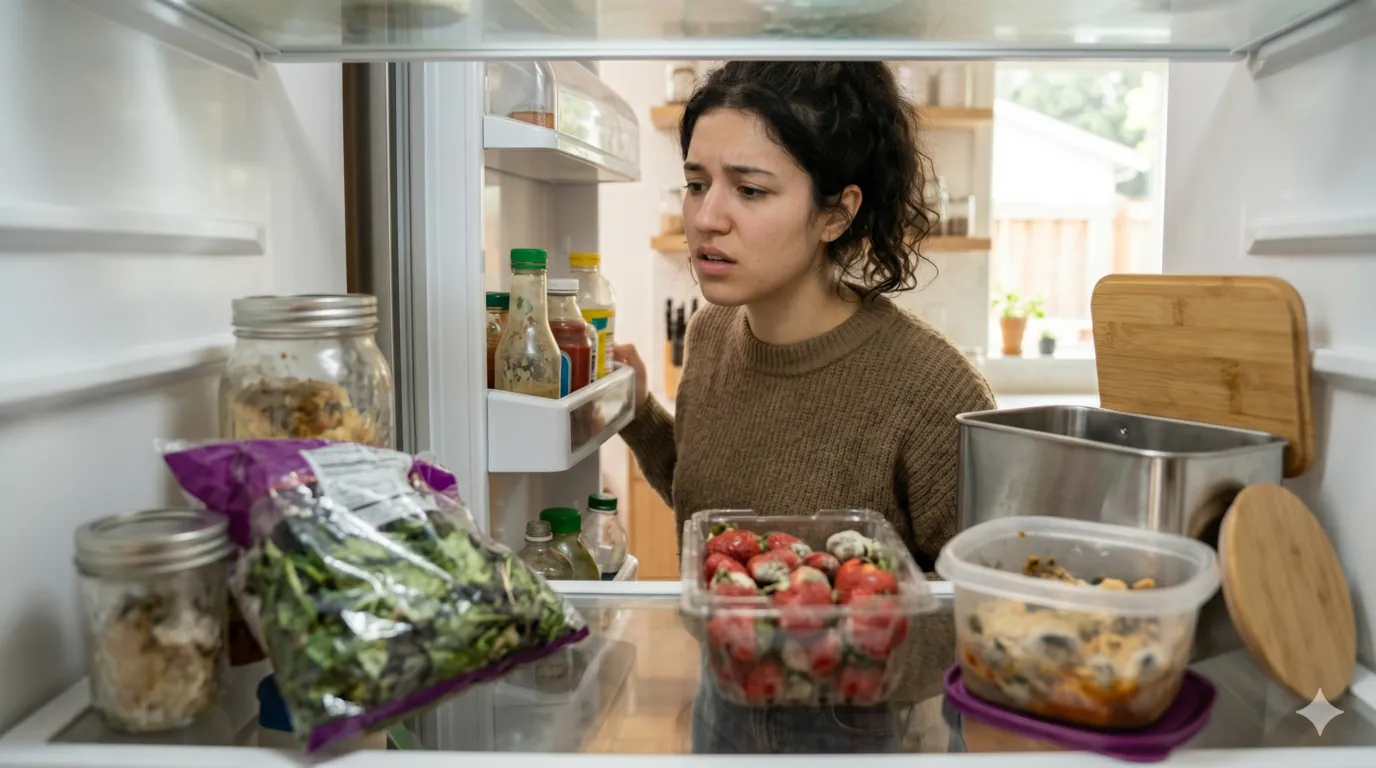
Beginners tend to focus almost entirely on plastic and packaging, while one of the biggest sources of household waste sits quietly in the fridge.
Food waste is a serious environmental problem. When food scraps rot in a landfill, they break down without oxygen and release methane, a greenhouse gas more potent than carbon dioxide. Wasted food also means the water, land, and energy used to grow and transport it was for nothing.
Cutting food waste is one of the highest-impact habits in any waste reduction effort — see our full guide on how to reduce food waste at home — and it usually saves money too. Simple ways to start:
Simple ways to start:
- Plan meals before you shop so you only buy what you’ll use
- Store fruit, vegetables, and leftovers properly so they last longer
- Keep a “use it first” shelf in the fridge for food near its end
- Get comfortable with leftovers and clear-out meals like soups and stir-fries
- Try composting at home for the scraps you can’t avoid
Composting turns peels and coffee grounds into something useful instead of sending them to landfill. Even a small countertop bin or a worm bin on a balcony makes a difference. If you’re new to it, our guide on how to start composting at home covers every option
Mistake 5: Forgetting About Reusables

Buying reusables is the easy part. Remembering to use them is where most people slip.
The reusable coffee cup sits on the kitchen counter while you buy another disposable one on the way to work. The tote bags live in a cupboard while you collect more plastic bags at the till. A reusable item only helps if it actually replaces dozens of single-use ones. Bought, used once, and forgotten, it can be worse than the disposable version it was meant to replace.
The answer isn’t more willpower, it’s a better system. Make the reusable option the easy one to grab.
- Keep a few tote bags in your car, by the front door, or folded in your everyday bag
- Put your coffee cup or water bottle next to your keys the night before
- Stash a small set of cutlery or a container in your work bag or backpack
Attach the new habit to something you already do, like grabbing your phone or keys, and it stops being something you have to remember.
Mistake 6: Expecting Immediate Results
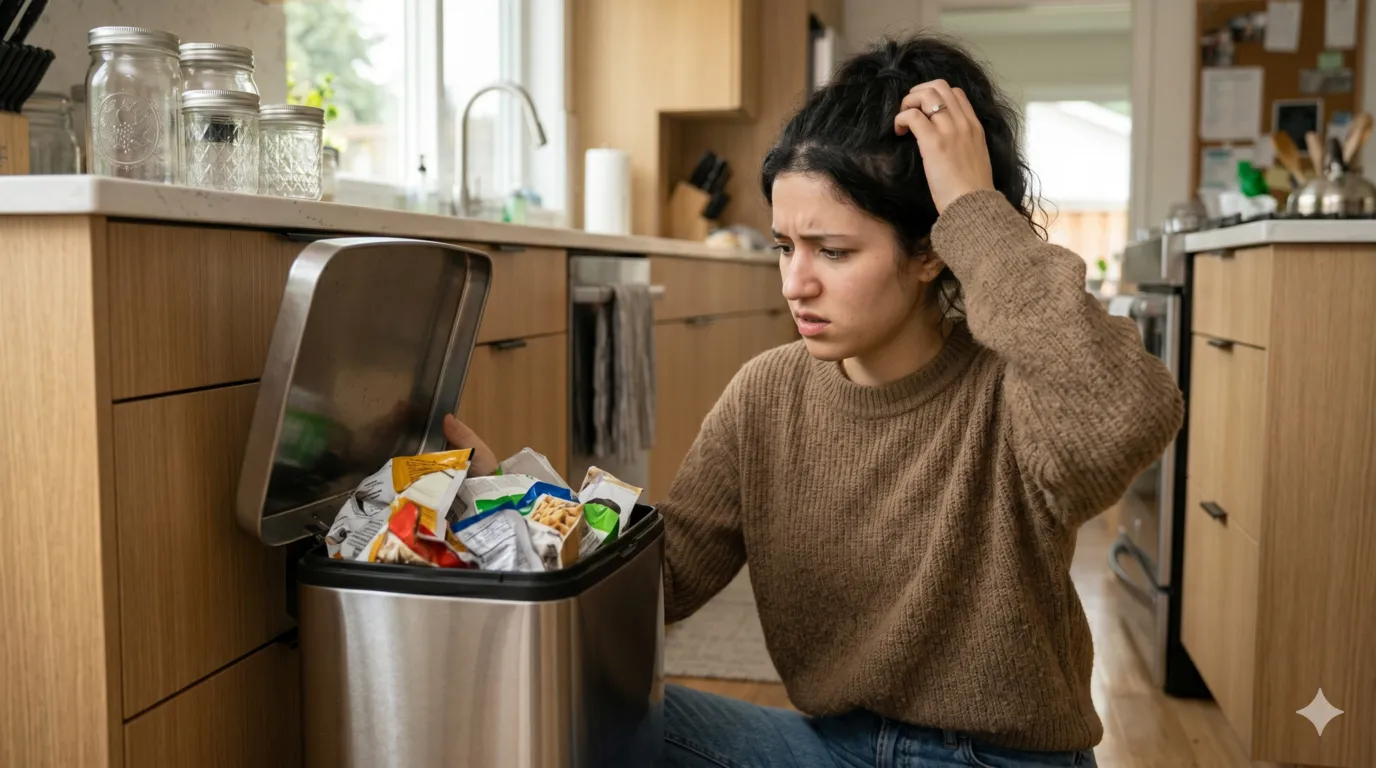
A lot of people treat zero waste like a weekend project. They expect to overhaul the whole house in a few days, then feel discouraged when the habits don’t stick.
Real change is slower and quieter than that. You’re building eco-friendly habits, and habits take time to settle in. Trying to change everything at once almost guarantees you’ll feel overwhelmed and drop most of it.
A calmer approach works better. Pick one area, like the kitchen or the bathroom, and focus there. Master one swap before adding another. Think in months, not days. When you look back after half a year of small changes, the difference is bigger than anything you could have forced in a single weekend. Starting in the kitchen tends to have the biggest payoff — see how to build a zero waste kitchen for a full room-by-room plan.
Mistake 7: Comparing Yourself to Others
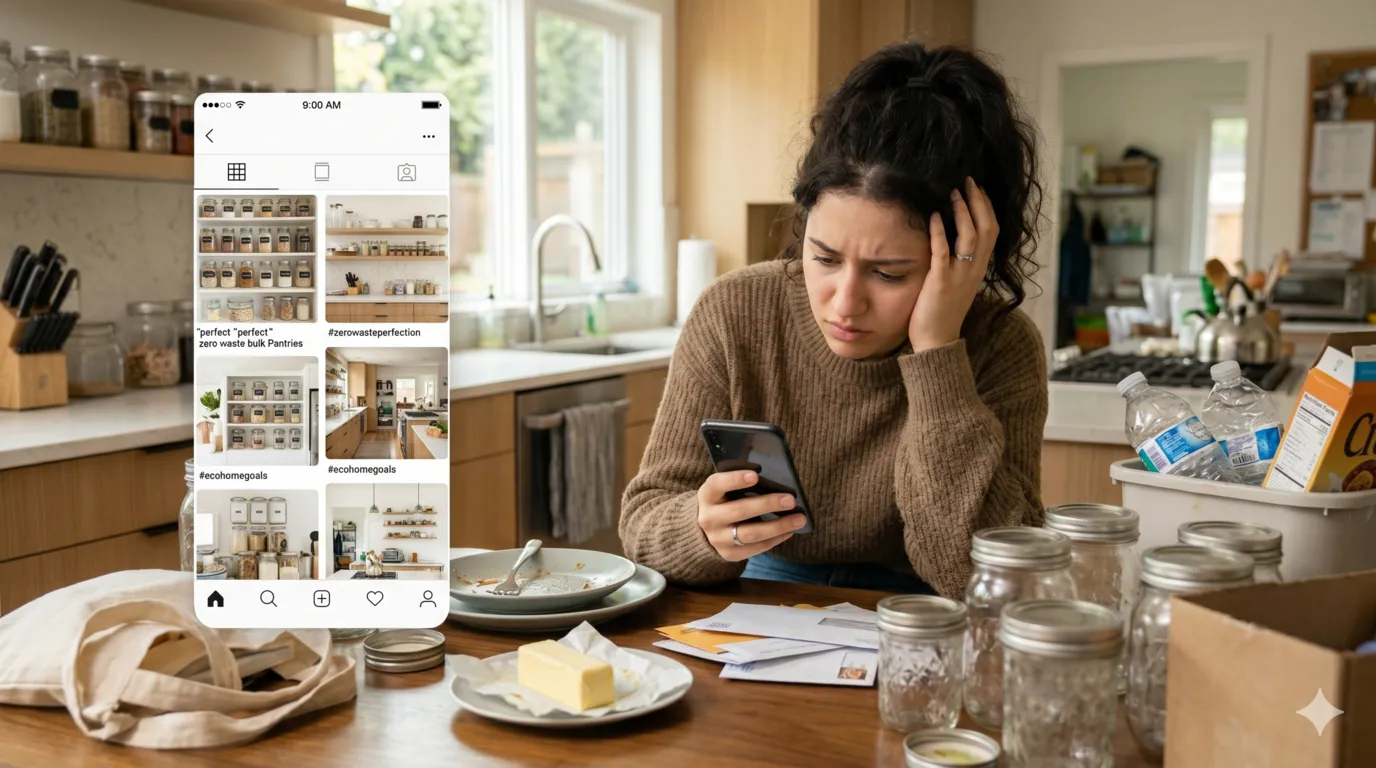
Social media makes this lifestyle look effortless and beautiful, and it’s easy to feel like you’re failing by comparison. Their pantry is full of matching jars. Their bathroom is all bars and bamboo. Yours has half-used plastic bottles and a recycling bin that’s a little too full.
Comparison is one of the fastest ways to talk yourself out of trying at all.
Here’s what those photos leave out: everyone’s situation is different. Budget, health, where you live, whether there’s a bulk store nearby, how much time you have, whether you’re cooking for one or for a family of five. A plastic-free lifestyle looks completely different for a student in a city apartment than for a parent in a rural town.
Measure your progress against where you started, not against a stranger’s highlight reel. The only useful comparison is you last month versus you today.
Sustainable Progress Over Perfection
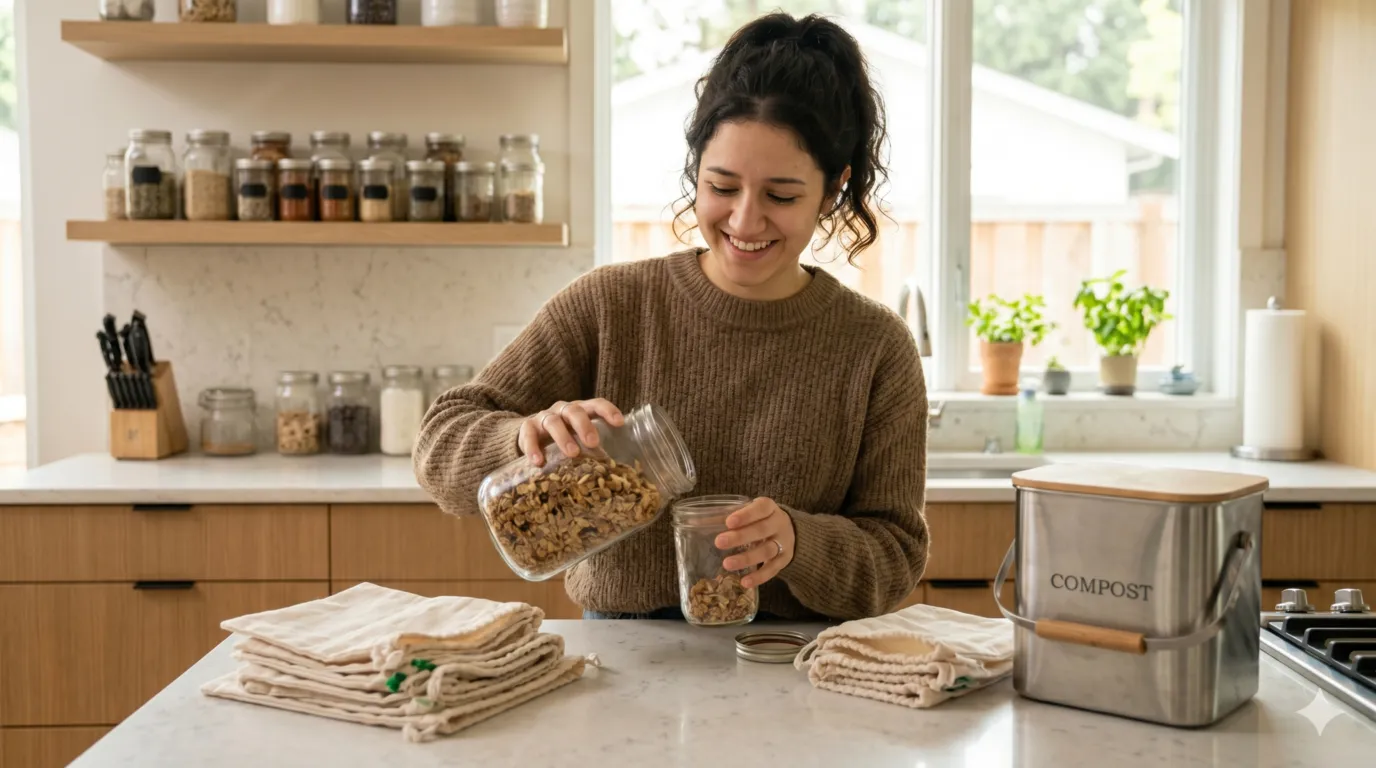
If there’s one idea to take from all of this, it’s that consistency beats perfection every time.
A million people each cutting their waste by a reasonable amount will always do more good than a handful of people living a flawless zero waste life. You don’t need to get everything right. You need to keep going.
So give yourself permission to be a work in progress. Some weeks you’ll forget your bags and buy something wrapped in plastic, and that’s okay. What matters is the overall direction. Small, repeatable actions are what turn sustainable living from a stressful project into a normal part of everyday life.
Frequently Asked Questions
What is the biggest zero waste mistake beginners make?
Trying to be perfect from day one. The all-or-nothing mindset leads to guilt and burnout, and most people quit within weeks. Aiming for less waste rather than zero waste is far more sustainable over time.
Is it okay to throw away plastic items when going zero waste?
It’s better to keep using them. Tossing usable plastic to replace it with eco-friendly versions creates waste and throws away the resources already spent making those items. Use what you own until it wears out, then choose a better replacement.
Do I need to buy special products to live zero waste?
No. Many effective swaps cost nothing. Glass jars from sauces become storage, old shirts become cleaning cloths, and tap water replaces bottled. Buying less is usually more sustainable than buying new “eco” products.
How long does it take to build zero waste habits?
There’s no fixed timeline, but think in months, not days. Changing one habit at a time and letting it become automatic is more durable than trying to overhaul everything at once.
Can you really live with zero waste?
For almost everyone, true zero is unrealistic, and that’s okay. The goal is meaningful waste reduction, not a perfect score. Reducing what you can, where you can, is what makes a real difference.
Final Thoughts
Most zero waste mistakes come down to one thing: putting pressure on yourself to be perfect instead of allowing yourself to improve. Use what you already have, buy less, waste less food, actually reach for your reusables, and give it time.
Start with a single change this week. Once it feels normal, add the next one. That steady, forgiving approach is what makes a low-waste life something you can keep up, long after the first burst of motivation fades.