Most of us have a cabinet like this: three or four water bottles shoved in the back, one with a lid that leaks, one that makes everything taste faintly of metal, and one you genuinely forgot you owned. Meanwhile, you’re still buying $3 bottled water at the airport and drinking lukewarm tap water at your desk.
The right reusable water bottle fixes all of that. It keeps your water cold for hours, saves you real money, and quietly cuts a surprising amount of plastic out of your week. The trick is picking one you’ll actually carry every day instead of adding to the cabinet graveyard.
This guide breaks down the best reusable water bottles for different needs, budgets, and habits. You’ll get five solid picks, a plain-English breakdown of what actually matters when you buy, advice on choosing the right size, and answers to the questions people ask most. No hype, just what works.
Top Picks at a Glance
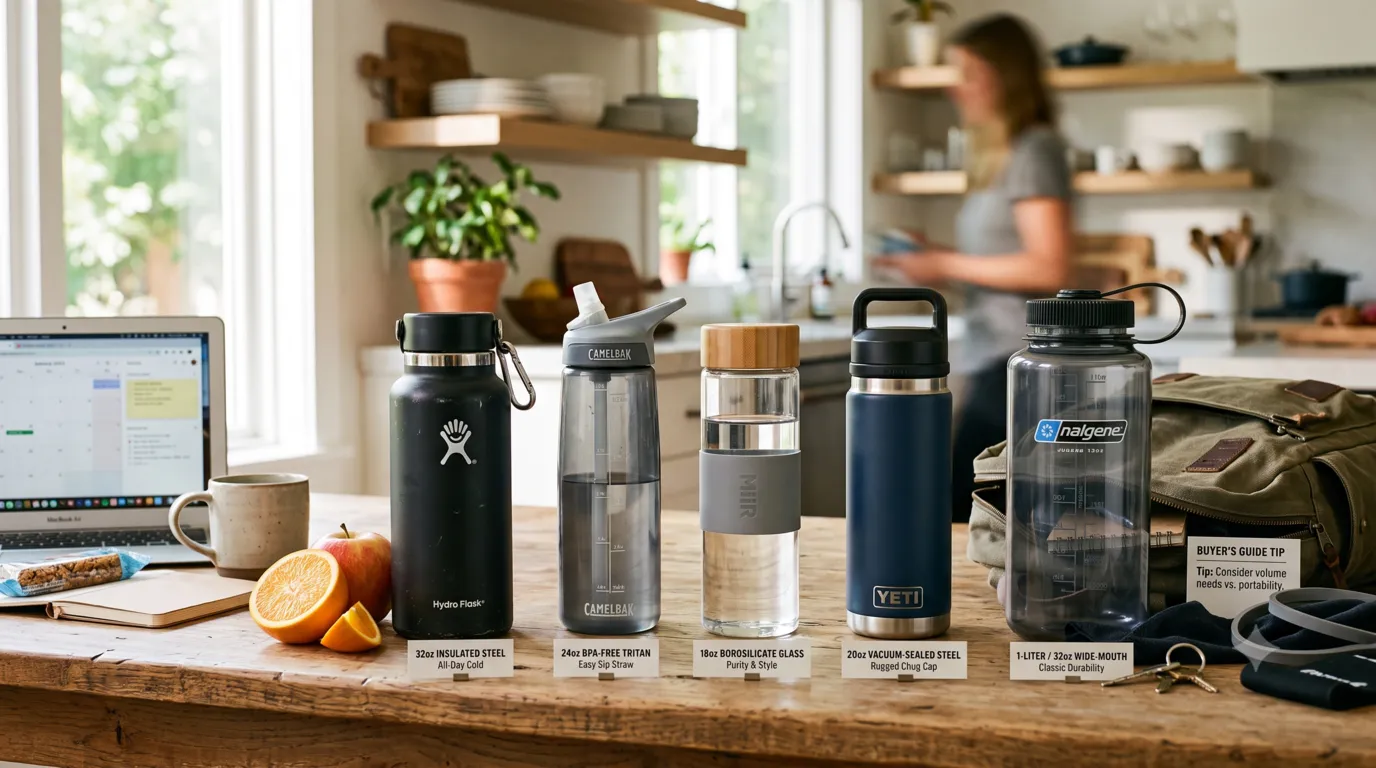
- Best overall: Hydro Flask Wide Mouth (32 oz) — the versatile all-rounder most people should buy
- Best stainless steel: Klean Kanteen Classic (27 oz) — simple, lightweight, plastic-free, ethically made
- Best budget option: Nalgene Wide Mouth Sustain (32 oz) — nearly indestructible and cheap
- Best insulated: YETI Rambler (26 oz) — built like a tank, keeps drinks cold for ages
- Best large-capacity: Stanley Quencher H2.0 (40 oz) — big capacity that’s still easy to carry and sip
Prices below are approximate and shift by size, color, and retailer, so treat them as a ballpark and check current listings before buying.
Why Switch to a Reusable Water Bottle?
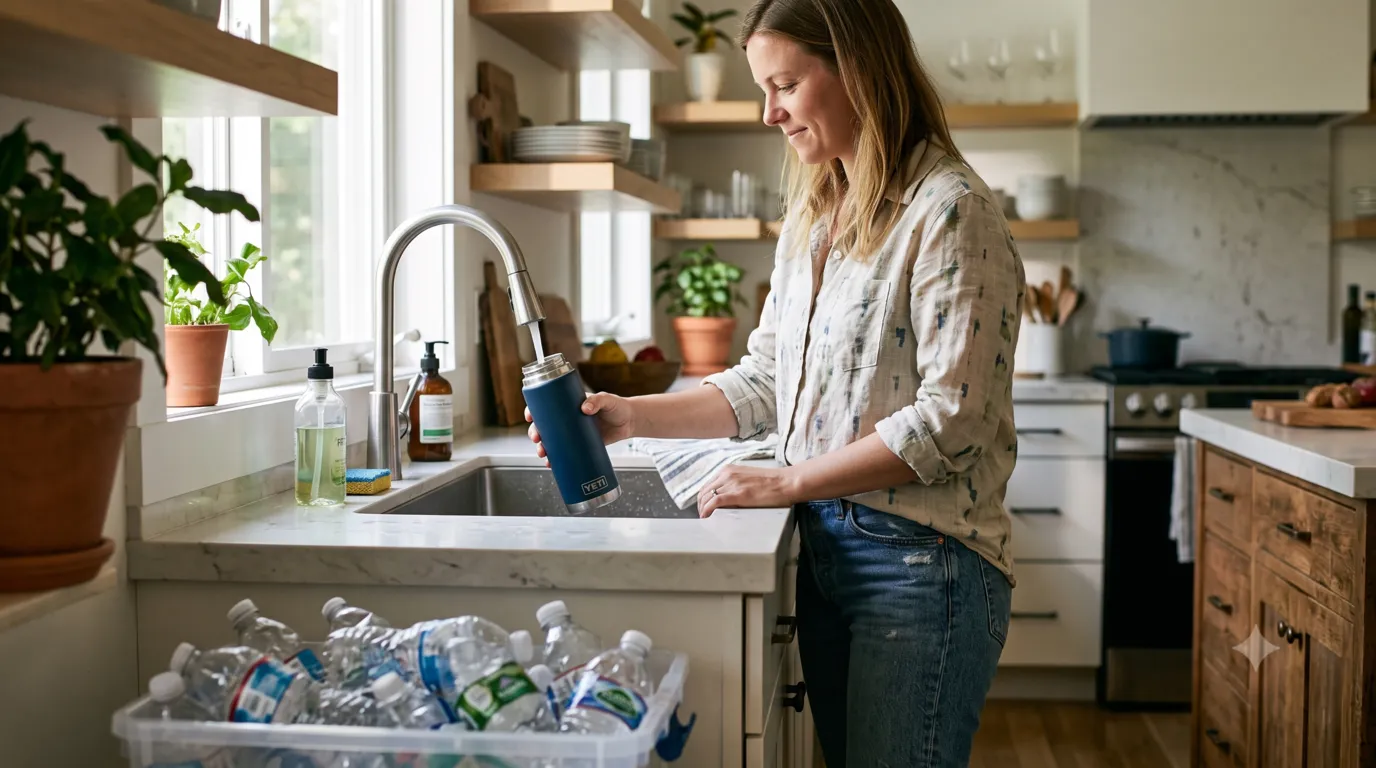
If you’re on the fence, here’s the honest case for making the swap.
It saves money fast. A single bottle of water at a store or airport can cost more than a dollar or two. Buy one a day and you’re spending hundreds of dollars a year on water you could carry for free. A quality reusable bottle pays for itself within a few weeks and then keeps saving you money for years.
It cuts a lot of waste. Single-use plastic bottles are one of the most common items in landfills and waterways. One reusable bottle you actually stick with replaces hundreds of disposable ones over its lifetime. That’s the kind of small, repeatable habit that adds up far more than people expect, and it sits right at the heart of a zero waste lifestyle.
It helps you drink more. This sounds minor, but it’s the real reason most people feel better after switching. When a bottle is sitting on your desk or in your bag, you sip throughout the day without thinking about it. Hydration becomes automatic instead of something you have to remember.
The water tastes better and stays cold. Insulated stainless steel keeps ice intact for hours and doesn’t leave that plasticky aftertaste. Cold water you enjoy is water you’ll actually drink.
There’s also growing interest in what’s in bottled water itself. Researchers in a widely reported 2024 study estimated that a liter of bottled water can contain roughly 240,000 tiny plastic particles on average, most of them nanoplastics. Scientists are still studying what, if anything, this means for human health, so it’s not a reason to panic. But for a lot of people, refilling a clean steel bottle from the tap or a filter is a simple way to sidestep the question.
One honest caveat: a reusable bottle only helps the planet and your wallet if you keep using it. The most eco friendly water bottle is the one you already own and refill, not a shelf full of trendy ones. Buy a bottle that fits your real routine and commit to it.
How We Chose the Best Products
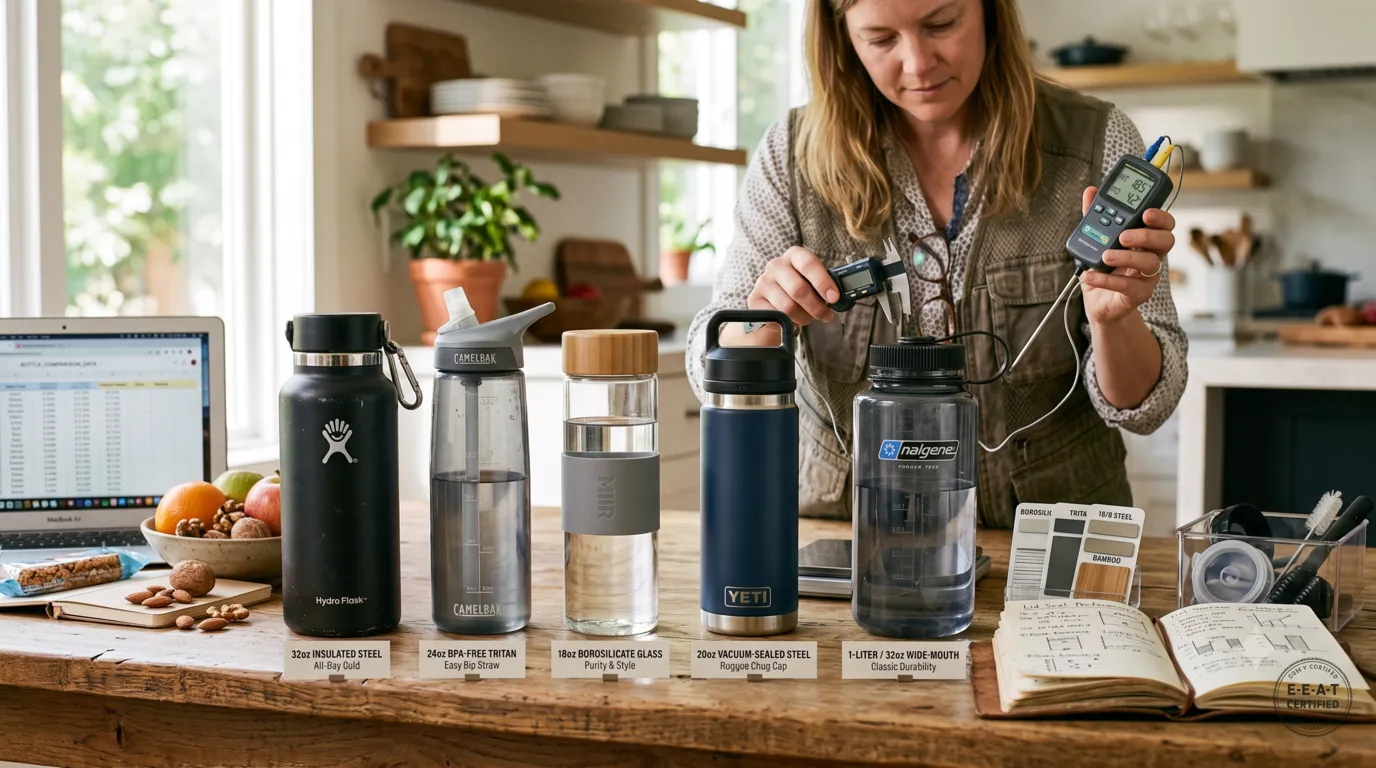
These picks aren’t based on a quick glance at brand names. They reflect a mix of hands-on use, long-term feedback from people who’ve owned these bottles for months or years, and independent testing from outlets like REI and OutdoorGearLab that put dozens of bottles through real-world conditions.
Here’s what we weighed:
- Temperature retention. For insulated bottles, how long they actually keep drinks cold (or hot), not just what the label promises.
- Leak resistance. Whether you can toss it in a bag without a soggy surprise. We treat “spill-resistant” and “100% leakproof” as different things, because they are.
- Durability. How the bottle and its finish hold up to drops, dings, and daily abuse.
- Ease of cleaning. Wide mouths, dishwasher-safe parts, and removable gaskets all matter. Lids and seals are usually the first thing to fail or grow grime.
- Material safety. Food-grade 18/8 stainless steel or BPA-free Tritan, with no sketchy liners.
- Value and warranty. A fair price for what you get, backed by a real guarantee.
A pattern worth knowing before you buy: across long-term reviews, the lid almost always wears out before the bottle does. Straws and seals can trap mold if you don’t clean them, and gaskets eventually need replacing. That’s why a brand’s warranty and the availability of replacement parts genuinely matter.
Best Overall Reusable Water Bottle: Hydro Flask Wide Mouth

Key specs: 18/8 stainless steel · TempShield double-wall vacuum insulation (cold up to ~24 hours, hot up to ~12) · sizes from 12 to 40 oz · multiple lid styles · around $45 (32 oz) · limited lifetime warranty.
If you want one bottle that handles work, the gym, travel, and weekend trips without drama, the Hydro Flask Wide Mouth is the easy recommendation. It’s been the default top pick among independent testers for years, and it earns that spot by doing everything well rather than chasing one flashy feature.
The wide opening makes it easy to drop in ice and simple to clean. The double-wall vacuum insulation keeps cold drinks genuinely cold through a full day, and the outside never sweats onto your desk or bag. You can also swap between lid styles, including a flex straw cap for sipping on the go and a chug cap for bigger gulps, so you can tune the bottle to how you drink.
What’s great: versatile sizes and lids, excellent insulation, durable powder-coat finish, easy to clean, backed by a lifetime warranty.
Trade-offs: it’s on the pricier side, and some lid styles are sold separately. The colored coating can show cosmetic wear around the rim after heavy use, though that doesn’t affect performance.
Best for: almost anyone who wants a single, reliable, do-it-all stainless steel water bottle.
Best Stainless Steel Bottle: Klean Kanteen Classic
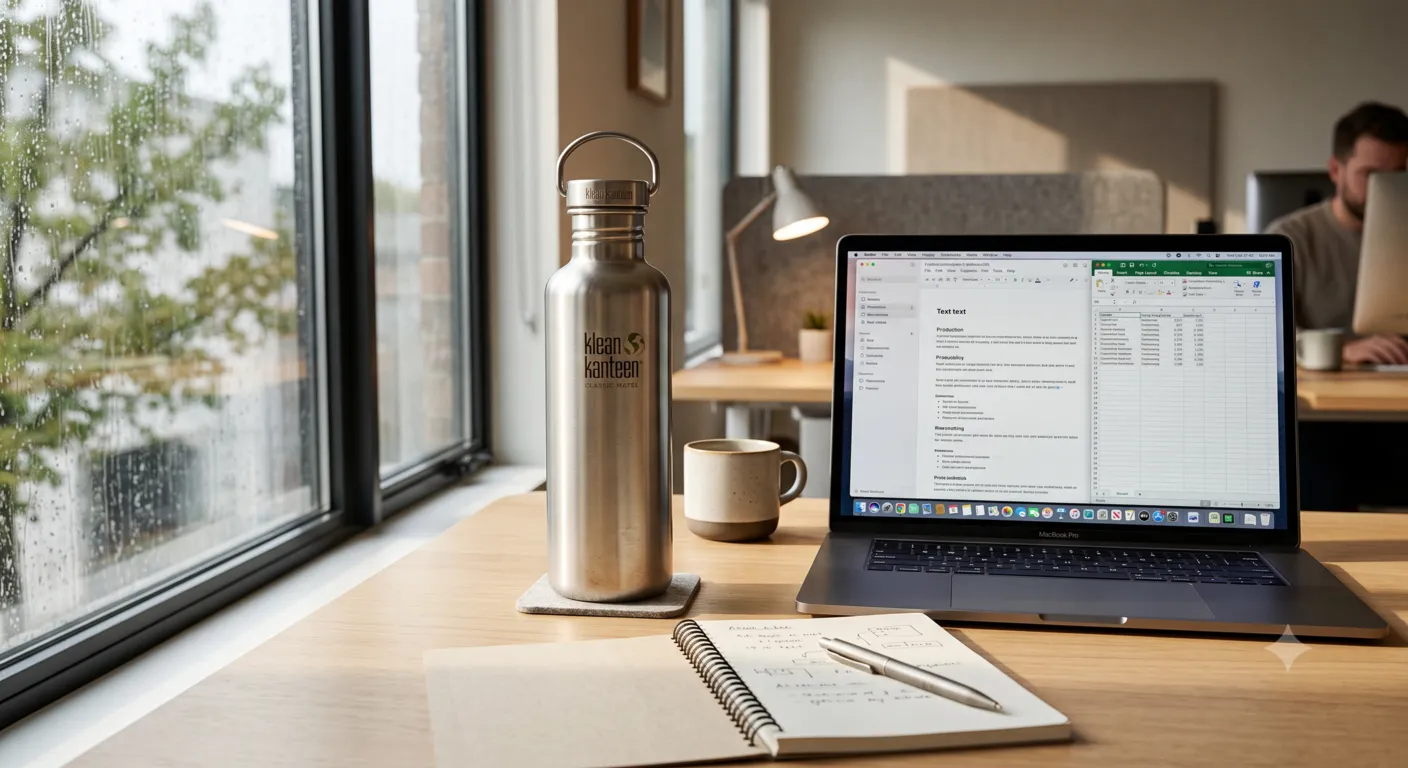
Key specs: certified 90% post-consumer recycled 18/8 stainless steel · single-wall (non-insulated) · electropolished interior, no liner · BPA-free · leakproof Flip Seal sport cap with stainless steel straw · sizes 18, 27, and 40 oz · around $30 · “Strong as Steel” limited lifetime warranty.
When people picture a classic stainless steel water bottle, this is basically it. Klean Kanteen has made this design for two decades, and it’s beloved for being simple, light, and built to last. There’s no plastic touching your water, the inside is electropolished so it won’t hold onto flavors, and the brand walks the sustainability talk as a certified B Corp and member of 1% for the Planet.
The big thing to understand is that the Classic is single-walled, which means it is not insulated. It keeps water at roughly room temperature and will sweat a little if you fill it with ice water. That’s a deliberate trade-off: skipping the vacuum insulation makes it noticeably lighter and cheaper. If you mostly want a clean, plastic-free bottle for the desk, the trail, or travel and don’t need ice-cold water all afternoon, it’s fantastic. If you do want insulation, Klean Kanteen makes vacuum-insulated versions (like the TKWide) that cost more.
What’s great: lightweight, fully plastic-free interior, no flavor transfer, slim enough for most cup holders, strong eco and ethics credentials, and replaceable caps so you can repair rather than replace.
Trade-offs: no temperature control, and some users find the straw spout slow to drink from.
Best for: minimalists and eco-focused buyers who want straightforward stainless steel and don’t need insulation.
Best Budget Option: Nalgene Wide Mouth Sustain

Key specs: Tritan Renew (made with up to 50% recycled plastic) · BPA-, BPS-, and phthalate-free · 32 oz with a wide 63 mm mouth · leakproof screw-top · dishwasher safe · made in the USA · around $16 · lifetime warranty.
The Nalgene is the bottle that quietly survives everything. It’s been a hiking and dorm-room staple for decades, and the current Sustain version is made from recycled Tritan plastic, so the budget pick also happens to be a reasonably eco-friendly one. It’s light, cheap, and close to indestructible, which is exactly what you want in a first bottle or a knockaround spare.
The wide mouth fits ice and most water filters, the measurement markings on the side help you track intake, and the screw-top lid seals tight without any fussy moving parts. It comes in a huge range of colors, and the lifetime warranty means Nalgene will often replace a worn cap strap for free.
What’s great: extremely durable, very affordable, lightweight, easy to clean, and surprisingly sustainable for the price.
Trade-offs: it’s plastic, not steel, and it has no insulation, so your water will warm up. The classic wide mouth can also splash when you’re walking or driving unless you add a separate splash-guard insert.
Best for: students, beginners, hikers, and anyone who wants a dependable bottle without spending much.
Best Insulated Bottle: YETI Rambler
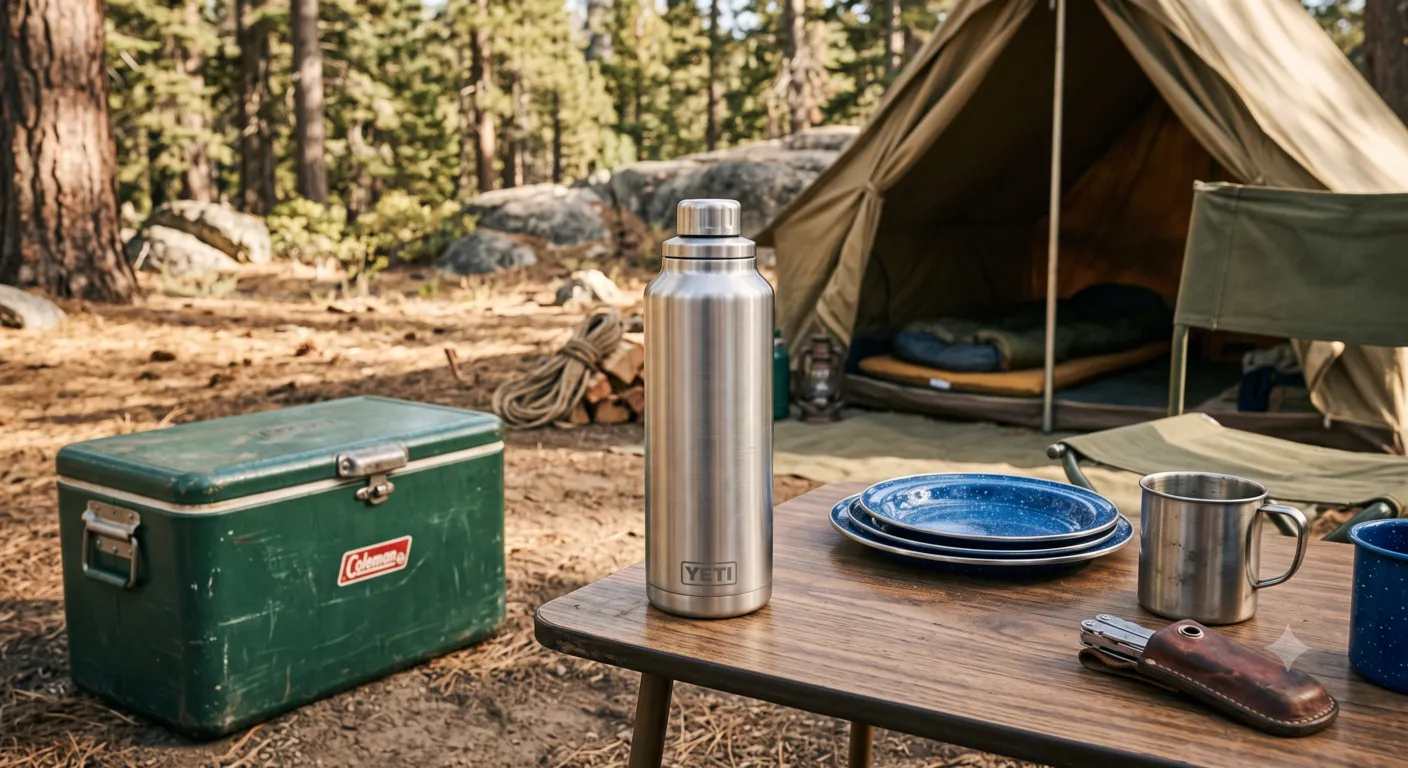
Key specs: 18/8 kitchen-grade stainless steel · double-wall vacuum insulation · DuraCoat finish · 100% leakproof Chug Cap · sizes 18, 26, 36, and 46 oz · around $40 for the 26 oz · 5-year warranty · dishwasher safe.
If your bottle takes a beating, the YETI Rambler is the one to reach for. It’s heavier and pricier than most, but it’s almost comically tough. Long-term owners describe dropping it off ledges, off mowers, even running it over, and walking away with nothing worse than a dent and a still-working bottle. The insulation is excellent, keeping ice intact for a long time, and the No Sweat exterior stays dry in your hand.
The Chug Cap is the standout: it’s 100% leakproof and opens with a quick half-twist for fast, easy drinking, so you can toss the whole thing in a gym bag or truck without worry. One thing to keep in mind is that YETI’s chug and straw caps have temperature and use limits, so they aren’t meant for very hot or carbonated drinks. Check the care instructions for your specific cap.
What’s great: outstanding durability and insulation, a genuinely leakproof everyday lid, and a finish that resists chipping and fading.
Trade-offs: it’s heavy, especially when full, and the bottle shape is too wide for most car cup holders. It’s also a premium price.
Best for: outdoor use, job sites, commuters who are rough on gear, and anyone who values toughness above all.
Best Large-Capacity Bottle: Stanley Quencher H2.0
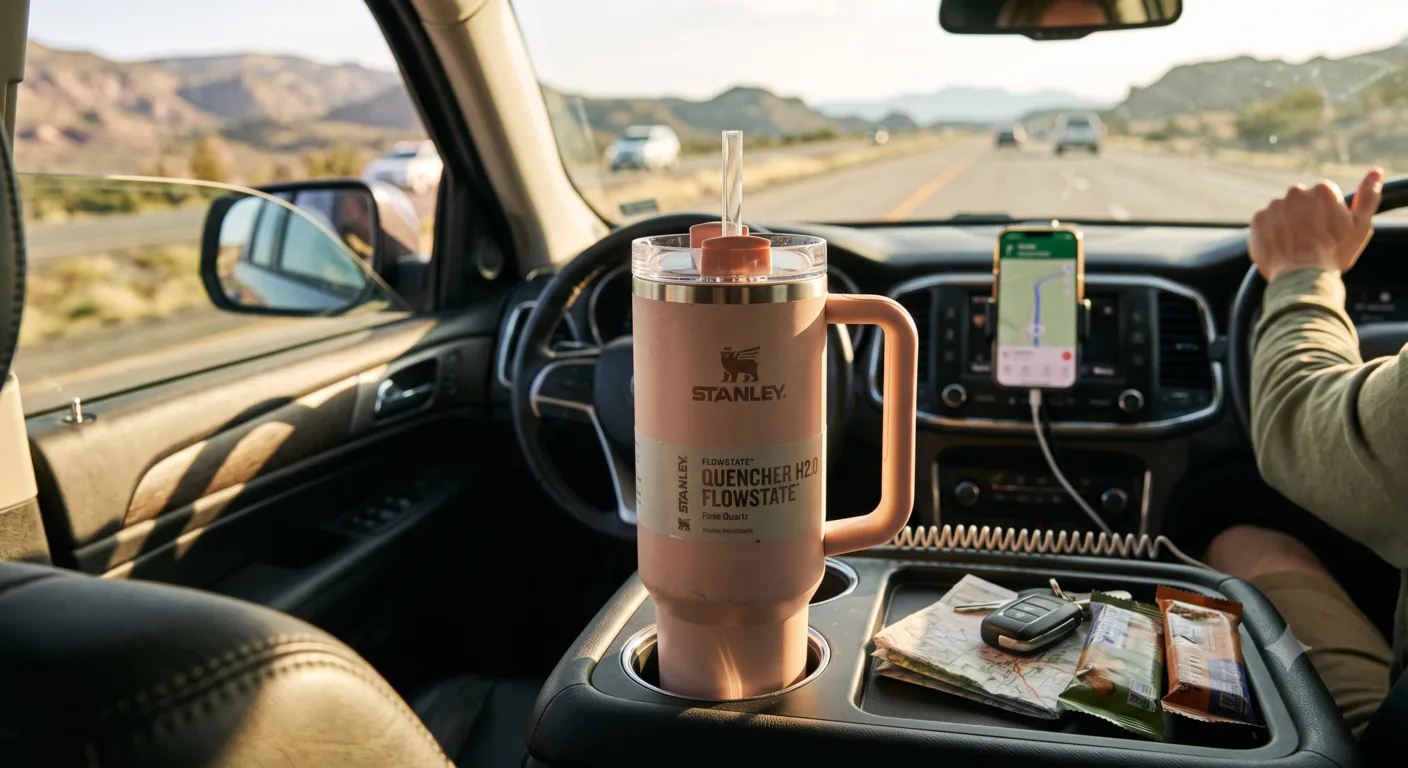
Key specs: 90% recycled 18/8 stainless steel · double-wall vacuum insulation · FlowState 3-position lid with reusable straw · comfort-grip handle · narrow base fits most cup holders · sizes 14 to 64 oz · around $45 (40 oz) · Built for Life lifetime warranty.
The Stanley Quencher went viral for a reason. It holds a lot of water, so you refill far less often, and yet it’s still pleasant to carry and drink from all day. The handle makes the big 40 oz size easy to grab, and the narrow base slips into most car cup holders despite the volume. The FlowState lid rotates between a straw opening, a wider drink opening, and a fully closed position, so you can sip through the straw at your desk or take a real gulp when you’re thirsty.
The key thing to understand is that the Quencher is technically a tumbler, not a fully sealed bottle. The straw opening is splash-resistant, but it is not designed to be leakproof if you knock it over or lay it on its side in a bag. So it shines as a desk and car companion, less so as something you’d toss in a backpack and forget about.
What’s great: large capacity with fewer refills, comfortable handle, fits cup holders, strong cold retention, and easy straw sipping.
Trade-offs: not leakproof when tipped, heavy when full, and tall enough to be awkward in smaller bags.
Best for: desk workers, big water drinkers, and car commuters who want maximum capacity within reach all day.
What Size Should You Choose?
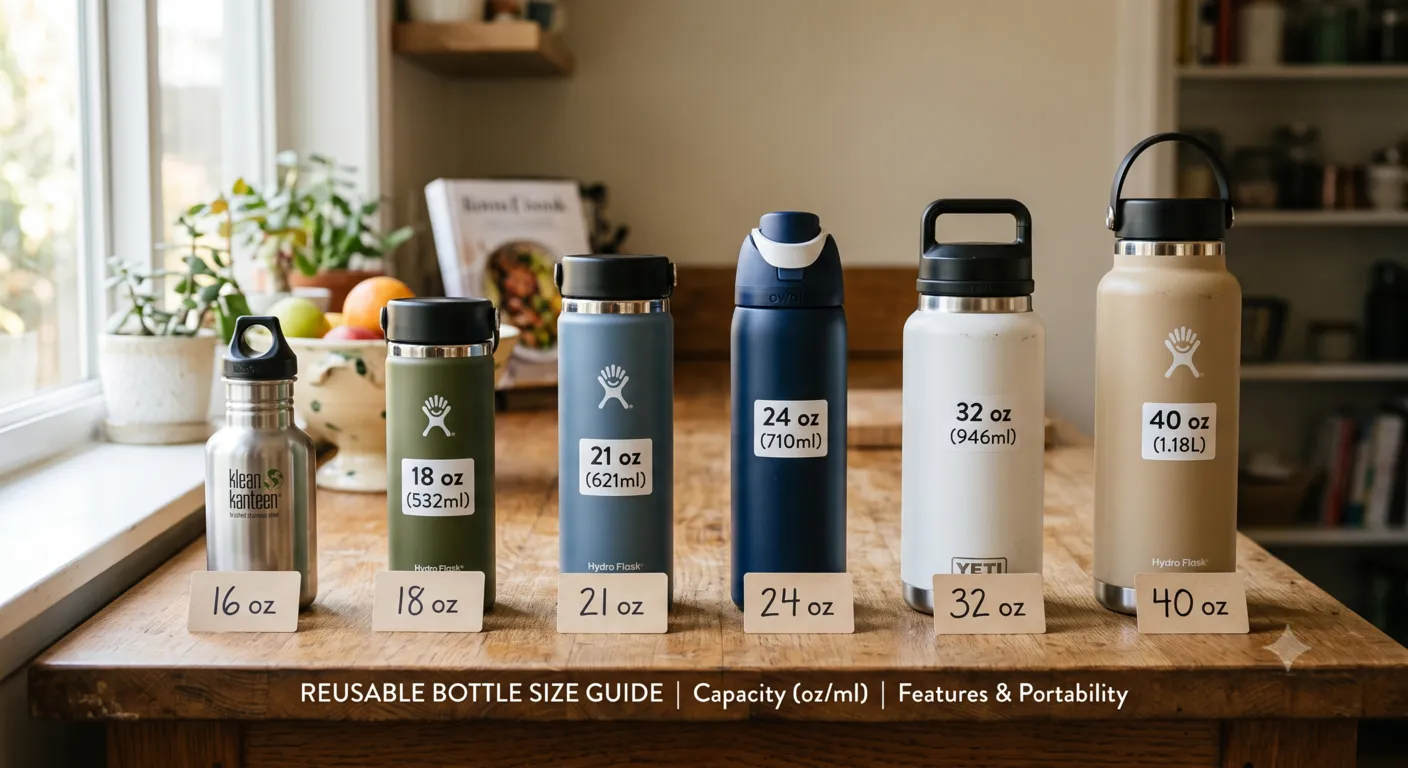
Bigger isn’t automatically better. A huge bottle you find too heavy to carry ends up staying home. Match the size to how and where you’ll use it.
- 12–18 oz: kids, short outings, a purse or small bag, and minimalists who refill often.
- 20–24 oz: the everyday sweet spot for many people. Big enough for a commute or errands, slim enough to fit cup holders.
- 32 oz: great for the desk, the gym, or a long day out, with fewer refills. This is the most popular all-day size.
- 40 oz and up: for heavy drinkers, hot climates, or long shifts. Just know these get heavy and bulky once full.
A quick gut check: think about how you carry it. If it’s going in a bag, weight and a leakproof lid matter most. If it lives in a cup holder or on a desk, capacity and a comfortable spout matter more.
Buying Guide: What Actually Matters
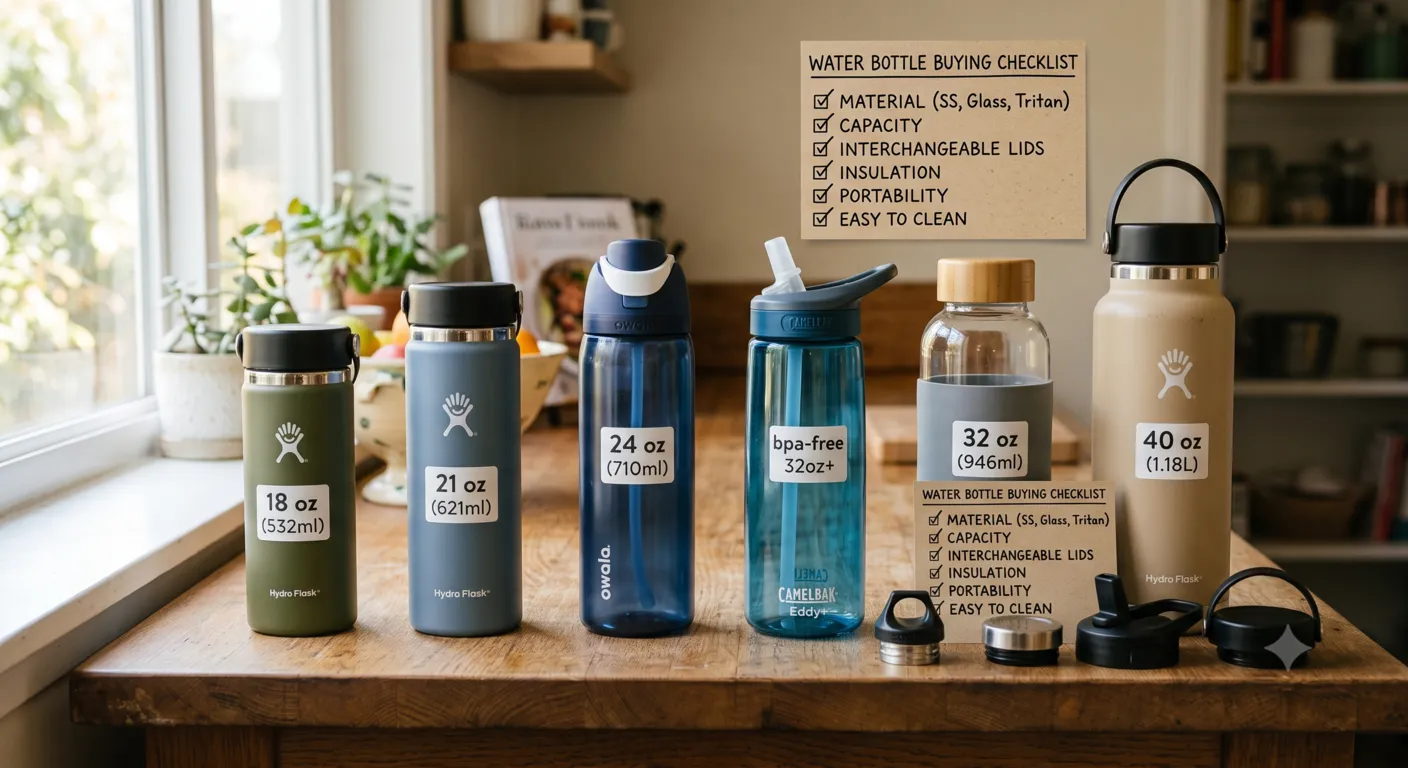
You don’t need to memorize specs. Focus on these few things and you’ll pick a good bottle.
Material
Stainless steel (look for food-grade 18/8) is the most popular choice: durable, doesn’t hold flavors, and pairs with vacuum insulation. Tritan plastic like Nalgene’s is light and cheap and now comes in recycled versions, though it won’t insulate. Glass offers the purest taste but is heavier and more fragile. Avoid cheap, unmarked metal bottles that don’t specify the steel grade.
Insulation
Only double-wall vacuum insulation keeps drinks cold or hot for hours. “Double-wall” without a vacuum, or any single-wall bottle, won’t hold temperature for long. If ice water at hour six is your goal, you need a true vacuum-insulated stainless steel water bottle. If you just want a clean, light bottle, single-wall is fine and costs less.
Lid type
Straw lids are easy to sip from while moving and driving. Chug or flip lids are faster for big gulps. Wide-mouth screw caps are simplest and easiest to clean. Many bottles let you swap lids, which is genuinely useful. Whatever you choose, confirm whether it’s truly leakproof.
Leakproof vs. spill-resistant
This catches people out. A sealed bottle with a screw or chug cap can usually go sideways in a bag without leaking. A tumbler with a straw opening, like the Stanley Quencher, is only splash-resistant and will leak if tipped. Know which one you’re buying.
Ease of cleaning
A wide mouth, dishwasher-safe parts, and removable gaskets make life easier. Straws and rubber seals are where mold likes to hide, so favor bottles you can fully take apart and rinse. Plan to deep-clean those parts regularly no matter which bottle you pick.
Durability and warranty
Look for a tough finish that resists chipping and a solid warranty. Most of the brands here offer lifetime or multi-year coverage and sell replacement lids, which keeps a good bottle in use for years instead of in the trash.
Sustainability
Recycled stainless steel or recycled Tritan, B Corp certification, and replaceable parts are all real signals a brand takes a plastic-free lifestyle seriously. But remember the golden rule: the greenest bottle is the one you keep using. Durability and daily fit beat any eco label.
Frequently Asked Questions
Are stainless steel water bottles better than plastic ones?
For most people, yes. Stainless steel water bottles are more durable, don’t absorb flavors or odors, and pair with vacuum insulation to keep drinks cold. Recycled Tritan plastic bottles still have a place, though, because they’re lighter and cheaper, which makes them great for budgets, kids, and backpacking.
How long do reusable water bottles keep water cold?
A good vacuum-insulated stainless steel bottle keeps water cold for roughly a full day, often around 24 hours, and many keep ice for even longer. Single-wall bottles, whether steel or plastic, don’t insulate at all, so the water drifts to room temperature within a few hours.
How often should I clean my reusable water bottle?
Rinse it daily, especially if you drink anything other than water. Give it a deeper wash with soap and a bottle brush every few days, and pay special attention to the lid, straw, and any rubber gaskets, since those trap grime and mold. Many bottles here are dishwasher safe, but hand-washing the lid usually makes it last longer.
Are reusable water bottles actually better for the environment?
Yes, as long as you keep using one. Making a reusable bottle takes more resources than a single disposable one, so the environmental payoff comes from reuse over time. Stick with the same bottle for months and you’ll easily come out ahead while keeping a steady stream of single-use plastic out of the landfill.
Can I put coffee or hot drinks in these bottles?
Insulated stainless steel bottles like the Hydro Flask and YETI Rambler handle hot drinks well and will keep them warm for hours. Check your specific lid, though, since some straw and chug caps aren’t rated for very hot or carbonated drinks. Single-wall bottles like the Klean Kanteen Classic and plastic Nalgene aren’t ideal for hot liquids.
Is it safe to leave water sitting in a bottle overnight?
A night is generally fine if the bottle is clean. What you want to avoid is letting water and backwash sit for days, or skipping cleaning of the lid and straw, since that’s where bacteria and mold build up. A quick rinse before refilling goes a long way.
Final Verdict
There’s no single best bottle for everyone, only the best one for how you live. Here’s the short version:
- For most people, the Hydro Flask Wide Mouth is the safest pick. It does everything well and lasts.
- For simple, light, plastic-free steel, the Klean Kanteen Classic is hard to beat, as long as you don’t need insulation.
- On a tight budget, the Nalgene Wide Mouth Sustain gives you a tough, recycled, dependable bottle for very little.
- For toughness and insulation, the YETI Rambler shrugs off abuse and keeps drinks cold for ages.
- For maximum capacity at your desk or in the car, the Stanley Quencher H2.0 carries a lot of water comfortably.
Whichever you choose, the real win is the habit. Pick the reusable bottle that fits your day, keep it clean, and carry it everywhere. That one small change saves money, cuts waste, and keeps you better hydrated, which is about as easy as eco-friendly habits get.