If you’ve ever carried groceries inside and watched a thin plastic bag split halfway up the driveway, eggs and all, you already know why people switch to reusable bags. The annoyance is real. So is the waste. The average household burns through hundreds of single-use bags a year, and most of them get used once before they’re trashed.
The good news: a couple of well-chosen reusable bags solve the problem for years. The tricky part is that “reusable” covers everything from a flimsy promo tote to a 50-pound workhorse, and not all of them are worth your money.
This guide cuts through that. Below are the best reusable grocery bags for different kinds of shoppers, what to look for before you buy, and an honest look at the cotton-vs-polyester debate that most articles get wrong.
Quick picks:
- Best overall: BAGGU Standard (recycled ripstop nylon, folds tiny, rated to 50 lbs)
- Best foldable: Lightweight ripstop pouch bags like BeeGreen or ChicoBag
- Best heavy-duty: Lotus Trolley Bags (set of 4, fit standard carts, insulated bag included)
- Best produce bags: purifyou mesh set (polyester) or Lotus organic cotton (plastic-free)
Why Replace Plastic Grocery Bags?

Single-use plastic bags are convenient for about ten minutes and a problem for a very long time after that. They’re light, hard to recycle through regular curbside programs, and they break down into smaller and smaller pieces rather than disappearing. Plenty of U.S. states and cities now restrict or charge for them, so the switch is happening with or without you.
But the case for reusable bags isn’t only environmental. There are everyday reasons people stick with them:
- They hold more and won’t split. One sturdy tote replaces two or three plastic bags, so you make fewer trips from the car.
- They’re easier to carry. Real handles that don’t cut into your fingers make a difference when you’re loaded up.
- They save money over time. Where bag fees apply, a $15 bag pays for itself fast. Even without fees, you stop buying trash-bag replacements you didn’t need.
- They keep your trunk sane. A few good bags beat a glovebox stuffed with crumpled plastic.
One honest caveat worth saying up front: a reusable bag only earns its keep if you actually use it, and keep using it for years. We’ll come back to why that matters more than the material it’s made from. It’s a small habit, but a genuine building block of a full zero waste lifestyle.
How We Evaluated These Bags
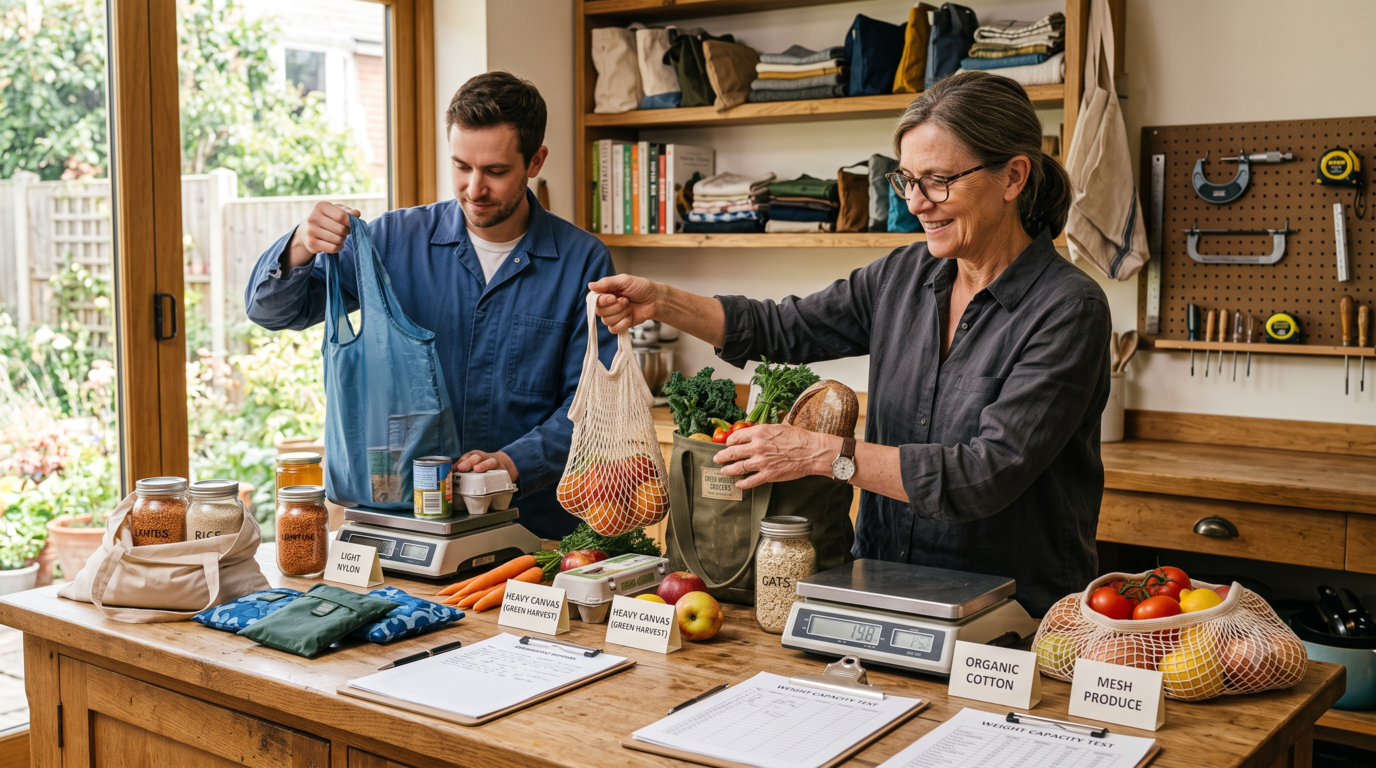
These recommendations come from comparing independent hands-on testing (including America’s Test Kitchen and Reviewed), patterns across thousands of verified owner reviews, and published lifecycle research on bag materials. They are not paid placements.
Here’s what we weighted, and why each one matters in real kitchens:
- Capacity and strength. Can it carry a full load of canned goods and milk without straining the seams? We favored bags with reinforced or double stitching and a realistic weight rating.
- Packability. A bag you can fold into a pocket is a bag you’ll actually have on you. The ones that live folded on a shelf at home don’t count.
- Cleanability. Raw chicken leaks. Berries get crushed. Machine-washable bags are far more practical than “spot clean only.”
- Comfort. Handle length and width decide whether you can sling it over a shoulder or have to bear-hug it.
- Material and footprint. Recycled content, durability, and how the bag holds up to long-term use all factor in, since the greenest bag is the one you don’t replace.
A note on honesty: nothing replaces your own use over time. Treat these picks as a strong starting point, then keep whichever ones fit how you shop.
Best Overall Grocery Bag

BAGGU Standard Reusable Bag
If you buy one reusable bag and want it to do everything, this is the one. The BAGGU Standard is made from recycled ripstop nylon, the same lightweight, grid-patterned fabric used in packable jackets and travel gear. It’s thin, but ripstop is built so a small snag won’t spread into a tear.
What makes it the all-rounder:
- It’s rated to hold up to 50 pounds, which is more than you’ll realistically pile into one bag.
- It folds down into a flat pouch roughly the size of your palm, so it tucks into a purse, glovebox, or jacket pocket.
- It’s machine washable, which matters the first time something leaks inside it.
- The wide, flat handles sit comfortably on the shoulder or in the hand.
The fabric is slick and a little structureless, so it won’t stand upright on its own the way a boxy tote does. That’s the trade-off for how small it packs. It also costs more than a no-name tote, usually somewhere in the mid-teens for a single bag, though it’s still inexpensive for something you’ll use for years.
For most people, two or three of these cover a normal shopping trip and live permanently in the car. It’s a small, durable, do-anything bag, and that’s exactly why it earns the top spot.
Best Foldable Bag
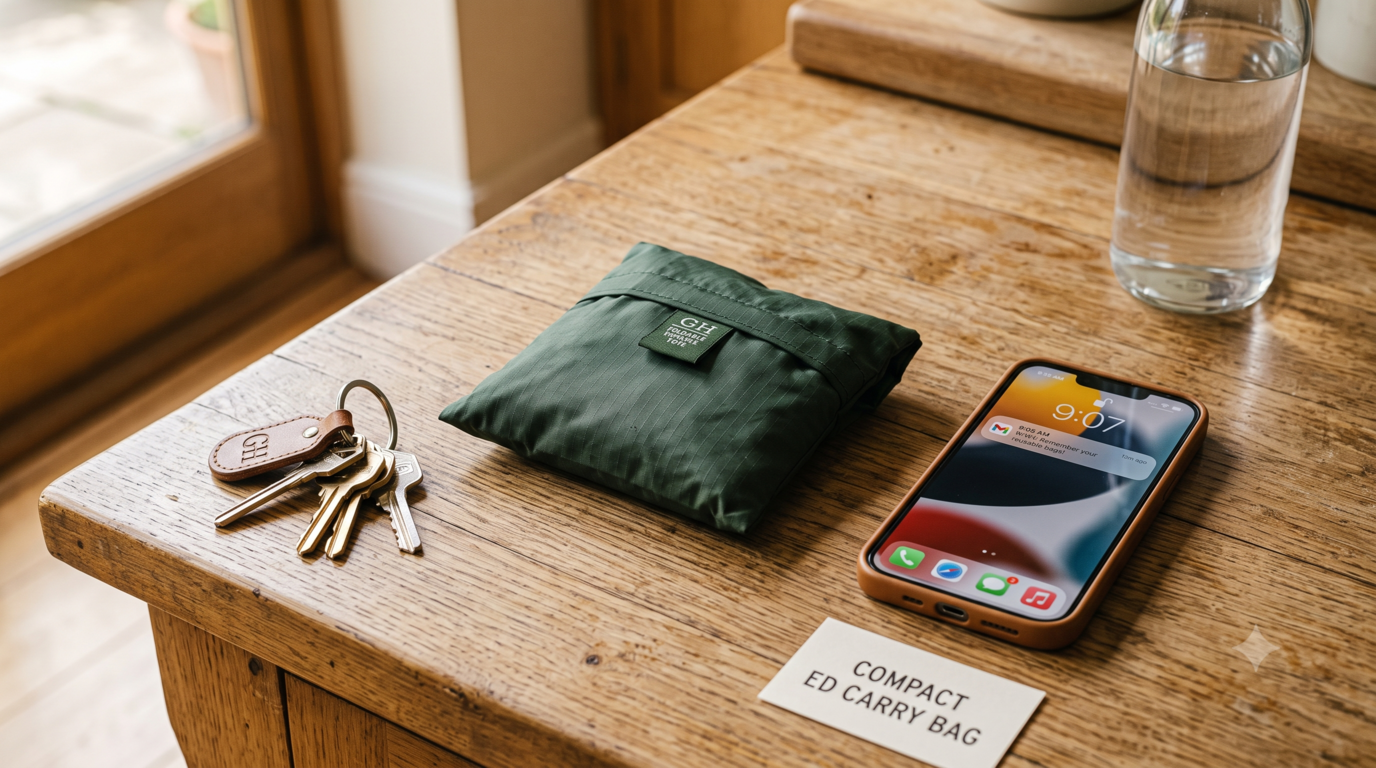
Ultralight ripstop pouch bags (BeeGreen, ChicoBag, and similar)
The best foldable bag is the one you never have to remember, because it’s already clipped to your keys or balled up in your jacket. A whole category of ultralight bags is built around this idea: thin ripstop polyester that stuffs into an attached pouch, often with a small carabiner or snap so it can hang off a backpack strap or key ring.
Brands like BeeGreen and ChicoBag dominate this space, and they’re cheap, frequently just a few dollars each in a multipack. Despite the low price and feather weight, many are rated to carry 30 to 50 pounds, which surprises first-time users.
Why this style wins on portability:
- It collapses smaller than a wallet, so “I forgot my bags” stops being an excuse.
- The attached pouch means you won’t lose the stuff sack (a real weakness of bags with separate pouches).
- A clip lets you keep one on your everyday bag for unplanned stops.
The honest downside is that the thinnest versions feel flimsier than a BAGGU and can run small. They’re best as your always-with-you backup rather than your main haul-everything bag. Buy a three- or five-pack, clip one to whatever you carry daily, and keep the rest in the car. For the price, it’s the easiest habit-builder on this list.
Best Heavy-Duty Bag

Lotus Trolley Bags (Set of 4)
For big weekly hauls, a single tote isn’t the answer, and the Lotus Trolley Bag system is a genuinely different approach. It’s a set of four large bags that hang open across a standard U.S. shopping cart on lightweight rods, so you sort and pack as you shop instead of bagging everything at the end.
What owners consistently like about it:
- Each bag is rated to hold over 50 pounds, with double-stitched seams that don’t blow out under heavy items.
- One bag in the set is insulated, which keeps frozen and refrigerated items cold on the drive home.
- The three non-insulated bags have mesh bottoms that resist the mold and mildew that grow inside closed totes.
- There are built-in pockets, including sleeves meant for eggs and wine bottles so fragile things don’t get crushed.
- The four bags velcro together and roll up, so the set stores compactly in your trunk.
This system shines at stores that don’t bag for you, and reviewers regularly mention breezing past the bagging area because everything’s already sorted in the cart. It’s especially loved by people who shop at Aldi.
Two things to know before you buy. First, the rods are sized for standard carts at most grocery stores, Target, and Walmart; the maker says they don’t fit the wider carts at Costco, Sam’s Club, Aldi, or H-E-B, and there’s a separate Club Cart version for those. (Some shoppers report making the standard set work anyway by loading bags after checkout.) Second, the full set runs around $40, more than a stack of totes, but a single purchase that replaces your whole bag situation. If you do one large grocery run a week, it’s the most practical pick here.
Best Produce Bags
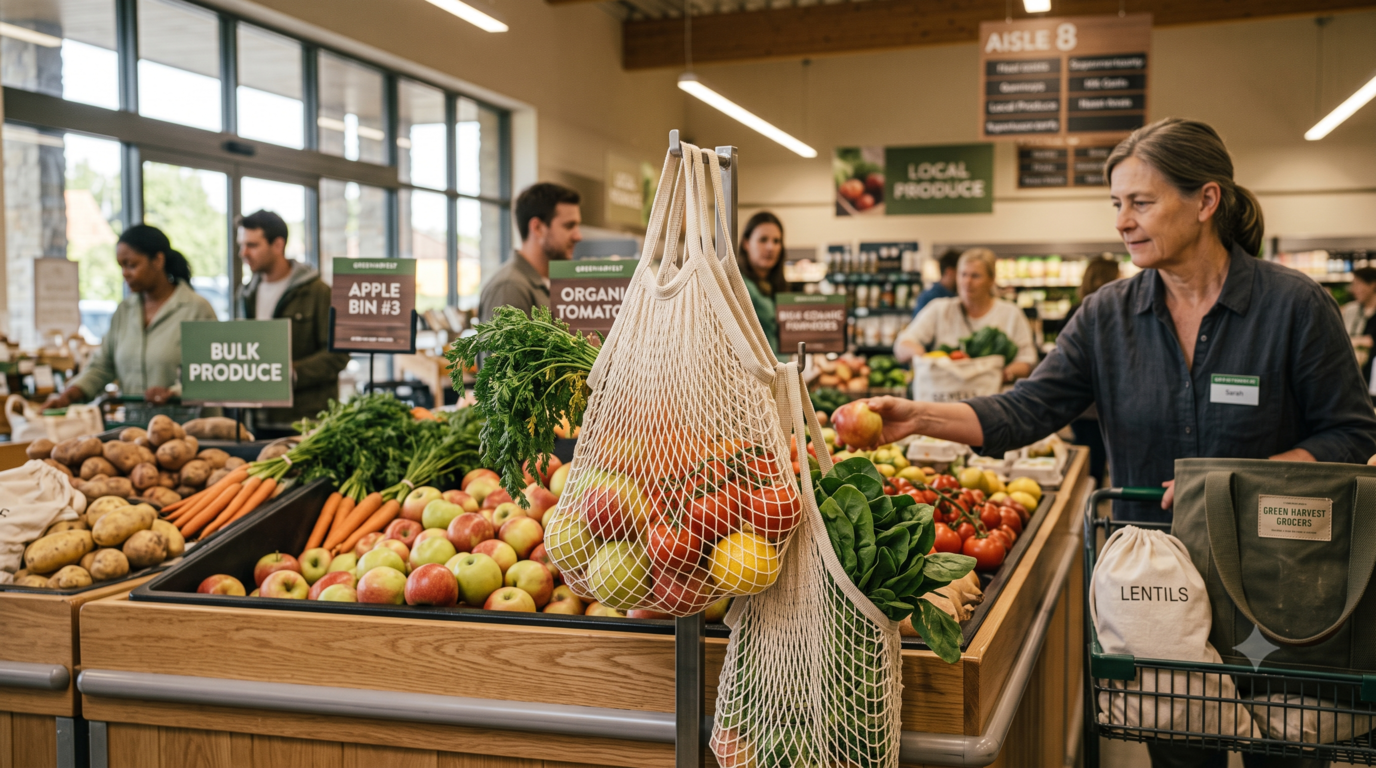
Reusable produce bags are the easy second step after grocery totes, because the thin plastic bags in the produce aisle add up fast. There are two strong directions depending on whether you prioritize performance or going fully plastic-free.
Best overall produce bags: purifyou Reusable Produce Bags (Set of 9)
This polyester mesh set is America’s Test Kitchen’s top pick, and it’s easy to see why. The see-through mesh lets cashiers scan items without opening the bag, the seams are double-stitched, and the drawstrings have a bead that actually stays closed when the bag is full. The set mixes large, medium, and small bags, which covers a full shopping trip. Each bag also has a printed tare weight tag, so the cashier can deduct the bag’s weight from items sold by the pound.
Best plastic-free option: Lotus Organic Cotton Produce Bags
If your goal is to avoid synthetics entirely, America’s Test Kitchen named these organic cotton bags their best cotton pick. They’re biodegradable, machine washable, and hold up well over time. The trade-offs: cotton bags are heavier (which slightly affects weighed items), they’re not see-through, and damp produce takes longer to dry inside them.
A practical tip that saves money on either: you don’t need to bag everything. Bananas, onions, avocados, peppers, and a head of broccoli are fine loose in the cart. Save the bags for things that genuinely need containing, like loose grapes, green beans, cherry tomatoes, fresh herbs, and anything from a bulk bin. A set of six to nine bags then handles a full trip easily.
Cotton vs Polyester Bags
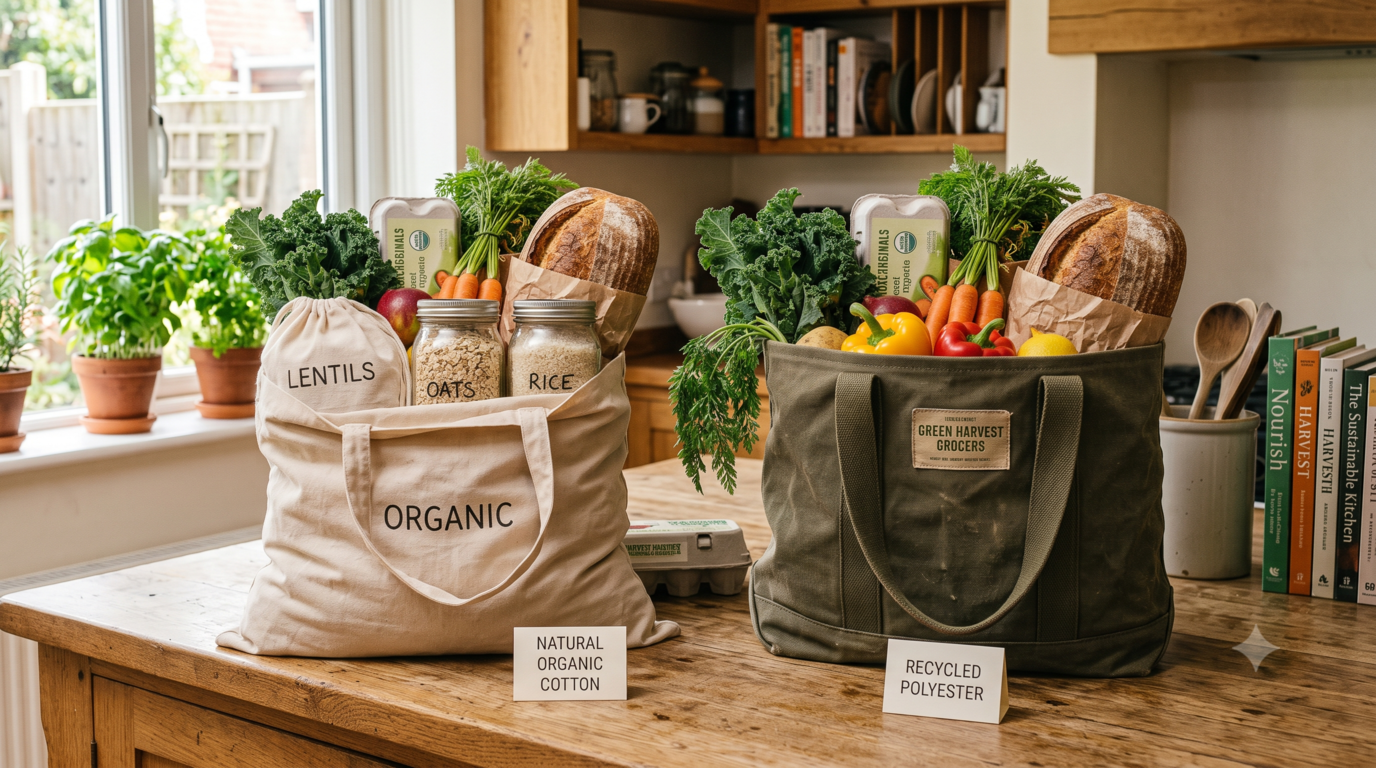
This is where a lot of guides oversimplify, so it’s worth getting right. The instinct is “cotton good, plastic bad,” but the actual research is more nuanced.
A widely cited 2018 lifecycle assessment from the Danish Environmental Protection Agency compared bag materials across many environmental measures, not just carbon, but also water use, toxicity, and ozone impact. Measured that way, and compared against a thin plastic bag that’s reused once as a trash-can liner, the study estimated a conventional cotton bag would need to be reused around 7,100 times to break even, and an organic cotton bag around 20,000 times. Those are eye-popping numbers, and they get quoted out of context constantly.
The important caveat: those figures cover the full basket of environmental indicators and assume the plastic bag gets a second life as a bin liner. If you look at climate impact alone, the gap shrinks dramatically. United Nations Environment Programme figures put a cotton bag at roughly 50 to 150 uses to beat a single-use plastic bag on carbon. Still more than once, but very achievable.
So how do the two materials actually compare?
- Cotton is renewable and biodegradable, and a good canvas bag lasts for years. But cotton is water- and pesticide-intensive to grow, so its production footprint is higher than people assume.
- Polyester and recycled polyester (RPET) have a lower production footprint than cotton and are lightweight and durable. The catch: they’re plastic, so they don’t biodegrade, and they shed microplastic fibers in the wash.
The honest takeaway is the same either way: the single biggest factor is how many times you use the bag. The worst outcome for the planet is collecting a drawer full of totes you rarely touch. Pick a durable bag in whichever material you’ll keep using, then use it for years. To cut the microfiber issue with synthetics, wash them only when they’re actually dirty, air them out between trips, and consider a fiber-catching laundry bag.
Buying Guide
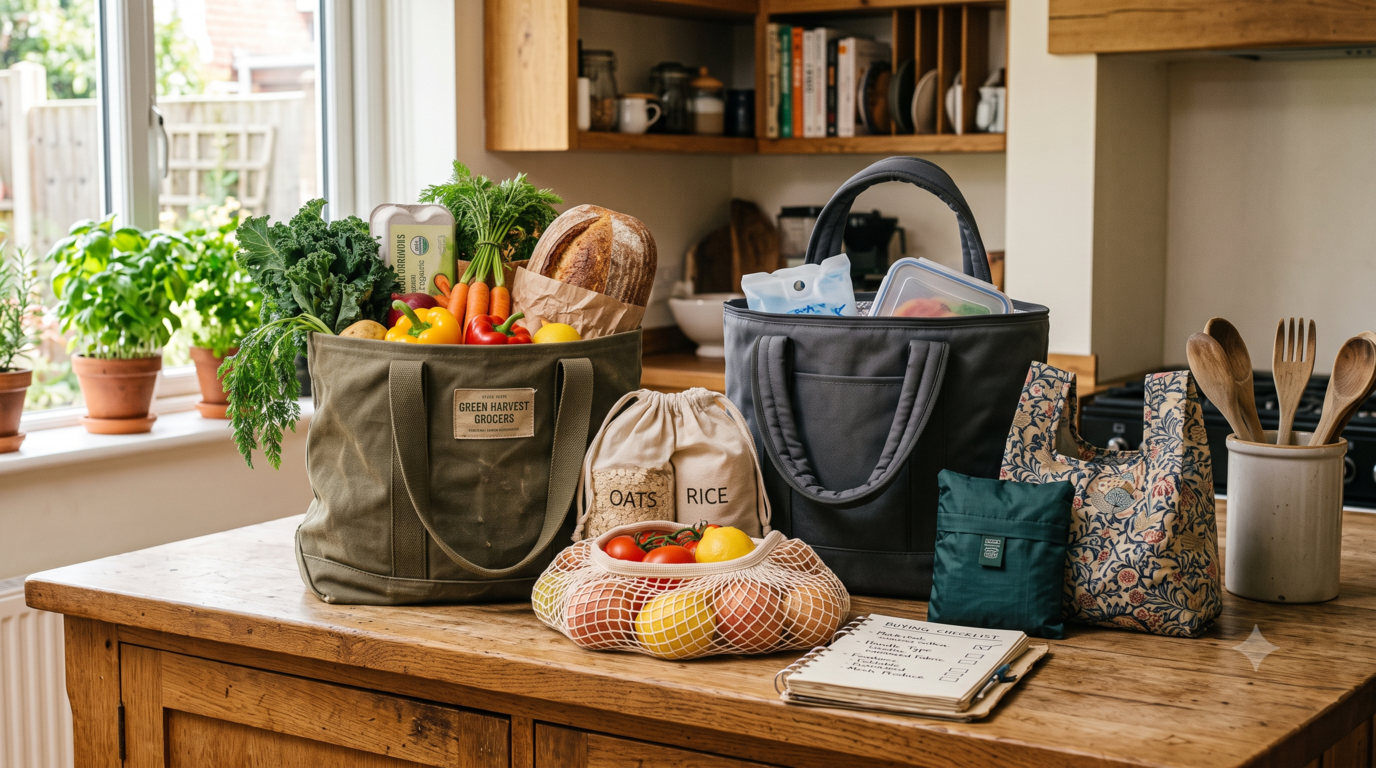
A few quick rules make this an easy decision.
Match the bag to how you shop. Big weekly runs favor a cart system or a few large totes. Frequent small trips favor one packable bag you always have on you. Most people end up with a mix. For more on building smarter shopping habits overall, see our guide to zero waste grocery shopping.
Check the weight rating and the stitching. Reinforced or double-stitched seams are what separate a bag that lasts from one that splits. A higher weight rating usually signals tougher fabric and seams even if you never load it to the max.
Prioritize machine washable. Grocery bags get dirty in ways you can’t see. Bags you can toss in the laundry stay safe to reuse; “spot clean only” bags tend to get abandoned.
Buy fewer, better bags. Three good bags you actually use beat a dozen freebies. Resist grabbing every promotional tote.
Keep them where you’ll use them. This is the make-or-break habit. Store bags in the car, not by the front door, and keep folded produce bags tucked inside your main tote so they’re always there.
On price: expect a few dollars each for thin foldables, mid-teens for a quality single tote like the BAGGU, and around $40 for a full cart system like Lotus. Prices shift over time and by retailer, so confirm the current cost before you buy.
Frequently Asked Questions
How many reusable grocery bags do I actually need?
For most households, three to five totes plus a set of six to nine produce bags covers a normal weekly trip. If you do one big haul, a four-bag cart system can replace your whole setup. Start small and add only if you’re consistently short.
Are reusable bags actually better for the environment?
Yes, as long as you reuse them many times. Reusable bags have a higher upfront footprint than a single thin plastic bag, but that’s offset through repeated use, dozens of times for synthetics on a carbon basis, more for cotton. Using one bag for years easily clears that bar; buying bags you rarely use does not.
How do I clean reusable grocery bags?
Most fabric and mesh bags are machine washable. Wash them when they’re visibly dirty or after carrying anything that leaked, like raw meat or produce, and let them air dry fully before storing to prevent mildew. Washing synthetics less often also reduces microfiber shedding. Wipe down insulated and lined bags by hand.
Will cashiers scan items through reusable produce bags?
Usually, yes. See-through mesh bags scan fine, and most stores are used to them. For items sold by weight, point out the tare weight tag so the cashier can subtract the bag’s weight. If a store seems unsure, a quick check at the service desk sorts it out.
Cotton or polyester reusable bags, which should I choose?
Choose based on what you’ll keep using. Polyester and recycled polyester are lighter, more durable, and have a smaller production footprint, but they’re plastic and shed microfibers. Cotton is biodegradable and pleasant to use but more resource-intensive to make. Either works if you commit to it long-term.
Do reusable bags hold up to heavy groceries?
The good ones do. Look for a weight rating of 40 pounds or more and reinforced stitching. Ripstop nylon totes and structured cart bags routinely handle cans, bottles, and gallons of milk without issue.
Final Verdict
If you want a single recommendation, get a couple of BAGGU Standard bags. They’re durable, fold to nothing, wash easily, and handle almost anything you’ll throw at them. Add a clip-on foldable bag for unplanned stops, and a set of mesh produce bags to skip the plastic in the produce aisle.
For big weekly shops, especially at stores that don’t bag for you, the Lotus Trolley Bag system is worth the upgrade.
Whichever you choose, the bag itself matters less than the habit. The most eco-friendly, money-saving, frustration-killing reusable bag is simply the one you keep in the car and actually use, trip after trip, for years.