Open the cabinet under most bathroom sinks and you’ll find a quiet little graveyard of plastic. Half-used bottles. A tangle of old razor cartridges. Cotton pads, travel minis you forgot you owned, a toothbrush or two waiting to be tossed.
The bathroom is one of the sneakiest sources of household waste, and the reason is simple: hardly anyone keeps a recycling bin in there. So empties go straight in the trash without a second thought, day after day, for years.
Here’s the encouraging part. The bathroom is also one of the easiest rooms to clean up. The changes are small, most save money over time, and you don’t have to overhaul everything in a single weekend. This guide walks you through the most useful zero waste bathroom swaps for beginners — what each one is, how it works, the mistakes that trip people up, and how to start without feeling like you’ve signed up for a second job. It’s one of the easiest rooms to bring in line with a broader zero waste lifestyle.
Why the Bathroom Creates So Much Waste
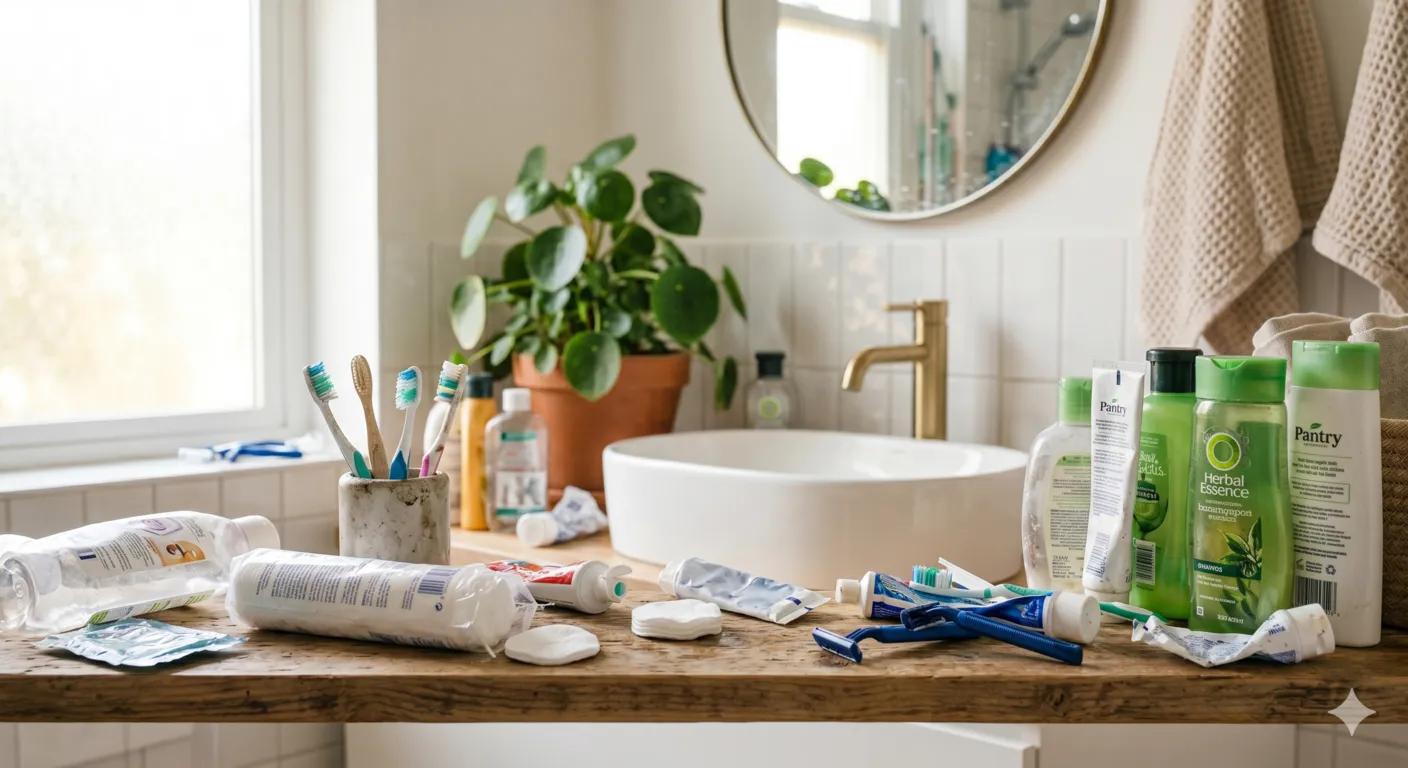
A typical morning is a steady stream of single-use plastic: a toothpaste tube, a plastic toothbrush, shampoo and body wash bottles, a disposable razor, and cotton pads used once and binned.
The numbers behind a few of these add up fast:
- Toothbrushes: National Geographic has reported that Americans throw away roughly a billion plastic toothbrushes a year. Most can’t go in curbside recycling, because the mixed plastics and nylon jam up sorting machinery.
- Razors: An often-quoted EPA estimate from the early 1990s put disposable razors thrown out in the US at around two billion a year. The agency hasn’t updated that figure in decades, so treat it as a rough, dated snapshot rather than a precise number — but the direction is clear, and almost none of it gets recycled.
- Shampoo bottles: Roughly 550 million empty shampoo bottles are estimated to be tossed in the US each year, before you even count conditioner, body wash, and face wash.
Two things make it worse. First, less than 10% of all plastic ever made has been recycled — most goes to landfill or incineration whatever bin you use. Second, much of what you pay for in a liquid product is water; many shampoos and body washes are mostly water by weight, so we ship heavy, bulky bottles of it around the world for a quick rinse.
None of this is about guilt. It just means the bathroom is full of low-effort, high-impact opportunities — a handful of well-chosen, eco-friendly bathroom products can replace most of that single-use plastic.
Reusable Cotton Pads
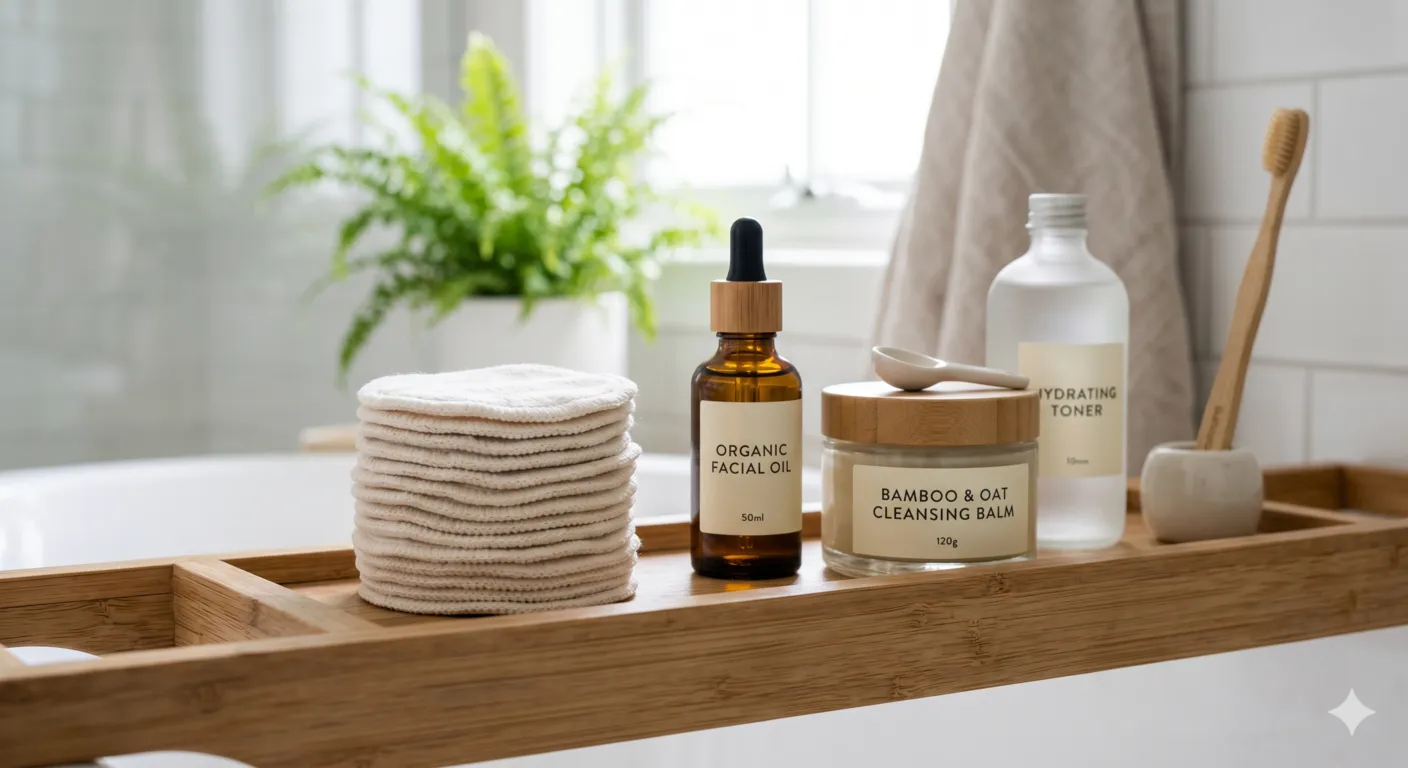
Single-use cotton pads do one job for about ten seconds — removing makeup or applying toner — then they’re trash. Over a year, a daily user gets through hundreds of them.
Reusable cotton pads fix this with a simple swap. They’re small, soft, washable rounds, usually made from cotton, bamboo terry, or a blend. You use one the same way you’d use a disposable, drop it in a little laundry bag, and wash it with your towels. A set of 10 to 16 is enough for most people to never buy disposables again.
How to use them: Wet the pad (or add your product), wipe, then toss it in a mesh wash bag so the small rounds don’t disappear into your machine. Wash on a normal cycle and air-dry. That’s the whole routine.
What to look for: Organic cotton or bamboo, a textured side for makeup and a soft side for toner, and an included wash bag. Skip synthetic microfiber pads if you’re cutting plastic, since they shed tiny fibers in the wash.
Common mistake: Buying a set of four, running out before laundry day, and reaching for disposables again — so buy enough to cover at least a week. Staining is the other slip-up: rinse heavily soiled pads before washing, and don’t panic if white pads go a bit grey over time. They still work.
Bamboo Toothbrushes

Dentists recommend replacing your toothbrush every three to four months, which means one person sends a steady trickle of plastic to landfill for life. Multiply that across a household and it’s a lot of waste for something you use two minutes a day.
A bamboo toothbrush works exactly like a plastic one. The difference is the handle — fast-growing bamboo instead of petroleum-based plastic. It feels slightly lighter and a bit more textured at first, but the brushing experience is the same.
The honest catch: Most bamboo toothbrushes still have nylon bristles, because plant-based ones that clean well are hard to make — so the brush isn’t fully compostable out of the box. At the end of its life, pull the bristles out (pliers help), compost the bare handle, and bin the small tuft of bristles. Not perfect, but it swaps most of the plastic for a renewable material.
What to look for: A handle labeled compostable, removable bristles, and plastic-free or recyclable packaging. Some brands offer take-back recycling for oral care, worth checking if you’d rather skip the bristle step.
Common mistake: Leaving a wet brush in a sealed cup or a pool of water. Bamboo lasts longer when it dries between uses, so store yours upright, head up, with good airflow.
Shampoo Bars
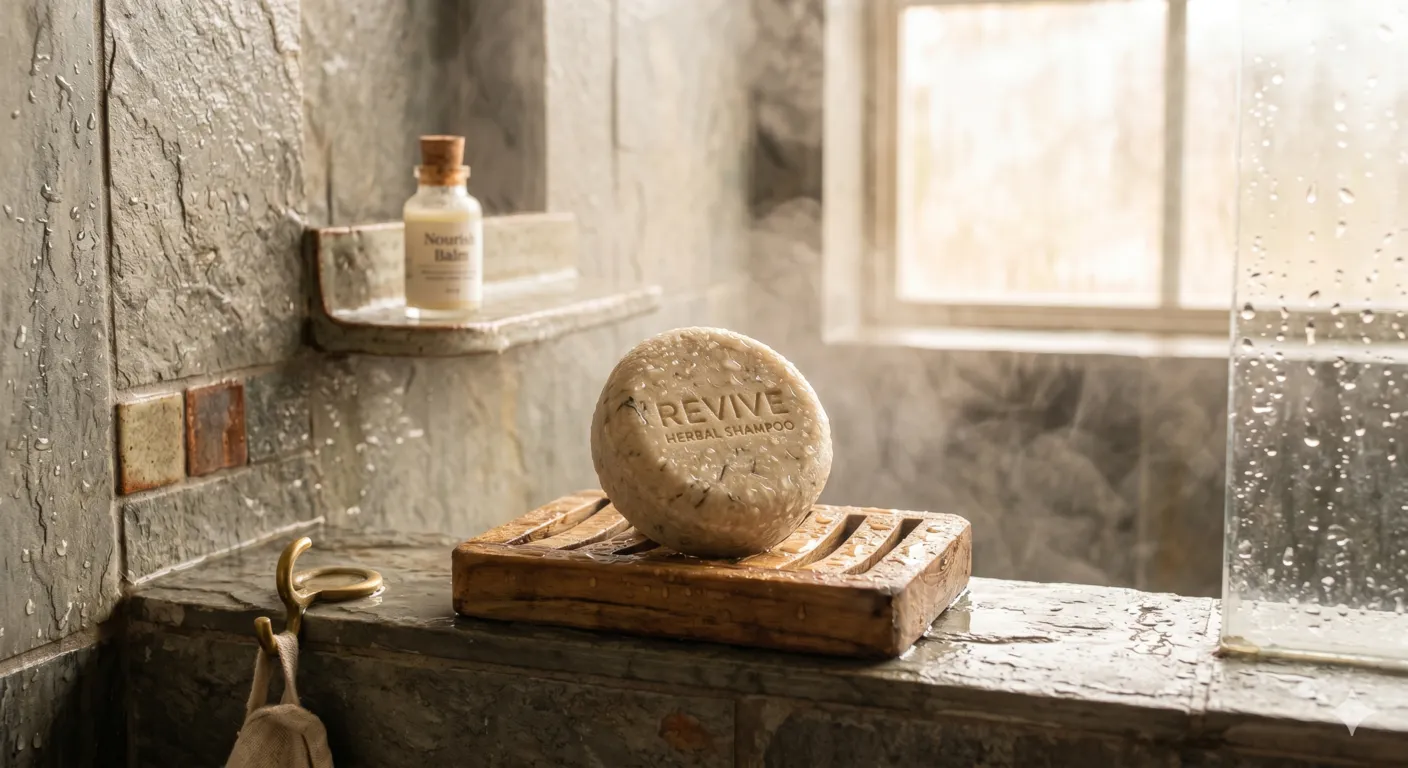
A shampoo bar is what it sounds like: solid shampoo, shaped like a bar of soap, with no bottle at all. One bar replaces a bottle (often several), and because you’re not paying to ship water around, it lasts longer than you’d expect. Brands commonly claim a single bar outlasts two or three liquid bottles, though that depends on your hair and how often you wash.
How to use one: In the shower, rub the bar onto wet hair a few times (or lather it between your hands), then massage into your scalp and rinse. Between washes, keep it somewhere it can drain and dry — a slatted dish or a small wire rack — not in a puddle on the shower floor.
The adjustment period: Nobody warns beginners about this. For the first week or two, some people’s hair feels different — waxy, flat, or “not quite clean.” That’s usually your scalp adjusting after years of liquid shampoo, and it settles. Hard water can leave a film, which a diluted apple cider vinegar rinse helps cut. Don’t judge a bar by day three.
What to look for: A bar made for hair (body soap will dry it out), and ideally a gentle, sulfate-free one if your scalp is sensitive. Conditioner bars exist too, though many people find liquid conditioner easier and switch the shampoo first.
Common mistake: Letting the bar sit in standing water, which turns it to mush and wastes half of it. A draining dish is the single best thing you can do to make a bar last.
Safety Razors
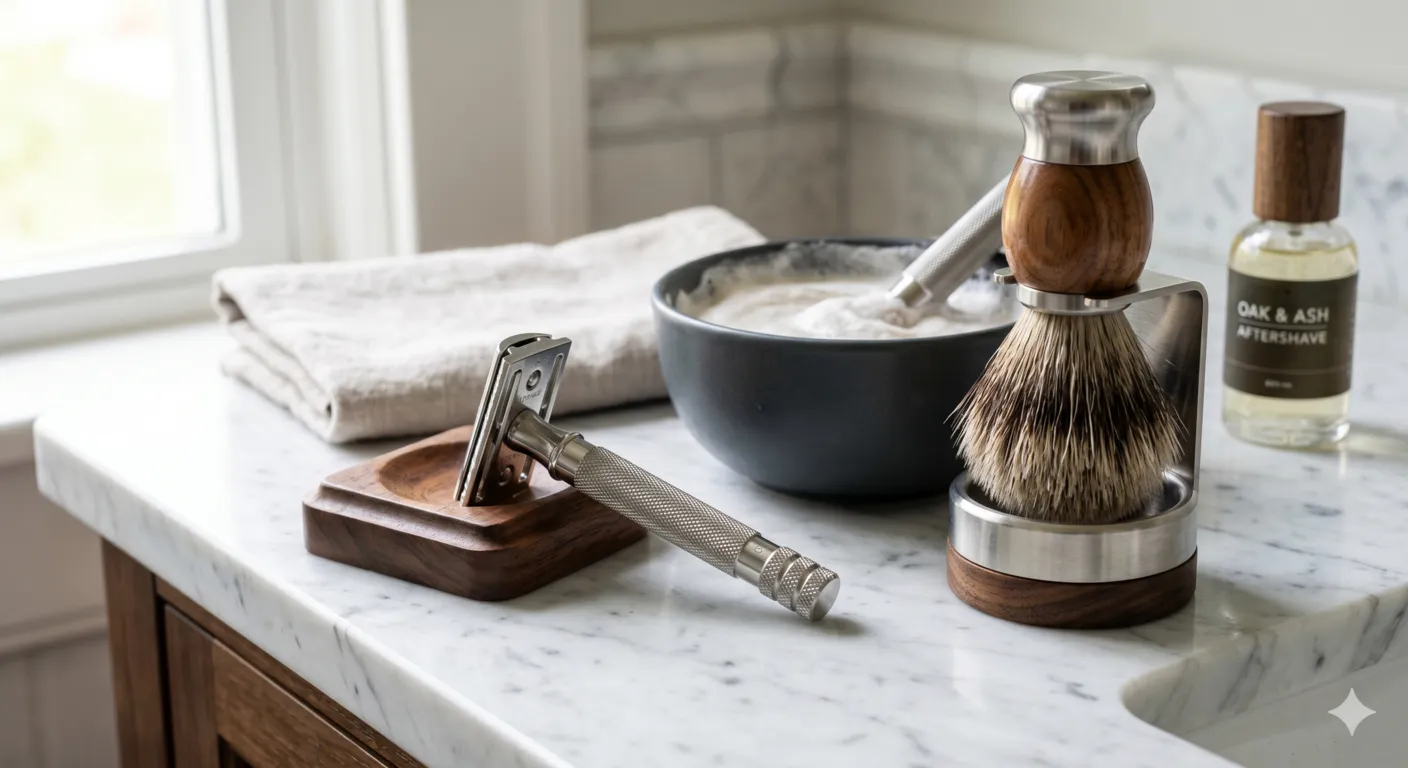
If one swap changes your long-term spending and your waste at the same time, it’s this. A safety razor is a weighted metal handle that holds a single, flat, double-edged steel blade. Instead of throwing away a whole plastic cartridge every few shaves, you replace just the thin blade — and the blade is recyclable steel.
How it works: Load a fresh blade, shave for a couple of weeks, then swap it out. The handle lasts years, often a lifetime. Blades are cheap — a pack of ten double-edged blades often costs a few dollars, while plastic cartridge refills can run several dollars each. Over a year, the math is hard to ignore.
Beginner technique (this matters): A safety razor rewards a light touch. The most common rookie error is pressing down like you would a cartridge razor, which causes nicks:
- Soften your skin with warm water and use a proper shave soap or cream.
- Hold the razor at roughly a 30-degree angle to your skin.
- Let the weight of the handle do the work — almost no pressure.
- Go slowly, in short strokes, with the direction of hair growth first.
Your first shave or two might feel slow, and you may catch a small nick. That’s normal — within a week most people get the feel for it and report a closer, less irritating shave than disposables gave them.
Blade disposal: Used blades are sharp, so never toss them loose in the recycling. Keep a small tin or “blade bank” in your cabinet, drop spent blades through the slot, and once it’s full, seal it and recycle the whole metal container (check local rules).
Common mistake: Buying a fancy razor but skipping shave soap and rushing. Slow down and lather up, and the experience gets much better.
Refillable Products
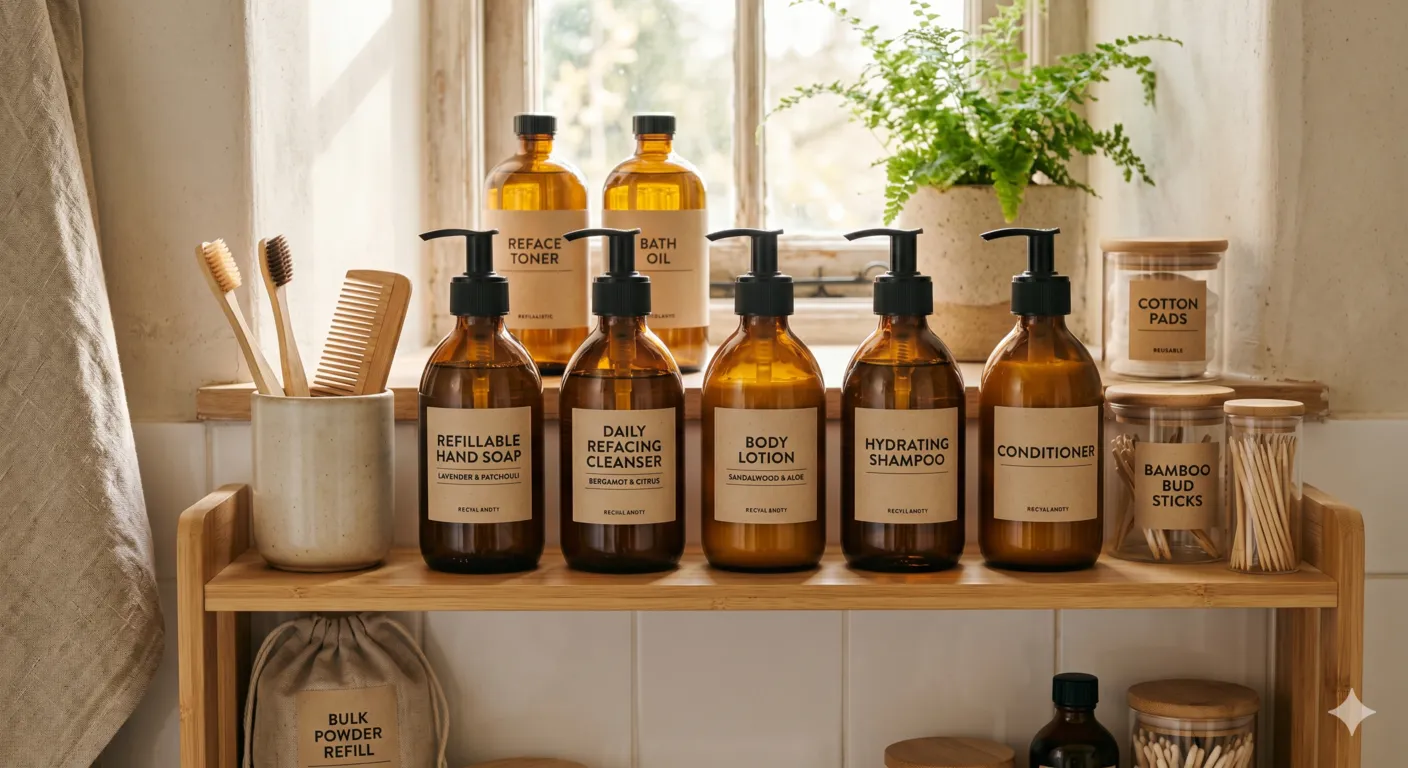
Refillable products tackle the bottles you can’t easily turn into a bar — hand soap, body wash, cleaning sprays, even toothpaste. The idea is to keep the container and replace only what’s inside, which slashes packaging over time.
A few that work well for beginners:
- Refillable hand and body wash: Top up the pump bottle you already own from a large concentrate or refill pouch. Some zero waste shops and refill stations let you bring your own container and fill by weight.
- Toothpaste tablets: Small chewable tabs in a glass jar or compostable pouch instead of a plastic tube. You bite one, brush as normal, and it foams up.
- Plastic-free deodorant: Now sold in cardboard push-up tubes or refillable cases.
- Concentrated cleaners: A reusable spray bottle plus a tablet or sachet you dissolve in water, so you’re not buying a new plastic bottle each time. For more on this, see our guide to natural cleaning products that reduce waste.
What to look for: Whether a true refill exists (some “refillable” products only sell another single-use plastic pod), and whether a refill station near you takes your own containers. Buying concentrates online and topping up at home is the most accessible version for most people.
Common mistake: Chasing the “perfect” eco product across brands and ending up with a shelf of half-used jars. Pick one refill system, stick with it, and finish what you start — that beats a cabinet full of good intentions.
Toilet Paper Alternatives
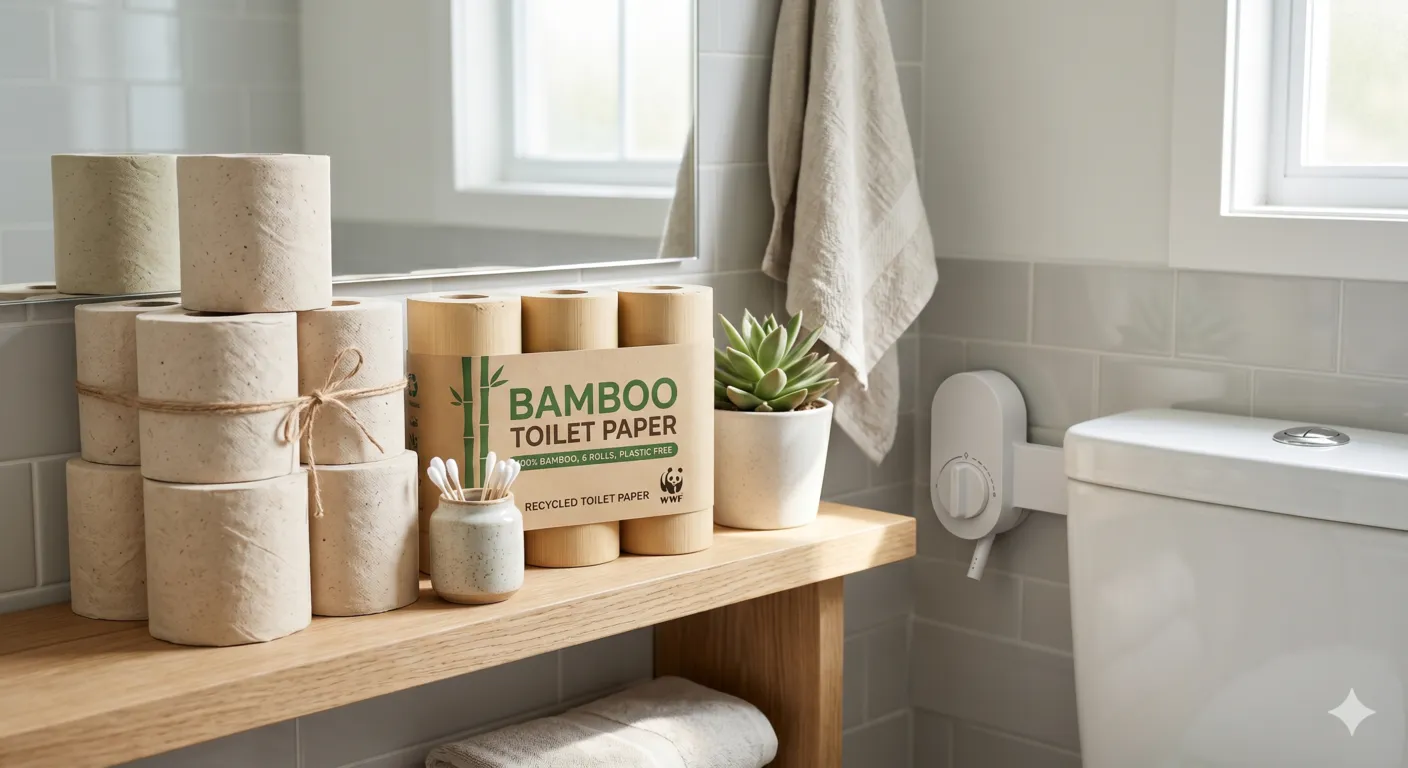
Conventional toilet paper is usually made from virgin wood pulp, and a meaningful share comes from old, slow-growing forests. The average American gets through well over a hundred rolls a year, so the source matters more than it seems.
You have a few greener options:
- Recycled toilet paper: Made from post-consumer paper like office paper and newsprint. Groups such as the NRDC generally rate high-recycled-content paper the most responsible choice, since it reuses existing material and carries a much smaller carbon footprint than virgin pulp.
- Bamboo toilet paper: Made from fast-growing bamboo that regrows without replanting. It beats virgin tree pulp on land use and emissions, and tends to feel softer than recycled. In most life-cycle comparisons it lands just behind recycled paper, so look for an FSC certification to confirm it’s responsibly sourced.
- A bidet: A simple bidet attachment on your existing toilet cuts how much paper you use in the first place. They’re inexpensive, install in minutes, and pay for themselves over time.
What to look for: A high percentage of post-consumer recycled content or FSC-certified bamboo, plus plastic-free (paper or compostable) packaging. Plenty of brands wrap “eco” toilet paper in plastic film, which undercuts the point.
Common mistake: Assuming bamboo is automatically the greenest choice. It’s solid, but recycled content usually edges it out, and the packaging matters as much as the fiber.
Simple Changes That Save Money

A lot of people assume a plastic-free bathroom is more expensive. Some swaps cost more upfront, but several are cheaper over any reasonable stretch of time — good for the planet and your wallet.
Where the savings show up:
- Safety razor blades cost a fraction of cartridge refills, so the handle’s higher upfront price is usually recovered within a year.
- Shampoo and conditioner bars often outlast the bottles they replace, because you’re not rinsing watered-down product down the drain.
- Reusable cotton pads are a one-time buy that replaces an ongoing one, paying for themselves within a few months.
- Refills and concentrates cost less per use than a brand-new bottle every time.
A fair note: prices vary by brand and region, and a few items (a quality safety razor, a bidet) cost money before they save it. Think in terms of total cost over a year or two, not the shelf price today.
Beginner Bathroom Swap Checklist
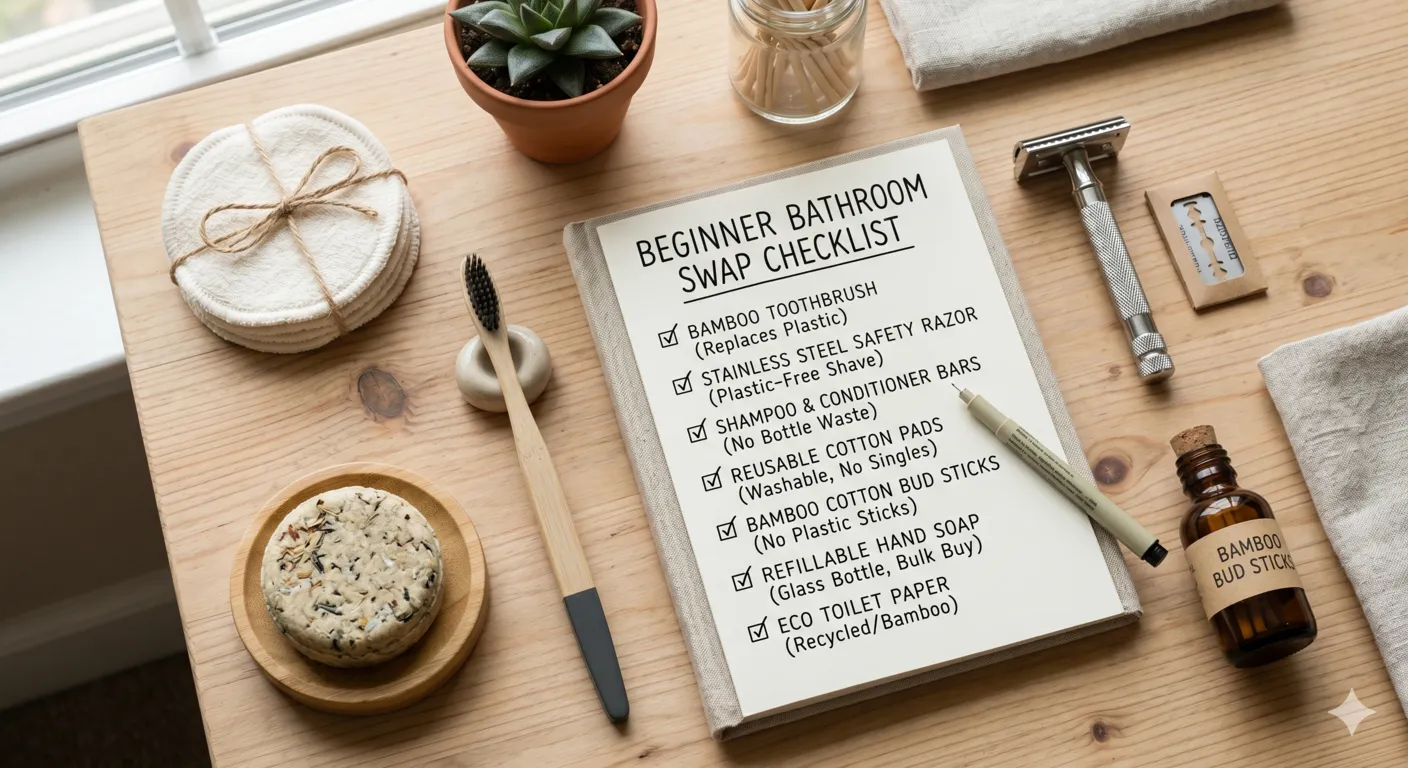
You don’t need to make all these sustainable bathroom swaps at once — that’s the fastest way to give up. The easiest approach is to replace each item as it runs out, so you never throw away something you already own. A sensible order:
- Reusable cotton pads — easiest swap, no learning curve, immediate savings.
- Bamboo toothbrush — switch next time you’d replace your brush anyway.
- Shampoo bar — start with shampoo; add a conditioner bar later if you like it.
- Safety razor — the biggest money-saver, worth the small learning curve.
- Recycled or bamboo toilet paper — an easy subscription you can set and forget.
- Refillable hand soap and body wash — top up bottles you already have.
- Toothpaste tablets and plastic-free deodorant — once the basics feel normal.
Tip: put a small recycling bin in the bathroom today. It captures the empties that used to vanish into the trash, and it costs nothing.
Frequently Asked Questions (FAQs)
Are zero waste bathroom swaps actually cheaper?
Some are, some aren’t. Safety razors, shampoo bars, reusable cotton pads, and refills usually save money over a year because you stop repeatedly buying disposables. A few items cost more upfront, so the savings show up over time rather than on day one.
Do I have to switch everything at once?
No, and you shouldn’t. The best approach is to replace each product only when it runs out, so nothing usable gets thrown away. Most people start with one or two swaps and add more as the habit settles in.
Are bamboo toothbrushes as good as plastic ones?
For cleaning your teeth, yes — the bristles do the same job. The main difference is the handle, which is renewable bamboo instead of plastic. Just remember most bamboo brushes have nylon bristles to remove before composting the handle.
Why does my hair feel weird after switching to a shampoo bar?
That waxy or flat feeling in the first week or two is usually your scalp adjusting, and it typically passes. Hard water can leave a film, which an occasional diluted apple cider vinegar rinse helps with. Give a bar at least two weeks before deciding.
What’s the easiest first swap for a complete beginner?
Reusable cotton pads or a bamboo toothbrush. Both ask for almost no change to your routine, cost little, and build momentum before you tackle bigger swaps like a safety razor.
Is bamboo or recycled toilet paper better?
Both beat conventional virgin-pulp paper. In most independent assessments, high-recycled-content paper edges out bamboo because it reuses existing material, while responsibly sourced (FSC-certified) bamboo is a close second. Either is a strong choice, and plastic-free packaging matters too.
Final Thoughts
A plastic-free bathroom isn’t about being perfect or buying a cabinet full of trendy products. It’s about noticing where the waste comes from and quietly trading a few single-use items for ones that last.
Start with whatever feels easiest — a set of cotton pads, a bamboo brush, a switch to recycled toilet paper. Let that change become normal, then add the next. Within a few months you’ll look under the sink and see fewer empties, a little more money in your budget, and a routine that fits your life just as well as the old one did.
Small swaps, repeated daily, are what real sustainable living looks like. The bathroom is a great place to prove it to yourself.