Open the cabinet under most kitchen sinks and you’ll find the same scene: a row of plastic bottles, each one for a single job, each one in its own colored packaging, and most of them replaced every few weeks. A spray for glass. A spray for counters. A spray for the bathroom. A scrub for the tub. It adds up fast, both in money and in plastic.
The good news is that you can clean a whole home well with a handful of simple ingredients, most of which you might already own. Natural cleaning products cut down on packaging, reduce the chemicals you breathe in, and usually cost a fraction of the branded stuff. They aren’t magic, and there are a few real limits worth knowing about, which we’ll cover honestly.
In short, natural cleaning products are cleaners made from simple, plant- or mineral-based ingredients like vinegar, baking soda, castile soap, and citrus, rather than synthetic detergents and fragrances. This guide walks through what each one does, how to use it without damaging your surfaces, when to buy versus make your own, and which products actually pull their weight. It’s one small corner of a broader zero waste lifestyle, but a very achievable one.
Why Conventional Cleaning Products Create Waste
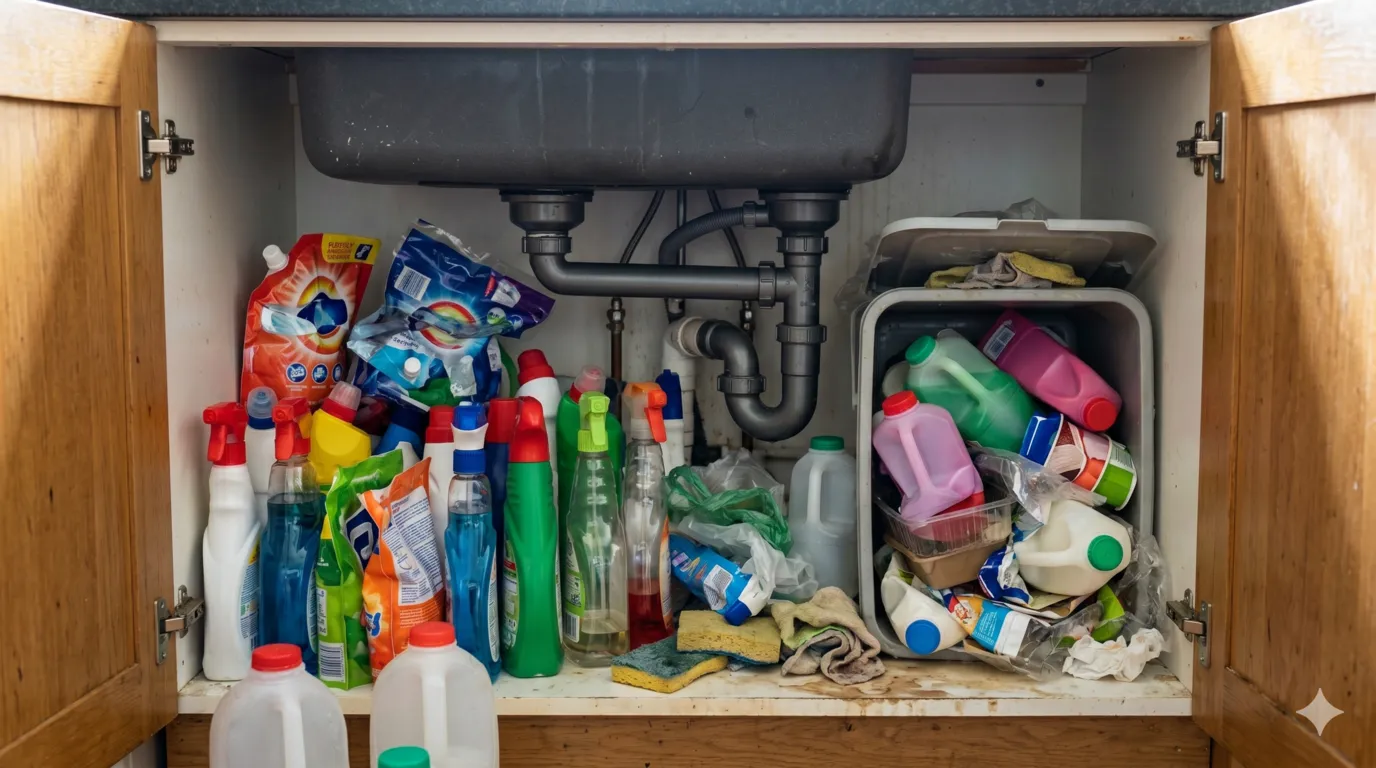
The waste problem with standard cleaners has less to do with the liquid inside and more to do with everything around it.
Most spray cleaners are mostly water. When you buy a bottle of all-purpose spray, you’re paying to ship water across the country in a heavy plastic container. That weight burns fuel in transit, and the bottle itself usually ends up in the trash.
The packaging is harder to recycle than it looks. A trigger-spray bottle is a mix of materials: a rigid plastic body, a plastic-and-metal spray mechanism, and a small spring inside the nozzle. Many recycling programs can’t process the sprayer, so the whole thing often goes to landfill even when people try to do the right thing.
Then there’s the “one product per surface” habit. Marketing pushes a separate cleaner for floors, glass, bathrooms, kitchens, and stainless steel. Each one is another bottle, another plastic lid, another purchase on repeat.
A quick note on “natural” and greenwashing
The word “natural” is not regulated, so a label can say it freely. A product marketed as eco friendly cleaning products may still come in single-use plastic or contain synthetic fragrance. This is why focusing on simple ingredients and refillable packaging matters more than trusting a green leaf on the front of a bottle. Sustainable living works best when you check what’s actually inside and how it’s packaged.
Vinegar as a Natural Cleaner
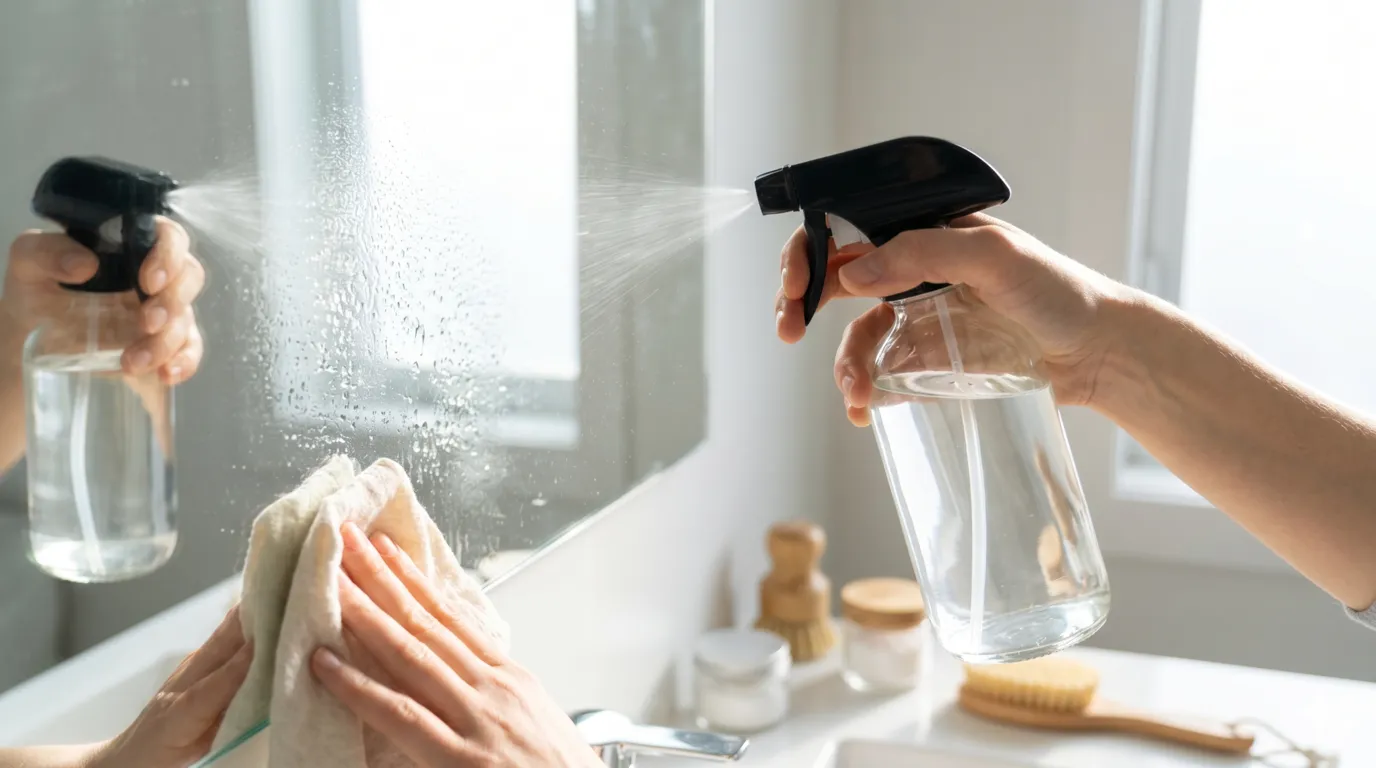
Plain white distilled vinegar is the workhorse of natural cleaning. It’s cheap, it’s sold almost everywhere, and a single bottle replaces several specialized sprays.
Vinegar is mildly acidic, which makes it good at dissolving the things acid breaks down: limescale, hard-water spots, soap scum, and mineral buildup. It also cuts through grime on glass and leaves no streaky residue.
Here’s where vinegar earns its place:
- Glass and mirrors — diluted vinegar leaves windows clear and streak-free.
- Hard-water stains — it dissolves the chalky buildup around faucets and on shower glass.
- Kettles and coffee makers — it removes limescale from the inside.
- Deodorizing — it neutralizes lingering smells rather than masking them.
A simple all-purpose spray: mix equal parts white vinegar and water in a reusable bottle. For tougher limescale, use the vinegar straight and let it sit for a few minutes before wiping.
Where you should not use vinegar
This is the part most “natural cleaning” articles skip, and it matters. Because vinegar is acidic, it can damage some surfaces:
- Natural stone like marble, granite, travertine, and limestone. The acid etches and dulls the finish permanently.
- Unsealed grout and stone tile, which can pit over time.
- Waxed or oiled wood, where it can strip the finish.
- Rubber seals and gaskets, which can degrade with heavy, repeated use.
One safety rule with no exceptions: never mix vinegar with bleach. The combination releases chlorine gas, which is dangerous to breathe. Keep these two far apart.
Baking Soda Uses Around the Home

If vinegar handles acidic jobs, baking soda handles the scrubbing and the smells. It’s a mild abrasive, so it lifts grime without scratching most surfaces, and it neutralizes odors instead of covering them.
Practical baking soda uses:
- Scouring sinks, tubs, and stovetops — sprinkle it on, add a little water to make a paste, and scrub.
- Cleaning scorched pots and pans — let a baking soda paste sit on the burnt area before scrubbing.
- Deodorizing the fridge — an open box absorbs food smells.
- Freshening carpets and upholstery — sprinkle, wait fifteen minutes, then vacuum.
- Refreshing drains — pour some in, follow with hot water.
- Cleaning the oven — a paste left overnight loosens baked-on grease.
Baking soda is one of the most versatile zero waste cleaning products because it’s sold in plain cardboard, costs very little, and works for both cleaning and deodorizing.
The vinegar and baking soda myth
You’ve probably seen the fizzing trick where people combine vinegar and baking soda for a “super cleaner.” Here’s the honest version: when an acid (vinegar) meets a base (baking soda), they neutralize each other. The dramatic fizz is mostly carbon dioxide, and what’s left behind is largely water and a bit of salt.
The fizzing action can help loosen gunk in a clogged drain through sheer bubbling, so it has a use. But as a cleaning solution you mix up and store in a bottle, the two cancel each other out. Use them for separate jobs to get the most from each. And never seal a vinegar-and-baking-soda mix in a closed container, since the gas can build pressure.
Castile Soap Benefits
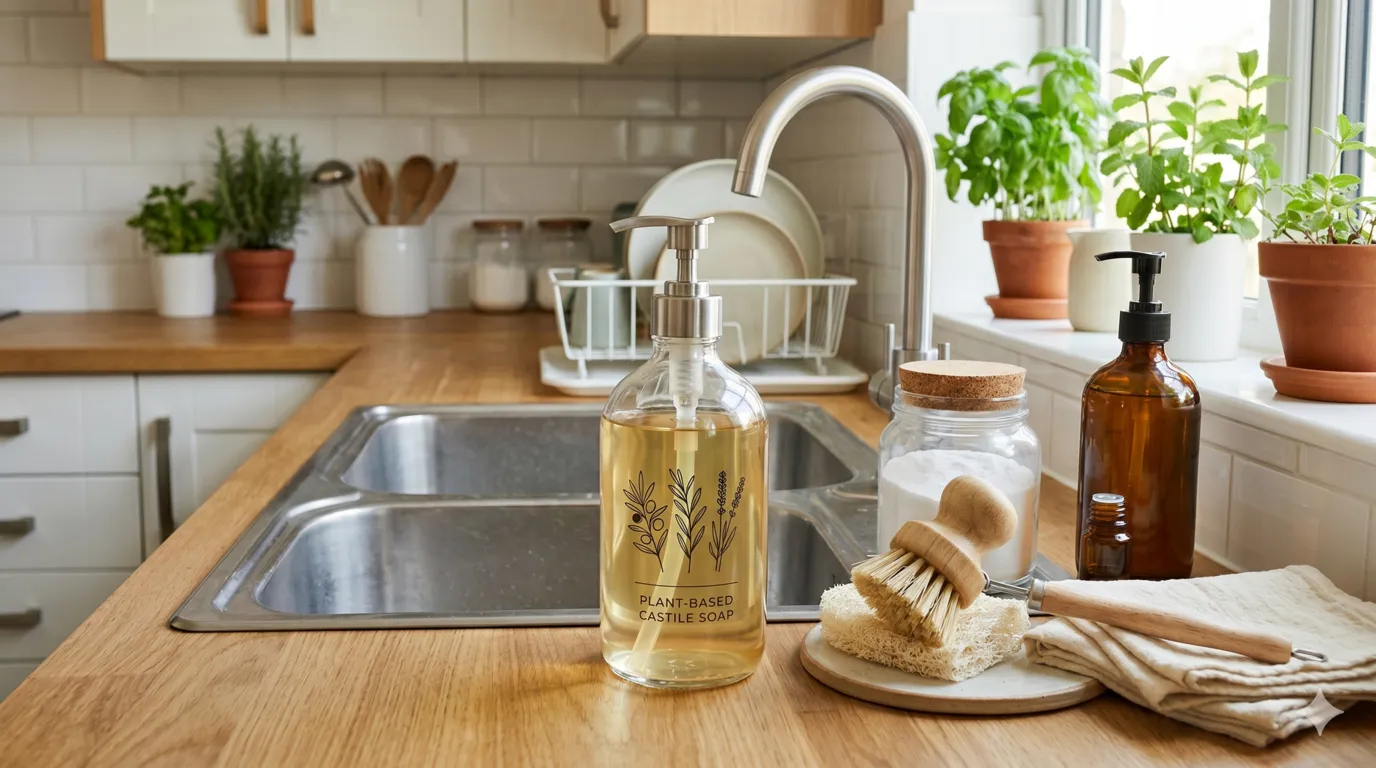
Castile soap is a concentrated soap made from plant oils such as olive, coconut, or hemp. It’s biodegradable, gentle, and remarkably flexible. One bottle, heavily diluted, can replace dish soap, hand soap, floor cleaner, and general surface spray. Dr. Bronner’s is the brand most people recognize, though others exist.
Because it’s concentrated, a little goes a long way. A few drops in a sink of warm water handles dishes. A tablespoon or so in a bucket of water cleans floors. A small squirt in a foaming dispenser makes hand soap.
What makes castile soap appealing for sustainable cleaning products:
- It’s plant-based and breaks down naturally.
- It’s gentle enough for many everyday surfaces and even some personal care.
- Its concentration means less packaging per use, since one bottle lasts a long time.
Don’t mix castile soap with vinegar or lemon
This is the classic beginner mistake. People try to combine castile soap with vinegar or lemon to make one do-it-all spray, and they end up with a curdled, white, greasy film. Soap is a base, and acid breaks it back down into its oily components, so the two effectively destroy each other.
If you want to use both, clean with diluted castile soap first, then rinse or follow with diluted vinegar as a separate step. Never mix them in the same bottle.
Lemon and Citrus Cleaners
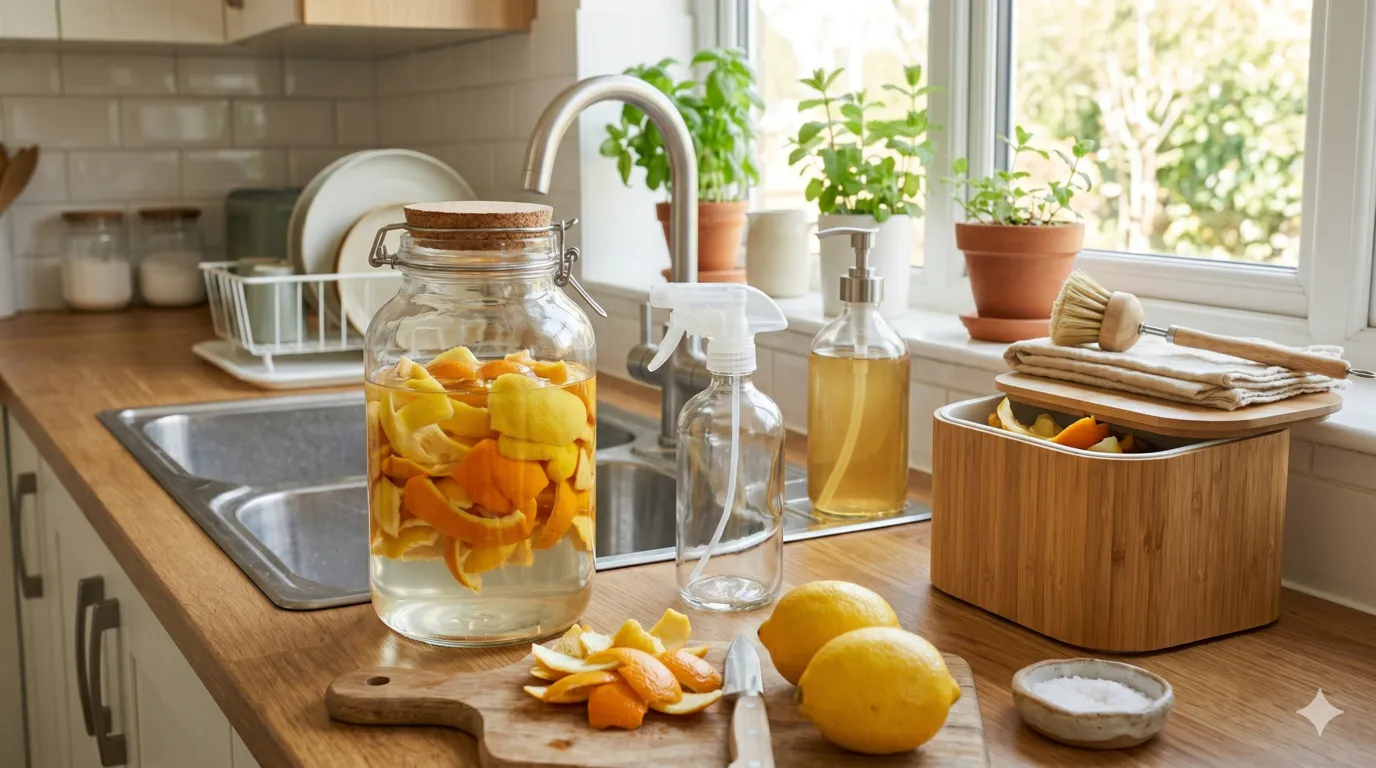
Citrus brings a fresh scent and a bit of natural grease-cutting power. Lemon juice is mildly acidic, and the oils in citrus peel help dissolve grease and grime.
Everyday uses for lemon and citrus:
- Deodorizing cutting boards — rub with a cut lemon, then rinse.
- Freshening a garbage disposal — grind a few citrus peels.
- Shining metal fixtures — lemon helps cut light mineral spots.
- Brightening stained surfaces — a lemon-and-baking-soda paste can lift some stains.
A nice waste-reducing trick: save your citrus peels and steep them in white vinegar for a couple of weeks to make a better-smelling cleaning vinegar. It uses up scraps you’d otherwise toss, and any leftover peels can go in your home compost. This is a small habit, but it’s exactly the kind of waste reduction that adds up across a year.
Two cautions: lemon is acidic, so the same surfaces you avoid with vinegar (natural stone especially) apply here. And lemon smells clean but is not a disinfectant, which brings us to an important point later on.
Refillable Cleaning Products
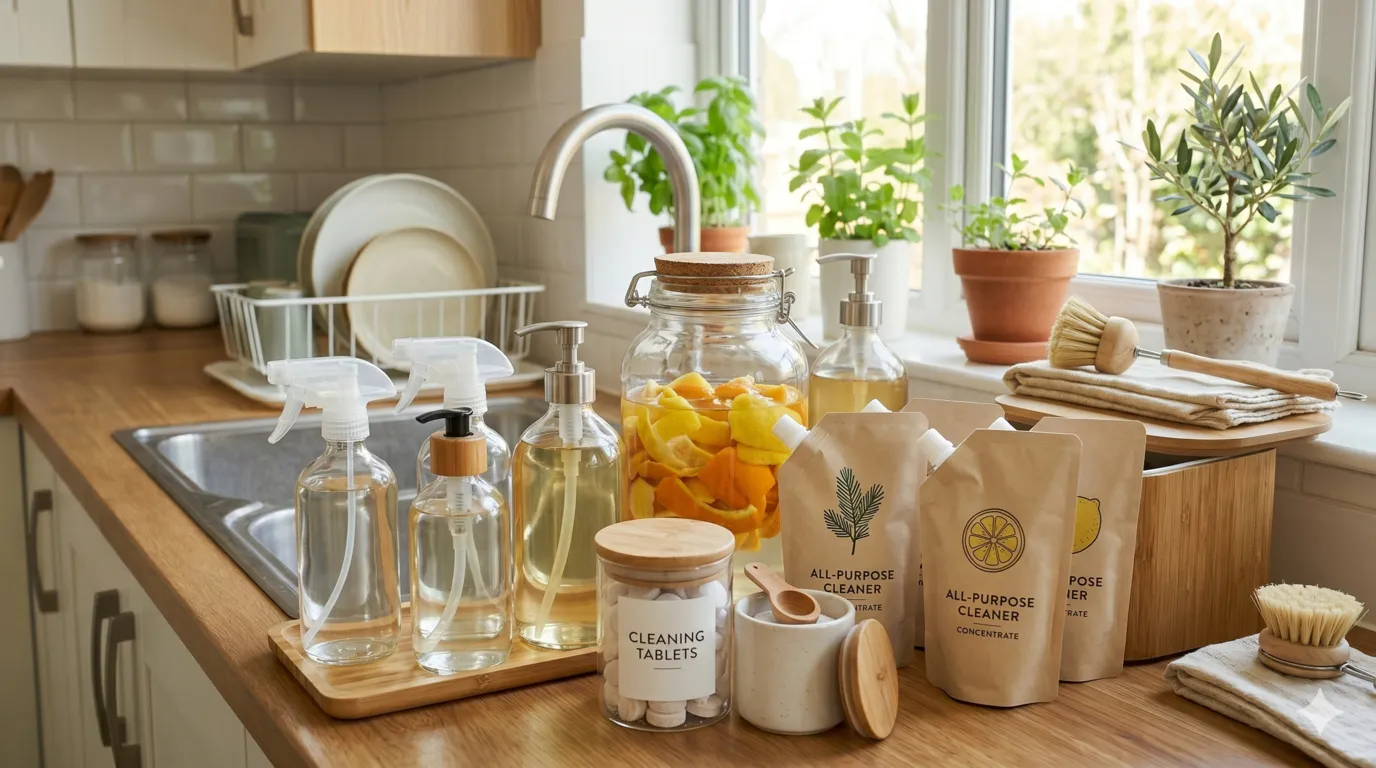
Here’s the truth that often gets lost: for cutting waste, the packaging usually matters more than the ingredient. You can make the most natural spray in the world, but if you keep buying new plastic bottles, the waste problem hasn’t really gone away.
Refillable cleaning products solve this directly. A few approaches that work well:
- Refill stations at zero-waste or bulk stores, where you bring your own container and fill up on cleaner by weight.
- Concentrate refills, where you keep one sturdy bottle and buy small concentrated pods or pouches to mix with water at home. You ship the active ingredient, not the water.
- Dissolvable tablets, which drop into a reusable bottle of water to make a fresh spray.
- Bulk pantry staples, buying vinegar, baking soda, and castile soap in larger sizes or cardboard packaging.
The single highest-impact habit is simple: keep one or two good spray bottles and reuse them for years. A reusable bottle plus a refill or a homemade mix is the core of a plastic-free lifestyle in the cleaning cupboard. These small eco-friendly habits quietly remove a steady stream of plastic from your home.
Store-Bought vs DIY Options
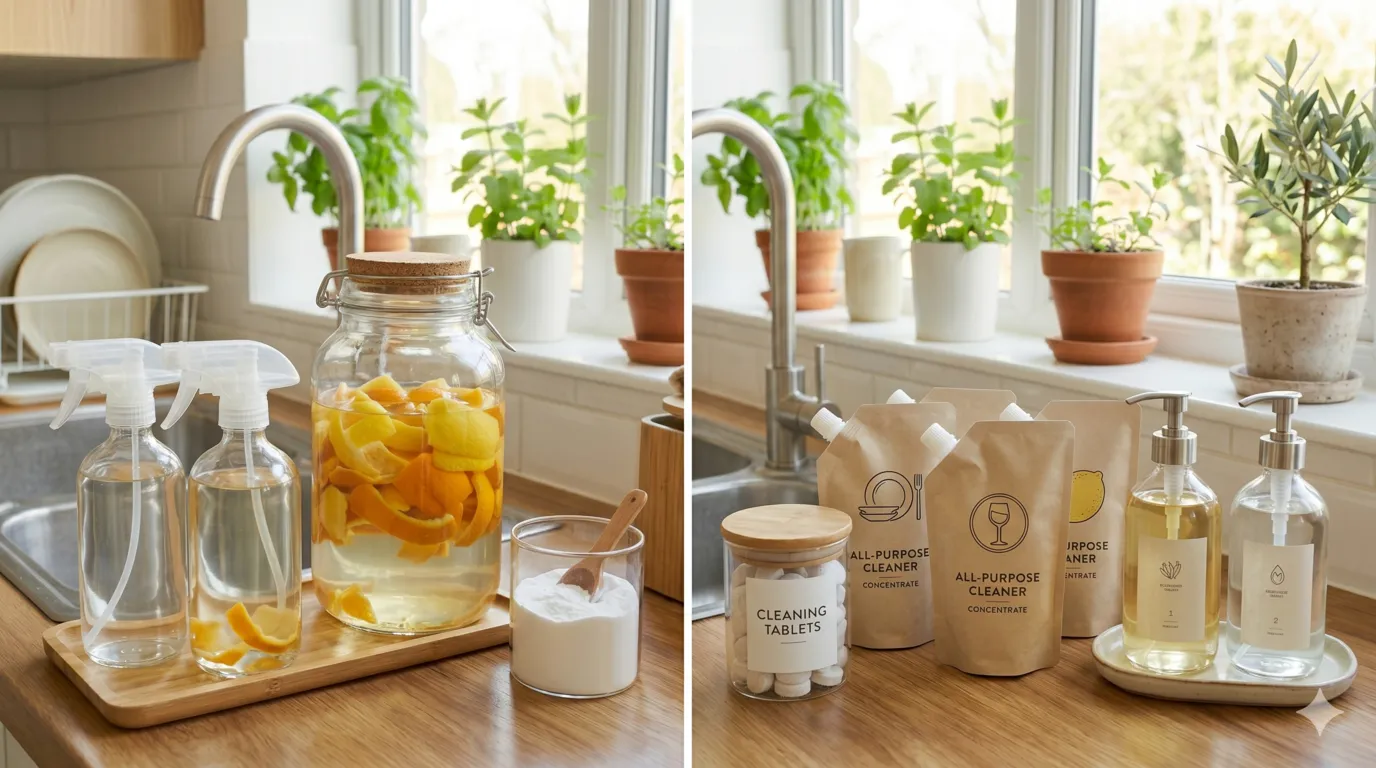
You don’t have to choose one camp. Most people who stick with natural cleaning long-term land on a mix, and that’s the realistic approach. If you want ready-made formulas rather than winging it, see our DIY zero waste cleaning recipes.
Making your own is cheap, lets you control exactly what goes in, and creates almost no packaging if you reuse bottles. The trade-offs: it takes a little time, homemade mixes can have a shorter shelf life, and results can vary depending on your ingredients and water.
Buying eco friendly cleaning products is convenient, consistent, and sometimes third-party certified, with refill options that still cut packaging. The trade-offs: it costs more than DIY, and even the greenest brands involve some packaging.
A sensible split that works for most homes:
- Make the easy ones: all-purpose spray, glass cleaner, and basic scrubbing paste. These are simple and reliable to mix yourself.
- Buy the hard ones: dishwasher detergent, laundry products, tough degreasers, and a registered disinfectant for when you actually need one.
There’s no prize for doing everything from scratch. Choose the version you’ll stick with.
Which Natural Products Actually Work?
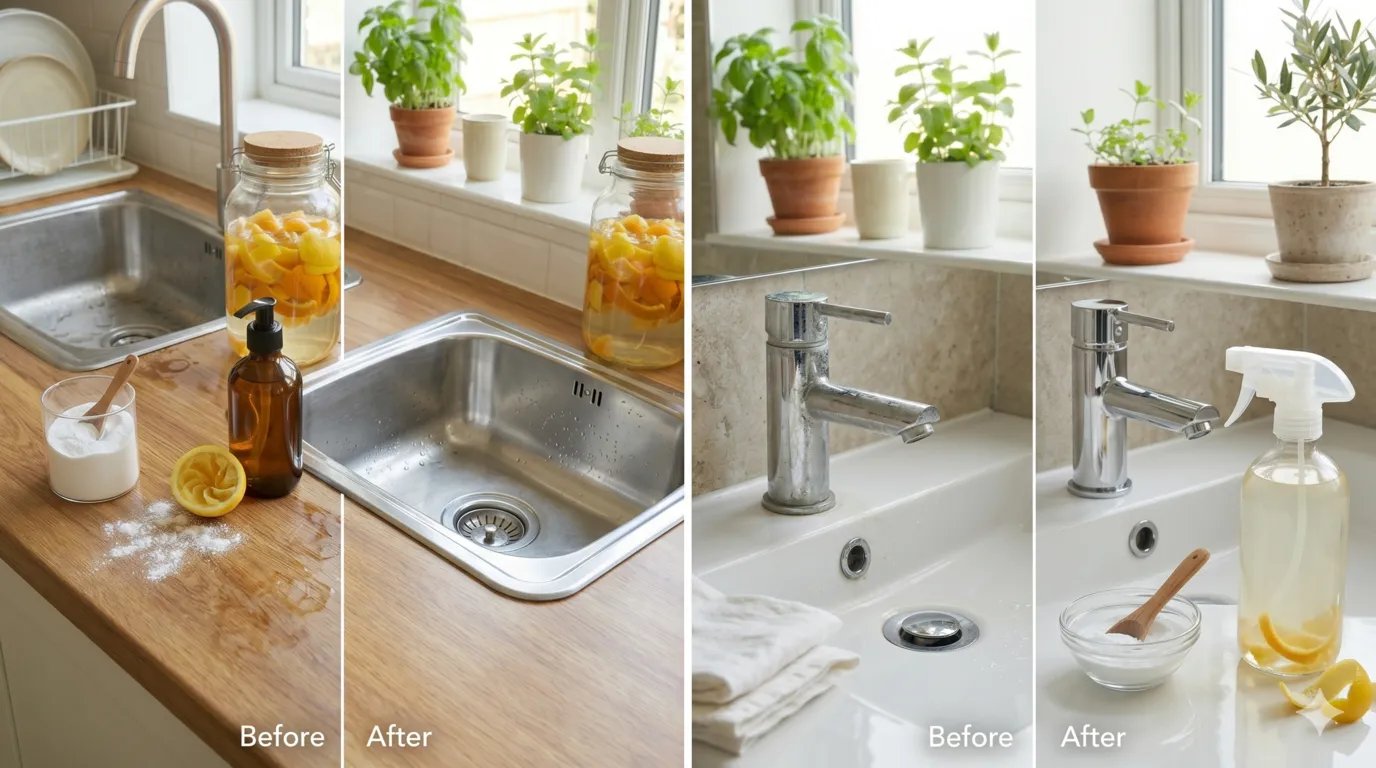
This is where honesty separates a useful guide from a fluffy one. Natural products are excellent at many jobs and genuinely weak at a few. Knowing the difference saves you frustration.
What natural cleaners do well:
- General cleaning — castile soap and diluted vinegar handle most everyday dirt.
- Glass and shine — vinegar leaves mirrors and windows streak-free.
- Limescale and hard water — vinegar dissolves mineral buildup reliably.
- Scrubbing and deodorizing — baking soda lifts grime and absorbs odors.
- Grease — castile soap and citrus cut through it.
Where natural cleaners fall short:
The big one is the difference between cleaning and disinfecting. Cleaning removes dirt and many germs from a surface. Disinfecting means killing pathogens to a tested standard. In the US, products that claim to kill germs must be registered with the EPA. Vinegar, lemon, and baking soda clean well and may reduce some microbes, but they are not registered disinfectants.
For everyday tidying, that’s fine. But for situations that call for true disinfection, such as the counter where you cut raw chicken, or surfaces during illness in the house, reach for a registered disinfectant and use it as directed. This isn’t a knock on natural cleaning; it’s just matching the tool to the job.
Natural products can also struggle with heavy mold and certain stubborn stains, where a stronger targeted product sometimes wins.
One more myth worth retiring: “natural” does not automatically mean “safe.” Many essential oils added to homemade cleaners are harmful to pets, especially cats, which can’t process certain compounds the way humans do. Store all your cleaners, homemade or not, in clearly labeled containers and keep them away from children and animals.
Frequently Asked Questions
Are natural cleaning products as effective as conventional ones?
For most everyday cleaning, yes. Vinegar, baking soda, and castile soap handle the large majority of household jobs well. The main exception is disinfecting, where a registered disinfectant is the more reliable choice.
Can I mix vinegar and baking soda?
You can, but they neutralize each other, so the mixture is weaker than people expect. The fizzing helps loosen clogs in a drain, but it’s not a powerful all-purpose cleaner once combined. Use them on separate jobs, and never seal the mix in a closed container.
Is vinegar safe to use on all surfaces?
No. Avoid vinegar on natural stone like marble and granite, on unsealed grout, and on waxed wood, since the acid can damage them. And never mix vinegar with bleach, as it creates toxic chlorine gas.
Are natural cleaning products safe for kids and pets?
They’re generally gentler than synthetic cleaners, but “natural” doesn’t mean risk-free. Essential oils in particular can be harmful to pets. Store every cleaner safely and out of reach, just as you would a conventional one.
How do refillable cleaning products reduce waste?
They cut out single-use plastic bottles and avoid shipping heavy water across the country. By reusing one bottle and refilling it with concentrate, tablets, or bulk product, you remove a steady stream of packaging from your home.
Do natural products disinfect or kill germs?
They clean surfaces and can reduce some microbes, but they are not EPA-registered disinfectants. When you specifically need to kill pathogens, use a registered disinfectant.
Final Thoughts
You don’t have to overhaul your whole cleaning routine in a weekend. The easiest way to start is to swap one product. When your all-purpose spray runs out, mix a vinegar-and-water bottle instead and see how it goes.
From there, a short list covers most of a home: vinegar for glass and limescale, baking soda for scrubbing and odors, castile soap for general cleaning and dishes, and citrus for freshening and grease. Add a reusable bottle or two and a refill habit, and you’ve replaced a cabinet full of plastic with a handful of staples.
The aim isn’t a perfect, waste-free home. It’s steady progress, fewer bottles in the trash, fewer harsh chemicals indoors, and a little more money kept in your pocket. Natural cleaning products make that an easy, practical place to begin.