Take a look in your kitchen trash tonight. For most households, what’s in there tells a familiar story: a torn snack wrapper, the film off a container of tomatoes, a heel of bread gone stale, coffee grounds, the wrapper from last night’s cheese. The kitchen is the busiest room in the house, and it’s also where most of our everyday garbage is born.
Building a zero waste kitchen isn’t about achieving a perfectly empty trash can or filling your shelves with matching glass jars for a photo. It’s about setting your kitchen up so that less waste comes in, more of what you have actually gets used, and whatever’s left has somewhere better to go than the landfill.
This guide walks you through it step by step — what a zero waste kitchen really is, why kitchens generate so much waste in the first place, and the practical changes that make the biggest difference. No guilt, no all-or-nothing rules. Just things that work in a real home. The kitchen is usually the best place to start building a full zero waste lifestyle.
What Is a Zero Waste Kitchen?

A zero waste kitchen is a kitchen run in a way that sends as little as possible to the landfill. You do that by reducing what comes in (especially single-use packaging and food you won’t eat), reusing and repairing what you already own, and composting or recycling whatever’s left.
The phrase “zero waste” trips people up. Almost no household truly hits zero, and you don’t need to. Think of it as a direction, not a finish line. A kitchen that throws away half as much as it did last year is a genuine win.
It helps to keep a simple order of priority in mind:
- Refuse what you don’t need (free samples, extra bags, single-use cutlery).
- Reduce what you do buy.
- Reuse the containers, bags, and jars you already have.
- Recycle what you can’t avoid.
- Rot (compost) food scraps instead of trashing them.
Work down that list in order. Refusing and reducing always beat recycling, because the cleanest waste is the waste that never enters your home in the first place.
Why Kitchens Produce So Much Waste
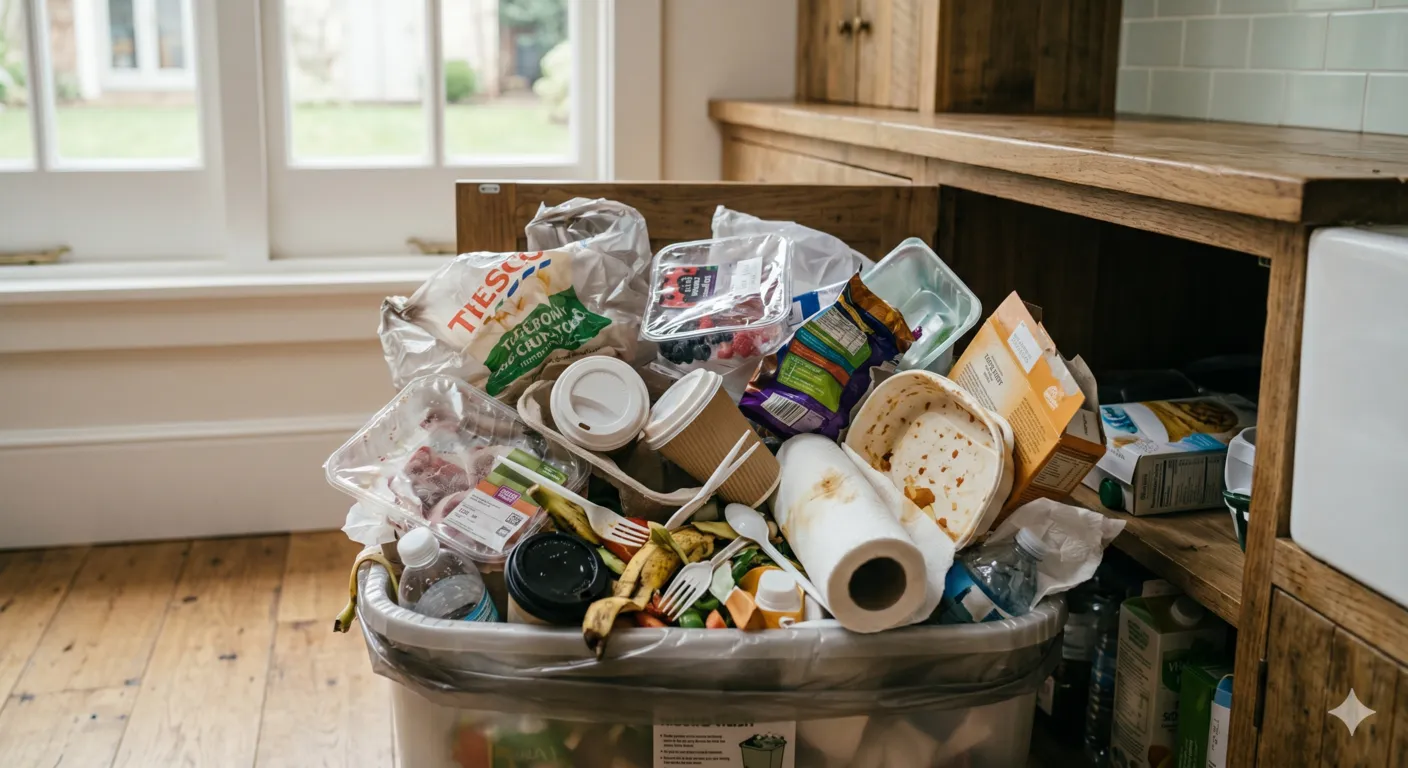
The kitchen has a waste problem for a simple reason: it’s where two of the most wasteful parts of modern life meet — packaged food and disposable convenience.
Almost everything you buy to eat arrives wrapped in something. Produce comes shrink-wrapped or bagged, snacks in foil-lined plastic, meat on styrofoam trays, drinks in bottles and cans. Then there’s the food itself, which spoils if you don’t get to it in time. Add the daily disposables — paper towels, plastic wrap, foil, sponges, takeout containers — and it piles up fast.
Three culprits cause most of it:
- Food packaging you throw away within minutes of getting home.
- Wasted food that spoils, gets forgotten, or gets cooked and never eaten.
- Single-use kitchen items like paper towels and plastic wrap that get used once and tossed.
Knowing where the waste actually comes from is half the battle. Once you can see the pattern in your own trash, you know exactly what to target — and you stop wasting effort on things that barely move the needle.
Start With What You Already Have
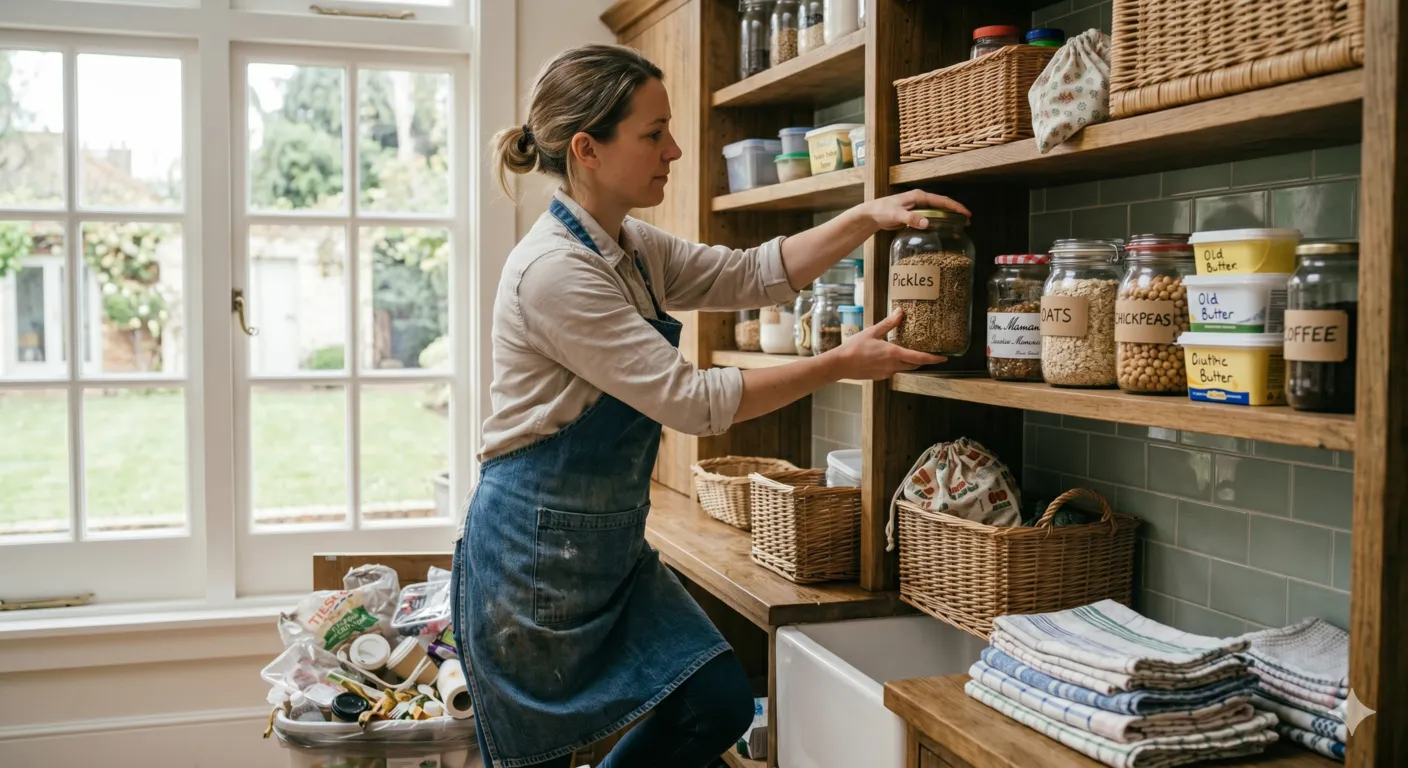
Here’s the advice that saves people the most money and prevents the most waste, and it’s the opposite of what most “eco starter kit” ads suggest: don’t throw anything out to get started.
It feels productive to dump all your plastic containers and replace them with glass, or to toss your plastic utensils for bamboo. But throwing away usable items and buying new ones creates more waste, not less — and it costs you money for no real benefit. The plastic tub you already own is far greener than a brand-new “eco” jar that had to be manufactured and shipped to you.
So before you buy a single thing, shop your own cabinets:
- Wash and keep glass jars from pasta sauce, jam, and pickles — that’s free storage.
- Use the containers, bags, and bottles you already have until they wear out.
- Round up the dish towels, cloths, and rags hiding in your drawers.
- Dig out the reusable bags you’ve collected and actually start using them.
A sustainable kitchen is built on using what exists, not buying your way to a greener label. The pretty jars came later for most people. The real work starts with what’s already on your shelves.
Replace Disposable Items Slowly
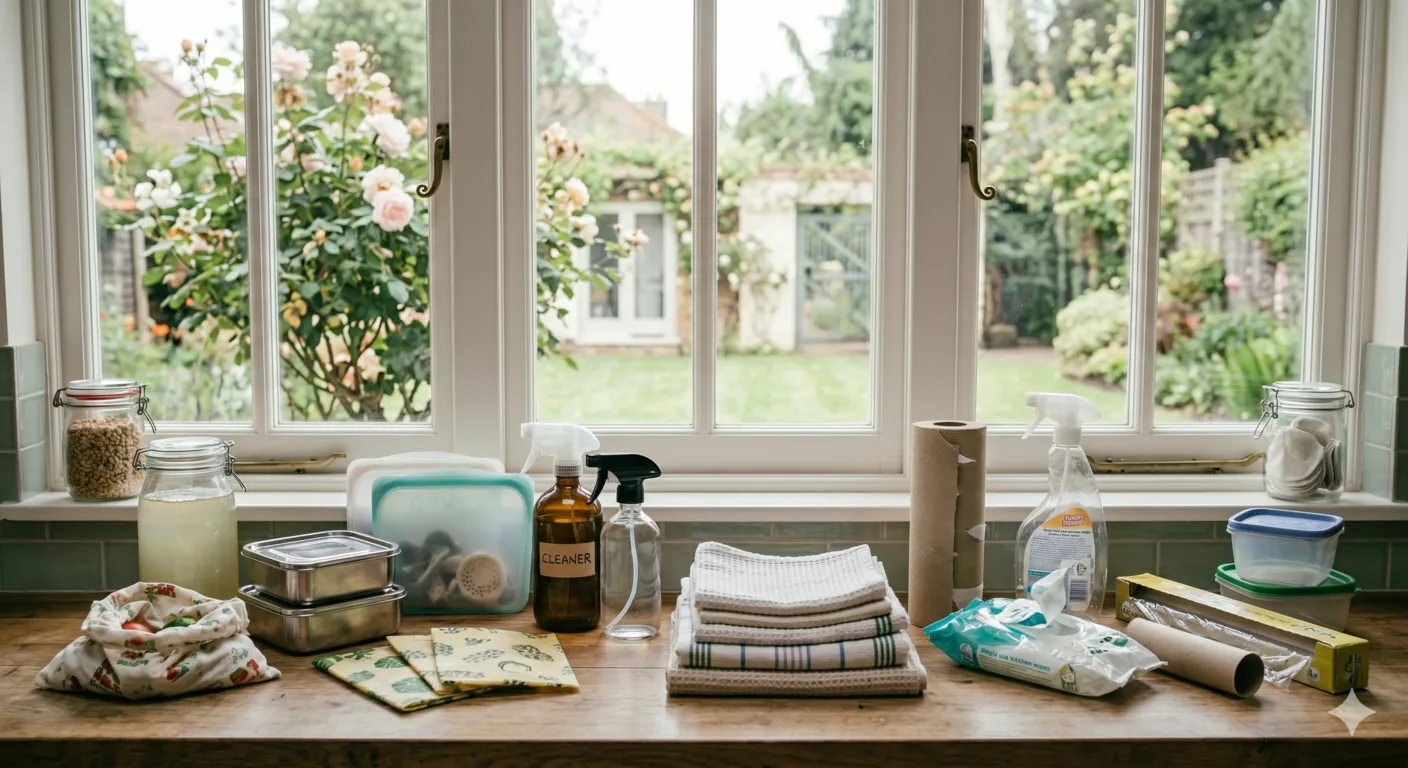
Once you’re working with what you have, the next step is to swap single-use items for durable ones — but only as they run out or wear through. This “use it up, then upgrade” approach spreads out your spending and avoids the waste of tossing things that still work.
When your paper towels run low, try keeping a stack of cloth rags and a couple of reusable dishcloths by the sink for everyday spills, and save paper for the genuinely nasty jobs. When the plastic wrap runs out, reach for a plate over a bowl, a reusable lid, or a beeswax wrap. When a plastic sponge falls apart, replace it with a wooden brush or a natural scrubber.
A few swaps worth making over time:
- Paper towels → washable cloth rags and a few reusable dishcloths
- Plastic wrap → beeswax wraps, silicone lids, or a plate set over a bowl
- Plastic sandwich bags → reusable silicone or fabric bags
- Bottled dish soap → a refill or a solid dish-soap bar
- Disposable sponges → a wooden brush with a replaceable head
- Paper napkins → cloth napkins you can wash and reuse
Spreading these out over months makes the change painless. You barely notice the cost, and nothing usable gets thrown away before its time.
Reduce Plastic Packaging

Cutting packaging is where a zero waste kitchen and a plastic-free kitchen overlap most. You’ll never get packaging down to zero, but you can cut a surprising amount with a few habits.
Buy loose where you can. Most grocery stores sell loose fruit and vegetables right next to the pre-packed versions, and choosing the loose option (while skipping the plastic produce bag) removes packaging at the source. Bring your own mesh or cloth produce bags, and keep a couple folded inside your shopping bag so you’re never caught without them.
If you have a bulk or refill store nearby, it’s the single biggest lever for packaging-free staples — rice, pasta, oats, flour, nuts, spices, oils, even cleaning liquids, scooped into your own jars and containers. Not everyone has access to one, and that’s completely fine; it isn’t a requirement. Where you can’t shop in bulk, you can still:
- Choose products in glass, metal, or cardboard over plastic when there’s a fair option.
- Buy the larger size of staples you use often, which usually means less packaging per portion.
- Make one or two things from scratch if you enjoy it — bread, dressings, stock, granola — and skip the packaging entirely.
Don’t beat yourself up over the packaging you can’t avoid. Reducing it meaningfully matters far more than chasing an impossible zero.
Choose Reusable Alternatives
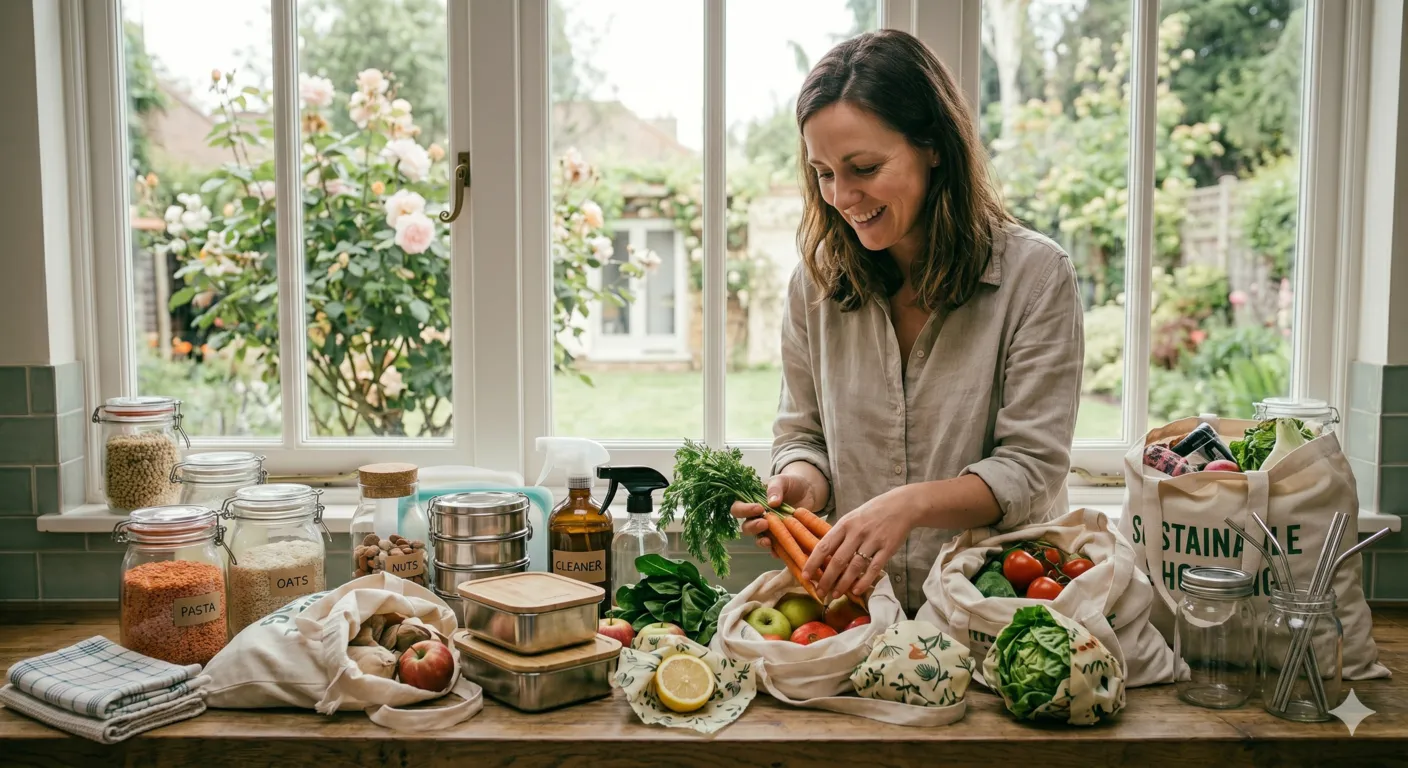
Reusables are the backbone of an eco-friendly kitchen. The goal isn’t to own the most gadgets — it’s to have a durable version of the things you’d otherwise buy again and again. Here’s a zone-by-zone look at the swaps that actually earn their place.
Food Storage
Glass jars and stainless steel containers store leftovers, dry goods, and batch-cooked meals without plastic, and they last for years. Beeswax wraps and silicone lids cover bowls and half-used produce. Reusable silicone bags handle the jobs you’d have used disposable bags for. Start with whatever you already have, and fill the gaps slowly. For more ideas, see our roundup of plastic-free food storage ideas.
Cleaning
A stack of cloth rags cut from old towels or t-shirts replaces most of your paper towel use. Reusable dishcloths dry fast and go in the wash. A solid dish-soap bar or a refillable bottle cuts plastic, and a wooden brush with a swappable head outlasts a drawer full of sponges.
Shopping
A few sturdy tote bags by the door, mesh bags for loose produce, and a couple of jars or containers for bulk items cover almost every grocery run. The trick is keeping them where you’ll actually grab them — by the door or already in the car — so reusing them actually happens.
Drinks
A refillable water bottle and a reusable coffee cup cut a startling amount of single-use waste over a year. Loose-leaf tea with a metal infuser skips individually wrapped tea bags, and a French press or a reusable filter does the same for coffee.
One honest note: a reusable item is only the greener choice once you’ve actually used it many times. So pick things you’ll genuinely use, take care of them, and you’ll get the full benefit.
Prevent Food Waste
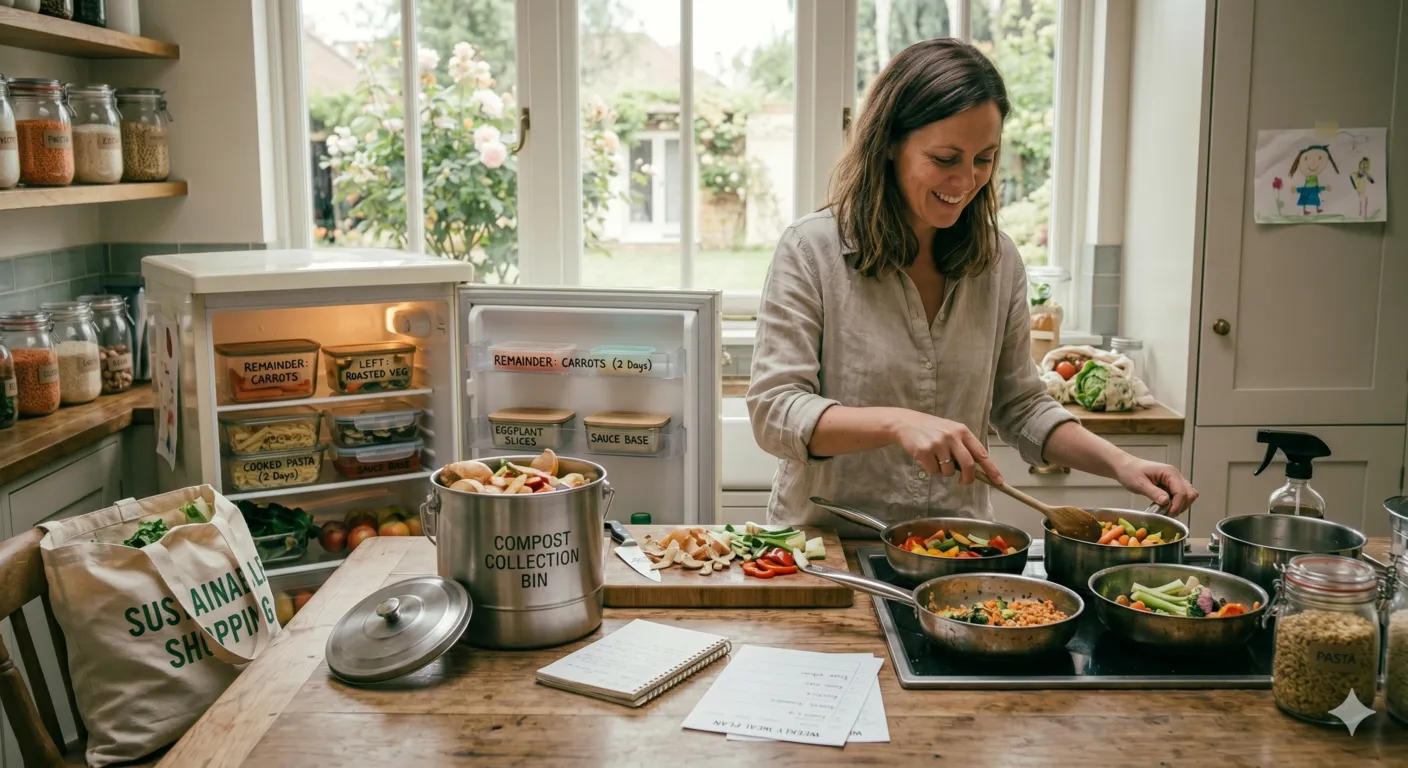
If you do one thing on this entire list, make it this. By weight, wasted food is usually the biggest thing leaving a household kitchen — and when food rots in a landfill, it breaks down and releases methane, a potent greenhouse gas. Studies estimate that, globally, roughly a third of all food produced is never eaten. Cutting your own food waste is the highest-impact habit in this whole guide, and it saves real money too — see our full guide on how to reduce food waste at home for more.
Plan Before You Shop
Most food waste starts at the store, not the trash can. Before you go, glance in your fridge and pantry, plan a few meals around what needs using up, and write a list. Buying to a plan means you buy what you’ll actually cook. Our guide to zero waste grocery shopping walks through this in more detail.
Store Food So It Lasts
A little know-how stretches how long food stays good:
- Keep fresh herbs alive by standing them in a jar of water, like flowers.
- Store leafy greens with a dry cloth in the container to soak up extra moisture.
- Don’t wash berries until you’re about to eat them.
- Keep potatoes and onions in a cool, dark spot — and apart, since they make each other spoil faster.
- Freeze bread you won’t finish in time, and toast slices straight from frozen.
Use What You Have First
Keep an “eat me first” shelf or bin at the front of the fridge for anything nearing its end, and put newer items behind older ones so nothing gets lost at the back. Cook from the fridge before you reach for something new.
Rescue Scraps and Leftovers
Plenty of “waste” is really just an ingredient:
- Vegetable peels and offcuts can simmer into stock.
- Stale bread becomes croutons, breadcrumbs, or French toast.
- Overripe fruit goes into smoothies, oatmeal, or baking.
- Last night’s dinner becomes today’s lunch.
Understand Date Labels
A lot of perfectly good food gets thrown out over confusion about dates. In the U.S., most date labels — “best by,” “sell by,” “best if used by” — refer to peak quality, not safety, so food is often fine to eat afterward if it looks and smells right. Trust your senses, and when something is genuinely in doubt, throw it out.
Whatever you truly can’t use, compost rather than trash (more on that below). Composting at home keeps scraps out of the landfill and turns them into something useful for your garden or plants.
Organize Your Pantry Sustainably
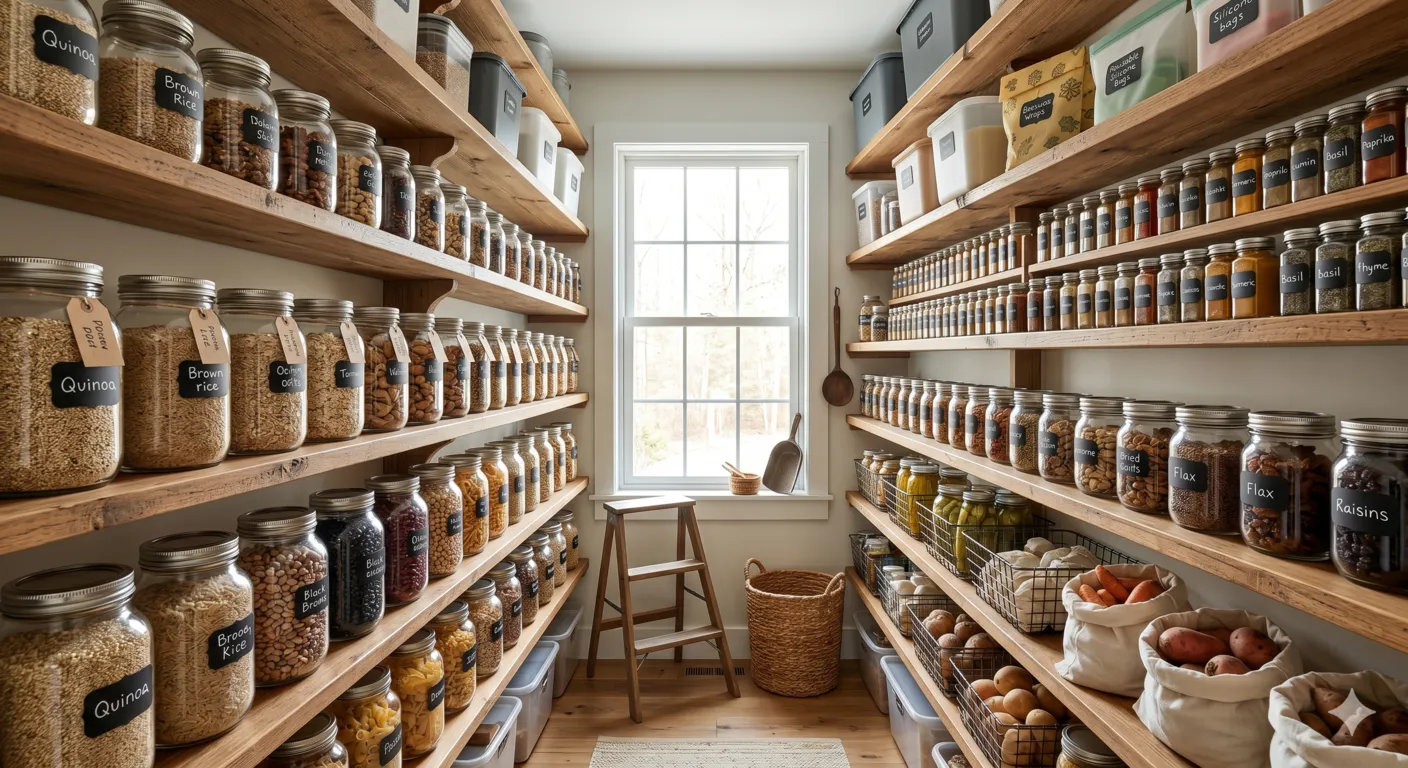
A tidy pantry isn’t just about looks — when you can see what you own, you stop buying duplicates and you use things up before they expire. Disorganization is a quiet source of food waste: the half-empty bag of rice behind the cans, the spice you bought twice.
A few simple habits:
- Decant staples into jars so you can see what’s there at a glance. Reused sauce and jam jars work perfectly — you don’t need a matching set.
- Refill from bulk where you can, topping up jars instead of buying a new package each time.
- Label and date jars and batch-cooked food, especially anything in the freezer.
- Practice first in, first out — newer stock to the back, older stock to the front.
The flawless, matching-jar pantry you’ve seen online is optional. The point is visibility and order, not a color scheme. Reusing the jars you’ve already collected is more sustainable than buying a brand-new set, and it works just as well.
Essential Zero Waste Kitchen Products
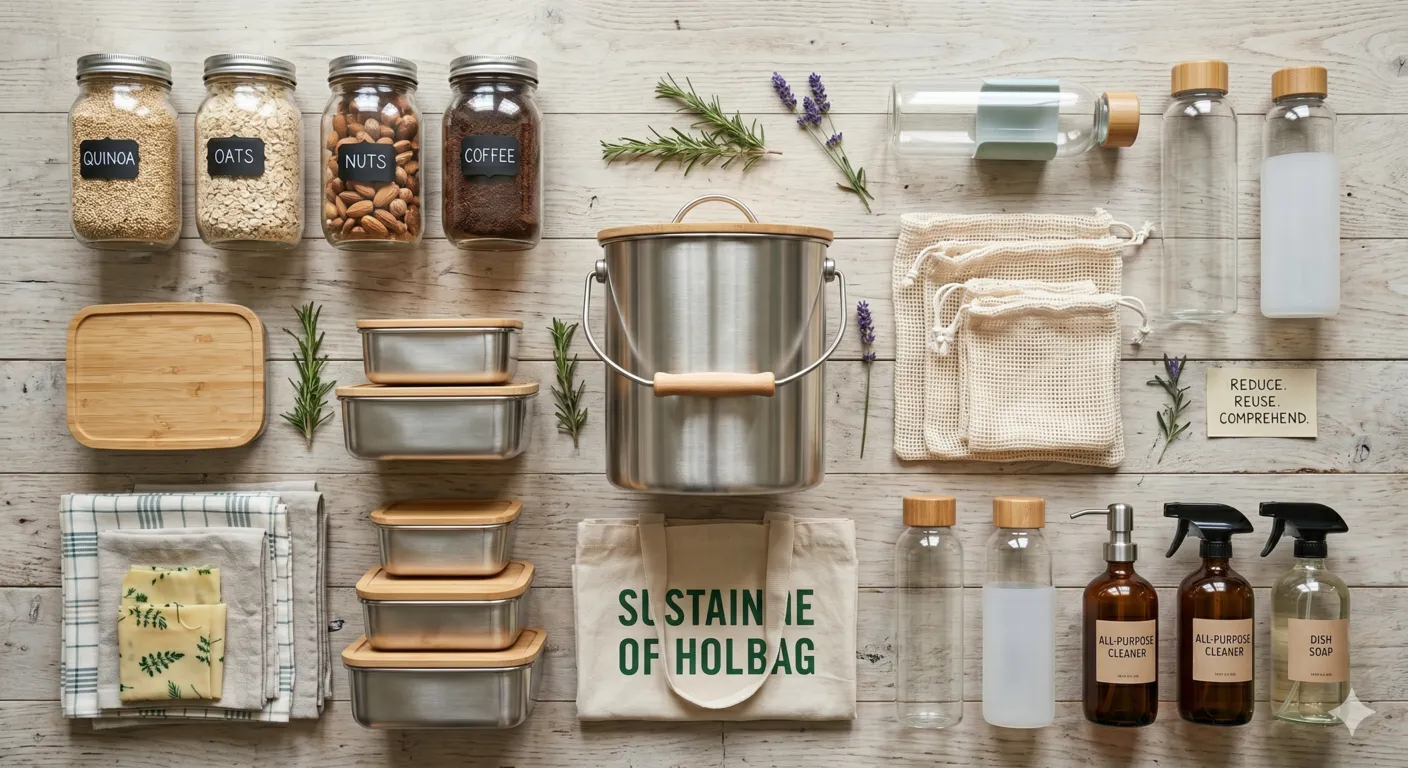
You do not need to buy any of this to start — and you definitely shouldn’t buy it all at once. Treat this as a menu of useful replacements to reach for as things wear out, and only pick what swaps something you’ll actually use.
- Glass jars — storage, leftovers, bulk shopping, pantry. The workhorse of any zero waste kitchen.
- Stainless steel containers — durable leftover and lunch storage that won’t crack or stain.
- Beeswax wraps — a reusable stand-in for plastic wrap on bowls and cut produce.
- Reusable silicone bags — for snacks, freezing, and anything you’d have used plastic bags for.
- Cloth produce bags and tote bags — for loose produce and carrying your groceries.
- Reusable dishcloths and cloth rags — soak up most of your paper-towel jobs.
- Wooden dish brush with a replaceable head — outlasts a pile of disposable sponges.
- Solid dish soap or a refillable bottle — cuts plastic at the sink.
- A compost bin or countertop caddy — a small lidded container to collect scraps for composting.
- Reusable water bottle and coffee cup — for everything you eat and drink on the go.
Buy slowly, buy what you’ll use, and let your existing things wear out first. A drawer full of unused “eco” gadgets is its own kind of waste.
Common Mistakes to Avoid
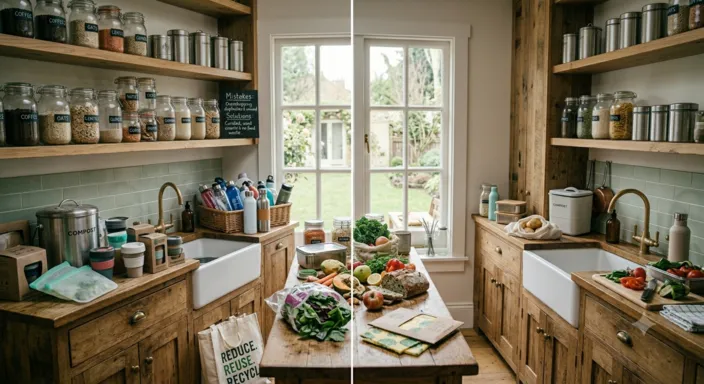
Most beginners trip over the same handful of things. Here’s what to watch for — and how to fix each one.
- Throwing out usable items to “go green.” Trashing good plastic to buy glass creates waste and costs money. Fix: use what you have until it wears out, then replace it.
- Buying a whole starter kit at once. Half of it ends up unused. Fix: add one swap at a time, only as you need it.
- Chasing perfection. All-or-nothing thinking makes people quit after a single slip-up. Fix: aim for “better than before,” not flawless.
- Obsessing over packaging while wasting food. A fridge full of forgotten leftovers undoes a lot of careful shopping. Fix: put food waste first — it’s the bigger problem.
- Decanting for the look, not the use. Pretty jars don’t help if the pantry is still chaotic. Fix: organize for visibility, and reuse jars you already have.
- Forgetting to actually use your reusables. Bags left at home don’t save anything. Fix: keep them by the door or in the car so they’re always with you.
- Comparing your kitchen to a picture-perfect one online. Those photos are styled, not lived in. Fix: judge your kitchen against your own trash last month, not a stranger’s feed.
Frequently Asked Questions
How do I start a zero waste kitchen on a budget?
Start by changing habits, not buying products. Use what you already own, save glass jars for storage, plan meals to cut food waste, and choose loose produce over packaged. The cheapest zero waste kitchen is one built mostly from things you have. Reducing food waste alone usually saves more money than any swap costs.
Can a kitchen ever be truly zero waste?
Almost never, and that’s okay. Some packaging and waste is hard to avoid, especially depending on where you shop. “Zero waste” is a direction to aim for, not a strict target. A kitchen that wastes far less than it used to is a real success.
What’s the easiest first step?
Tackle food waste. Plan your meals before shopping, store food so it lasts, and keep an “eat me first” shelf in the fridge. It’s free, it makes the biggest difference, and it saves money right away.
How do I store food without plastic?
Use glass jars, stainless steel containers, beeswax wraps, and reusable silicone bags. For fresh produce, simple tricks help — herbs in water, greens with a dry cloth, bread in the freezer. Start with the containers you already own before buying anything new.
Do I need to compost to have a zero waste kitchen?
Composting helps a lot, since it keeps food scraps out of the landfill, but it isn’t mandatory. If you have a yard, a compost bin or caddy is ideal. No outdoor space? Look into a countertop composter, a community compost drop-off, or a curbside food-scrap pickup if your city offers one.
What are the best reusable swaps for beginners?
Cloth rags or reusable dishcloths to replace paper towels, a few jars and containers for storage, mesh bags for produce, and a refillable water bottle and coffee cup. These cover the most common single-use items and are easy to stick with long term.
Final Thoughts
Building a zero waste kitchen isn’t a weekend project or a shopping spree. It’s a slow shift in how you shop, store, cook, and clean — and the changes that matter most are usually the cheapest ones, like wasting less food and using what you already own.
Pick one thing to start with. Maybe it’s planning your meals this week, or keeping a jar of cloth rags by the sink. Once that feels normal, add the next. The habits stack up quietly, and within a few months you’ll look in your trash and notice how much lighter it has become.
That’s the whole idea behind sustainable living — not perfection, just steady, doable changes that add up over time. Your kitchen is a great place to begin.