You buy a bag of spinach with good intentions. A few days later you open the crisper drawer and find a slimy green puddle where the leaves used to be. The strawberries grew fuzz. There’s a container of something at the back of the fridge that you’re now a little afraid to open.
If that sounds familiar, you’re in good company. Throwing out food we meant to eat is one of the most common household habits there is — and one of the easiest to fix once you know where it comes from.
Here’s the encouraging part: most food waste at home isn’t caused by laziness or bad luck. It comes from a handful of fixable patterns — how we shop, how we store things, and what we believe a date on a label really means. Change those patterns and you’ll waste less, spend less, and spend less time scrubbing out forgotten containers.
This guide walks through the habits that make the biggest difference, the mistakes that quietly sabotage most people, and clear answers to the questions beginners ask most. No guilt, no overwhelm — just what works in a real kitchen. Cutting food waste is one of the highest-impact habits in any zero waste lifestyle.
Why Food Waste Matters
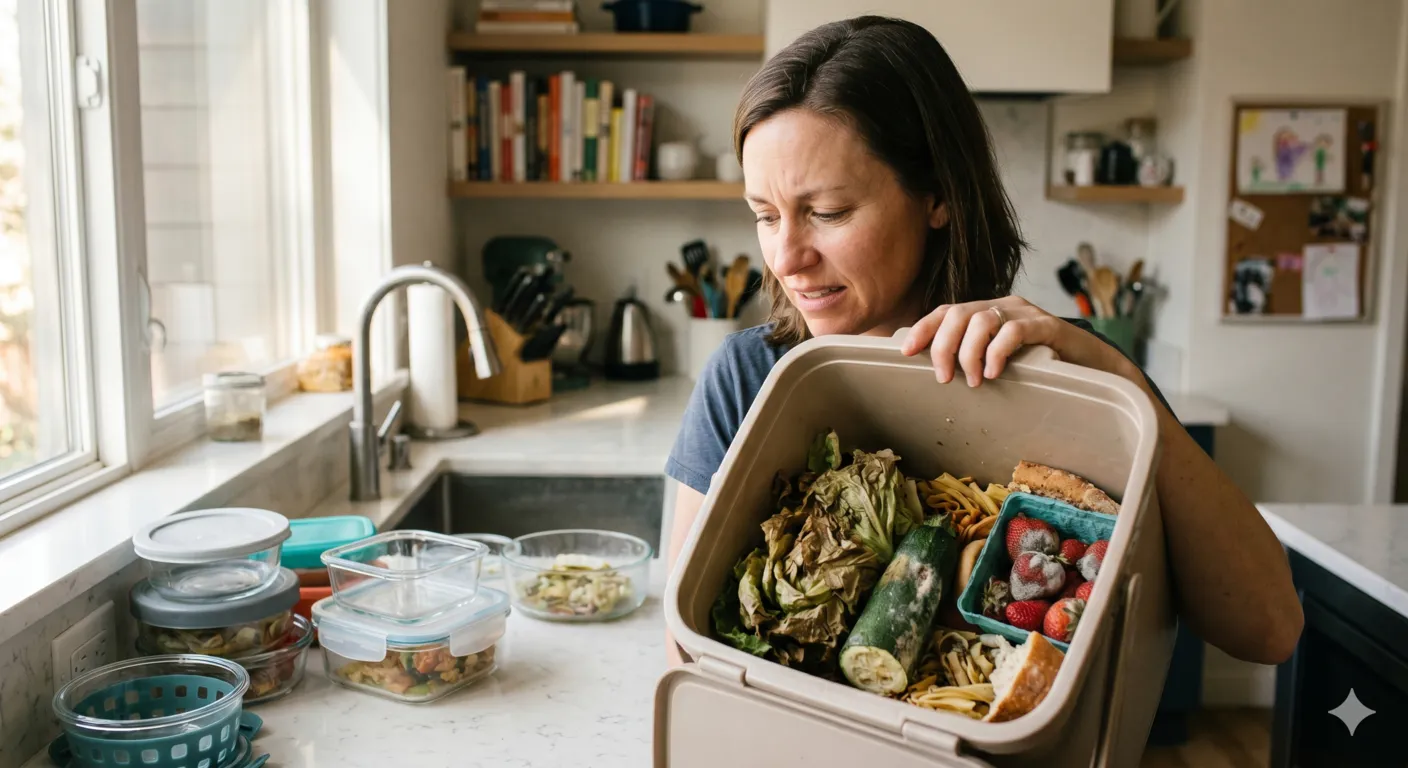
Before the how, it helps to see the scale, because it reframes the whole problem.
Globally, the world threw away around 1.05 billion tonnes of food in 2022 — close to a fifth of all the food available to people — according to the UN Environment Programme’s 2024 Food Waste Index. The detail that matters most for us: about 60% of that waste happened in households, not on farms or in factories or restaurants. That’s a sobering number, but it’s also good news. If the problem lives in our kitchens, the solution does too.
In the United States, the cost is personal. The USDA has long estimated that the average family of four throws out roughly $1,500 of food a year. A 2025 EPA analysis, using more recent prices, put the figure closer to $2,900 for a household of four — around 11% of a typical food budget. Either way, that’s real money going straight into the bin.
There’s an environmental side too. The EPA reports that food is the single largest category of material sent to U.S. landfills. When food rots there, buried without oxygen, it releases methane — a greenhouse gas far more potent than carbon dioxide in the short term. Worldwide, food loss and waste are responsible for an estimated 8–10% of greenhouse gas emissions.
A quick snapshot of why this matters:
- Money: the average U.S. family wastes well over $1,000 of food a year.
- Climate: wasted food in landfills is a major source of methane.
- Resources: every wasted item also wastes the water, land, and energy used to grow and move it.
- It’s mostly in our control: households are the biggest single source of food waste, which means small home habits add up fast.
Reducing food waste is one of the most accessible eco-friendly habits there is — no special equipment or big budget required.
Plan Meals Ahead
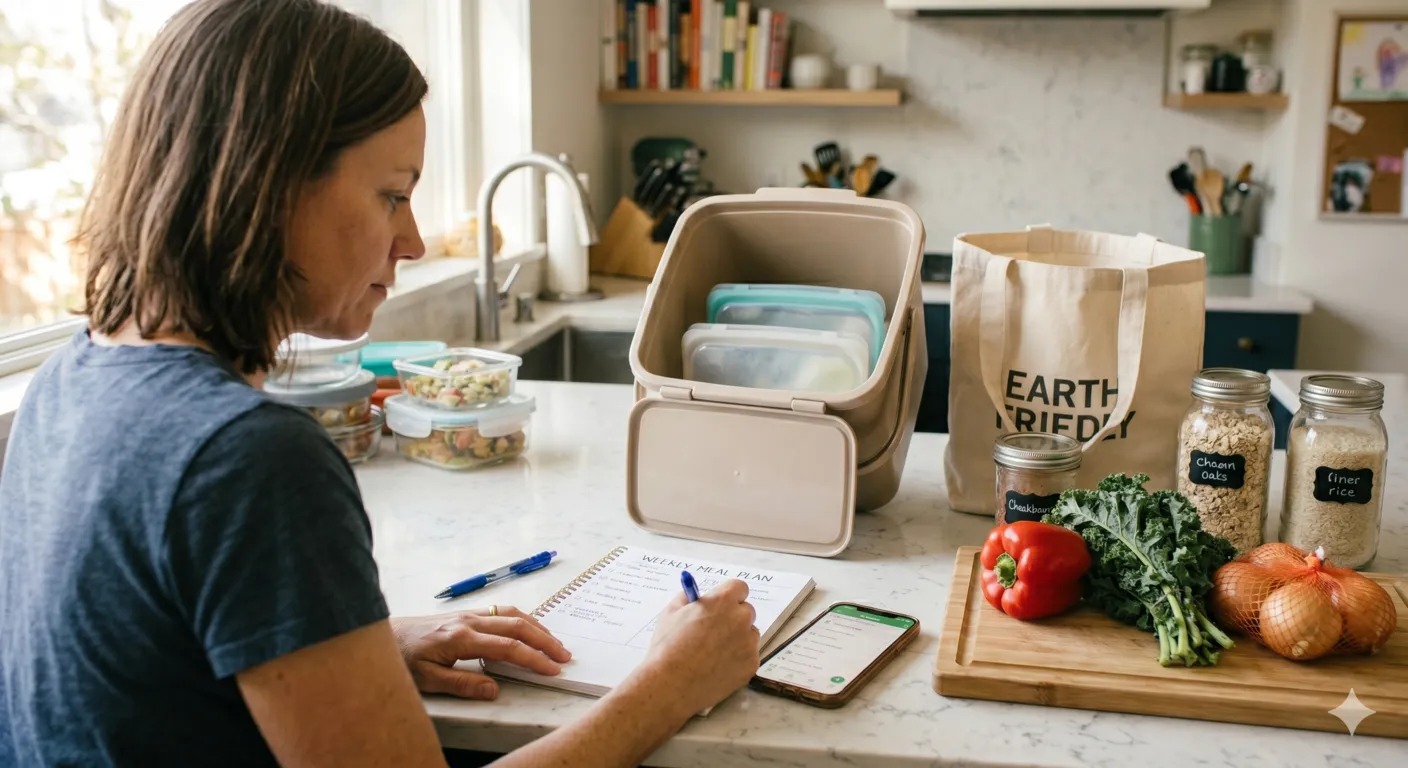
If you only change one thing, change this. Most food waste is decided at the store, before anything ever reaches your fridge. We buy hopeful — the ingredients for meals we imagine cooking — and then real life happens, plans change, and half of it spoils. For a deeper dive into this, see our easy zero waste meal planning tips.
A loose meal plan fixes that. The goal isn’t a rigid, color-coded chart; it’s a rough idea of what you’ll really eat this week.
How to do it in about ten minutes:
- Shop your kitchen first. Look in the fridge, freezer, and pantry and note what needs using up.
- Plan three to five dinners, not seven. Leave room for leftovers, takeout, or a change of plans. Over-planning is its own kind of waste.
- Build your list around those meals — and around the food you already have.
- Schedule one “use-it-up” night each week to clear out odds and ends before they turn.
In practice, the simplest version is a Sunday glance at the fridge and a quick list on your phone — buying with a plan instead of on impulse.
Common mistake: a strict seven-day menu that ignores how your week really goes. When Wednesday becomes a leftovers night, Thursday’s planned ingredients quietly rot. Plan for flexibility, not perfection.
Store Food Properly
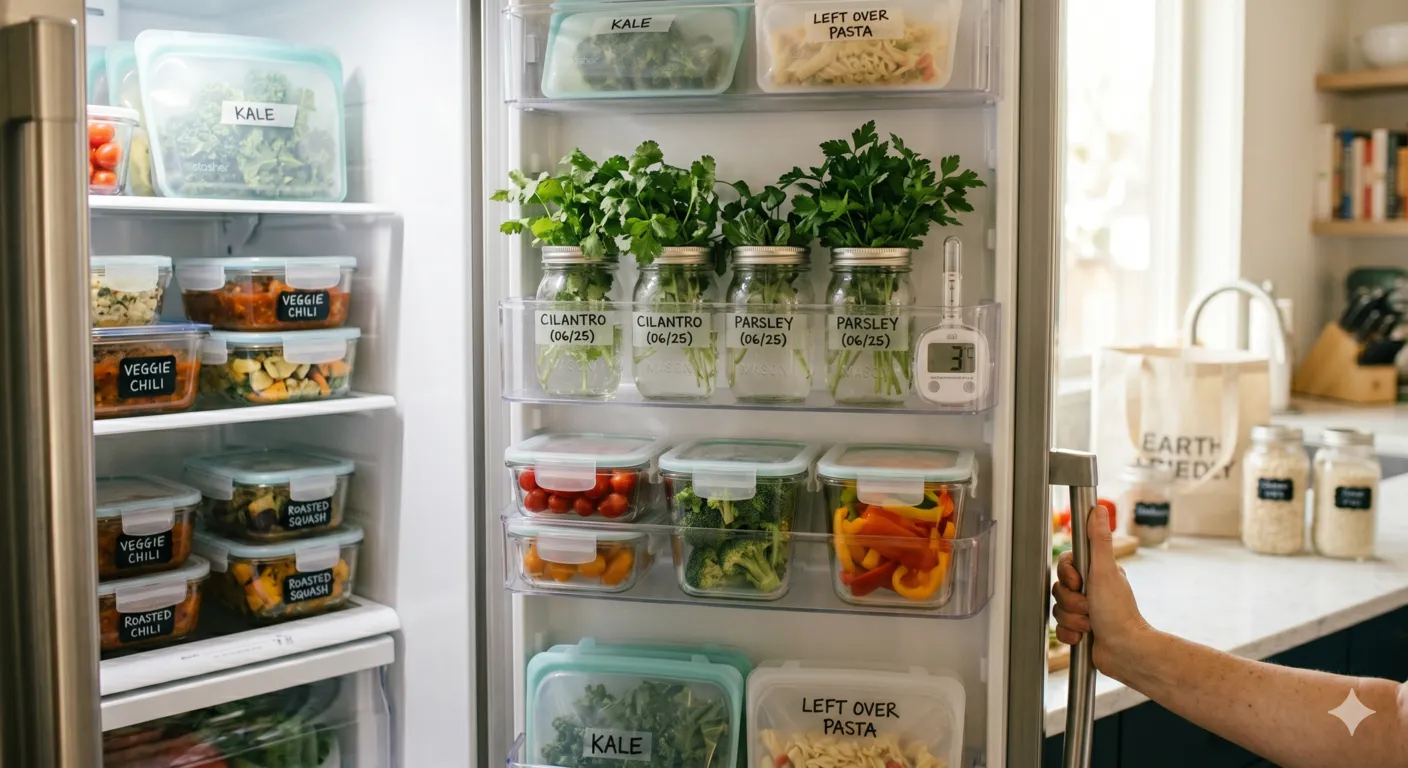
A surprising amount of produce dies young because of where we put it, not because it was bad to begin with. A few storage tweaks can add days — sometimes a week — to how long fresh food lasts.
Some reliable rules:
- Don’t wash berries or greens until you’re ready to eat them. Moisture speeds up mold. Store them dry, ideally with a paper towel to soak up extra humidity.
- Treat fresh herbs like cut flowers. Trim the stems and stand them in a jar with a little water; cover leafy herbs loosely. Or wrap them in a damp towel.
- Keep the “ripeners” separate. Apples, bananas, tomatoes, and avocados give off ethylene gas that ripens — and then spoils — nearby produce. Keep them away from leafy greens and broccoli.
- Onions, potatoes, and garlic belong in a cool, dark, dry spot, not the fridge. And keep onions and potatoes apart; stored together, they spoil faster.
- Use your crisper drawers on purpose. Higher humidity suits leafy greens; lower humidity suits fruit.
- Don’t overpack the fridge. Cold air needs room to circulate, and food you can’t see is food you’ll forget.
A habit worth borrowing from restaurants: “first in, first out.” When you bring groceries home, move older items to the front so they get used first.
Reusable glass containers, beeswax wraps, and silicone bags also help — they keep food fresh and visible while cutting down on single-use plastic, a nice overlap between reducing food waste and a more plastic-free lifestyle.
Common mistake: using the fridge as a black hole, with everything in opaque bags shoved wherever it fits. If you can’t see it, you won’t eat it in time.
Understand Expiration Dates
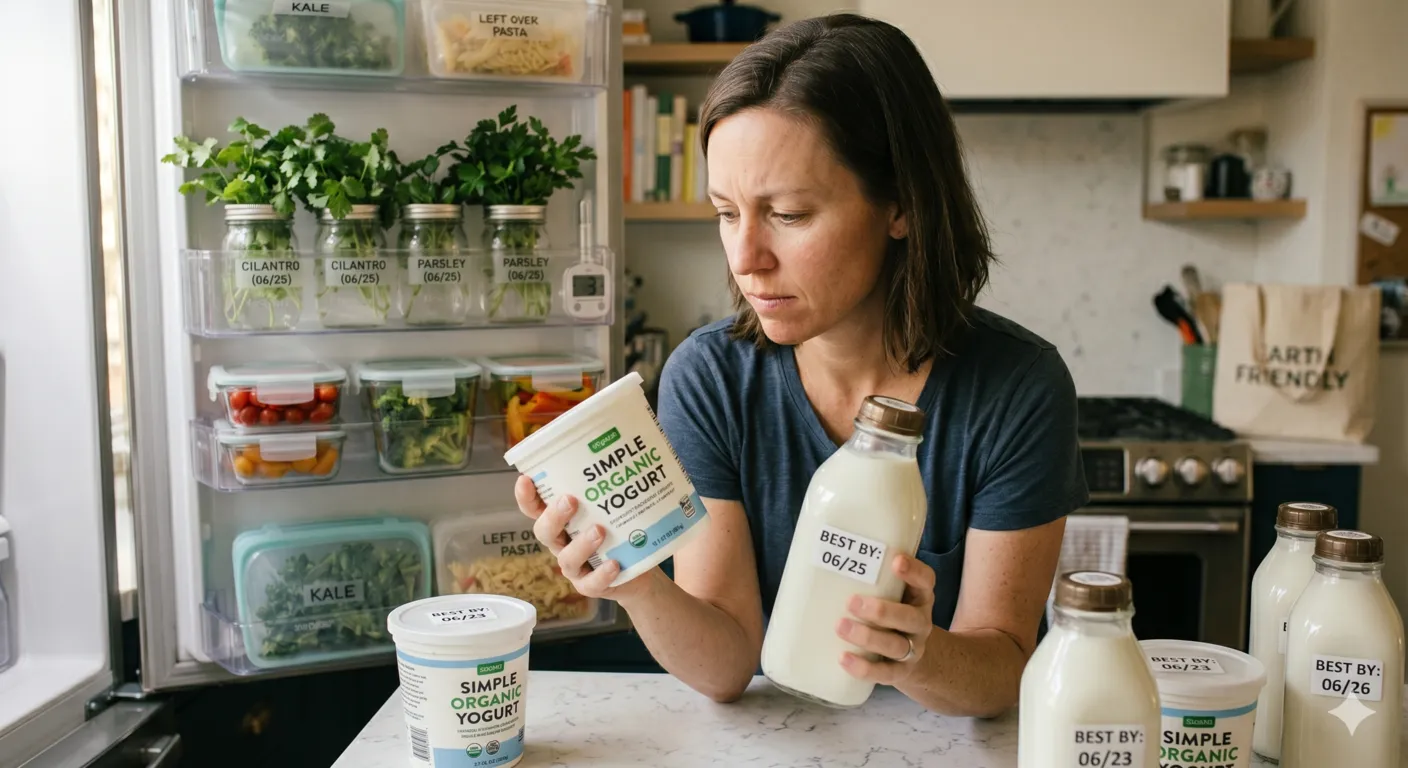
This one quietly causes an enormous amount of waste, because most people misread date labels.
Here’s the key fact, straight from the USDA: with the single exception of infant formula, date labels in the U.S. are not federally required and are not indicators of safety. They’re about peak quality. Properly stored food is generally still safe to eat after the printed date, until it shows real signs of spoilage.
What the labels actually mean:
- “Sell by” is a guide for the store’s stocking, not for you. Food is usually fine well past it.
- “Best by” / “Best if used by” points to peak flavor and texture, not a safety cutoff.
- “Use by” is the manufacturer’s estimate of last peak quality (again, except on infant formula).
So how do you decide? Trust your senses. Look at it, smell it, and check the texture. Sour milk announces itself. Moldy bread is obvious. Most foods tell you clearly when they’ve turned — usually long after the date suggests.
A sensible caveat: this isn’t a dare. Some foods carry more risk (certain deli meats, anything that smells or looks off), and when you’re truly unsure, it’s fine to throw it out. But for the everyday yogurt that’s a few days past its date and smells perfectly normal, the label alone is no reason to bin it.
Common mistake: tossing good food the moment the date passes. Learn what the labels mean, and let your eyes and nose make the call.
Freeze Leftovers
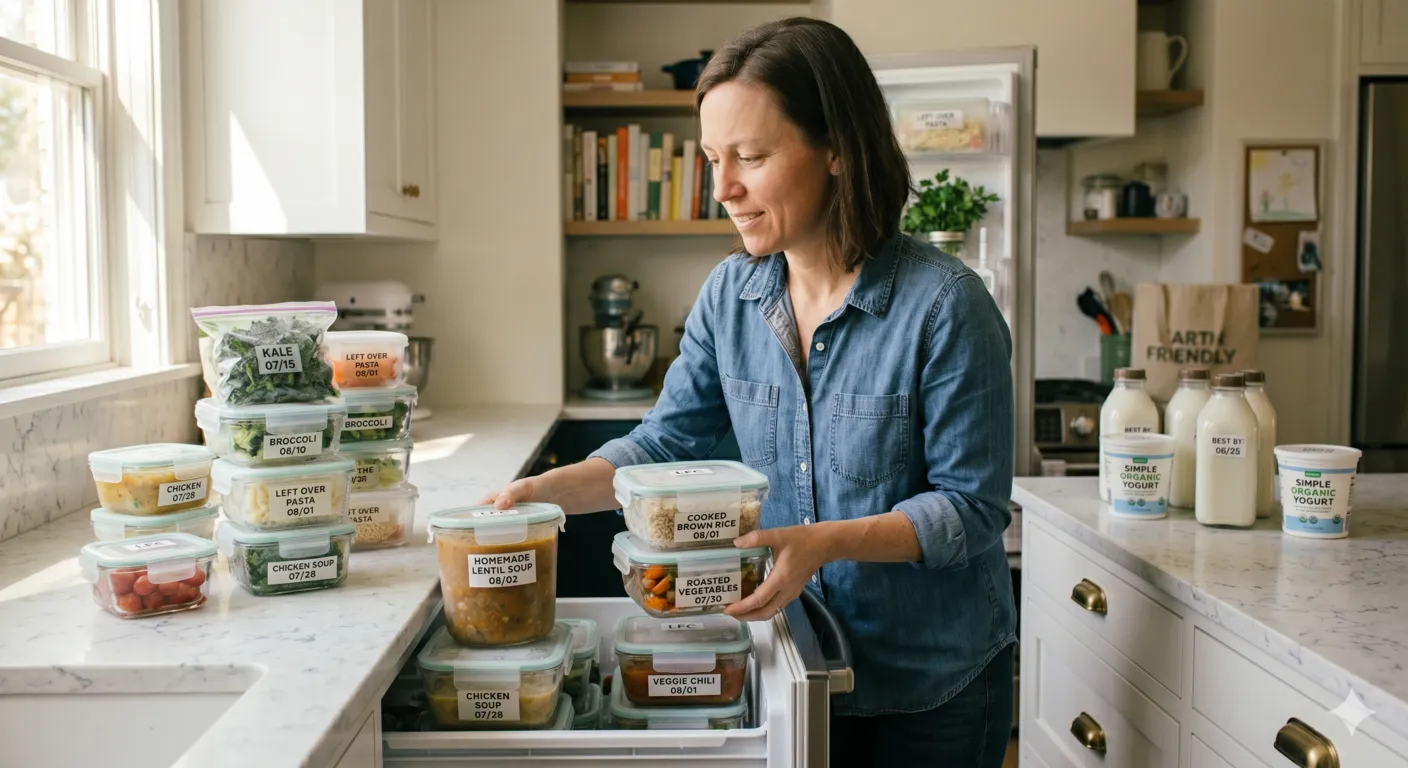
Think of your freezer as a pause button. It’s one of the most powerful and underused tools for cutting waste, because it buys you time on almost anything.
Foods that freeze well:
- Cooked meals, soups, stews, sauces, and casseroles
- Bread, bagels, and tortillas (toast or warm them straight from frozen)
- Cooked rice, beans, and grains
- Cheese (shred it first), butter, and even milk
- Overripe bananas (peel them first) for smoothies and baking
- Most fruits and many vegetables
A few rules make frozen food worth eating later:
- Cool food before freezing so it doesn’t turn icy and mushy.
- Portion it into meal-sized amounts so you only thaw what you need.
- Freeze bags flat to save space and speed up thawing.
- Label everything with the name and date — frozen mystery containers rarely get eaten.
In practice, this turns ordinary cooking into accidental meal prep. Made a big pot of chili? Freeze half. Bananas going brown? Into the freezer for banana bread. Bread heels piling up? Freeze them for breadcrumbs later.
Beginner tip: keep a running freezer list taped to the door. Without one, the freezer slowly becomes a graveyard of good intentions.
Common mistake: freezing food in one giant unlabeled block. You end up thawing far more than you need, or never identifying it at all.
Use Every Part of Ingredients
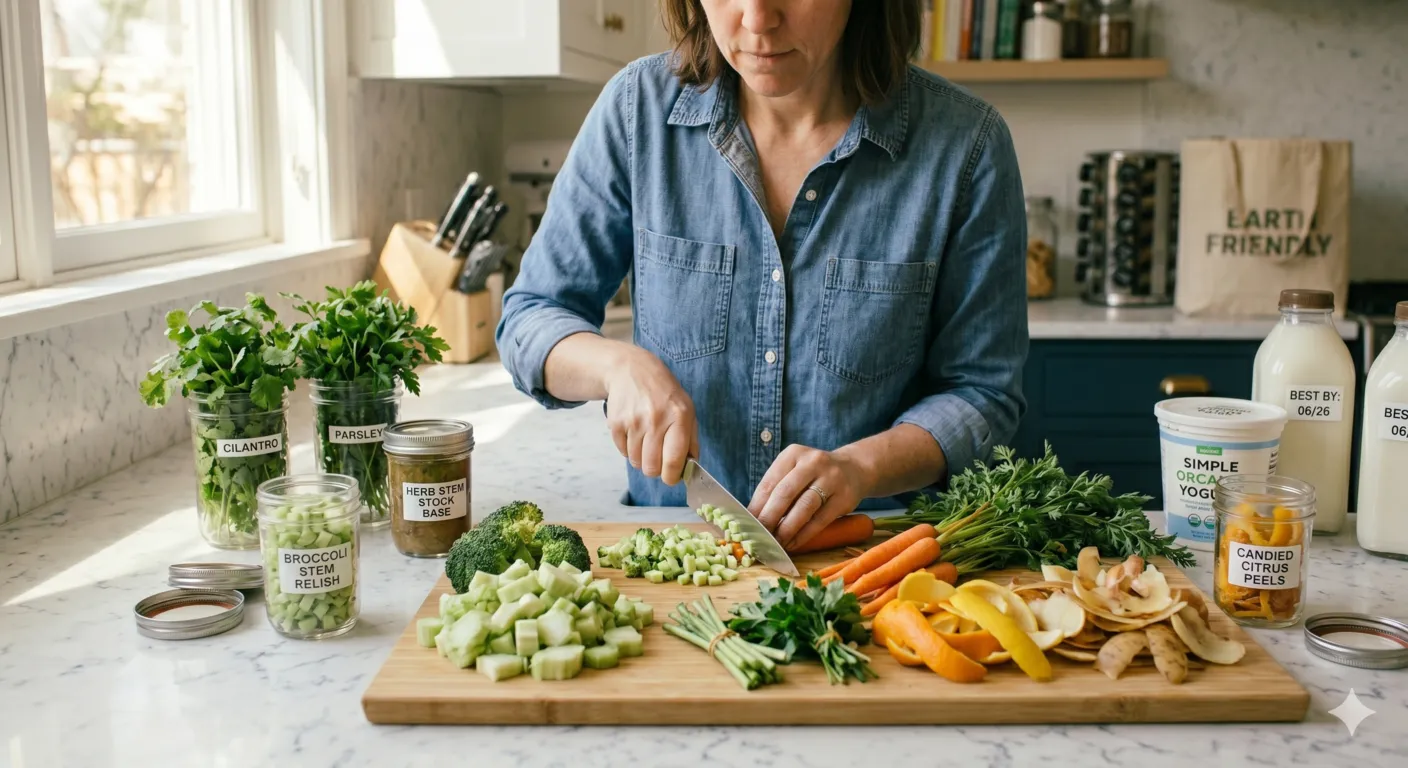
A lot of what we throw away isn’t waste at all — it’s food we were simply taught to discard. Cooking with the whole ingredient, sometimes called “root-to-stem,” stretches both your groceries and your money.
Ideas to start with:
- Broccoli and cauliflower stems: peel and slice them into stir-fries or slaw.
- Carrot tops and beet greens: treat them like herbs or hearty greens — pesto, sautés, soups.
- Herb stems: blend them into sauces, dressings, or stock.
- Stale bread: croutons, breadcrumbs, or French toast.
- Citrus peels: zest them before juicing for a flavor boost.
- Vegetable scraps: save onion ends, carrot peels, and celery bottoms for homemade stock.
- Parmesan rinds: simmer them in soups and sauces for extra depth.
The easiest system is a “scrap bag” in the freezer. Toss clean vegetable trimmings in as you cook, and once it’s full, simmer the lot into a free pot of stock.
Common mistake: peeling everything out of habit. For many vegetables — carrots, potatoes, cucumbers — a good scrub is enough, and you keep both the nutrients and the edible weight you paid for.
Compost Food Scraps
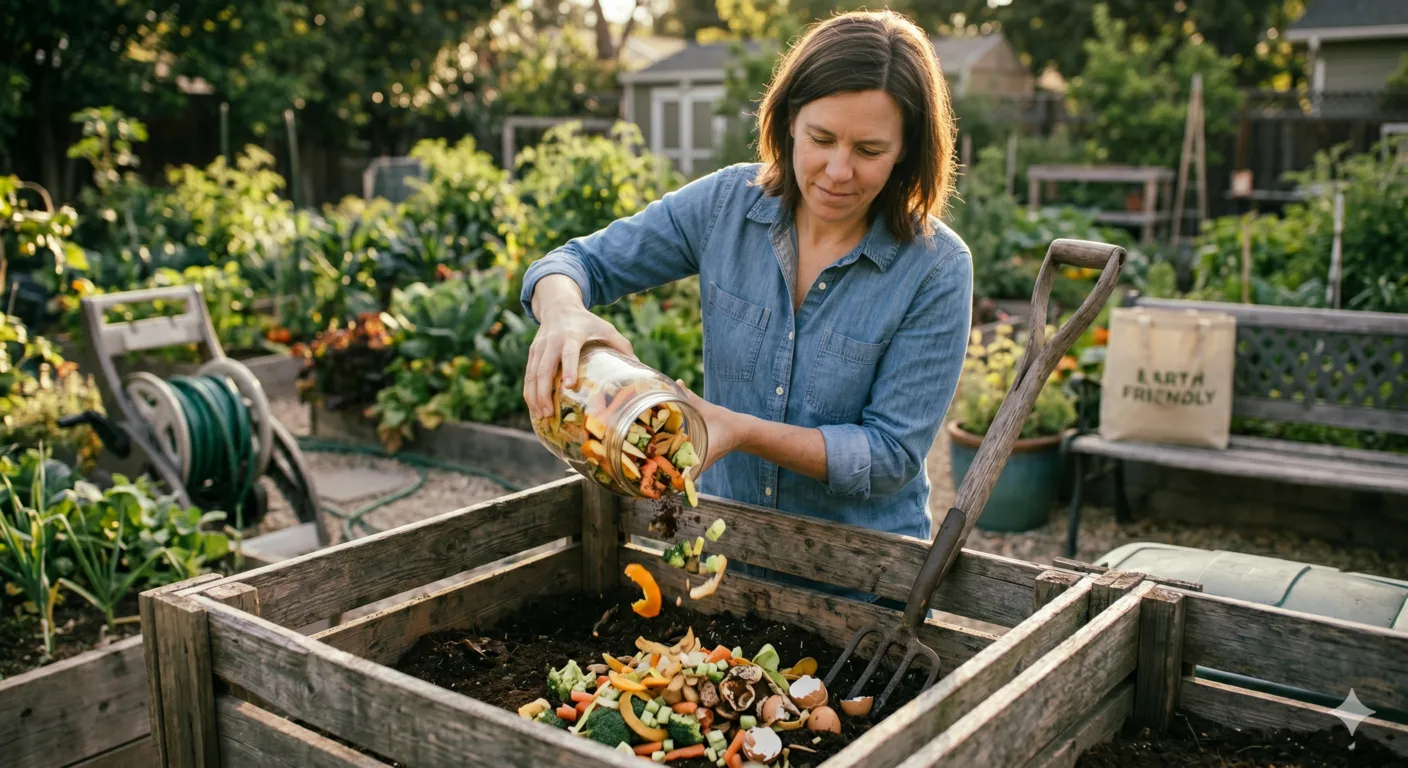
Even the most careful kitchen produces some scraps: peels, cores, coffee grounds, the occasional thing that got away. Composting keeps that material out of the landfill, where food turns into methane, and turns it into something useful for soil instead.
Composting at home is more flexible than people expect (see our guide to composting at home for the full picture). A few beginner-friendly options:
- A backyard bin or pile, if you have outdoor space.
- Curbside or drop-off organics collection, offered by a growing number of cities — often the simplest path.
- A worm bin (vermicomposting), which works indoors and suits apartments.
- An electric countertop composter, which grinds and dries scraps quickly; it’s not true compost, but it shrinks the volume and keeps scraps out of the trash.
A simple rule for home piles: compost fruit and vegetable scraps, coffee grounds and filters, eggshells, and tea, and balance these “greens” with “browns” like dry leaves or shredded paper. Skip meat, dairy, and oily food in a basic backyard setup — they attract pests and create odor.
To keep your kitchen pleasant, collect scraps in a lidded container or, better yet, a bag in the freezer until you’re ready to empty it.
One important mindset point: composting is the last step, not the first. It’s far better to eat food than to compost it. Prevention always beats disposal — composting is simply how you handle what’s truly unavoidable.
Shop Smarter
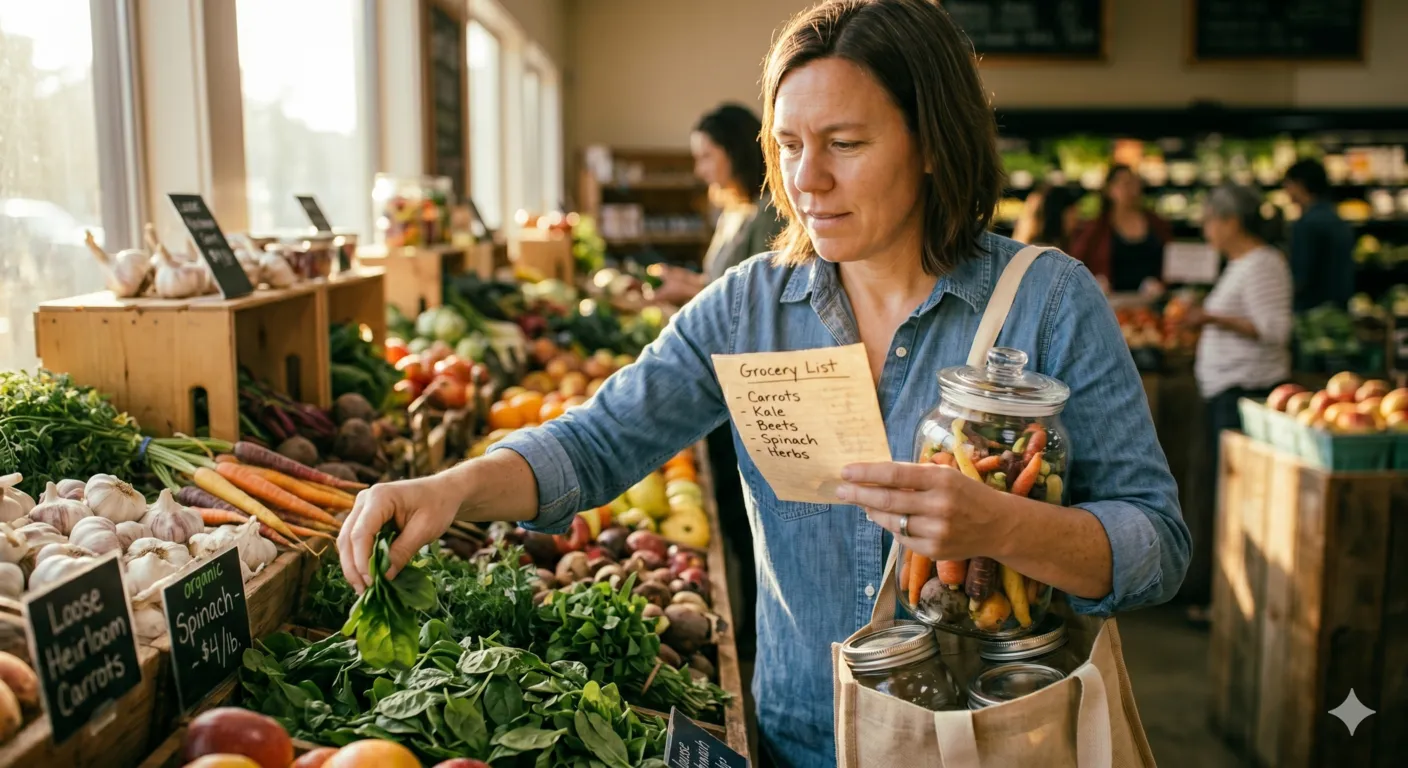
Since most waste begins at the store, our full guide to zero waste grocery shopping ties everything together. Habits that help:
Habits that help:
- Shop with a list and stick to it. Impulse buys are the items most likely to spoil unused.
- Don’t shop hungry. It’s a reliable way to overbuy.
- Buy loose produce when you can, so you take only what you need instead of a pre-bagged five-pound commitment.
- Be honest about bulk. Buying in bulk only saves money if you use it; otherwise it’s a discount on the trash.
- Shop a little more often for perishables, if your schedule allows, rather than one giant weekly haul.
- Don’t skip the “ugly” produce or the markdown rack. Slightly imperfect food is perfectly good, and cheaper.
One counterintuitive point from the data: smaller households often waste the most food per person, because package sizes are built for families. If you cook for one or two, buy smaller amounts — or split a large pack and freeze half right away.
Common mistake: bulk-buying perishables for the “savings.” If you throw out half a giant bag of salad, you didn’t save anything — you paid more to waste more.
Common Food Waste Mistakes
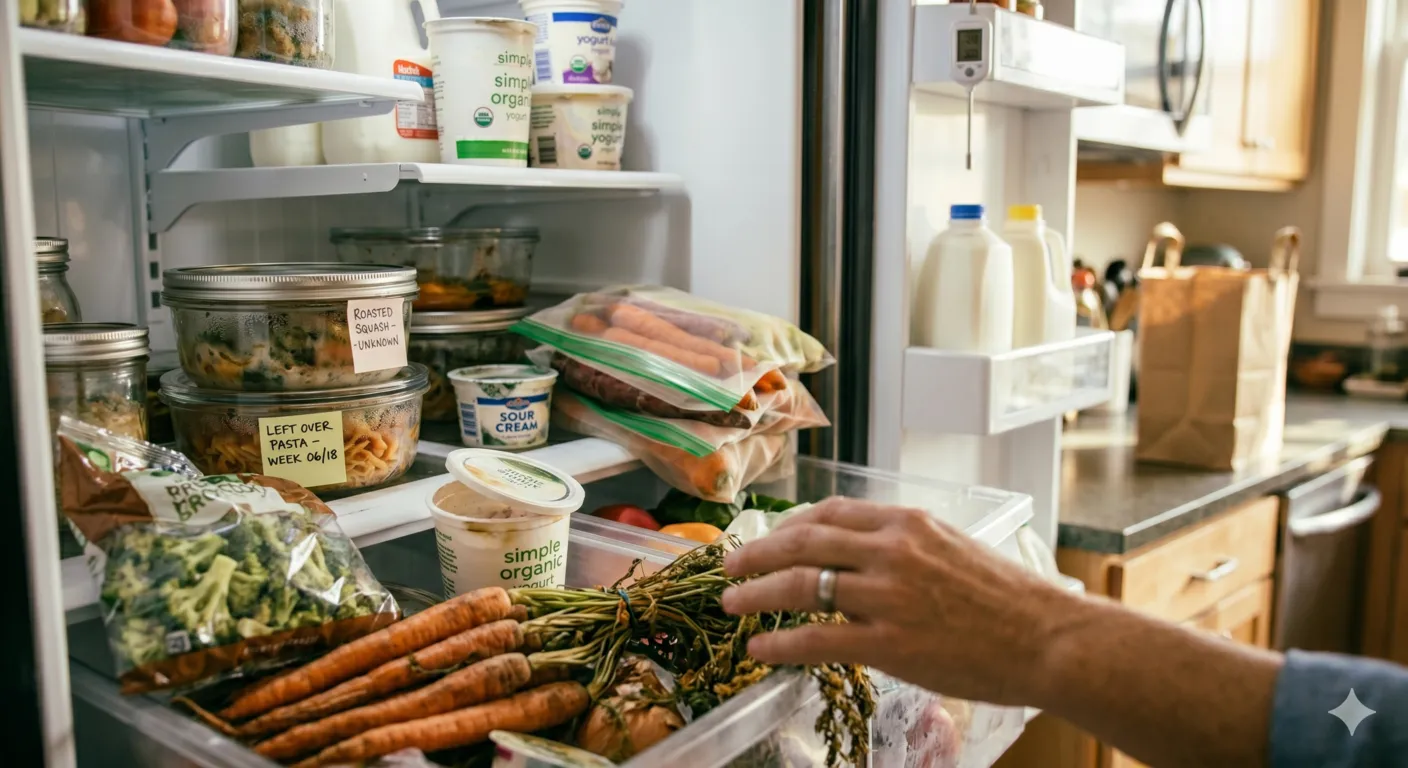
Even with good habits, a few recurring patterns trip up almost everyone. Here are the big ones, and how to fix them:
- Overbuying because of deals. A two-for-one isn’t a saving if one ends up in the bin. Buy for what you’ll realistically eat this week.
- The fridge black hole. Food pushed to the back gets forgotten. Keep an “eat me first” zone at eye level for items that need using soon.
- Trusting the date over your senses. Labels signal quality, not safety. Look, smell, and feel before you decide.
- Cooking and serving too much. Use smaller plates, serve modest portions, and put leftovers away while you clear the table.
- Forgetting leftovers entirely. Give them a set night each week, and store them where you’ll see them.
- Composting before preventing. Composting is great, but it’s a backstop. Buying less and eating what you have come first.
- All-or-nothing thinking. One wasteful week doesn’t undo your progress. Consistency beats perfection — small habits compound over time.
Frequently Asked Questions
What’s the easiest way to reduce food waste at home?
Start with meal planning and shopping your own kitchen first. Knowing what you already have, and buying only what you’ll realistically eat, prevents waste before it can happen. It’s the single highest-impact habit for most people.
Does food really go bad on the “best by” date?
Usually not. According to the USDA, date labels (except on infant formula) indicate peak quality, not safety, and aren’t even federally required. Properly stored food is generally safe past the printed date — rely on how it looks, smells, and feels rather than the date alone.
How much money can I save by reducing food waste?
A meaningful amount. With the average U.S. family wasting somewhere between $1,500 and nearly $3,000 of food a year (per USDA and EPA estimates), cutting your waste in half can realistically put $1,000 or more back in your budget annually.
Is composting necessary to reduce food waste?
No. Composting helps with scraps you can’t avoid, but prevention matters far more. Eating the food you buy keeps more money in your pocket — and more resources from being wasted — than composting ever can. Think of composting as the final step, not the starting point.
Which foods get wasted the most at home?
Fresh fruits and vegetables, by a wide margin. They have the shortest shelf life and are easy to overbuy, which is why better storage and realistic shopping make such a difference.
Can I freeze things like milk, bread, and cheese?
Yes. Milk, bread, shredded cheese, butter, cooked rice and beans, and most cooked meals all freeze well. Just cool the food first, portion it, and label it with the date so it gets used.
Final Thoughts
Reducing food waste isn’t about doing everything perfectly or feeling guilty over a forgotten cucumber. It’s about a few repeatable habits: plan loosely before you shop, store food so it lasts, read date labels for what they really mean, and lean on your freezer and your compost bin to catch the rest.
Start with one or two changes — meal planning and smarter storage are the highest-leverage places to begin — and let them settle into routine before adding more. Within a few weeks you’ll likely notice less food in the trash, more money in your budget, and a calmer, less cluttered kitchen.
It’s a small set of changes with an outsized payoff: for your wallet, for your time, and for a more sustainable, lower-waste home.