You buy a bag of spinach with good intentions. A week later it’s a slimy green puddle at the back of the fridge. The carrots have gone bendy, the leftovers you swore you’d eat are growing something, and into the bin it all goes.
If that sounds familiar, you’re in good company. Most of us have stood over the trash can with food we paid for, feeling a little guilty and not totally sure how it keeps happening.
The good news is that this is a fixable problem, and the fix is mostly about planning. Zero waste meal planning isn’t a strict system or a Pinterest-perfect color-coded binder. It’s a handful of simple habits that help you buy what you’ll actually eat, cook it before it spoils, and throw away almost nothing.
In this guide I’ll walk you through how to plan around what you already have, build a realistic week of meals, shop with a clear list, cook in batches, rescue leftovers, and store food so it lasts. These are the same meal planning tips I’ve used to cut my own kitchen waste down to almost nothing, and they work whether you cook for one or feed a houseful. It’s a small but powerful piece of a full zero waste lifestyle.
Why Meal Planning Matters

Here’s the part that surprised me when I first started paying attention: most food waste doesn’t happen on farms or in supermarkets. It happens at home.
In the United States, more food reaches landfills than any other material in our trash, and the EPA estimates that over a third of food is never eaten. A lot of that loss happens in regular kitchens, one forgotten leftover at a time.
When that food rots in a landfill, it doesn’t just disappear. It breaks down and releases methane, a greenhouse gas, which is one reason the EPA treats wasted food as an environmental problem and not only a budget one.
Meal planning matters because it goes straight at the root cause: buying food you won’t use and losing track of what you have. A plan turns “I’ll figure out dinner later” into “I know exactly what I’m making and I have everything for it.”
Zero waste meal planning is the practice of planning your meals around the food you already own and buying only what you’ll truly cook and eat, so very little ends up in the trash. That’s the whole idea. Everything below is just how to do it in real life.
Start With Foods You Already Have

This is the single most important habit, and it’s also the one most people skip. Before you plan anything or write a list, look at what’s already in your kitchen.
Shop Your Kitchen First
Open the fridge. Open the freezer. Open the pantry. Take two minutes to notice what’s in there, especially the things that need eating soon: the half a cabbage, the three eggs, the yogurt that’s getting close to its date.
I keep what I call an “eat me first” zone on one shelf of the fridge. Anything aging gets moved to the front and built into the next few meals. It’s a tiny change that quietly prevents a huge amount of waste.
A real example from my own kitchen last week: half a head of cabbage, two soft sweet potatoes, and a few eggs. On their own they looked like nothing. Together they became a hash for dinner and the start of a frittata the next morning. Nothing got tossed.
The goal is to treat your kitchen like the first store you shop. Use what you have before you go buy more.
Plan Weekly Meals
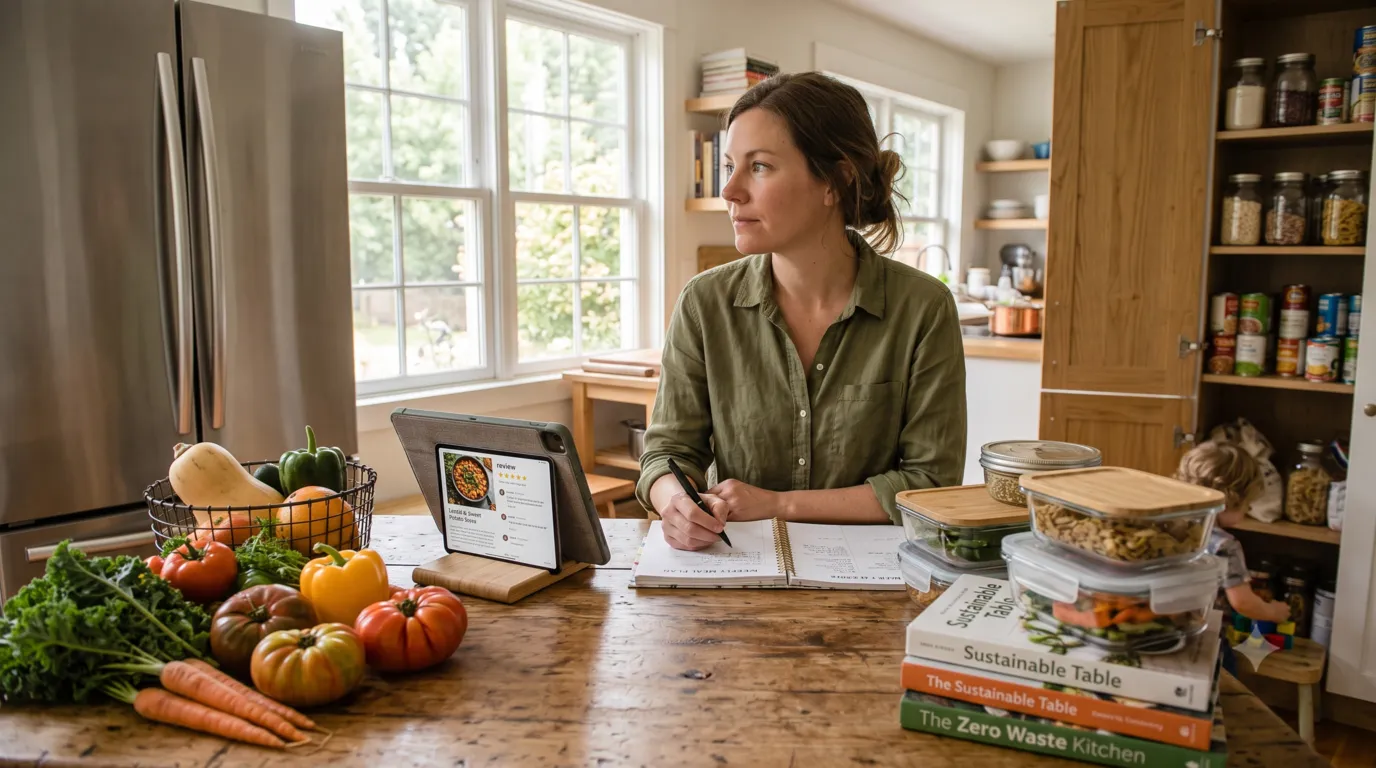
Once you know what you’ve got, you can plan the week. The mistake here is trying to plan all twenty-one meals like a meal-prep influencer. That’s exhausting, and it usually falls apart by Wednesday.
Plan light instead. Pick four or five anchor dinners and leave the rest of the week loose for leftovers, a quick fallback meal, and one flexible “whatever’s in the fridge” night.
Plan Meals That Share Ingredients
This is where sustainable meal planning really clicks. Choose meals that overlap, so a single bunch of cilantro, a head of celery, or a tub of sour cream gets fully used instead of bought for one recipe and abandoned.
If you’re making tacos one night, plan a grain bowl or a soup later in the week that uses the same beans, onions, and herbs. The ingredients pull double duty, and your shopping list shrinks.
A few simple meal planning tips that keep this realistic:
- Match meals to your actual schedule. Put fast meals on your busy nights so you don’t bail and order takeout.
- Theme your nights if it helps. Pasta night, stir-fry night, and taco night cut down on decision fatigue.
- Always plan one leftovers night so nothing from earlier in the week gets forgotten.
Create a Shopping List

Your shopping list is the bridge between your plan and the store. This is where reduce food waste with meal planning becomes concrete, because a good list stops you from buying things you’ll never use.
Pair it with our guide to zero waste grocery shopping for the full routine. Build the list straight from your weekly plan, then cross off anything you already have. What’s left is exactly what you need and nothing more.
Stick to the List
Impulse buys are the number one source of “what was I even going to do with this?” waste. The fancy cheese, the third kind of leafy green, the ingredient for a recipe you’ll probably never make.
A few things that help me stay on track:
- Shop on a full stomach. Hungry shopping leads to a cart full of stuff you don’t need.
- Buy loose produce in the amount you’ll actually use instead of grabbing a pre-bagged pile of it. Bringing your own reusable produce bags makes this easy and supports a more plastic-free lifestyle at the same time.
- Be honest about quantities. If you know you’ll only cook twice this week, don’t shop like you’ll cook every night.
A list isn’t about being rigid. It’s about walking out with food you have a plan for.
Batch cooking means cooking once and eating several times. It’s one of the most practical eco-friendly habits you can build into your week, and it saves a surprising amount of food, time, and energy.
Instead of making separate full meals every night, cook a few flexible staples in bulk: a big pot of rice, a batch of beans, a tray of roasted vegetables, and one protein. Then you mix and match all week.
Cook Components, Not Just Whole Meals
This is the trick that keeps batch cooking from getting boring. When you cook building blocks rather than finished dishes, the same ingredients can become different meals.
That tray of roasted vegetables you made on Sunday? It’s a grain bowl on Monday, an omelet filling on Tuesday, and stirred through pasta on Wednesday. One cooking session, one round of cleanup, several dinners.
Cooking in bulk also makes better use of your oven and stove, since you’re heating things once instead of five separate times. Less effort, less energy, less waste.
Use Leftovers Creatively
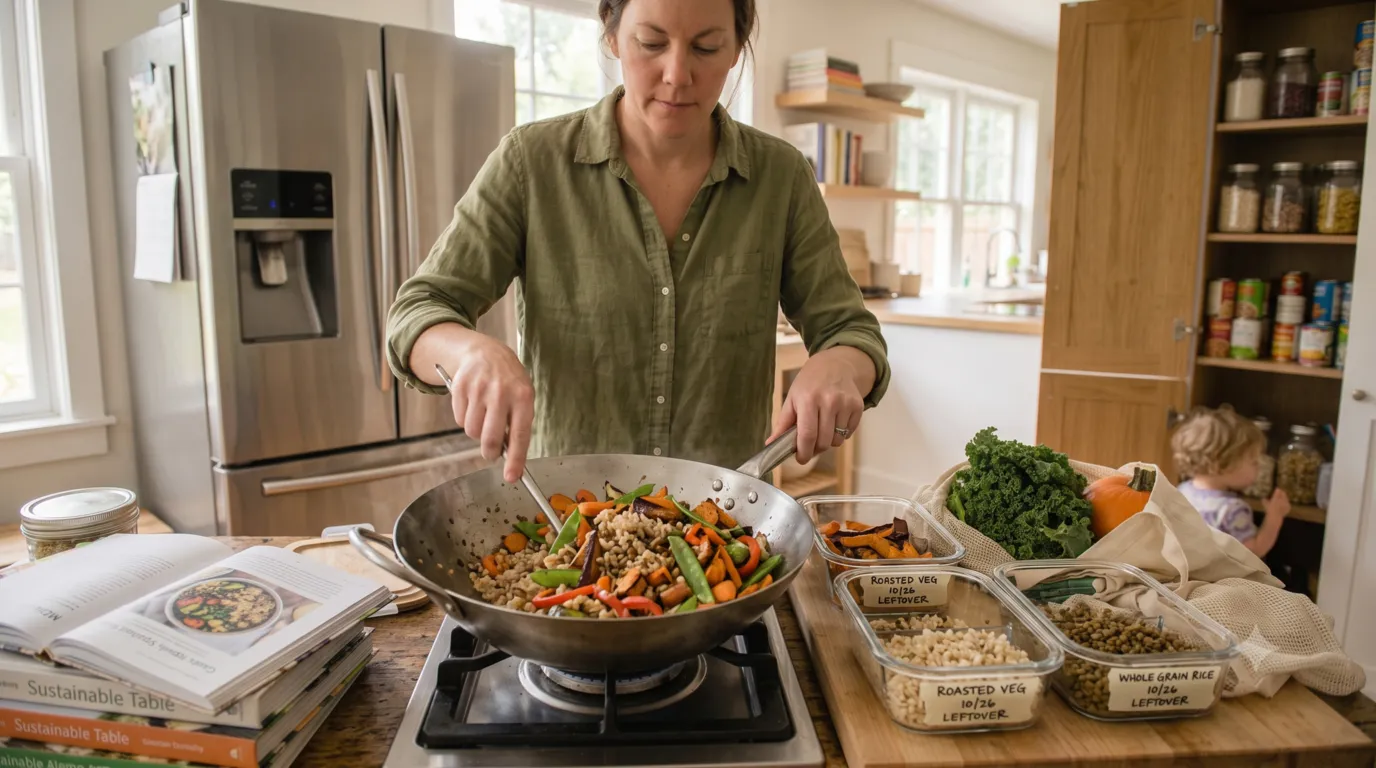
Leftovers are where a lot of good intentions quietly die. The container gets pushed to the back, forgotten, and discovered two weeks later as a science experiment.
The shift that helped me most was to stop seeing leftovers as sad reheated dinners and start seeing them as ingredients for the next meal.
Turn Leftovers Into New Meals
A little creativity stretches food a long way:
- Roast chicken becomes tacos one night, then the bones simmer into a broth for soup.
- Plain cooked rice turns into fried rice with whatever vegetables are hanging around.
- Stale bread becomes croutons or breadcrumbs instead of going in the bin.
- Vegetable scraps and peels can be saved in a freezer bag and boiled into a homemade stock.
I also keep one night a week as a “use-it-up” meal. Soups, stir-fries, frittatas, and grain bowls are perfect for this because they happily absorb odds and ends from the fridge.
One small habit makes all of it work: label your leftovers with the date. When you can see what’s there and how old it is, you actually eat it.
Store Meals Properly
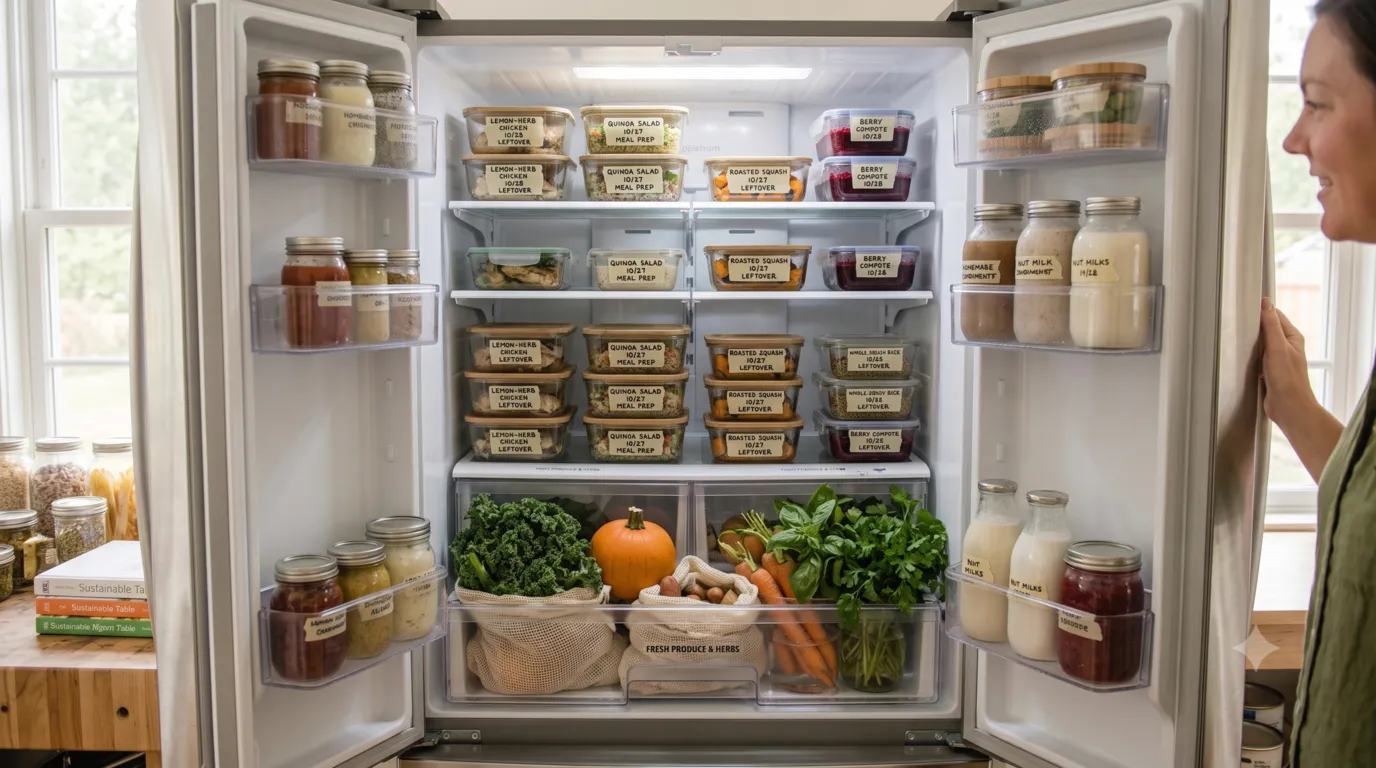
Storage is half the battle. You can plan and cook perfectly, but if food goes bad before you get to it, you’re back to throwing money away. See our roundup of plastic-free food storage ideas for containers that actually hold up.
Fridge, Freezer, and Pantry
A few storage basics keep food usable for far longer:
- Fridge: Keep it organized with older items in front. Store leafy greens with a dry towel to soak up moisture, and stand fresh herbs upright in a glass of water like flowers.
- Freezer: This is your best friend for surplus and leftovers. Freeze extra portions, soups, and bread before they spoil, and always label and date what goes in.
- Pantry: Move dry goods like rice, pasta, and beans into airtight containers, and use the oldest first.
Reusable containers beat single-use bags and wrap here, both for keeping food fresh and for cutting down on plastic.
If you’re ever unsure how long something keeps, the USDA’s free FoodKeeper app gives storage times for hundreds of foods. It’s a genuinely handy reference when you’re staring at something and wondering if it’s still good.
Don’t Get Tricked by Date Labels
A lot of perfectly good food gets thrown out because of date confusion. In most cases, a “best by” date is about quality, not safety, while “use by” is the one to take more seriously. When in doubt, trust your eyes and nose before you trust a printed date.
Save Time and Money

Here’s the payoff, and it’s bigger than most people expect.
The EPA estimates that an average household of four loses close to $2,913 a year on food that’s bought and never eaten, which works out to roughly $56 a week. Wasting less of it puts real money back in your pocket.
The benefits stack up across your whole life:
- Money: You stop quietly throwing away hundreds or thousands of dollars a year.
- Time: Fewer last-minute “what’s for dinner” panics and fewer extra trips to the store.
- Lifestyle: Calmer weeknights, less stress, and usually healthier eating, since you’re cooking on purpose instead of grabbing whatever’s fastest.
- The planet: Less food in the landfill and less waste of all the water, fuel, and labor it took to grow and ship that food. It’s one of the most effective ways everyday cooking connects to bigger sustainable living goals.
None of this requires a dramatic lifestyle overhaul. It’s the same grocery budget, spent more carefully.
Common Meal Planning Mistakes

Almost everyone hits a few of these when they start. Knowing them ahead of time makes them easy to avoid.
- Overplanning. Mapping out every single meal sets you up to fail. Fix: Start with three or four planned dinners and build from there.
- Ignoring what you already own. Shopping before checking your kitchen leads to doubles and waste. Fix: Always shop your fridge, freezer, and pantry first.
- Bulk buying with no plan. A giant bag of spinach is only a deal if you eat it. Fix: Only buy in bulk when you’ll genuinely use it or can freeze it.
- Forgetting leftovers. Out of sight, out of mind, into the trash. Fix: Schedule a leftovers night and label everything with a date.
- Poor storage. Even great food spoils fast in the wrong spot. Fix: Use airtight containers and freeze extras before they turn.
- Being too rigid. Life happens, plans change, and a too-strict plan just gets abandoned. Fix: Leave one flexible night so your plan can bend instead of break.
The biggest mistake of all is expecting perfection. You’ll still waste a little here and there, and that’s completely normal.
Final Thoughts
You don’t have to overhaul your entire kitchen this weekend to make a difference. Zero waste meal planning works best when you start small and let it build.
Pick one habit to begin with. Maybe it’s shopping your fridge before you head to the store, or planning just three dinners this week, or finally labeling your leftovers. Add another habit once the first one feels natural. Within a few weeks you’ll be planning, shopping, and cooking with far less thought and far less waste.
For the scraps that are left over, like peels, cores, and trimmings, composting at home is a great next step that keeps even those out of the landfill and turns them into something useful for your garden.
These small kitchen habits really do add up. Less food in the trash, more money in your budget, and a calmer, more sustainable home, one planned meal at a time.