Open most kitchen cabinets and you’ll find the same thing: a tower of mismatched plastic containers, a drawer full of orphan lids that fit nothing, and a few stained tubs that still smell faintly of last week’s curry. I had that exact cabinet for years. Replacing it was one of the easiest, most satisfying changes I made when I started cutting plastic out of my home.
Plastic-free food storage isn’t about buying a whole new matching set in one go. It’s about choosing materials that last, keep food fresher, and don’t end up in a landfill after a few months. This guide walks through the storage options that genuinely hold up in a real kitchen, what each one is best for, the mistakes to skip, and how to organize a pantry without a single plastic tub. It’s a small, practical piece of a broader zero waste lifestyle.
Why Plastic Storage Is a Problem
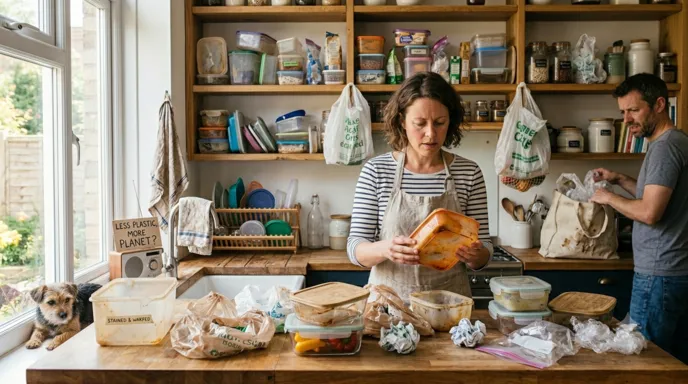
Plastic feels convenient, but it has real downsides once you look closely.
The first is wear. Plastic scratches, warps, and stains. Tomato-based sauces leave orange marks that never fully wash out, and a few trips through a hot dishwasher leave lids cloudy and warped so they no longer seal. You end up rebuying the same containers again and again, which makes “cheap” plastic surprisingly expensive over time.
The second is what plastic can pass into your food. Researchers have detected microplastics in a wide range of everyday foods and drinks, and heating plastic — in the microwave or a hot dishwasher — can speed up how it breaks down. Some older or low-grade plastics also contain additives like BPA. Many food-safety experts simply suggest not heating food in plastic at all, just to be safe.
Then there’s the bigger picture. Only a small fraction of all the plastic ever made has actually been recycled. The rest sits in landfills or the environment, where it can take a very long time to break down. Single-use plastic wrap and zip bags are the worst offenders, since they’re often used once and tossed.
Switching to durable, non-plastic materials solves all three problems at once. Here are the options worth knowing.
Glass Containers
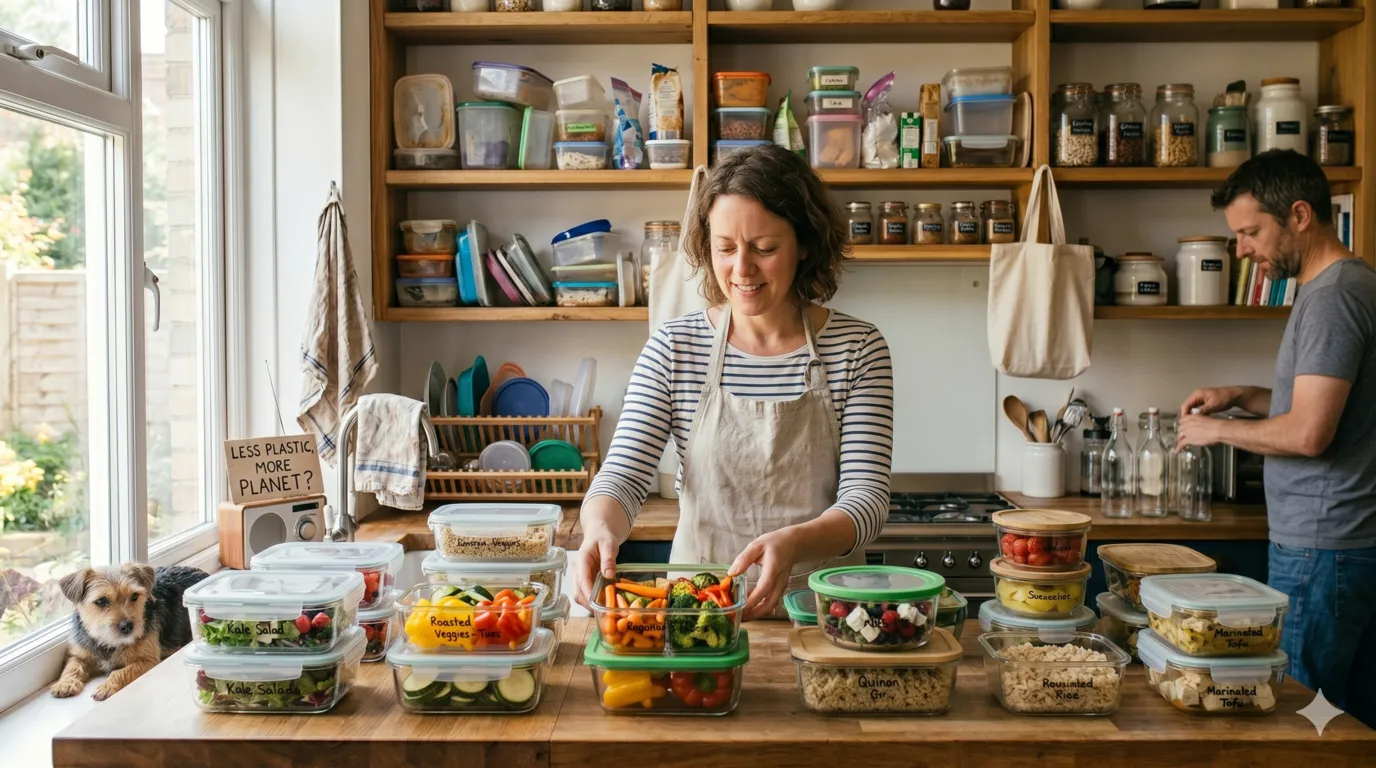
Glass is the all-rounder of plastic-free food storage. If you only swap one thing, make it your everyday containers.
Tempered glass containers handle the fridge, freezer, oven, and microwave (check the lid first — most glass lids come off before reheating). Glass doesn’t absorb stains or odors, so a container that held garlic-heavy leftovers comes out of the wash smelling like nothing. You can see exactly what’s inside, which means fewer mystery jars getting shoved to the back and forgotten.
The trade-offs are weight and the risk of breakage, plus a higher upfront cost. But a good glass container can last for decades, so you buy it once.
Tips that make glass easier to live with:
- Look for sets with secure clip-lock lids or stainless lids rather than flimsy plastic ones.
- When freezing liquids like soup or stock, leave headspace at the top so the food has room to expand without cracking the glass.
- Let hot food cool a little before moving it to the fridge or freezer to avoid thermal shock.
Glass is my default for leftovers, meal prep, and anything that goes from fridge to oven.
Stainless Steel Containers
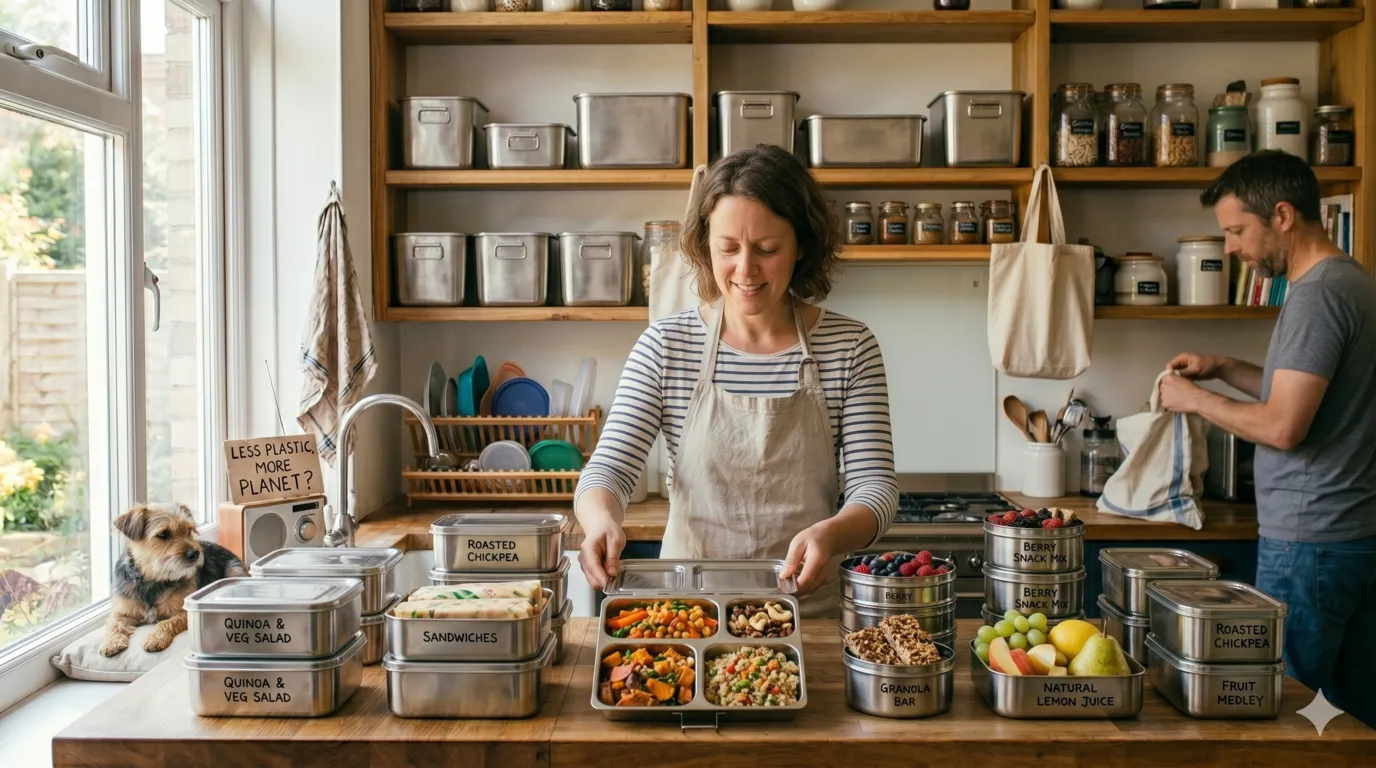
Stainless steel is what I reach for when something needs to survive being dropped, packed in a bag, or handed to a kid. It’s basically indestructible and far lighter than glass.
Food-grade stainless steel tins, tiffins, and bento boxes are ideal for lunches, picnics, snacks, and shopping in bulk. They won’t shatter, they don’t hold smells, and a good one will outlast almost everything else in your kitchen.
The downsides are simple: you can’t see inside, and plain steel isn’t microwave-safe. Many tins also aren’t fully airtight unless they have a silicone seal around the lid, so they’re better suited to dry or solid foods than soupy ones.
What to look for:
- Check for “18/8” or “304” food-grade stainless steel.
- For wet foods, choose a model with a silicone-sealed, leakproof lid.
- Stackable round tins are great for bulk-bin shopping, since you can fill them from the dispenser and they pack neatly.
Stainless steel is the most travel-friendly of the reusable food storage ideas here.
Beeswax Wraps

Beeswax wraps are the direct replacement for cling film, and they’re one of the most useful zero waste food storage swaps for produce. If you’re shopping for one, see our picks for the best beeswax wraps of 2026.
A wrap is just cotton fabric coated in beeswax, a little oil, and tree resin. The warmth of your hands softens it so it molds around a bowl, a wedge of cheese, or half a lemon, then firms up again to hold its shape. The fabric breathes, which actually keeps cheese, bread, and many vegetables fresher than airtight plastic does.
There are real limits. Beeswax wraps aren’t for raw meat or fish, and they can’t go anywhere hot. You wash them in cool water with a little mild soap — hot water melts the wax. With care, one wrap lasts roughly a year, and at the end of its life a pure beeswax-and-cotton wrap can go in your compost.
Good to know:
- Press the wrap with your palms for a few seconds; body heat does the sealing.
- If yours look tired, you can refresh them by re-melting a little wax over them.
- For a vegan version, look for wraps made with plant-based wax like candelilla instead of beeswax.
Use them for covering bowls, wrapping sandwiches, and keeping cut produce from drying out.
Mason Jars
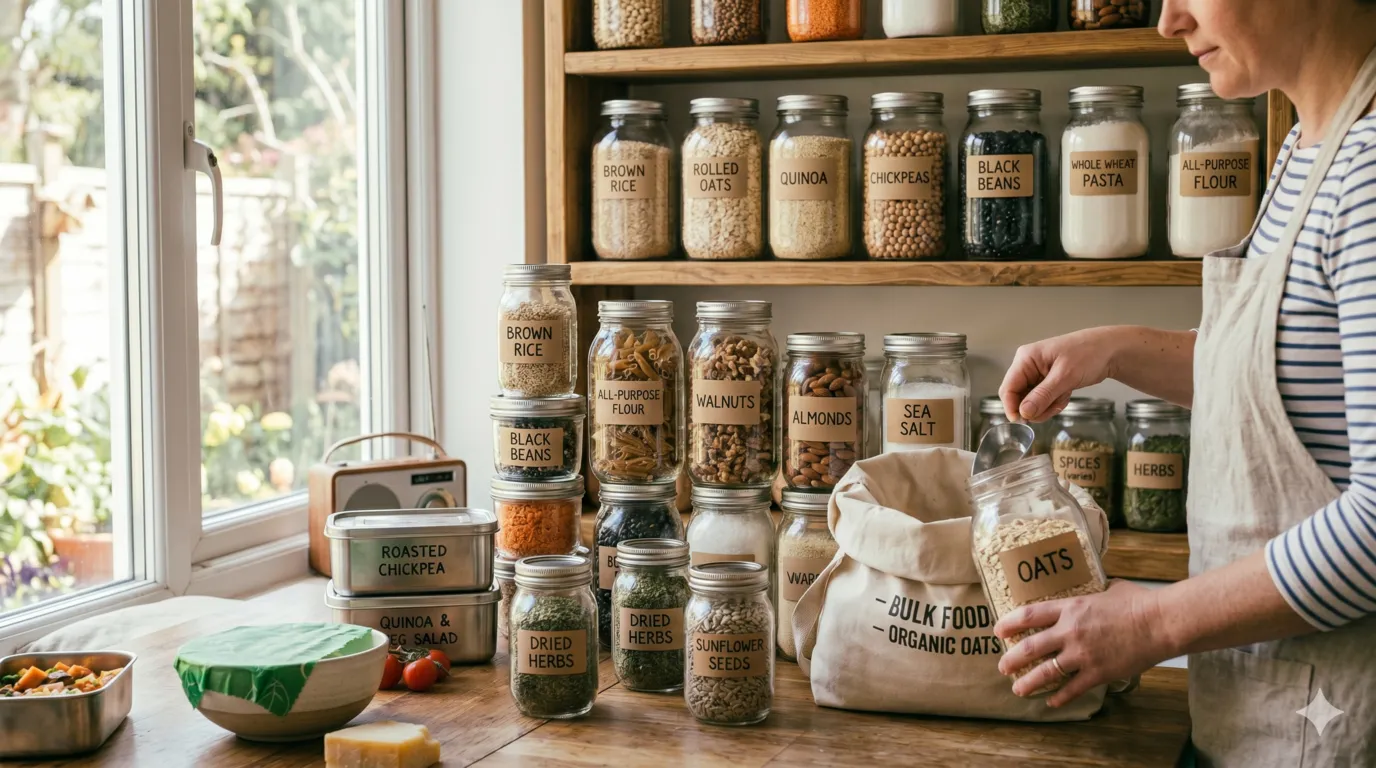
Mason jars are the budget hero of sustainable food storage. They’re cheap, easy to find, and endlessly reusable. Honestly, you don’t even need to buy the “mason” branded ones — washed-out pasta sauce and pickle jars do most of the same jobs for free.
A jar with a tight lid is airtight, see-through, and works almost everywhere: pantry staples, leftovers, drinks, salad layers, overnight oats, and even the freezer. The glass-everywhere logic from earlier applies here too.
The main weak point is the metal canning lid, which can rust over time and isn’t ideal for repeated fridge use. Plenty of brands sell reusable plastic-free storage lids or stainless caps that fix this.
How to get the most out of jars:
- Choose wide-mouth jars for freezing and for foods you scoop out, since they’re easier to fill and clean.
- For freezing, fill only to the jar’s fill line and leave space at the top so it doesn’t crack.
- Decant dry goods — rice, beans, pasta, oats, flour — into jars to keep them fresh and pest-free.
Mason jars are the cheapest way to start, and they pull double duty as drinkware and pantry storage.
Silicone Storage Bags
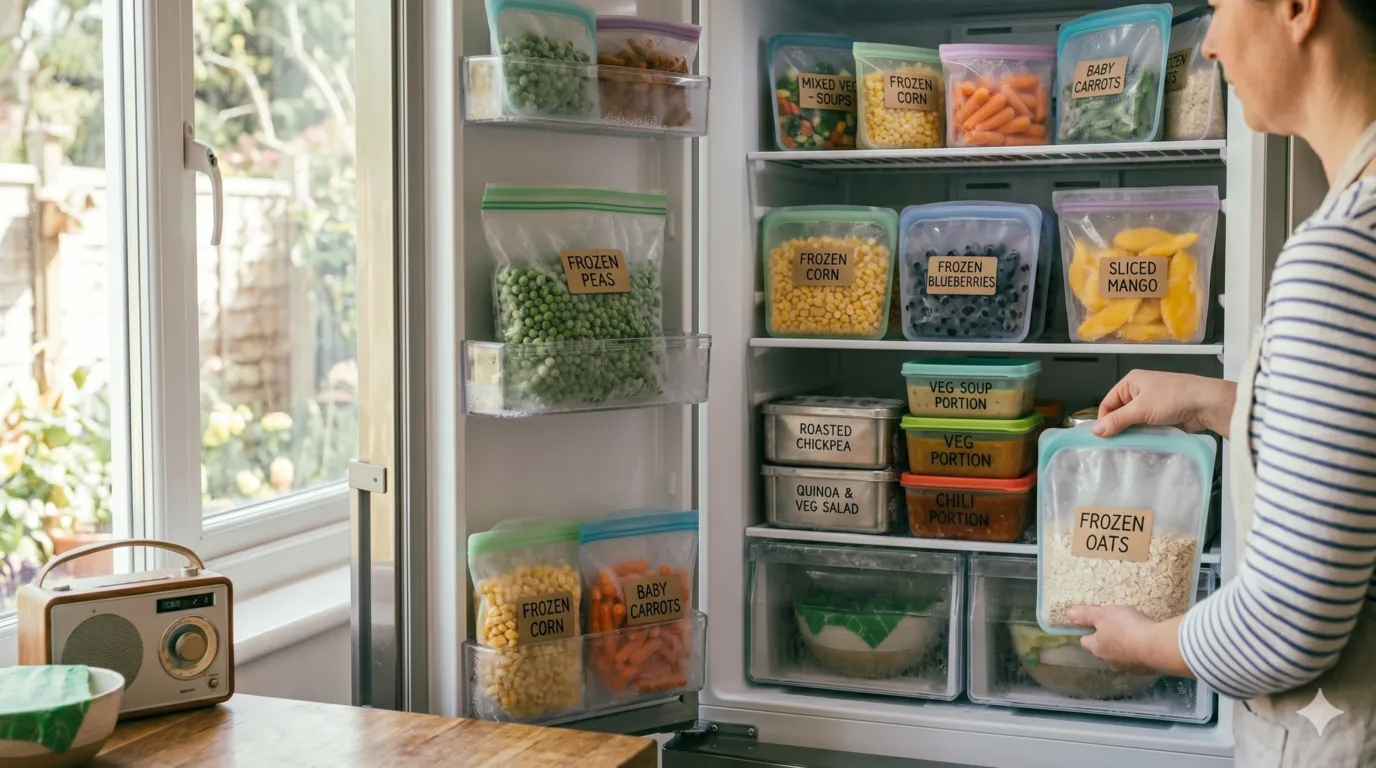
Reusable silicone bags are the swap for single-use zip-top plastic bags, and they’re a game-changer for the freezer.
Here’s the honest part, because it matters for trust: silicone isn’t technically “plastic-free.” It’s a synthetic material made from silica (sand). But it’s far more stable and durable than thin plastic, and a single silicone bag can replace hundreds of disposable ones. For most households trying to cut waste, that’s a worthwhile trade — just know it isn’t the same as glass or steel.
A good silicone bag is airtight and usually safe in the freezer, microwave, dishwasher, and even boiling water for sous vide (always check the brand’s guidance). It seals flat, so it’s great for freezing portioned soups, marinating, and packing snacks.
The downsides are a higher upfront price and the fact that they can be fiddly to dry inside.
Tips:
- Choose food-grade or “platinum” silicone.
- Prop the bag open over a bottle or jar to dry the inside fully.
- They’re ideal for freezing flat portions of stock, sauce, and leftovers that you want to stack.
If you go through a lot of disposable freezer bags, this is the swap with the biggest payoff.
Pantry Organization Tips
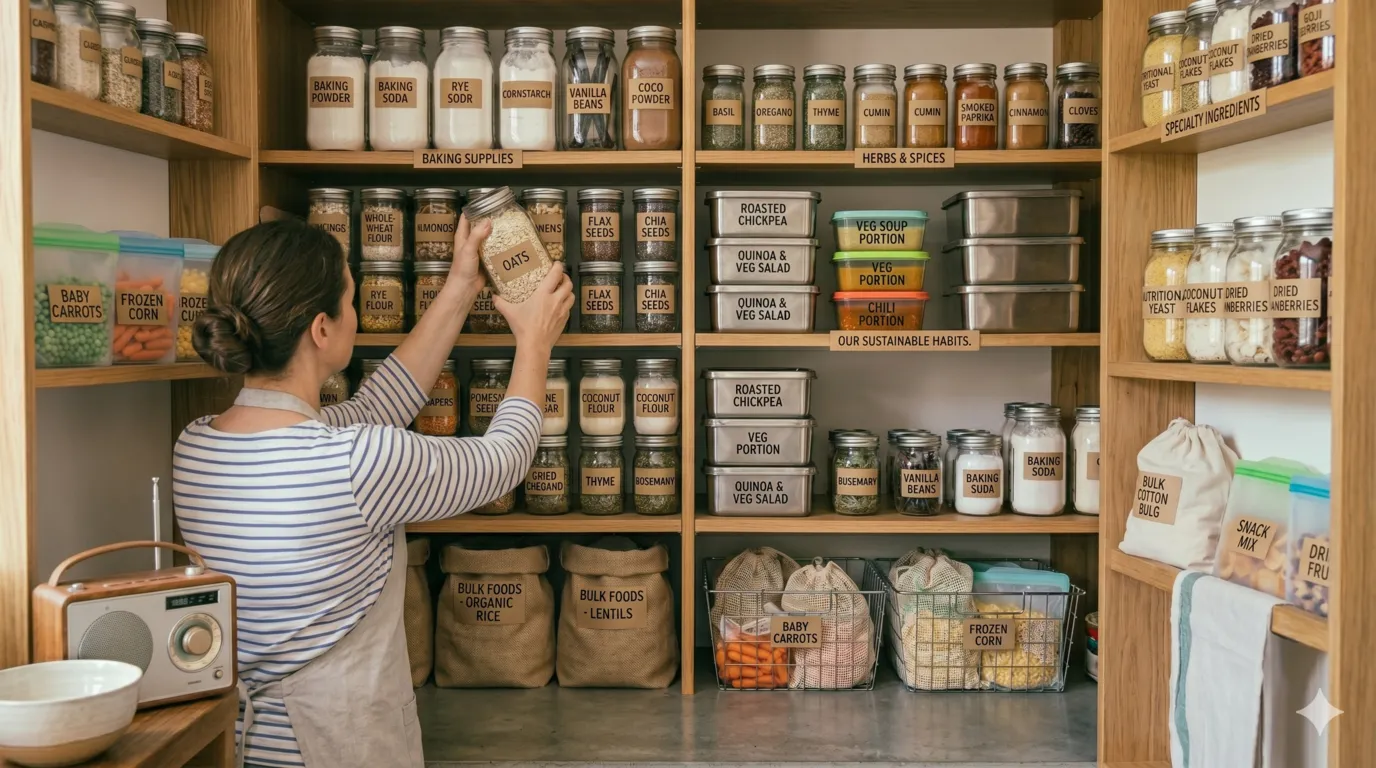
Good storage isn’t only about containers — it’s about a system that stops food (and money) from going to waste. This is one piece of a bigger picture — see our guide on how to build a zero waste kitchen for the rest.
The single best move is to decant dry goods into glass jars or steel tins. Uniform containers stack neatly, let you see exactly how much is left, and seal out the pantry moths that love a half-open bag of flour. As a bonus, you strip away a lot of plastic packaging clutter.
A simple plastic-free pantry routine:
- Empty and sort. Group items by type — grains, legumes, baking, snacks — and toss anything truly expired.
- Decant into jars. Use what you already own before buying new containers.
- Label clearly. A strip of washi tape or a chalk marker on the glass works, and it wipes off when you refill.
- Rotate stock. Put older items in front so you use them first.
- Keep a refill list. When a jar runs low, jot it down so you can refill in bulk.
Shopping the bulk bins with your own jars or cloth bags closes the loop. Most stores will weigh your empty container (the “tare”) so you only pay for the food, not the packaging. Our guide to zero waste grocery shopping covers this in more detail.
Best Materials for Food Storage
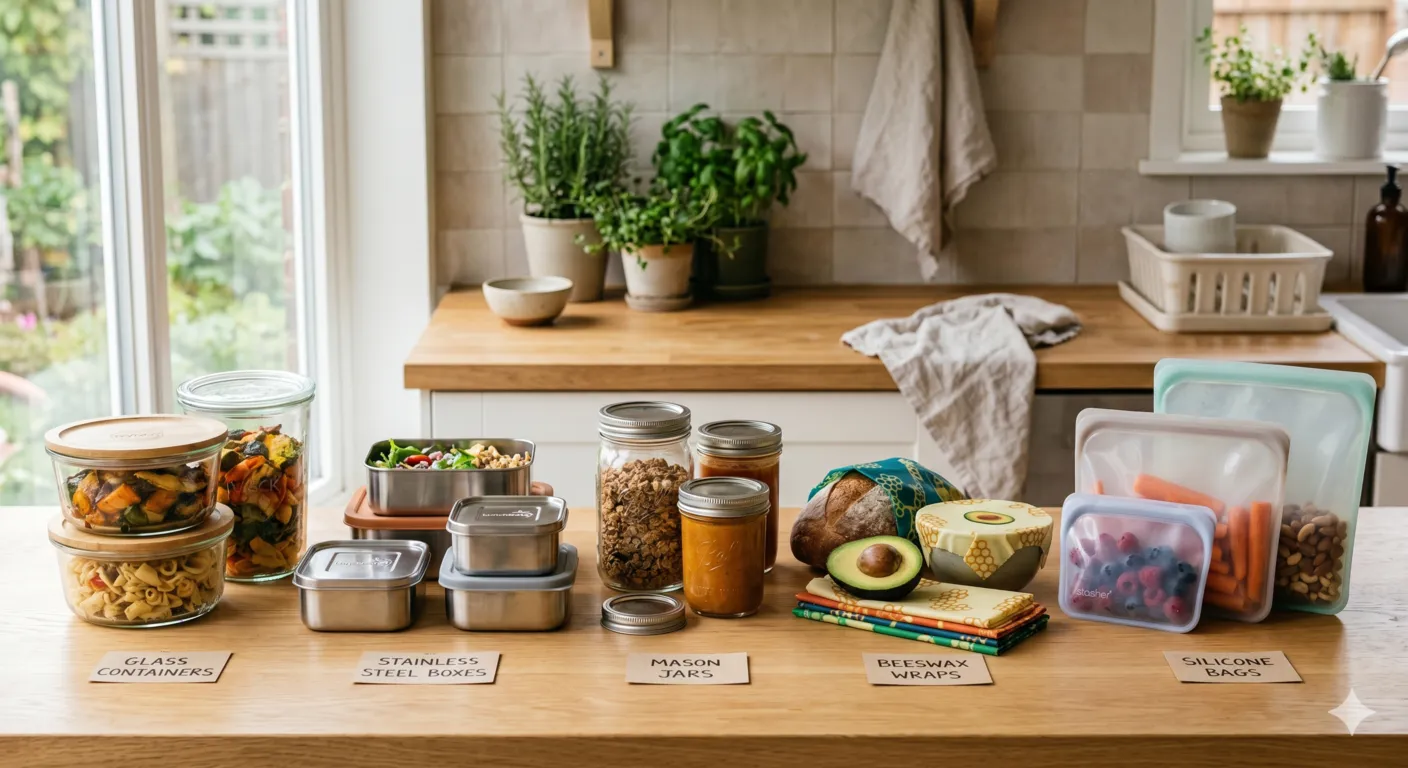
There’s no single best material — the right pick depends on the job. Here’s a quick guide to matching the container to the task.
| Need | Best material | Why |
| Everyday leftovers, fridge-to-oven | Glass | Inert, see-through, reheats well |
| Lunches, kids, on-the-go | Stainless steel | Unbreakable and lightweight |
| Covering bowls, wrapping produce | Beeswax or plant-wax wraps | Breathable, compostable |
| Dry pantry goods | Mason jars | Cheap, airtight, pest-proof |
| Freezing portions, replacing zip bags | Silicone bags | Seals flat, freezer-safe |
A few things to steer clear of: thin single-use plastics, melamine dishes (not made for hot food), and reheating in any plastic at all. When in doubt, glass and stainless steel are the safest, longest-lasting choices for a plastic-free kitchen.
Frequently Asked Questions
Is plastic-free food storage more expensive?
Upfront, yes — glass and steel cost more than a pack of plastic tubs. Over time, it’s usually cheaper. Quality containers last for years instead of warping and getting tossed, so you stop rebuying. Starting with reused glass jars keeps the initial cost close to zero.
Can you freeze food in glass jars?
Yes. Use wide-mouth jars, leave headspace at the top for the food to expand, and let hot food cool before it goes in the freezer. Straight-sided or wide-mouth jars are far less likely to crack than narrow-necked ones.
Are silicone storage bags really plastic-free?
Not strictly. Silicone is a synthetic material made from silica, so it sits in a gray area. It is, however, far more durable than disposable plastic, and one bag can replace hundreds of single-use ones — which is why many people still consider it a solid waste-reduction swap.
How do you store leftovers without plastic?
Glass containers are the easiest option, since they go from fridge to oven. Stainless steel tins work well for packed lunches, mason jars are perfect for soups and grains, and a beeswax wrap can cover a bowl or plate for a short-term cover.
Do beeswax wraps actually keep food fresh?
For the right foods, yes. They’re great for cheese, bread, cut vegetables, and covering bowls, because the fabric breathes. They aren’t suitable for raw meat or fish, and they can’t be used with anything hot.
What’s the best plastic-free option for meal prep?
Glass containers, hands down. You can portion meals, store them in the fridge, freeze extras, and reheat straight in the same dish. A matching set also stacks neatly and saves space.
Final Thoughts
You don’t need to overhaul your kitchen overnight. In fact, throwing out perfectly usable plastic just to replace it creates more waste, not less. The greener path is to use what you have until it wears out, then swap in something durable.
Start with one change — decant your pantry into jars, or replace cling film with a beeswax wrap — and build from there. Each small swap means less plastic in your food, less waste at the curb, and a kitchen that’s genuinely easier to keep tidy. Progress beats perfection every time.