If you’ve ever pulled everything out from under your kitchen sink, you know the scene. A crowd of half-used plastic bottles. Three sprays that basically do the same thing. That sharp chemical smell that makes you crack a window before you’ve even started scrubbing. Most of us bought all of it without thinking twice.
Here’s the part nobody tells you: you don’t need ten products to keep a home clean. You need about five simple ingredients, a couple of refillable bottles, and a few recipes you can actually remember.
DIY zero waste cleaning recipes are homemade cleaners made from basic, low-waste ingredients like vinegar, baking soda, and castile soap, mixed into reusable containers instead of single-use plastic bottles. They cost less, cut down on plastic, and keep a long list of harsh chemicals out of your home and out of the water system.
I’ve been making my own cleaners for years, and the recipes below are the ones I keep coming back to because they genuinely work. No magic claims, no 30-ingredient potions. Let’s get into it. It’s a small, satisfying piece of a bigger zero waste lifestyle.
Why Make Your Own Cleaners?

Switching to homemade cleaning recipes isn’t about being perfect or “crunchy.” It’s about a few practical wins that stack up over time.
- Far less plastic waste. Instead of tossing a spray bottle every few weeks, you refill the same glass bottles for years. That’s a small habit with a real effect on how much plastic leaves your home.
- Genuine cost savings. A jug of white vinegar and a box of baking soda cost a few dollars each and make batch after batch. Compare that to specialty sprays at several dollars a bottle, and the math turns in your favor quickly.
- You control the ingredients. When you mix it yourself, there’s no mystery “fragrance” on the label. You know exactly what’s touching your counters and going down your drain.
- Simplicity. One good all-purpose spray replaces three or four nearly identical products. Less clutter, fewer decisions.
These eco-friendly cleaning solutions also fit naturally into a broader sustainable living routine. Once you’ve reused a bottle a dozen times, refilling instead of rebuying just becomes normal.
If you’d rather understand the ingredients themselves before mixing anything, our guide to natural cleaning products that reduce waste covers that in depth. A quick note before the recipes: natural doesn’t automatically mean gentle on every surface, and it doesn’t always mean “disinfectant.” I’ll flag the important exceptions as we go so you can clean confidently.
All-Purpose Cleaner Recipe

This is the one I reach for most often. It handles counters, appliances, painted surfaces, and general grime.
What you need:
- 1 cup white distilled vinegar
- 1 cup water
- 10–15 drops essential oil (optional, for scent — lemon, lavender, or tea tree all work)
- A reusable spray bottle (glass is ideal)
How to make it:
- Pour the vinegar and water into your spray bottle.
- Add the essential oil if you’re using it.
- Screw on the lid and give it a gentle shake before each use.
How to use it: Spray, let it sit for a few seconds on greasy spots, then wipe with a cloth. The vinegar smell fades as it dries, so don’t worry if it’s strong at first.
Important: Skip this on natural stone like marble, granite, or travertine. Vinegar is acidic and will dull or etch those surfaces over time. For stone counters, use a few drops of castile soap in water instead.
A nice upgrade: save your citrus peels (orange, lemon, grapefruit), pack a jar with them, cover with vinegar, and let it steep for about two weeks. Strain it, and you’ve got a naturally citrus-scented base — plus the peels can go straight into your compost afterward.
Glass Cleaner Recipe

Streaky windows usually come down to one thing: too much soap residue. This natural cleaning recipe leaves glass clear without the haze.
What you need:
- 2 cups water
- 1/2 cup white vinegar
- 1/4 cup rubbing alcohol (optional, helps it dry fast and streak-free)
- 1–2 drops essential oil (optional)
How to make it:
- Combine everything in a spray bottle.
- Shake gently to mix.
How to use it: Spray lightly and wipe with a lint-free microfiber cloth or even crumpled newspaper. The trick is to use less product than you think you need, and to buff dry rather than leaving it wet.
Tip: Clean glass on a cloudy day or out of direct sunlight. In bright sun, the solution dries before you can wipe it, and that’s what causes streaks.
Bathroom Cleaner Recipe
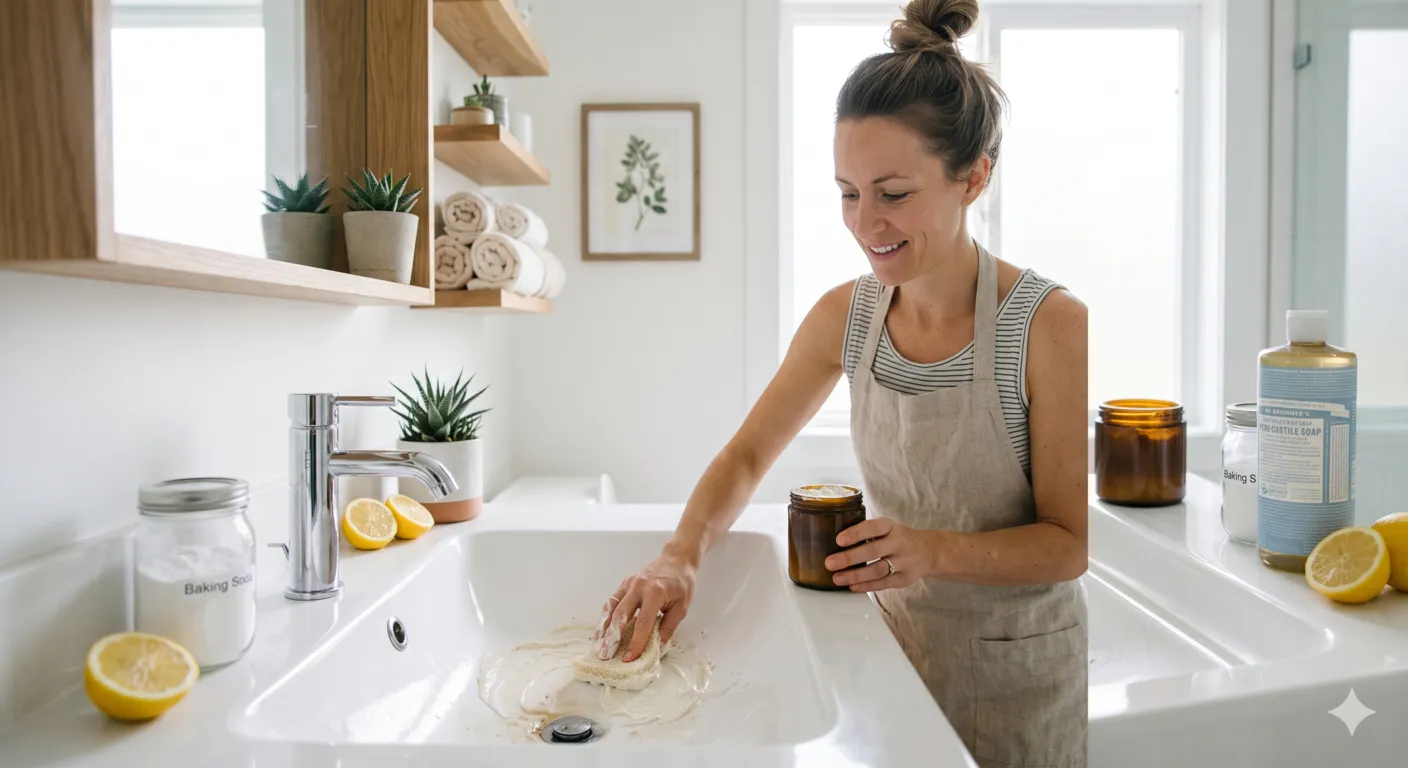
Bathrooms collect three different messes — soap scum, hard-water buildup, and general grime — so I use two simple mixes here. Pair these with a few bathroom swaps and the whole room gets a lot less wasteful. For tubs, tiles, and sinks (scrubbing paste):
For tubs, tiles, and sinks (scrubbing paste):
- 1/2 cup baking soda
- Enough liquid castile soap to make a spreadable paste (a few tablespoons)
- Optional: 5 drops tea tree oil
Mix into a paste, scoop some onto a sponge, scrub, then rinse well. The baking soda gives just enough grit to lift grime without scratching.
For soap scum and mineral spots:
Use your all-purpose vinegar spray. Spray it on, let it sit for 5–10 minutes to break down the buildup, then wipe and rinse.
For the toilet bowl:
- Sprinkle about 1/2 cup baking soda into the bowl.
- Add 1 cup vinegar — it’ll fizz, and that’s fine.
- Let it sit for 10 minutes, scrub with the toilet brush, and flush.
One reminder: keep the vinegar mix and the castile soap paste separate. Vinegar is acidic and castile soap is alkaline, so when you combine them directly they curdle into a useless white film. Use one, rinse, then the other.
Kitchen Cleaner Recipe

The kitchen is where grease, food residue, and odors all show up at once. A couple of go-to combinations cover almost everything. For the bigger picture beyond cleaning, see our guide on how to build a zero waste kitchen.
Counters and appliance fronts: Use your all-purpose vinegar spray (again, not on stone counters). For everyday wipe-downs it’s all you need.
Stovetop and sink scrub: Make a paste of baking soda and a little water, spread it on cooked-on spots or a dull sink, let it sit a few minutes, then scrub and rinse. It cuts grease without harsh fumes.
Cutting boards: Sprinkle coarse salt over the board, scrub with half a lemon, then rinse. The salt lifts residue and the lemon freshens it up.
Greasy pans and stuck-on food: A sprinkle of baking soda plus a drop of dish soap and hot water loosens most of it before you even start scrubbing.
For raw-meat prep areas or anything you want truly sanitized, plain vinegar isn’t enough on its own (more on that in the FAQs). Keep a bottle of 3% hydrogen peroxide on hand for those moments — spray it on the cleaned surface, let it sit a few minutes, and wipe.
Natural Deodorizer Recipe
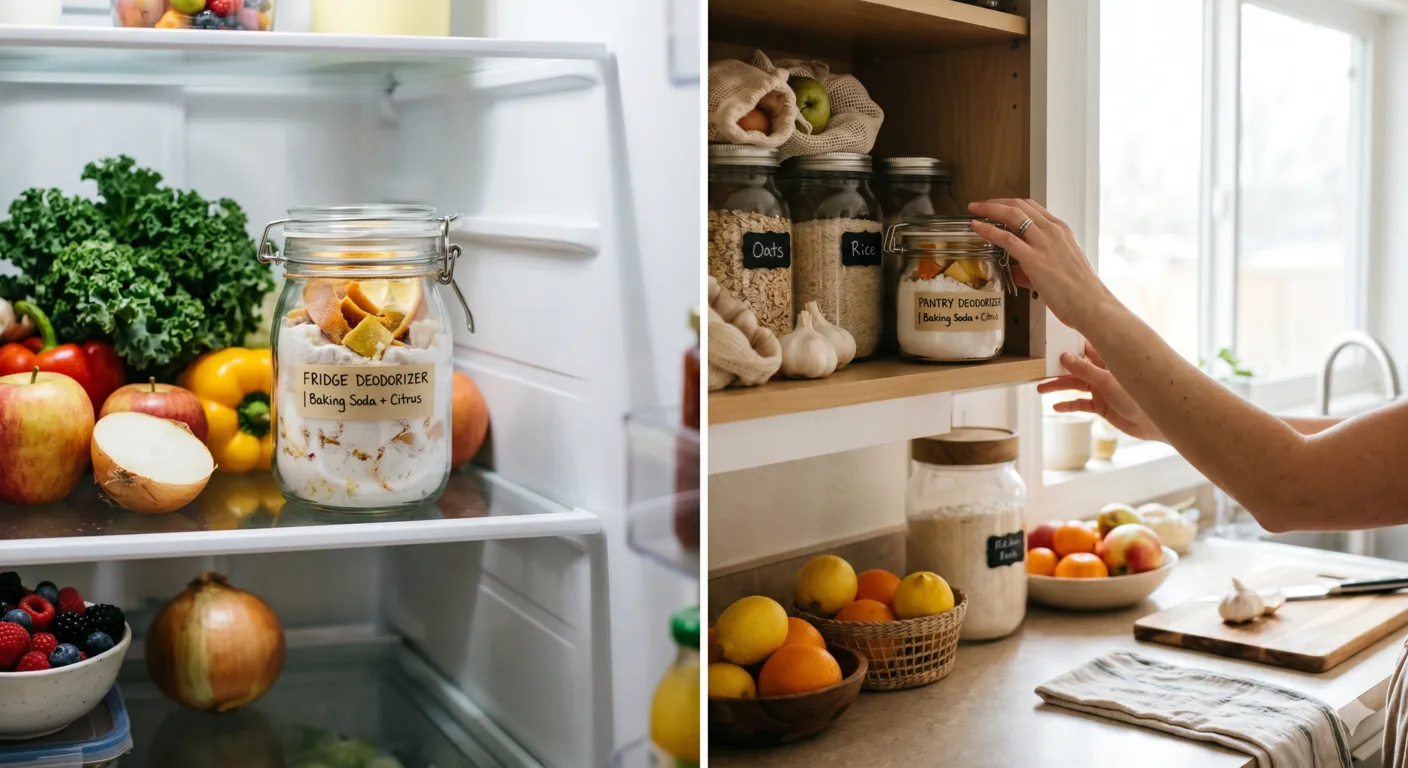
Most store-bought air fresheners just mask smells with synthetic fragrance. These eco-friendly cleaning solutions actually absorb or neutralize odors instead.
Fridge and small spaces: Leave an open jar of baking soda inside. It quietly absorbs odors — swap it out every month or so, and pour the old one down the drain with hot water to freshen the pipes.
Carpets and rugs: Mix 1 cup baking soda with 10 drops essential oil in a jar, sprinkle it over the carpet, wait 15 minutes, then vacuum. It pulls out trapped smells from pets and everyday life.
Room and fabric spray:
- 1 cup water
- 2 tablespoons rubbing alcohol or witch hazel (helps the oil disperse)
- 10–15 drops essential oil
Combine in a spray bottle, shake before each use, and mist into the air or over fabrics. The alcohol or witch hazel keeps the oil from just floating on top of the water.
Stovetop simmer: For a whole-home scent, simmer a small pot of water with citrus peels, a cinnamon stick, and a few cloves. Keep an eye on the water level so it doesn’t boil dry.
Ingredients to Avoid
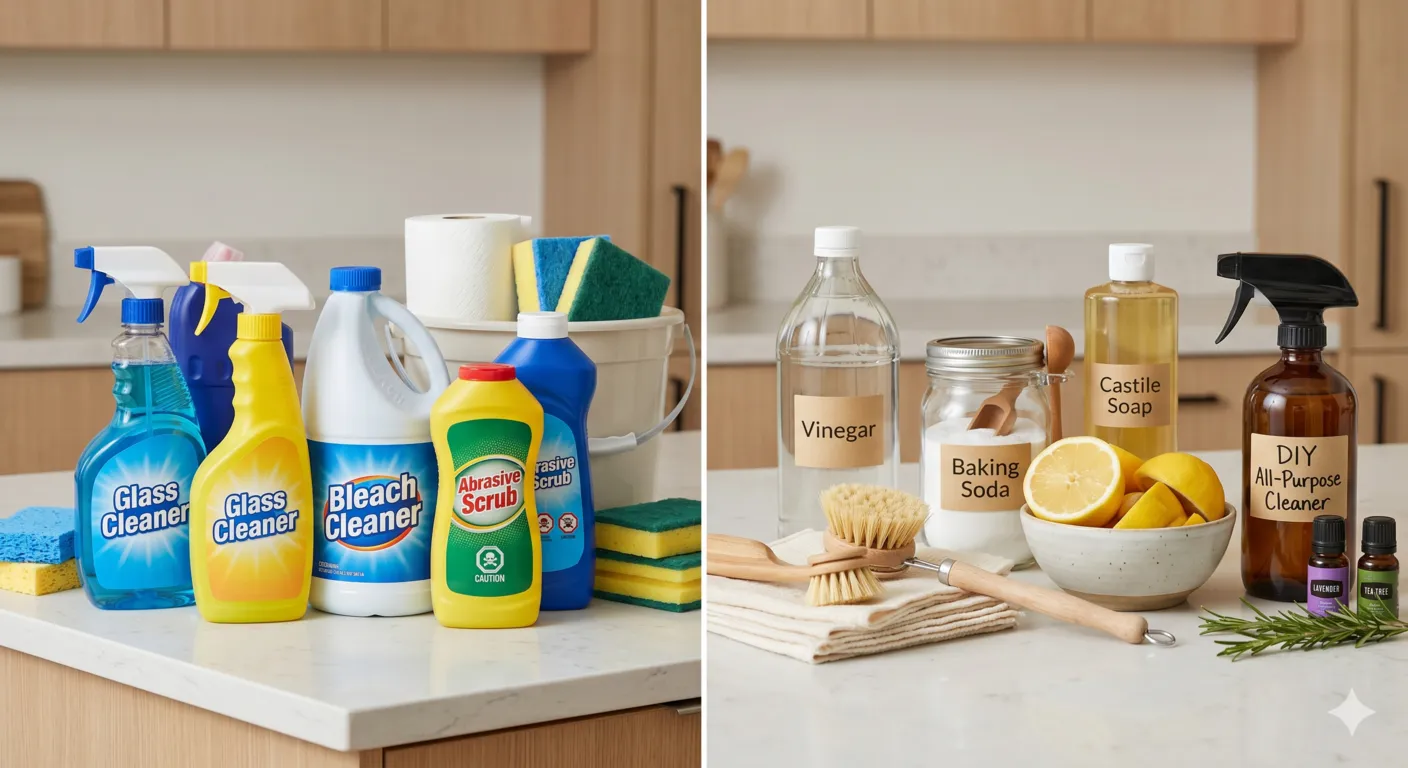
Part of going zero waste is also stepping away from a handful of ingredients common in conventional products. You’ll spot these on labels, and they’re worth knowing about:
- Synthetic fragrance (“fragrance” or “parfum”). A catch-all term that can hide dozens of undisclosed compounds.
- Triclosan and other added antibacterials. Often unnecessary for everyday home cleaning.
- Quaternary ammonium compounds (“quats,” like benzalkonium chloride). Common in disinfecting wipes and sprays.
- Ammonia and chlorine bleach. Effective but harsh, and risky if mixed (see below).
- Phthalates and certain dyes. Frequently tied to that vague “fragrance” listing.
You’ll notice none of these are in the recipes above, which is the point — you’re building a kit you fully understand.
Just as important is what you should never mix, even with natural ingredients:
- Never combine bleach with vinegar, ammonia, or rubbing alcohol. These reactions create toxic gases. This is non-negotiable.
- Don’t store hydrogen peroxide and vinegar mixed in the same bottle. Used separately on a surface they’re fine, but combined and sealed up they form an irritating acid. Keep them in their own containers.
- Don’t mix vinegar and castile soap. Not dangerous, just ineffective — they cancel each other out.
When in doubt, use one product, rinse, then use another. Simple sequencing keeps you safe.
Storage Tips
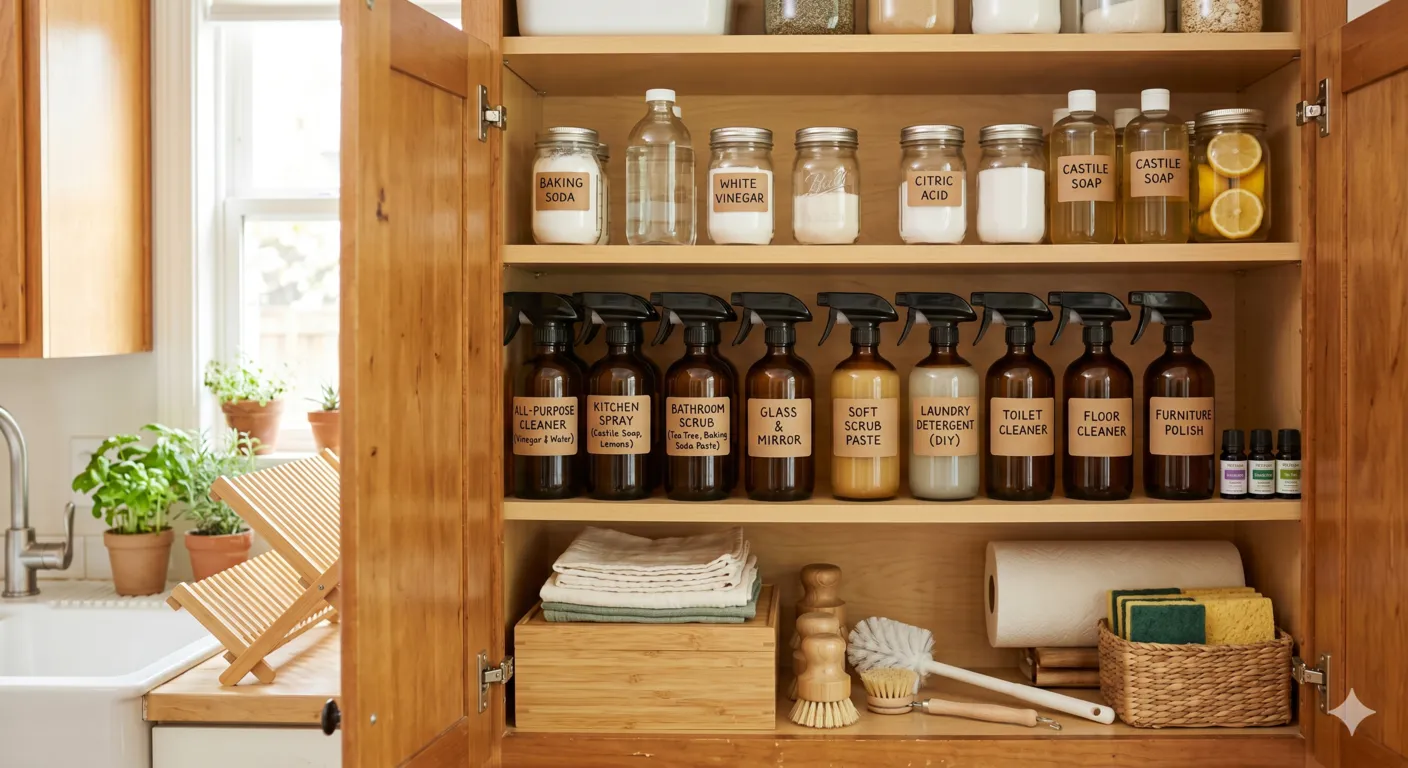
Good storage keeps your homemade cleaning recipes working and safe to keep around.
- Use glass bottles when you can. They don’t degrade the way some plastics do when essential oils are involved, and they’re endlessly reusable. Amber or cobalt glass also protects light-sensitive ingredients like hydrogen peroxide.
- Label everything. Write the contents and the date on each bottle. A cabinet of unlabeled sprays is how mix-ups happen.
- Match batch size to shelf life. Vinegar-and-water solutions last a long time because vinegar is a natural preservative. Anything with fresh citrus juice or castile soap is best made in small amounts and used within a few weeks.
- Keep hydrogen peroxide in a dark bottle. Light breaks it down, so store it where it came from or in opaque glass.
- Store out of reach of kids and pets. Natural still means “not for drinking.” Keep bottles up high or in a latched cabinet.
- A note on essential oils and pets: several oils, especially tea tree, can be toxic to cats and dogs. If you have animals, keep scented sprays well out of reach and rinse surfaces your pets contact.
Frequently Asked Questions
Do natural cleaners actually kill germs?
They clean very well — lifting dirt, grease, and most residue — but vinegar and baking soda are not registered disinfectants. For everyday cleaning, that’s usually all you need. When you want true disinfection (after handling raw meat, or when someone’s sick), use 3% hydrogen peroxide or 70% rubbing alcohol on the already-cleaned surface, and let it sit a few minutes before wiping.
Is vinegar safe on every surface?
No. Avoid it on natural stone (marble, granite, travertine), unsealed grout, and some hardwood or waxed finishes, since the acid can dull or damage them. For those, use a little castile soap in water instead. Vinegar is great on glass, tile, sinks, and most painted or laminate surfaces.
Can I mix baking soda and vinegar together?
You can, but don’t bottle it up for storage. When combined, they fizz and then mostly neutralize into water and a bit of salt, so a premixed bottle loses its punch. The fizzing action is genuinely useful for freshening drains, though — pour in baking soda, then vinegar, let it bubble, and flush with hot water.
How long do homemade cleaners last?
Vinegar-based sprays keep for months. Mixes with castile soap or fresh lemon are best used within two to four weeks. If anything looks cloudy, separates oddly, or smells off, just make a fresh batch.
Will these recipes really save me money?
Yes, for most people. The base ingredients are inexpensive and stretch across many batches, so the per-bottle cost drops well below name-brand sprays. The bigger you buy your vinegar and baking soda, the more you save.
Are these cleaners safe around children and pets?
They’re far gentler than most conventional products, but you should still store them safely and keep pets off freshly sprayed surfaces until dry — especially with essential oils. Treat them like any cleaning supply: useful, but not toys.
Final Thoughts
You don’t have to overhaul your whole cabinet this weekend. Start with one recipe — the all-purpose spray is the easiest win — and refill the same bottle for a month. Once you see how well it works and how little it costs, the rest tends to follow naturally.
That’s really the heart of a low-waste home: small, repeatable habits that quietly add up. Fewer plastic bottles in the bin, fewer harsh chemicals down the drain, and a little more money left in your pocket. Mix one bottle, give it a try, and build from there.