Open your laundry cabinet for a second. If it looks like most people’s, there’s probably a half-empty plastic jug of detergent, a box of dryer sheets, maybe some fabric softener, and a stain spray or two — almost all of it wrapped in plastic that gets tossed the moment it runs out.
Laundry is one of those background chores we barely think about, but the waste adds up quietly: plastic packaging, energy, water, and a steady stream of tiny plastic fibers heading down the drain with every wash.
Here’s the reassuring part. A zero waste laundry routine isn’t about buying a shelf full of expensive “eco” gadgets. Most of it comes down to a few simple swaps and small habit changes — ones that usually save money and help your clothes last longer too.
This guide walks through how to build a low-waste, eco friendly laundry routine from scratch: what’s genuinely worth changing, what’s mostly marketing, and the easy mistakes you can skip once you know they exist. Laundry is just one room of a much bigger zero waste lifestyle, but it’s an easy one to get right.
Why Traditional Laundry Creates Waste
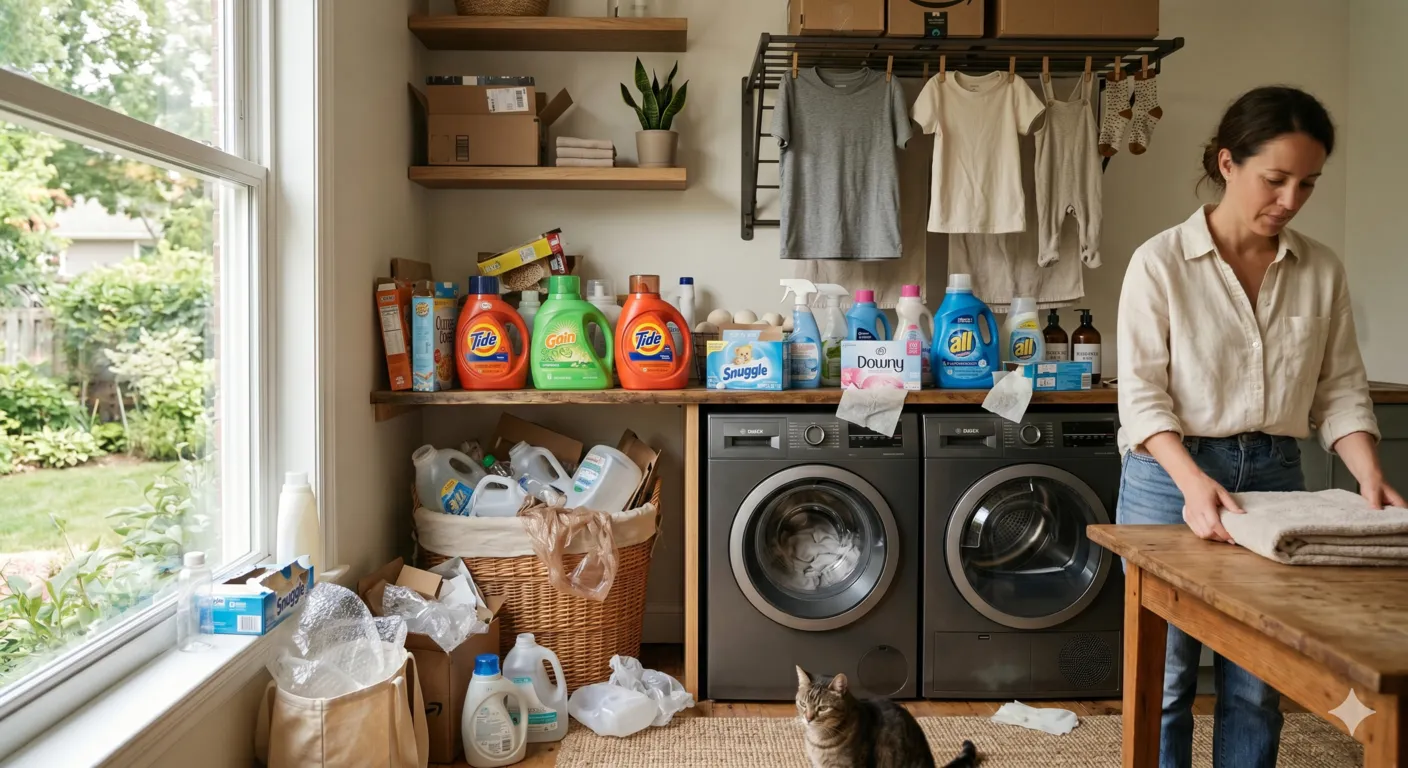
Before changing anything, it helps to see where the waste actually comes from. A typical load creates more than just clean clothes.
- Plastic packaging. Liquid detergent is mostly water by weight, which means you’re paying to ship water around in a heavy plastic jug. Those jugs, plus softener bottles and dryer-sheet boxes, pile up fast — and many curbside programs don’t reliably recycle them.
- Energy. Most of the energy your machine uses on a warm or hot wash goes into heating the water, not spinning the drum. Tumble dryers are worse: they’re among the most energy-hungry appliances in a home.
- Water. Older or oversized machines can use a surprising amount of water per cycle, especially when you run small, frequent loads instead of full ones.
- Microfibers. Synthetic clothes shed tiny plastic fibers in the wash (more on that below).
- Single-use extras. Dryer sheets, scent boosters, and disposable stain wipes are used once and thrown away.
There’s also a hidden cost: washing and drying are tough on fabric. That lint trap full of fuzz is literally your clothes wearing down. Gentler laundry habits mean your wardrobe lasts longer, which is one of the most underrated forms of waste reduction there is.
Choose Concentrated or Powder Detergents
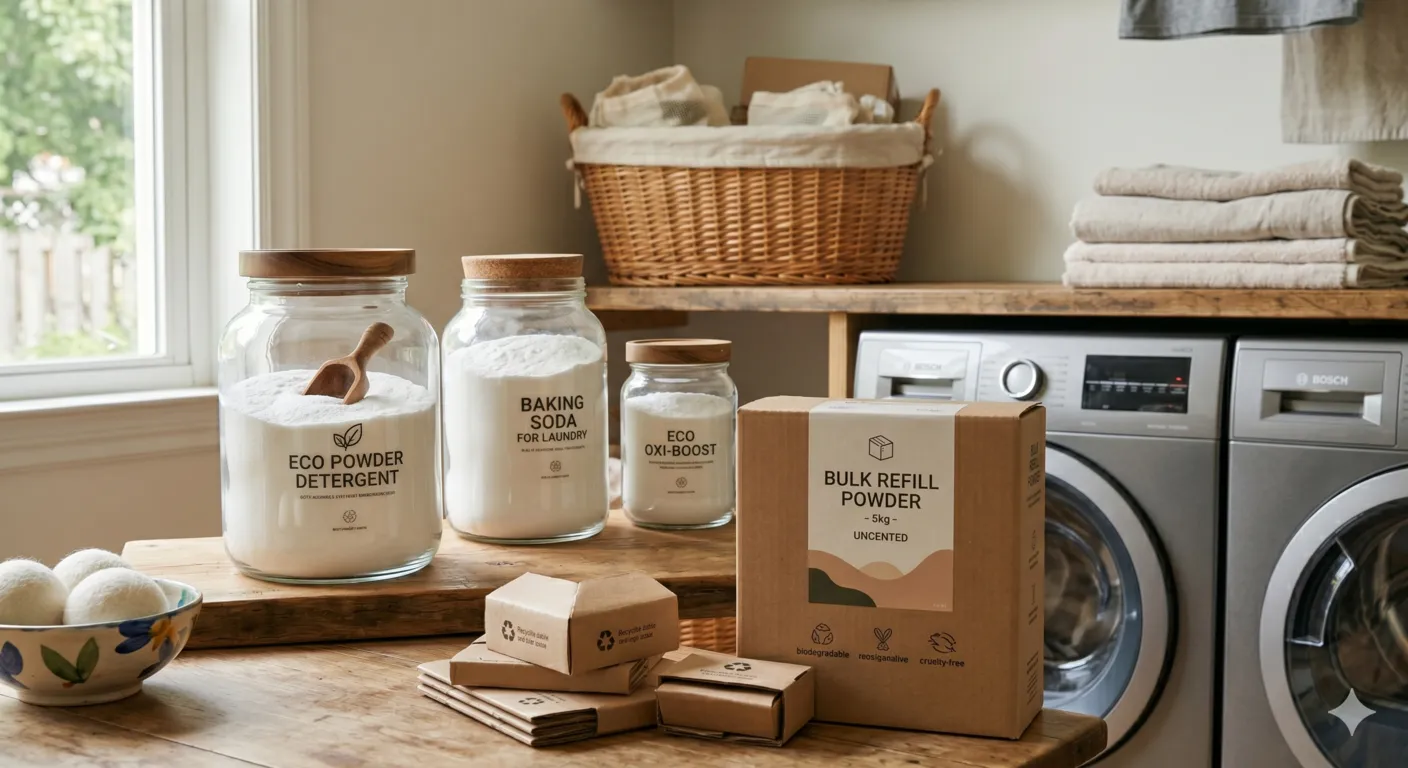
Swapping your detergent is the easiest first win, and it’s where the plastic-free laundry shift really starts.
The problem with standard liquid detergent is all that water and the bulky plastic jug it lives in. Better low-waste options include:
- Powder detergent in a cardboard box. Often the cheapest option per load, fully effective, and the box is easy to recycle or compost.
- Detergent sheets or strips. Lightweight, pre-measured, and usually packaged in a small cardboard sleeve. Very convenient, though it’s worth checking the ingredient list and cost per wash, since quality varies between brands.
- Refill and bulk options. Many zero waste shops and a growing number of brands let you refill a container you already own, or send concentrated refills you dilute at home.
- Detergent in returnable or aluminum packaging. A handful of companies use packaging designed to be reused or recycled more easily than plastic.
A practical tip: powder can leave a bit of residue in cold water if it doesn’t fully dissolve. If you wash cold, dissolve the powder in a cup of warm water first, or add it to the drum before your clothes so it has time to break down.
And the most important rule of any swap: finish what you already own first. Pouring out a usable jug of detergent to “go zero waste” creates more waste, not less. Make the switch when the current bottle runs dry.
Use Reusable Dryer Balls
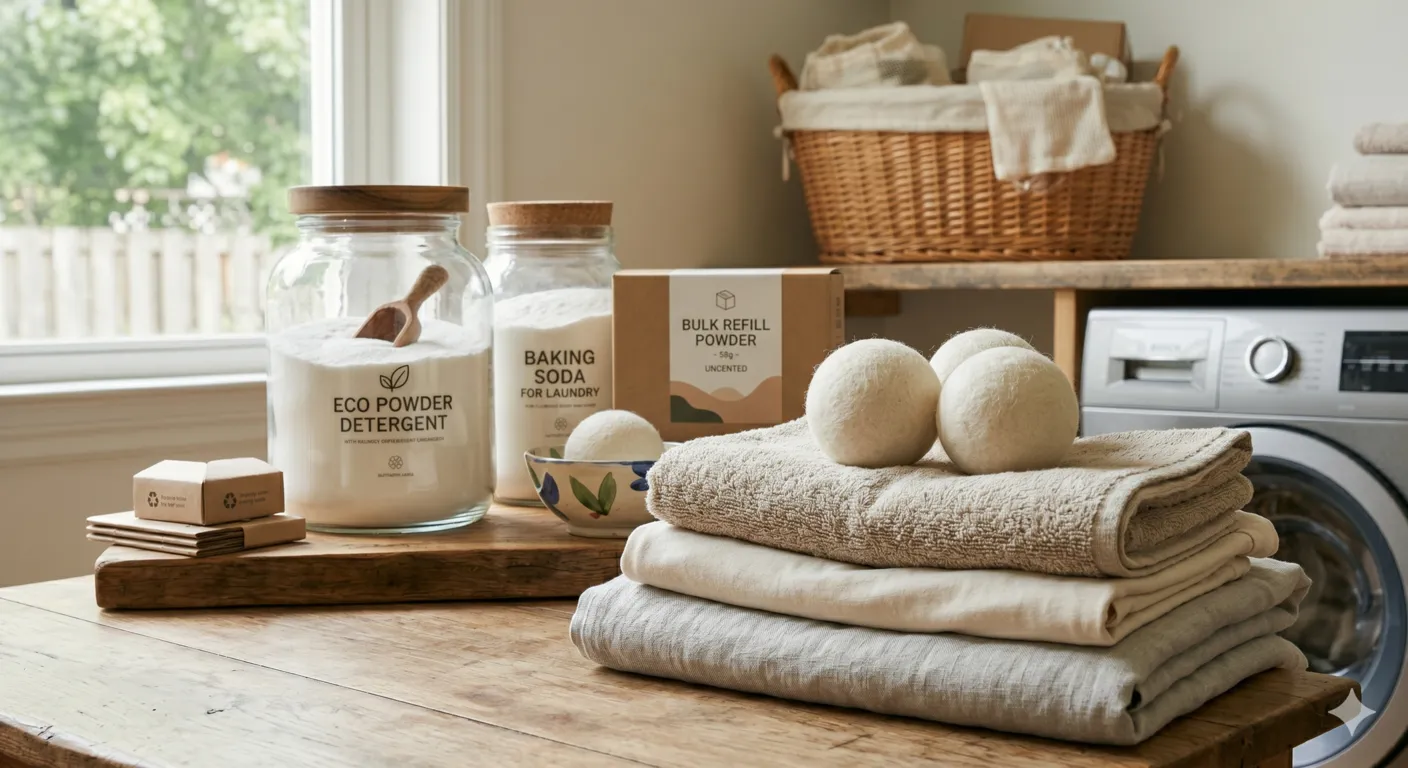
Dryer sheets are single-use by design — you toss one in, then throw it away. Wool dryer balls do a similar job and last for years.
Tossed in with your wet clothes, wool balls bounce around and separate the fabric, which improves airflow and helps everything dry a little faster. They also cut down on static and soften clothes naturally, with no coating or fragrance.
How to use them:
- Use 3 to 6 balls per load — more balls, more effect.
- Add a drop or two of essential oil to a ball if you want a light scent (let it dry briefly before adding clothes).
- Re-fluff them occasionally; they’ll last for hundreds of loads.
Be honest with your expectations, though. They won’t eliminate static completely on very dry winter loads, and the time savings are modest rather than dramatic. One thing worth skipping: plastic dryer balls. They’re loud, and as plastic that’s constantly tumbling against hot fabric, they’re not a great fit for a low-waste home.
Wash Clothes Less Often

This one feels almost too simple, but it’s genuinely the most powerful habit on this list. The greenest wash is the one you don’t run.
We’ve been trained to treat “worn once” as “dirty,” but a lot of clothing doesn’t need washing after every use. Over-washing wastes water, energy, and detergent — and it wears fabric out faster, fading colors and breaking down fibers.
Wash after every wear:
- Underwear and socks
- Activewear and anything sweaty
- Clothes with visible stains or strong odors
Wear several times before washing:
- Jeans and most trousers
- Sweaters, jackets, and outerwear
- Bras and lightly worn tops
Between washes, air clothes out overnight, spot-clean small marks instead of washing the whole garment, and hang things up rather than dropping them in the hamper out of habit. When you do run a load, wait until it’s full and default to cold water unless something is heavily soiled. Cold cycles clean most everyday laundry perfectly well while using far less energy.
Reduce Microplastic Pollution
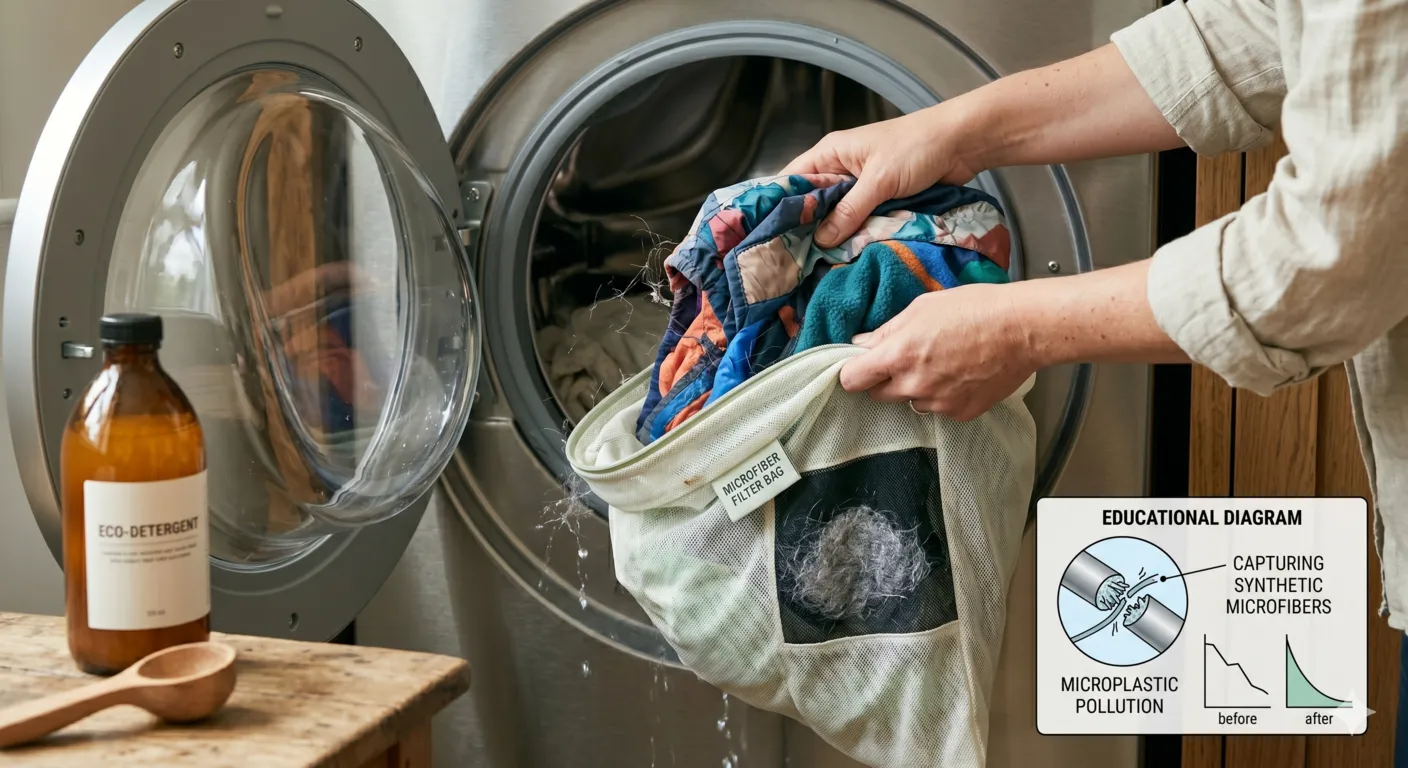
Clothes made from synthetic materials — polyester, nylon, acrylic, and most stretchy activewear — shed tiny plastic fibers every time they’re agitated in water. These microfibers are small enough to slip through many wastewater treatment systems and end up in rivers and oceans.
You can’t make it disappear entirely, but a few habits noticeably reduce shedding:
- Wash less often, and wash full loads on a gentle, shorter cycle. Less friction and less time in the water means fewer fibers released.
- Use cold water. Heat and long cycles tend to break fibers loose more easily.
- Try a microfiber-catching tool. Washing bags (like the Guppyfriend style) and in-drum catchers (such as a Cora Ball) trap a portion of the fibers so they don’t go down the drain. Some people fit an external filter to the machine’s outflow hose.
- Lean toward natural fibers when you’re buying new. Cotton, linen, wool, and hemp don’t shed plastic.
A quick reality check so we don’t overstate it: natural fabrics have their own environmental footprints, and no single trick solves microfiber pollution on its own. The realistic goal is to release fewer plastic fibers over time, not to chase a perfect number.
Air-Dry Clothes When Possible
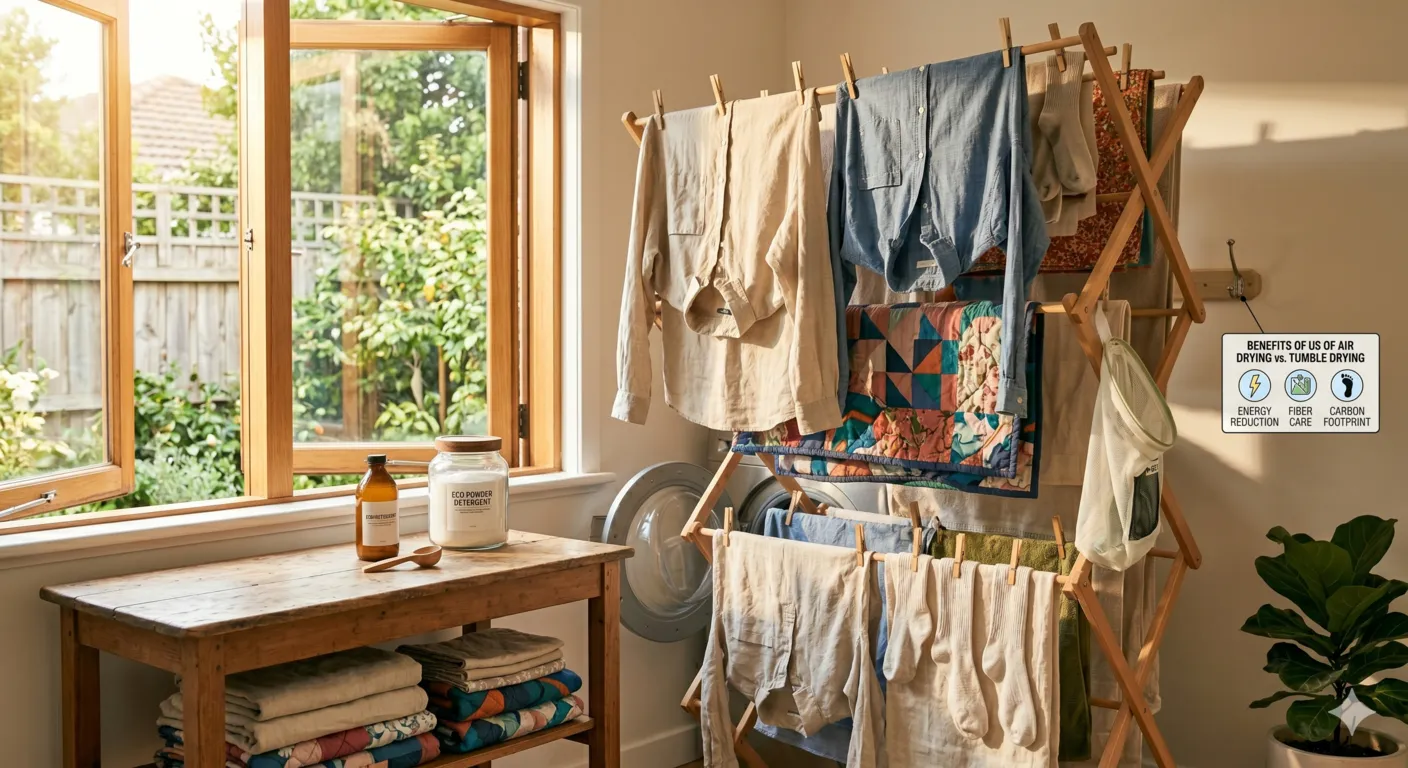
If the dryer is the single most energy-hungry part of your routine, line drying is the single biggest cut you can make — and it’s free.
Air drying is also far gentler on clothes. Remember, all that dryer lint is fabric breaking down, so skipping the dryer helps your wardrobe survive longer.
Easy ways to air-dry, even without a backyard:
- A folding drying rack you can move room to room
- A retractable clothesline over the bath or on a balcony
- Over-the-door or wall-mounted bars for smaller spaces
- A regular clothesline outdoors when the weather allows
A few tips that make it work better:
- Run a high spin cycle in the washer first to remove more water, so things dry faster.
- Shake each item out and don’t overcrowd the rack — airflow is everything.
- Hang whites and linens in direct sun when you can; sunlight brightens and naturally freshens fabric.
- Drying indoors in winter is fine, just crack a window or run a fan so the room doesn’t get damp.
You don’t have to go all-or-nothing. A hybrid approach — air-drying most things and using the dryer occasionally for towels or a time crunch — still cuts a lot of energy.
DIY Laundry Detergent Options
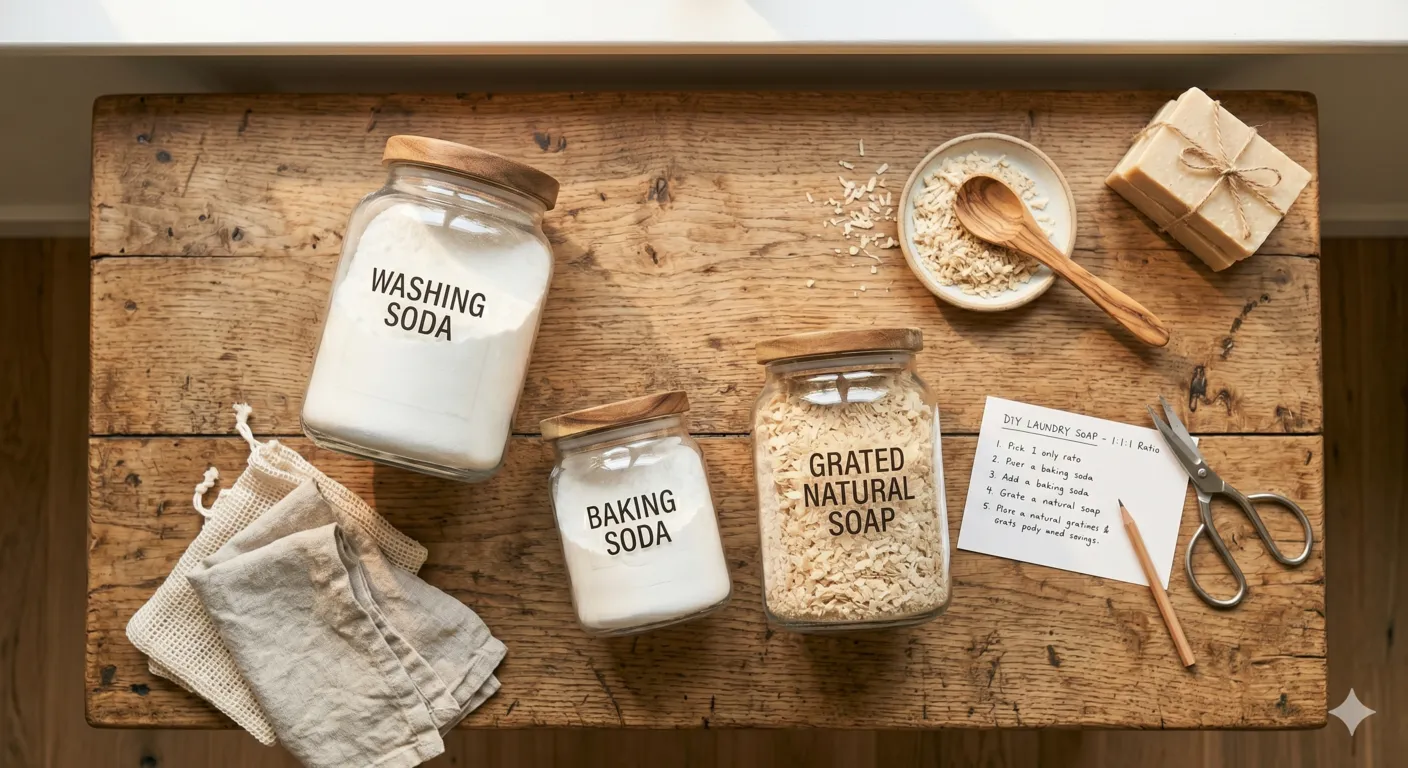
DIY detergent is popular in the zero waste world, and it can work, but it deserves an honest explanation rather than the usual “just mix three things together” promise.
We go into more detail on this in our DIY zero waste cleaning recipes guide. Here’s the catch most recipes skip: many homemade “detergents” are really soap, not detergent. In hard water especially, soap can react with minerals and leave a film on clothes and inside your machine over time. That buildup can trap odors, and it’s not ideal for high-efficiency (HE) machines, where it may even affect your warranty. So treat DIY as an experiment that suits some households and water types better than others. If you’d like to try it, a basic blend is:
So treat DIY as an experiment that suits some households and water types better than others. If you’d like to try it, a basic blend is:
- 1 part washing soda (sodium carbonate)
- 1 part finely grated pure soap, such as a castile or natural laundry bar
- An optional scoop of baking soda for freshness
Some recipes add borax as a booster. It’s effective, but opinions differ on skin and respiratory irritation, so use your own judgment, keep it away from kids and pets, and wear gloves if your skin is sensitive. For most people, these natural cleaning products are simpler and more reliable than full DIY:
For most people, these low-waste options are simpler and more reliable than full DIY:
- Oxygen bleach (sodium percarbonate) as a booster for whites and stains — it usually comes in a cardboard tub.
- White vinegar in the rinse compartment instead of fabric softener. It helps soften and cut residue, and it’s gentle on machines in normal amounts.
- Baking soda added to a load to neutralize odors.
- Soap nuts (soapberries) — a genuinely low-waste, compostable option. They’re mild, so they’re great for everyday and delicate loads but may struggle with heavy stains.
Common Laundry Mistakes

A few habits quietly work against a sustainable laundry routine. Most are easy to fix once you spot them.
- Using too much detergent. More soap doesn’t mean cleaner clothes. It leaves residue, builds up in your machine, and burns through product faster. Use the line on the cap, or less.
- Washing everything hot. Hot water is rarely necessary for everyday loads and wastes most of the cycle’s energy. Save it for towels, bedding, or anything genuinely grimy.
- Running half-empty loads. Small frequent washes waste water and energy. Wait for a full load — but don’t overstuff it either, or nothing rinses properly.
- Washing after a single wear. Out of habit, not need. Air things out instead.
- Relying on the dryer by default. Air dry whenever you reasonably can.
- Using liquid fabric softener. It coats fibers, which reduces towel absorbency and activewear’s ability to wick sweat. White vinegar in the rinse does the soft-and-fresh job without the plastic bottle.
- Throwing clothes out instead of repairing them. A quick stitch, a new button, or a stain treatment keeps clothes (and money) out of the landfill.
Frequently Asked Questions
Is zero waste laundry actually cheaper?
Usually, yes. Washing less, drying on a rack, skipping softener and dryer sheets, and buying concentrated powder all cut recurring costs. A few items (like wool dryer balls or a wash bag) are upfront purchases, but they pay for themselves over years of use.
Are laundry detergent sheets better for the environment?
They can be. Sheets cut out the heavy plastic jug and the water weight of liquid detergent, and they’re easy to store. That said, quality and ingredients vary by brand, so check that they actually clean well and that the packaging is as low-waste as it claims.
Can I do zero waste laundry in an apartment with shared machines?
Absolutely. You control the parts that matter most: cold-water washes, full loads, low-waste detergent, dryer balls, and air-drying on a rack indoors or on a balcony. None of that requires owning the machine.
Does cold water really get clothes clean?
For most everyday laundry, yes. Modern detergents are designed to work in cold water, and you’ll only need warm or hot for heavily soiled items, sickbed linens, or stubborn grease.
How do I deal with static without dryer sheets?
Wool dryer balls help a lot, and so does taking clothes out of the dryer slightly before they’re bone-dry. Air-drying avoids static almost entirely. A small splash of vinegar in the wash can help too.
Is vinegar safe for my washing machine?
In normal rinse-cup amounts, white vinegar is fine for most machines and helps reduce residue. If you have a specific concern, check your manufacturer’s guidance, and don’t combine it with bleach.
Final Thoughts
“Zero waste” laundry isn’t a pass-or-fail test, and you don’t have to overhaul everything this weekend. It’s a direction you move in, one habit at a time.
If you only do two things, make them the ones with the biggest payoff: wash less often and air-dry when you can. Both are free, both cut waste and energy, and both make your clothes last longer. From there, switch to a low-waste detergent when your current bottle runs out, swap in wool dryer balls, and add a microfiber catcher if synthetics fill your wardrobe.
Use up what you already have, choose the changes that fit your home, and let the routine build naturally. Small, steady swaps are what a real sustainable lifestyle is made of — and laundry is a genuinely easy place to start.