You started composting with the best intentions. A bin in the corner of the yard, a little caddy on the kitchen counter, a quiet sense that you were finally doing something good for the planet. Then a few weeks passed and something went sideways. Maybe the pile started to smell. Maybe it turned into a wet, slimy mess. Or maybe nothing happened at all, and that same heap of scraps and leaves just sat there, refusing to turn into anything useful.
If that sounds familiar, take a breath. You haven’t failed, and your compost isn’t broken. Composting is one of the easiest habits to build into a full zero waste lifestyle, but it comes with a handful of make-or-break details that almost nobody explains up front.
This guide walks through the most common composting mistakes beginners run into, why each one happens, and exactly how to fix it, usually in a few minutes with materials you already have. If you’re just getting started, see our full guide on how to start composting at home first.
Why Composting Sometimes Fails
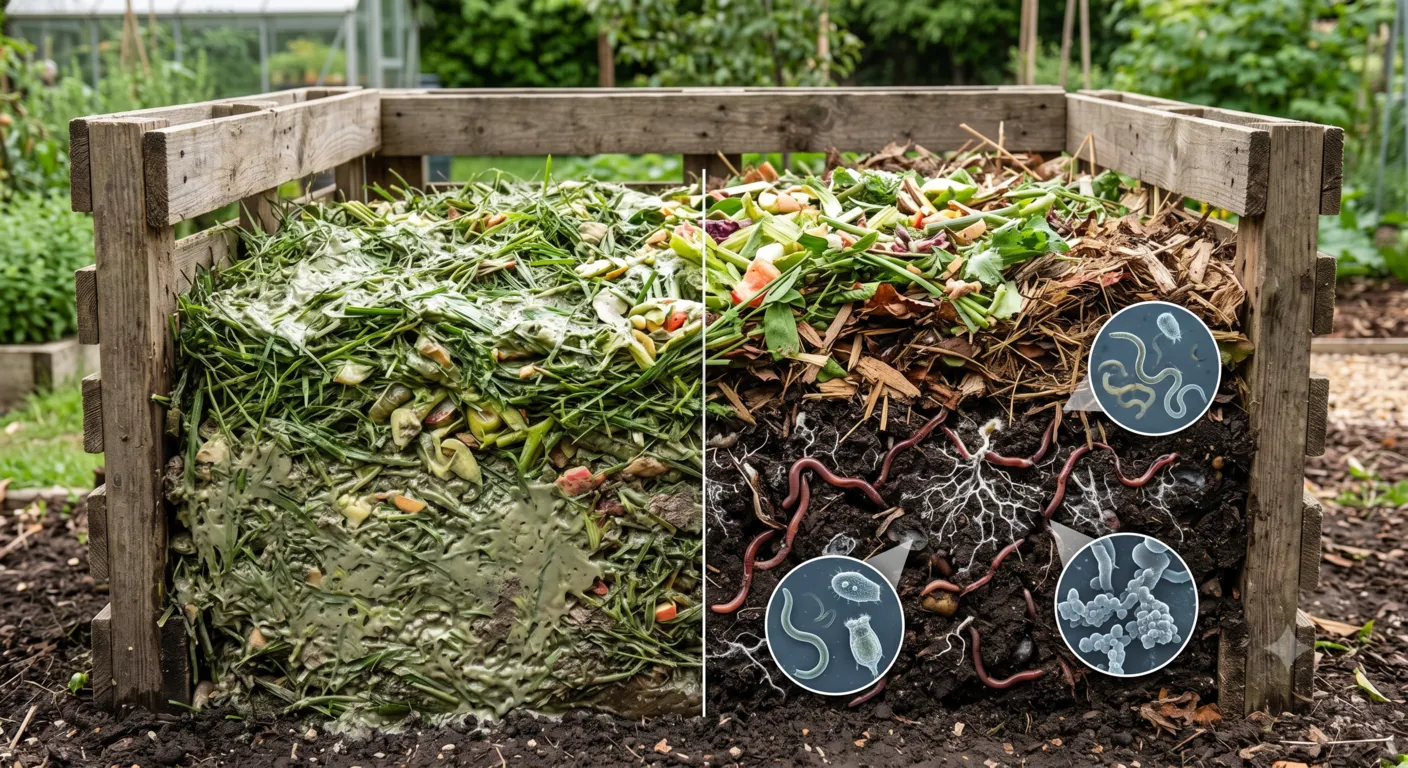
It helps to remember what compost really is. A compost pile is alive. It’s home to billions of microbes, along with worms, insects, and fungi, all working together to break down organic matter into dark, crumbly soil.
Like anything alive, those organisms need a few basic things to thrive:
- Food — a mix of “greens” and “browns”
- Air — oxygen to breathe
- Water — enough moisture, but not too much
- Time — patience while the process runs
Almost every composting problem traces back to one of those four being out of balance. Too wet, too dry, too much of one ingredient, not enough air. Once you can spot which one is off, fixing it becomes simple.
Two definitions, since they come up constantly:
- Greens are wet, fresh, nitrogen-rich materials: fruit and vegetable scraps, coffee grounds, fresh grass clippings, plant trimmings.
- Browns are dry, carbon-rich materials: dead leaves, cardboard, shredded paper, straw, small twigs.
Greens feed the microbes. Browns give the pile structure, soak up moisture, and keep air flowing. You need both. Keep that pairing in mind and most of what follows will click.
Adding the Wrong Materials
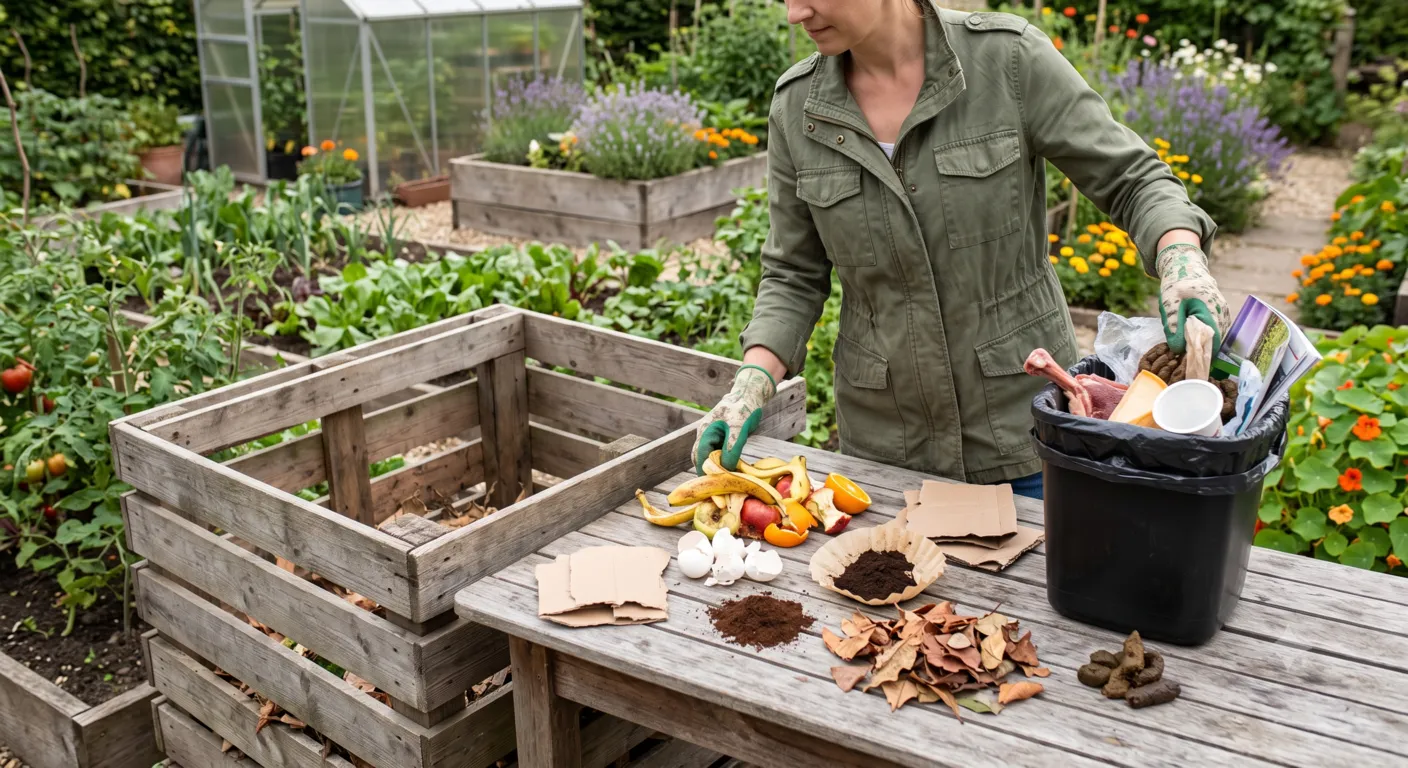
This is the number-one beginner composting mistake, and it’s an easy one to make. It feels like anything that was once “natural” should compost. Most plant-based kitchen and yard waste does, but a few common items cause smells, attract pests, or simply don’t belong in a backyard pile.
What you can compost
Safe, reliable additions include:
- Fruit and vegetable scraps and peels
- Coffee grounds and paper filters
- Tea leaves
- Crushed eggshells
- Grass clippings and plant trimmings
- Dry leaves
- Shredded paper and plain cardboard (no glossy coating)
- Straw and sawdust from untreated wood
What to leave out
Keep these out of a home compost pile:
- Meat, fish, and bones — they rot, smell strongly, and draw pests.
- Dairy products — same problem.
- Oily or greasy food — fats break down slowly and turn the pile sour.
- Dog and cat waste — it can carry parasites and pathogens.
- Diseased plants — a backyard pile may not get hot enough to kill plant diseases, so you risk spreading them.
- Weeds that have gone to seed — those seeds can survive and sprout later in your garden.
- Glossy or coated paper — the coating doesn’t belong in soil.
- Treated or painted wood — it carries chemicals you don’t want in your compost.
A couple of gray areas worth knowing: small amounts of citrus, onion, and garlic are fine, though large quantities can throw things off. And products labeled “compostable,” like some cups and bags, usually need an industrial composting facility and rarely break down in a home pile.
Too Much Green Material
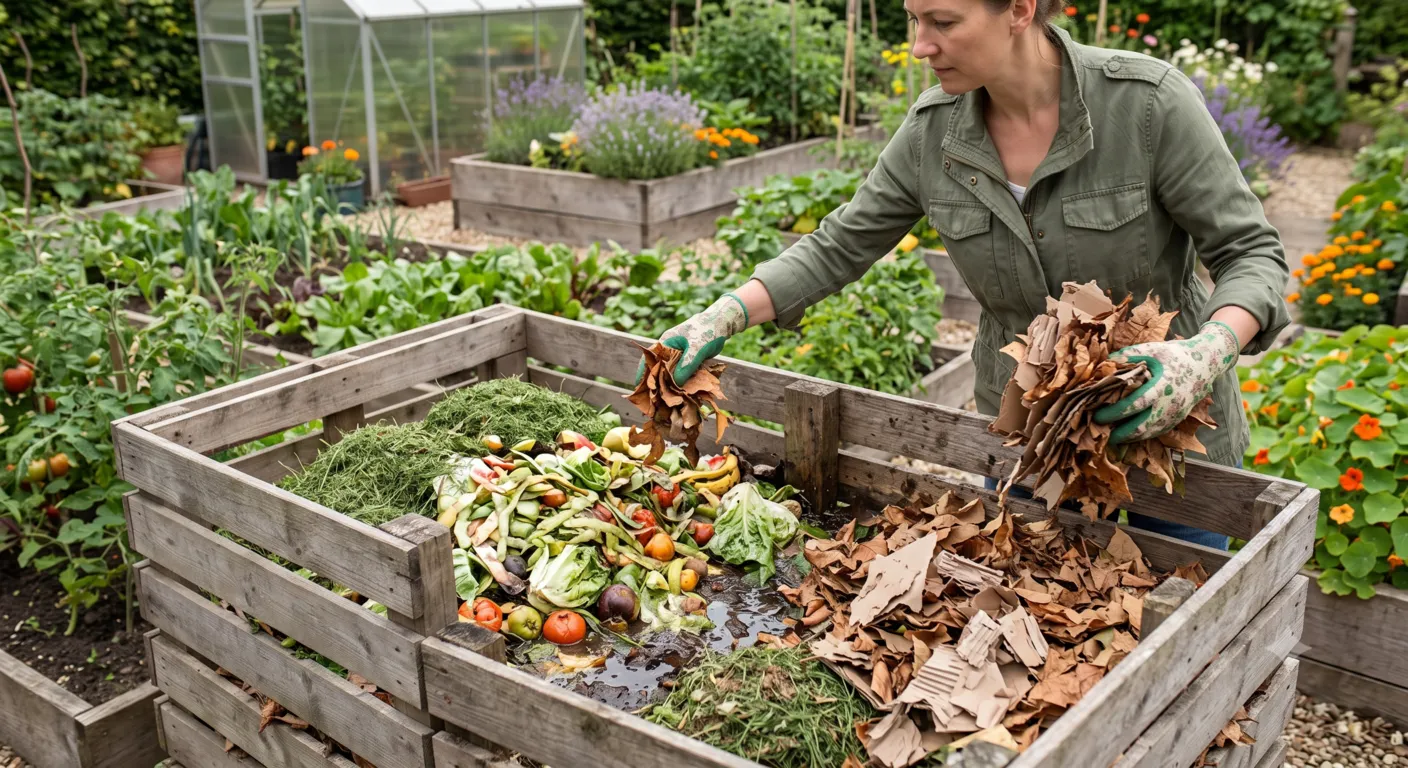
Here’s a scene almost every beginner recognizes. You’ve been tossing in vegetable scraps, coffee grounds, and a big batch of fresh grass clippings. A week later you lift the lid and it reeks. The pile is wet, dense, and a little slimy.
That’s the classic sign of too much green material.
Greens are rich in nitrogen and hold a lot of water. Pile in too many without enough dry material to balance them, and the heap becomes wet and compacted. Air gets squeezed out, the wrong kind of bacteria take over, and you get that sour, rotten, sometimes ammonia-like smell.
The fix is reassuringly easy: add browns. Mix in dry leaves, shredded cardboard, or shredded paper, then turn the pile to fluff it up. The browns absorb the extra moisture and restore airflow, and the smell usually fades within a few days.
Too Much Brown Material
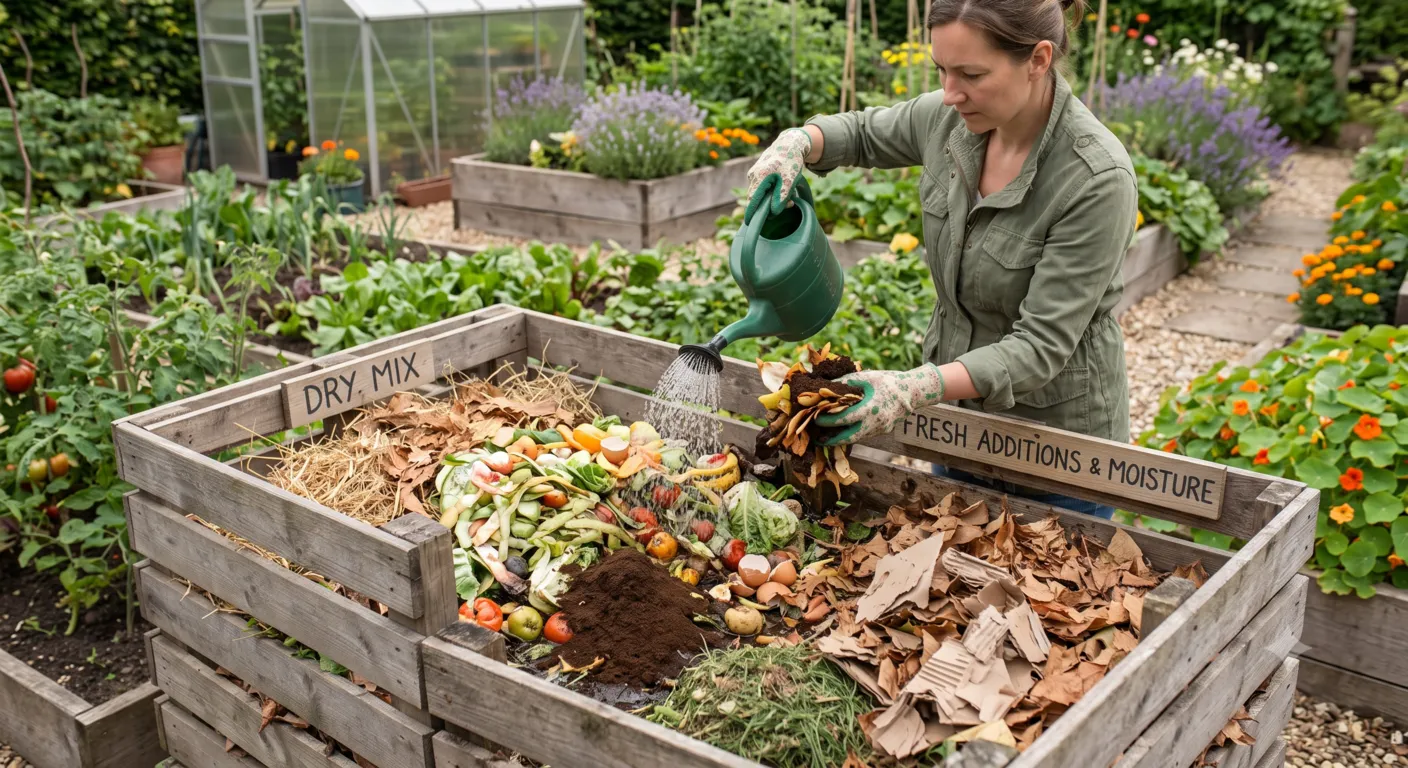
The opposite problem is quieter but just as frustrating. You built a tidy pile, mostly dry leaves and cardboard, and weeks later it looks exactly the same. No heat, no shrinking, no transformation. Just a heap slowly gathering dust.
This is too much brown material: plenty of carbon, but not enough nitrogen to fuel the microbes doing the work. Dry brown piles also tend to lack moisture, which stalls things even further.
To get it moving, add greens and a little water. Fresh grass clippings, vegetable scraps, or coffee grounds give the microbes the nitrogen they need, and moisture wakes everything up.
So what’s the right balance? A useful rule of thumb is to aim for more browns than greens by volume, somewhere around two to three parts brown to one part green as a starting point. Don’t treat that as an exact formula. The real skill is reading the pile. If it’s wet and smelly, add browns. If it’s dry and lifeless, add greens. Adjust as you go.
Lack of Airflow
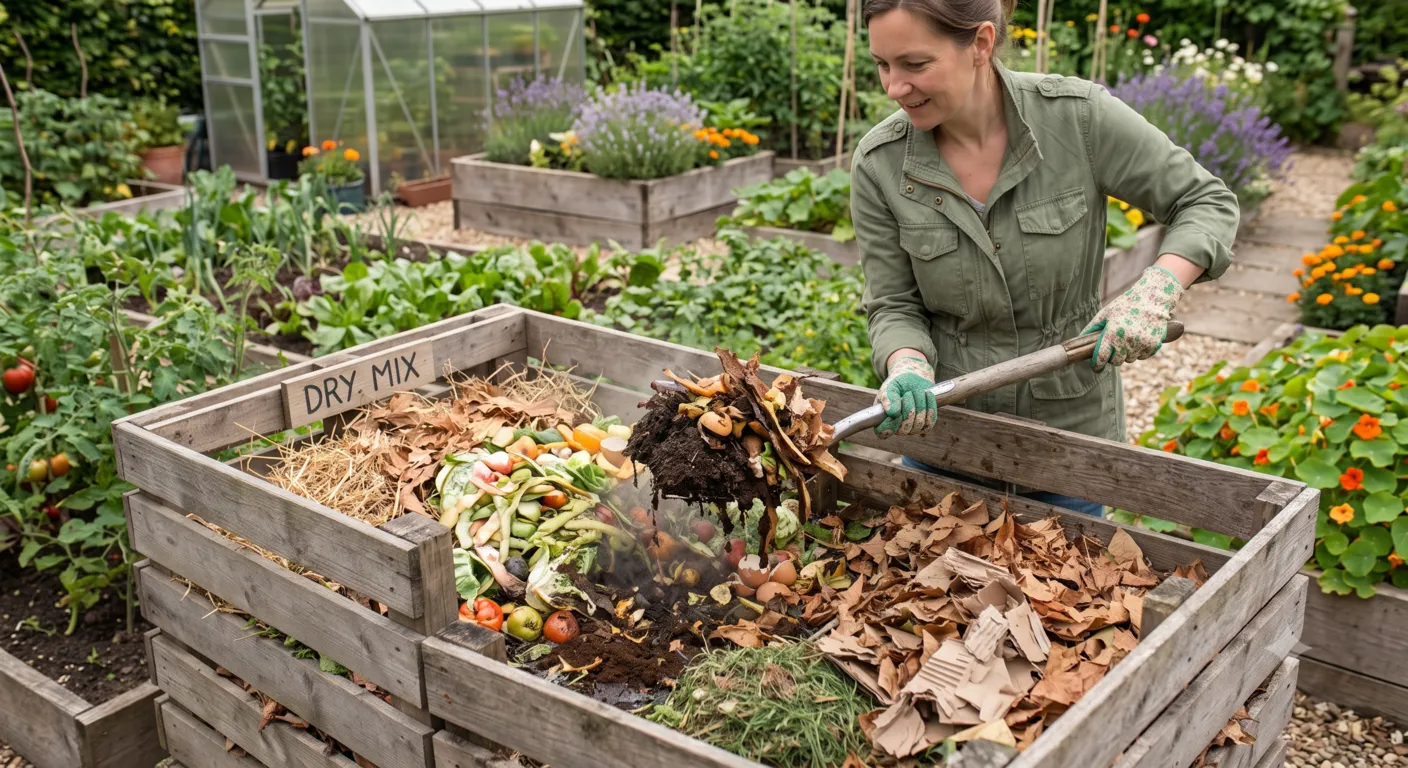
The helpful microbes in a healthy compost pile need oxygen to do their job. When a pile gets too dense or compacted, oxygen runs out, and a different set of microbes takes over, the kind that work slowly and produce bad smells.
Common causes of poor airflow:
- Never turning or mixing the pile
- Packing material down tightly
- A solid bin with no ventilation holes
- Too many wet greens matting together
The fix is to get air back in. Turn the pile every week or two with a garden fork or compost aerator, moving the outside material toward the center. Bulky browns like twigs, straw, or crumpled cardboard help too, since they create little pockets for air. And resist the urge to compress everything down. A loose pile breathes better than a packed one. A well-designed bin also helps a lot here — see our picks for the best compost bins of 2026.
Excess Moisture
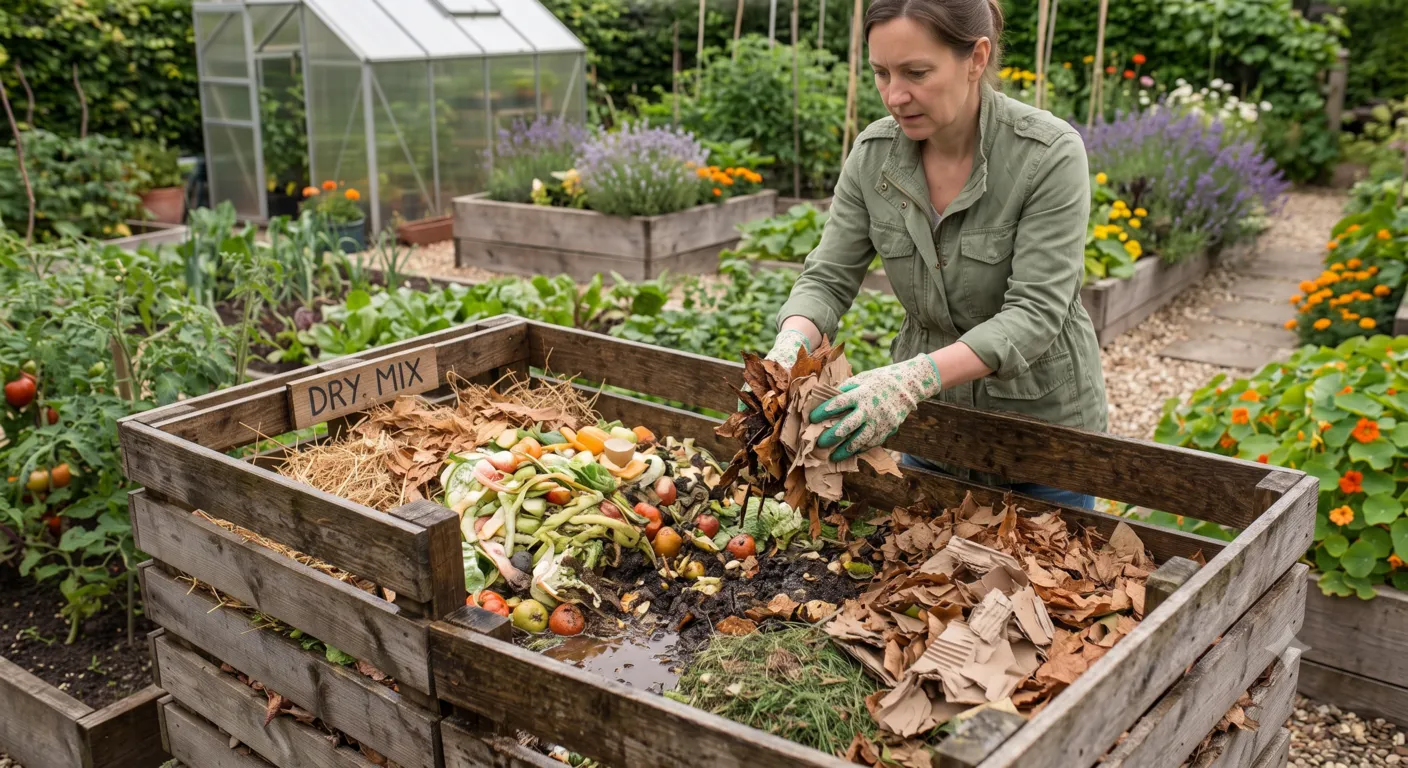
Moisture is one of the trickiest things to get right, and it trips up a lot of beginners in both directions.
A compost pile should feel like a wrung-out sponge: damp to the touch, but not dripping. Squeeze a handful, and a drop or two of water is perfect. A steady trickle means it’s too wet.
Too much moisture usually comes from piling in wet greens, rain soaking an uncovered pile, or a bin that doesn’t drain. A waterlogged pile turns soggy, smelly, and slow, for the same reason a green-heavy pile does: water pushes out the air.
To dry things out, add browns to soak up the excess, turn the pile, and cover it if rain is the culprit. The reverse is also worth catching. If the pile is bone dry and nothing’s happening, sprinkle it with water as you turn, just enough to bring back that wrung-out-sponge feel.
Ignoring the Compost Pile
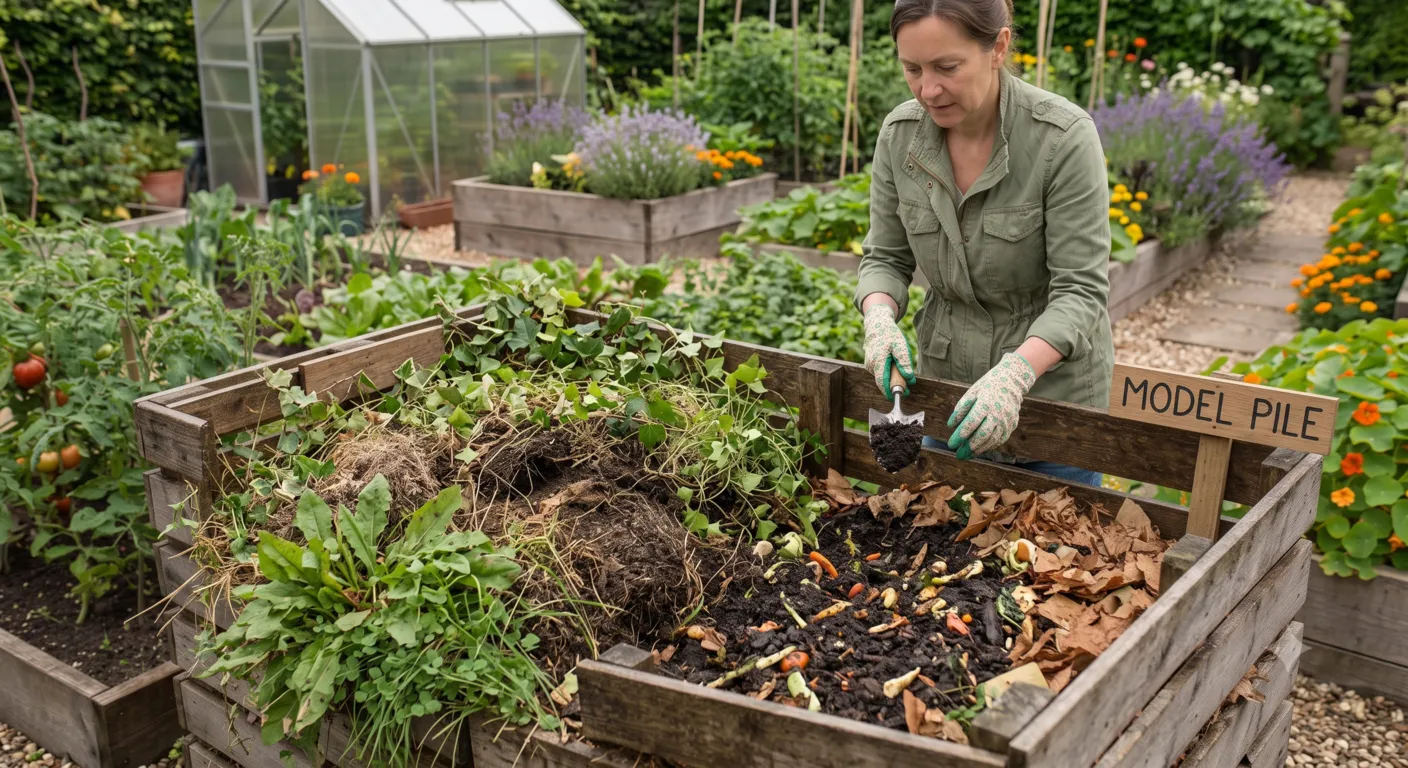
There’s a popular idea that composting is completely “set it and forget it.” For the most part, nature does the heavy lifting. But a pile that’s truly ignored for months often runs into trouble that could have been caught early.
Without the occasional check-in, a pile can dry out, get waterlogged after a rainy spell, lose its airflow, or quietly stall, and you won’t know until you finally look and find a problem that’s been building for weeks.
The good news is that staying on top of it takes almost no effort. Every week or two, do a quick 30-second check:
- Give it a sniff (earthy is good; sour or rotten is a signal)
- Feel the moisture (wrung-out sponge is the goal)
- Turn it if it hasn’t been turned in a while
That’s it. A little attention now and then keeps small issues from turning into smelly, frustrating ones.
Attracting Pests
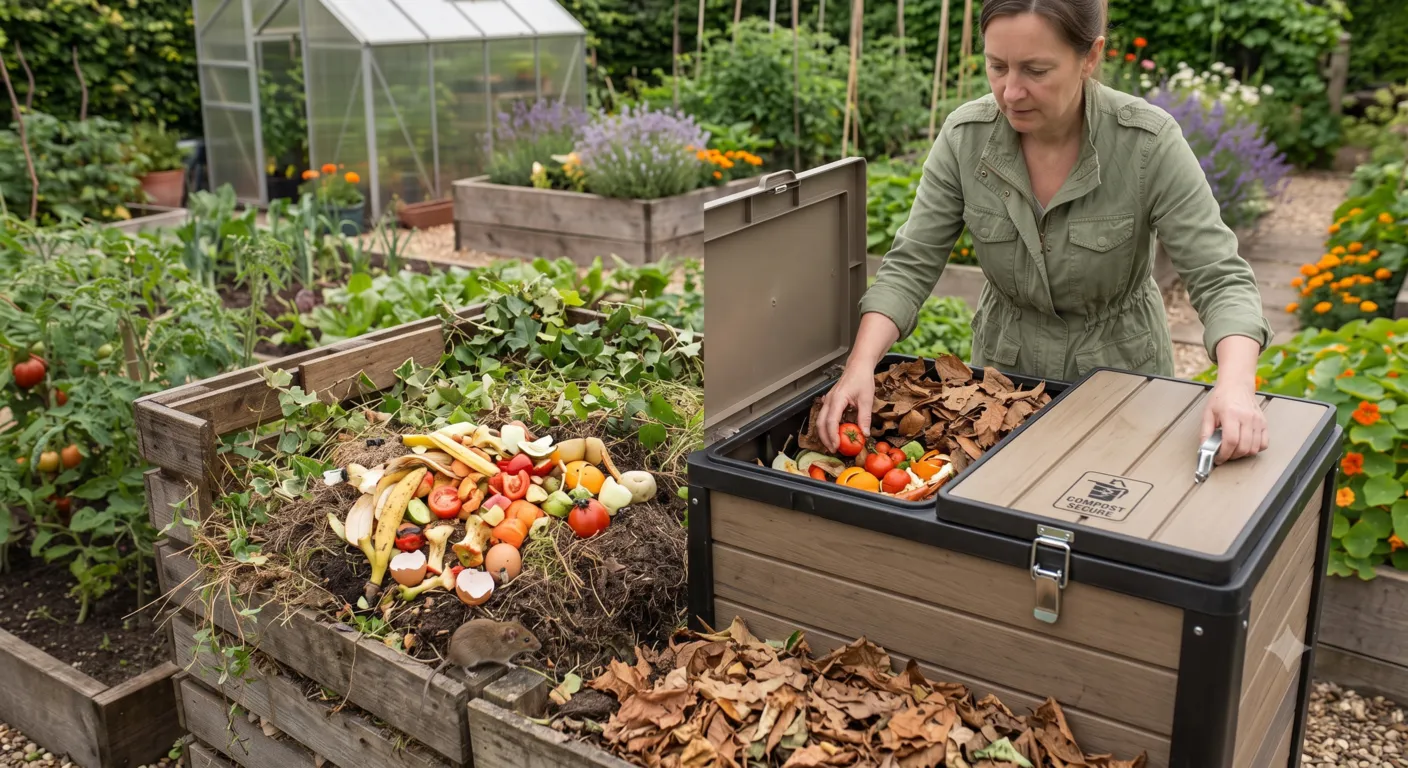
Few things sour someone on composting faster than finding rodents, swarms of flies, or raccoons digging through the bin. The frustrating part is that pests usually aren’t proof that composting “attracts vermin.” They’re a sign that something specific went wrong.
The usual culprits:
- Meat, fish, dairy, or oily food in the pile
- Food scraps left exposed on top instead of mixed in
- An open pile with easy access for animals
The fixes follow directly:
- Keep problem foods out. Stick to plant scraps and skip the meat, dairy, and grease.
- Bury fresh scraps under a layer of browns or finished compost so they aren’t sitting on the surface.
- Use a closed bin with a secure lid. If rodents are a known issue where you live, choose one with a solid base or fine mesh.
A balanced, well-managed pile that’s mostly browns on the outside rarely gives pests a reason to visit.
How to Fix Common Problems
When something’s off, you don’t need to start over. Here’s a quick troubleshooting guide to come back to anytime.
Smelly pile (rotten or ammonia smell)
Usually means too much green, too much moisture, or not enough air. Add browns, turn the pile to get oxygen in, and it should clear up within a few days.
Soggy, slimy pile
Too wet. Mix in plenty of dry browns to absorb the moisture, turn it, cover it if rain is getting in, and make sure the bin can drain.
Dry pile that won’t break down
Too dry, or too many browns. Sprinkle with water and add some greens as you turn, then keep an eye on the moisture over the next week.
Pile won’t heat up or breaks down very slowly
A few possible causes: the pile may be too small to build heat, too dry, short on greens, or made of pieces that are too big. Chop materials smaller, add greens and moisture, and build up more volume. Bigger piles, roughly a cubic yard or about three feet on each side, hold heat far better than tiny ones.
Pests showing up
Stop adding meat, dairy, and oily food, bury fresh scraps under browns, and secure the bin with a tight lid.
Frequently Asked Questions
How long does compost take to be ready?
It depends on your method and how actively you manage it. A hot, well-tended pile that you turn regularly can produce finished compost in a couple of months. A hands-off “cold” pile can take six months to a year. You’ll know it’s ready when it looks dark and crumbly, smells earthy, and you can no longer recognize the original scraps.
Why does my compost smell bad?
A bad smell almost always means the pile is too wet, has too much green material, or isn’t getting enough air. The fix is the same in each case: add dry browns and turn the pile to let oxygen back in. A healthy compost pile should smell earthy, like a forest floor, not sour or rotten.
Do I really need to turn my compost?
You don’t have to, but turning helps a lot. It adds oxygen, speeds up decomposition, and prevents the wet, smelly problems that come from a compacted pile. If you’d rather not turn often, lean on plenty of bulky browns to keep air flowing naturally, and expect the process to take longer.
Can I compost in winter?
Yes. Cold weather slows the microbes down, so decomposition nearly pauses in freezing temperatures, but it picks back up as things warm. You can keep adding scraps through winter, and they’ll start breaking down again in spring.
Can I put bread, rice, or cooked food in my compost?
Small amounts of plain bread or rice can break down, but cooked foods, especially anything oily, salty, or mixed with meat or dairy, tend to attract pests and create odors. For a backyard bin, it’s safest to stick mostly to raw fruit and vegetable scraps.
Is it normal to see bugs and worms in my compost?
Completely normal, and usually a good sign. Worms, beetles, and other small creatures help break material down. The ones to watch for are large numbers of flies, which often point to exposed food scraps. Just bury them under a layer of browns.
Final Thoughts
Here’s the most reassuring thing to remember: composting is forgiving. Almost every mistake on this list is fixable in a few minutes, and the pile will bounce back. You don’t need special skills or expensive gear, just a rough sense of balance and the willingness to check in now and then.
Keep the basics in mind. Mix greens and browns. Give the pile air. Keep it as damp as a wrung-out sponge. Glance at it every week or two. Do that, and the rest tends to take care of itself.
And even on the days it’s not perfect, you’re still keeping food scraps out of the landfill, cutting down on waste, and turning everyday kitchen leftovers into something that feeds your garden. For more on setting up your pile the right way from the start, see our backyard composting guide for beginners.